The answer depends on where you live, what you are spending, and how long you plan to stay in your home. This guide breaks down every factor San Antonio homeowners need to know before choosing between aluminum and steel roofing panels.
When San Antonio homeowners start researching metal roofing, one of the first questions they run into is also one of the most practically important: is aluminum or steel the right material for the job? Both are legitimate metal roofing options. Both can last 50 years or more. Both outperform asphalt shingles in nearly every measurable category. But they are not the same product, and the differences between them matter a great deal depending on your budget, your neighborhood, and the specific demands of the Texas climate.
Steel is heavier, stronger, and less expensive per square foot. Aluminum is lighter, naturally rust-resistant, and better suited for coastal or high-humidity environments. In San Antonio, which sits inland in a hot, semi-arid climate rather than near the Gulf Coast, steel is the dominant choice for good reason. But aluminum has real advantages in certain applications, and it is never the wrong material simply because of the label on the panel.
This guide walks through every meaningful difference between aluminum and steel metal roofing: cost, performance, weight, durability, corrosion resistance, energy efficiency, and how each holds up specifically in the San Antonio and Bexar County environment. By the end, you will know which material makes sense for your home and why.
Material guides are a starting point, not a substitute for a professional roof assessment. Your home's structural load rating, the slope and pitch of your roof, your existing decking condition, and your long-term plans for the property all affect which metal roofing material is the right fit. A reputable San Antonio metal roofing contractor will give you a side-by-side comparison based on your actual roof, not a generic answer from a website. Use this guide to ask better questions, not to skip the conversation.
Material cost is the most immediate and visible difference between aluminum and steel metal roofing. Steel panels are manufactured in larger volumes, use a more abundant raw material, and generally cost between 30 and 50 percent less per square foot than aluminum before any coatings or finishes are applied. For most San Antonio homeowners comparing bids, the price difference on a full roof installation is substantial enough to be the deciding factor on its own.
Steel panel installed costs in the San Antonio market typically run $3.50 to $7.00 per square foot for corrugated and ribbed panel systems, and $6.00 to $12.00 per square foot for standing seam steel. The wide range reflects panel gauge, coating quality, and the complexity of your specific roof.
Aluminum panel installed costs in the same market typically run $5.00 to $9.00 per square foot for standard profiles and $9.00 to $15.00 per square foot for premium standing seam aluminum systems. Aluminum's higher raw material price does not disappear at the contractor level.
- Is the price difference between aluminum and steel panels significant enough on my specific roof to affect the project budget meaningfully?
- What gauge is being quoted for each material, and are we comparing equivalent thicknesses?
- Does the aluminum bid include thicker panels to compensate for lower tensile strength?
- Are the coating systems being quoted the same quality level for both materials?
- What is the warranty offered on each panel type, and who backs it?
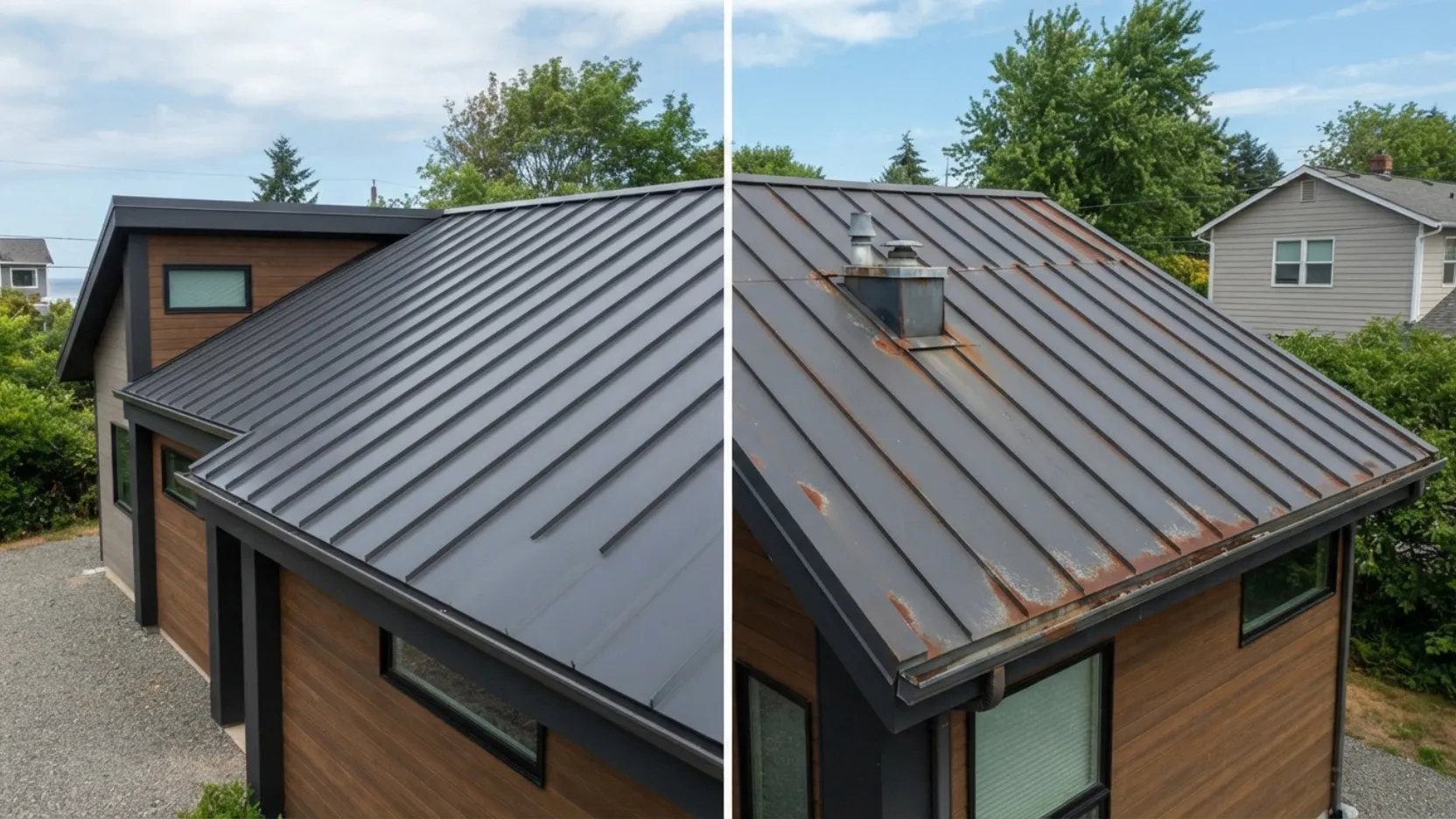
This is the category where aluminum has a genuine and undeniable advantage. Aluminum does not rust. Period. It is not a matter of coating quality or maintenance frequency. The base metal itself does not oxidize in the same way steel does when exposed to water and oxygen. When aluminum oxidizes, it forms a thin layer of aluminum oxide on the surface that actually acts as a protective barrier, slowing any further corrosion rather than accelerating it the way iron rust does on bare steel.
Steel, by contrast, contains iron. Iron rusts. Modern metal roofing steel is coated with zinc (galvanized) or zinc-aluminum alloys (Galvalume) specifically to prevent the base steel from being exposed to moisture. As long as those coatings remain intact, steel roofing performs excellently and does not rust. But if the coating is cut, scratched, or worn through at fastener holes, cut edges, or damaged areas, the underlying steel becomes vulnerable to rust.

In San Antonio specifically, this distinction matters less than many people assume. The city sits inland, away from the salt air that accelerates corrosion along the Texas Gulf Coast. San Antonio's climate is hot and semi-arid, with low humidity compared to coastal cities. Properly coated Galvalume steel roofing performs exceptionally well in this environment, and rust is rarely a practical concern on a correctly installed steel roof in Bexar County unless the panels are damaged and left unrepaired for years.
The corrosion advantage of aluminum becomes decisive the closer you get to the Gulf Coast. If you own a property in Corpus Christi, Galveston, or anywhere within 50 miles of saltwater, aluminum's corrosion resistance is worth every penny of the premium. In San Antonio, 140 miles from the coast, that same premium is buying insurance against a risk that is, for most homeowners, not a significant threat. Galvalume steel with a quality paint system will outlast most San Antonio homeowners without meaningful rust concerns.
One area where aluminum's corrosion resistance does matter even in San Antonio is around swimming pools. Pool chemicals, particularly chlorine off-gassing, can accelerate corrosion on steel roofing panels on structures adjacent to pools, such as pool houses, covered patios, and outdoor kitchens. For those specific structures, aluminum is worth serious consideration even in an inland market like San Antonio.
- Aluminum wins in coastal and high-humidity environments, and on pool-adjacent structures anywhere
- Galvalume steel performs comparably in San Antonio's inland, semi-arid climate
- Never install bare or galvanized steel without a quality Galvalume or paint coating in any outdoor Texas environment
- Cut edges on steel panels must be sealed to prevent rust at exposed steel
- Fastener holes on exposed-fastener steel systems should use coated or stainless steel screws to prevent corrosion points
Steel and aluminum have very different physical properties when it comes to strength and weight, and both matter for roofing decisions. Steel is approximately three times denser than aluminum, which makes a steel panel considerably heavier than an aluminum panel of the same thickness. At the same time, steel is significantly stronger and stiffer, meaning it can handle impact forces, wind uplift, and structural loads that would dent or deform a comparably thin aluminum panel.
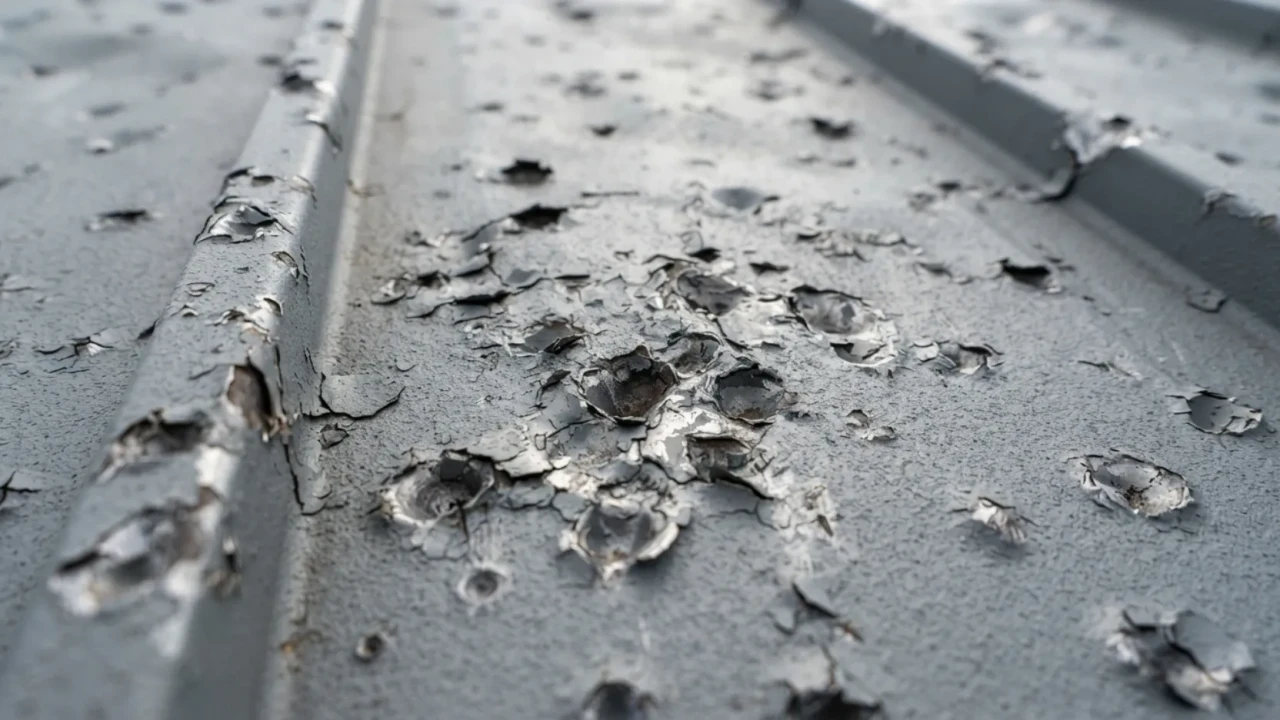
Hail resistance is a major consideration in San Antonio, which sees frequent severe hail events. Steel panels in standard roofing gauges (26 or 24 gauge) resist denting better than aluminum panels of equivalent thickness. This is because steel has a higher tensile and yield strength than aluminum, meaning it takes more force to permanently deform the panel.
Aluminum's lighter weight is a meaningful advantage in certain situations: re-roofing over an existing roof layer where added load is a concern, roofing structures with lighter framing systems, and applications where labor costs are significantly driven by material handling weight.
| Property | Steel (26 gauge) | Aluminum (0.032") | Winner |
|---|---|---|---|
| Weight per sq ft | 1.65 lbs | 0.45 lbs | Aluminum |
| Tensile strength | ~65,000 psi | ~25,000 psi | Steel |
| Hail resistance (same gauge) | Higher | Lower | Steel |
| Impact resistance rating | Class 4 achievable | Class 4 achievable (thicker gauge) | Tie |
| Dead load on structure | Heavier | Lighter | Aluminum |
| Spanning ability | Better | Requires more supports | Steel |
- Ask your contractor for the panel gauge being quoted for both steel and aluminum options
- Confirm whether either panel system carries a Class 4 impact resistance rating from an accredited testing lab
- If re-roofing over existing shingles, ask whether your structure's load rating permits the added weight of steel before ruling out aluminum
- For carports, open-bay structures, and agricultural buildings with wide spans, steel's stiffness advantage is particularly important
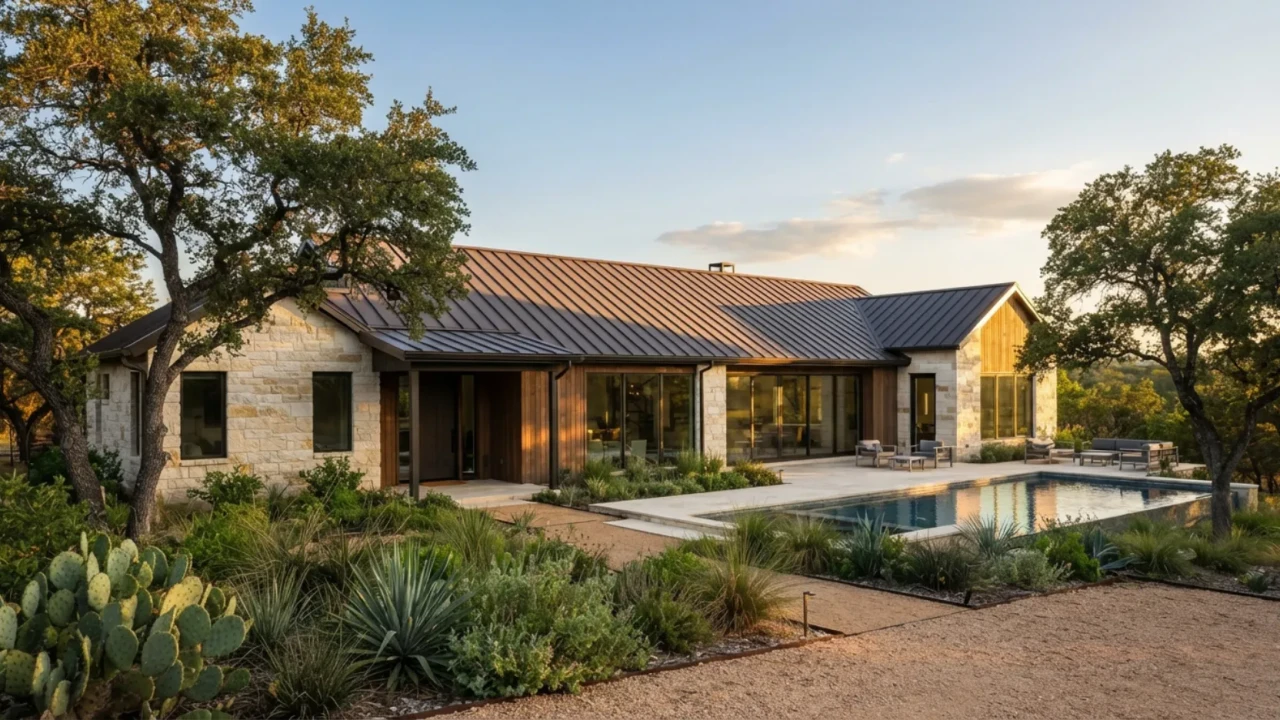
San Antonio homeowners frequently ask whether aluminum or steel roofing is more energy efficient, and the honest answer is that the material itself matters far less than the coating applied to it. Both aluminum and steel are excellent thermal reflectors compared to asphalt shingles. Both can be coated with high-reflectivity paint systems that meet Energy Star requirements. And both, when properly installed with adequate attic ventilation, will reduce cooling loads significantly compared to a dark asphalt roof in the Texas summer heat.
Aluminum does have a marginally better natural thermal reflectivity as a bare metal, but no modern metal roof is installed bare. The Kynar or PVDF paint systems applied to quality metal roofing panels are the dominant factor in determining how much solar heat the roof absorbs and re-emits. A steel panel with a high-quality cool roof coating will outperform an aluminum panel with a dark or low-reflectivity finish every time.
When comparing aluminum and steel for energy efficiency, ask your contractor for the Solar Reflectance Index (SRI) rating of the specific panels being quoted, not a general comparison of the two materials. An SRI above 78 qualifies most roofing products as Energy Star certified for steep-slope roofs. Both steel and aluminum systems can meet and exceed this threshold. Do not let a salesperson convince you that aluminum is inherently more energy efficient in a way that justifies a higher price the data does not support that claim in the context of modern coated metal roofing.
- Request the Solar Reflectance Index rating for both the steel and aluminum options being quoted
- Ask whether the panel qualifies for Energy Star and whether your project may be eligible for federal or utility rebates
- Confirm that the attic ventilation plan meets code requirements a reflective roof with poor attic ventilation still builds up heat
- Light-colored coatings on either steel or aluminum consistently outperform darker finishes regardless of the base material
This is a technical consideration that most homeowners never hear about, but it has real consequences for the long-term performance of a metal roof. Aluminum expands and contracts at a rate approximately twice that of steel when exposed to the same temperature change. In a climate like San Antonio's, where roof surface temperatures can swing from below freezing in January to above 170 degrees Fahrenheit on a July afternoon, that difference in thermal movement is significant.
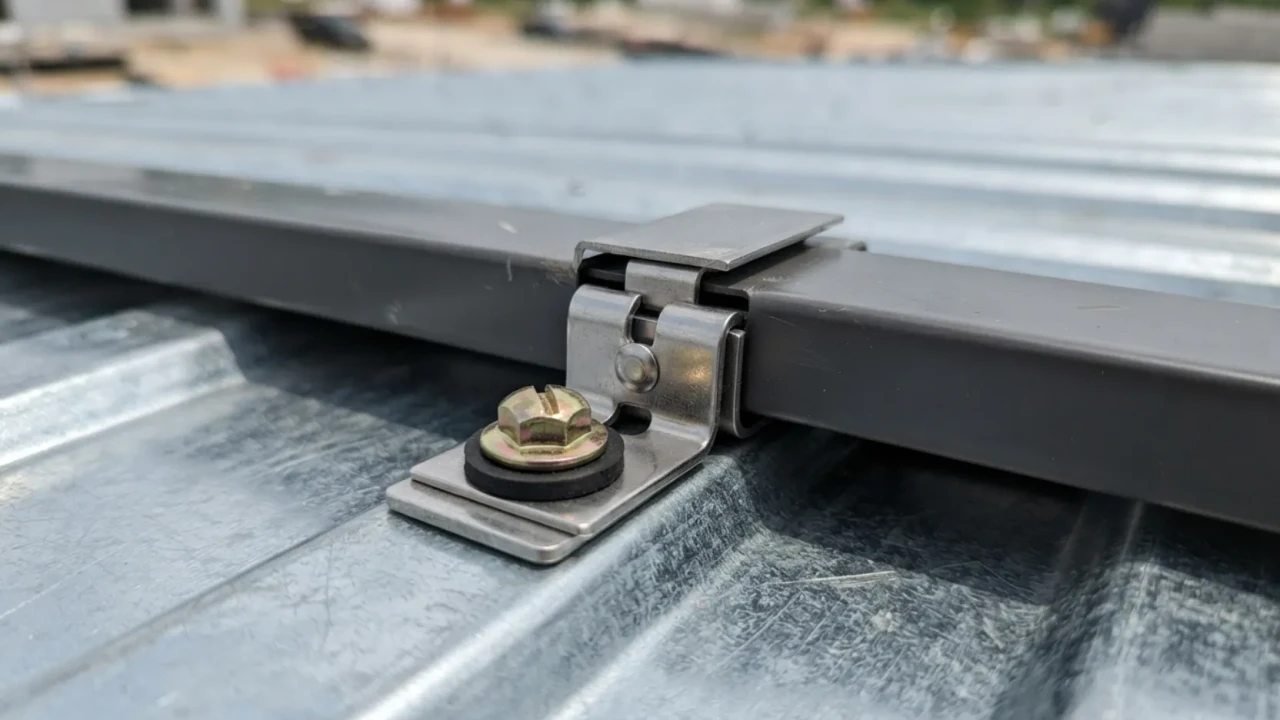
For steel roofing, thermal expansion is manageable with standard installation techniques and does not typically require special fastening systems beyond what a well-designed standing seam profile already provides. For aluminum roofing, the higher expansion rate requires careful attention to fastener types, panel gap allowances, and attachment methods. When aluminum panels are installed without adequate room to move, they can buckle, oil-can (develop a wavy appearance), or work fasteners loose over time.
This does not mean aluminum cannot be installed correctly in San Antonio. It means that aluminum installation requires experienced crews who understand the material's behavior and design the attachment system accordingly. If you are comparing bids for aluminum roofing and one contractor's price is significantly lower than the others, it is worth asking exactly how they are addressing thermal movement in their installation specification.
Standing seam profiles handle thermal expansion better than exposed-fastener systems for both aluminum and steel. Standing seam panels are attached through hidden clips that allow the panel to float and move without the fastener hole becoming an oval from repeated expansion and contraction cycles. If you are considering aluminum for a large roof area in San Antonio, standing seam is strongly preferred over exposed-fastener corrugated panels precisely because it manages the higher thermal movement without creating leak points over time.
- Ask your contractor whether the panel profile being quoted accommodates aluminum's higher thermal movement rate
- For aluminum on large roof areas, standing seam with floating clips is the appropriate installation method
- Verify that panel end laps and trim details are designed to allow movement without creating leak points
- Review the manufacturer's published thermal movement data for the specific panel being installed
One of the most common misconceptions in the aluminum-versus-steel debate is that aluminum automatically lasts longer. In coastal environments, this can be true, because aluminum's immunity to rust gives it a clear advantage when salt air is present. In San Antonio, this distinction nearly disappears. A properly installed and coated steel roof in Bexar County will last just as long as an aluminum roof, because the corrosion environment inland is not severe enough to meaningfully degrade a quality steel coating system over a normal roof's life.
Both materials, when installed correctly with quality Kynar or PVDF paint systems, are typically backed by manufacturer warranties of 30 to 40 years on the paint finish and 30 to 50 years on the panel itself. Both will outlast two to three generations of asphalt shingles on the same house. The real maintenance story is not about which material rusts less in San Antonio it is about keeping the coating system intact, maintaining fasteners and sealants, and addressing any storm damage promptly before it develops into a repair problem.
- Request written warranty documentation from the panel manufacturer for both the paint system and the panel itself
- Schedule a professional inspection every 5 to 10 years regardless of which material is installed
- Address any coating scratches or damage promptly with touch-up paint to prevent rust on steel panels
- After any significant hail event, have both aluminum and steel roofs inspected for coating damage that could compromise long-term performance
- Keep gutters and valleys clear to prevent standing water on either material
This table summarizes every meaningful category where aluminum and steel differ, with a verdict column that reflects performance specifically in San Antonio's inland Texas climate rather than a generic national answer.
| Category | Aluminum | Steel (Galvalume) | San Antonio Verdict |
|---|---|---|---|
| Upfront cost | Higher ($5-$15/sq ft installed) | Lower ($3.50-$12/sq ft installed) | Steel wins |
| Corrosion resistance | Excellent; will not rust | Very good with Galvalume coating | Tie in San Antonio's inland climate |
| Weight | Lighter; easier to handle | Heavier; denser material | Aluminum wins for load-limited structures |
| Strength and hail resistance | Lower tensile strength | Higher; better hail resistance at same gauge | Steel wins for San Antonio hail |
| Energy efficiency | Excellent with cool coating | Excellent with cool coating | Tie; coating determines performance |
| Thermal expansion | Higher; requires special installation | Lower; standard installation works well | Steel wins for installation simplicity |
| Lifespan in San Antonio | 50 years or more with maintenance | 50 years or more with maintenance | Tie in San Antonio's inland climate |
| Pool-adjacent structures | Preferred; chlorine resistant | Accelerated corrosion risk from chlorine | Aluminum wins near pools |
| Contractor availability | Fewer local specialists | More San Antonio contractors experienced | Steel wins on local expertise |
| Overall San Antonio value | Premium cost; limited extra benefit inland | Best combination of cost and performance | Steel wins for most San Antonio homes |
- Your primary concern is budget and overall value per dollar spent
- Your home is in a standard San Antonio residential neighborhood away from the Gulf Coast
- Hail resistance is a priority and you want to qualify for an insurance discount on a Class 4 rated panel
- Your project is a large roof area where steel's lower cost per square foot produces significant total savings
- Your structure has a standard load capacity that easily handles steel's additional weight
- You want the widest choice of local San Antonio contractors with specific installation experience
- Your structure is a pool house, covered patio near a pool, or any building regularly exposed to chlorine off-gassing
- You are re-roofing over an existing roof layer and structural load capacity is limited
- Your building has lighter framing that a structural engineer has rated for reduced dead load
- Long-term rust immunity is important enough to you to justify the higher upfront cost
- You own property that may transition to a coastal or high-humidity environment in the future
- Panel gauge for the specific profile being quoted (26 gauge steel or 0.032" aluminum minimum for most residential applications)
- Paint system type: Kynar 500 or PVDF coating for maximum UV resistance in the Texas sun
- Impact resistance rating: confirm Class 4 if you want to pursue a homeowner's insurance premium discount
- Manufacturer warranty: separate warranty for the paint system and the structural panel
- Installation method: standing seam versus exposed fastener, and why that choice suits your roof
- Underlayment specification: synthetic underlayment is standard in San Antonio for moisture management under both steel and aluminum
Ready to choose the right metal roof for your San Antonio home?
Our team has installed both aluminum and steel metal roofing systems across Bexar County for over 30 years. We will give you a straight answer on which material makes sense for your specific roof, budget, and situation no sales pressure, just honest advice from experienced San Antonio roofers.