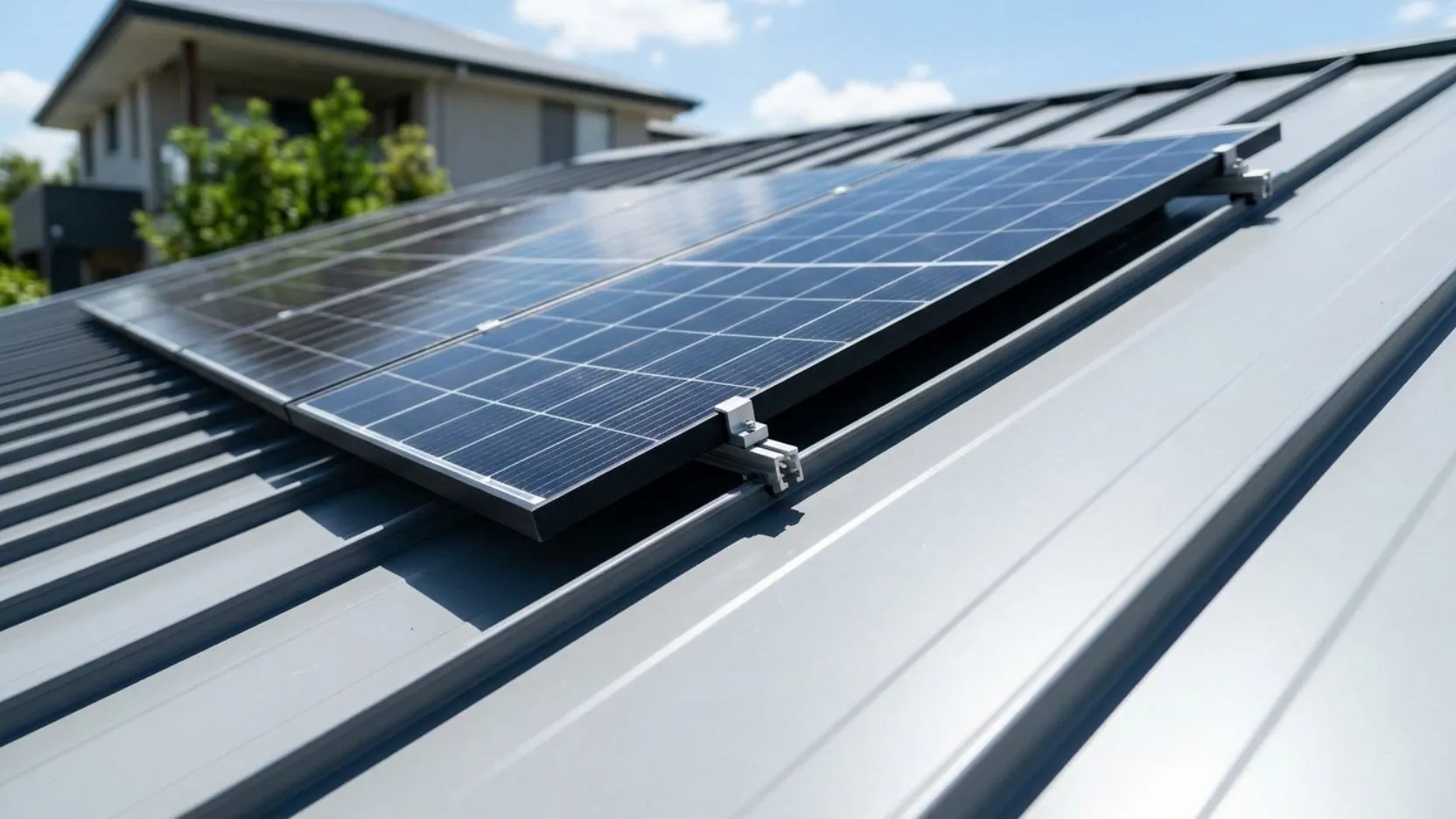
Is metal roofing better for solar panels

Is Metal Roofing Better For Solar Panels?

Home 9 Metal Roofing San antonio 9 Is Metal Roofing Better For Solar Panels?
Is Metal Roofing Better for Solar Panels? San Antonio TX Guide | Affordable Roofing Contractors San Antonio
Metal Roofing and Solar Panels Guide San Antonio, TX

If you are planning to go solar in San Antonio, your roof material matters more than most installers will tell you. This guide explains exactly why metal roofs outperform asphalt shingles for solar panel systems, what the installation differences look like, and how to make the right call for your home.

Metal roof solar panels San Antonio Solar on metal roof · Standing seam · Mounting Energy savings · Tax credits · ROI guide Residential · San Antonio · Bexar County Updated 2026
R
Ted
With over 30 years of residential and commercial metal roofing experience across San Antonio and Bexar County, our crews have worked alongside solar installers on hundreds of projects. We understand what makes a metal roof the right foundation for a solar energy system and what mistakes during installation can cost a homeowner thousands down the road.
· affordableroofingcontractorssanantonio.com · Licensed and Insured · $2M Liability Coverage · 100+ Five-Star Reviews
Part of our complete metal roofing tax credit and energy savings guide
Is a metal roof a tax credit?
25%+
More energy efficient than asphalt when paired with a reflective metal roof coating in San Antonio
50+yrs
Lifespan of a properly maintained metal roof outlasting most solar panel warranties by decades
$0
Roof penetrations needed for standing seam metal roof solar installations no holes, no leaks
30%
Federal Investment Tax Credit available in 2026 for qualifying solar installations on your home

If you are planning to add solar panels to your San Antonio home, you have probably already started comparing quotes and researching equipment. What most homeowners do not research early enough is the roof underneath those panels. The material your roof is made from determines how the solar system gets mounted, whether penetrations are needed, how long the installation will last, and how much airflow the panels get to maintain their efficiency in the Texas heat.

The short answer is yes metal roofing is better for solar panels in almost every measurable way. This is not a marketing claim. It is a function of the physical and structural properties of metal roofing compared to asphalt shingles. This guide walks you through five specific reasons metal roofs outperform asphalt for solar, what the installation process looks like for each metal roof type, and what San Antonio homeowners need to know before combining the two systems.

The most important thing to know before combining solar panels with any roof in San Antonio

If your existing asphalt roof is within 10 years of needing replacement and you are planning to go solar, replace the roof first. Removing and reinstalling solar panels mid-system life to access the roof beneath them costs $3,000 to $6,000 in labor alone. Switching to a metal roof before your solar installation means you will never pay that cost. Your metal roof will outlast your solar system by 20 to 30 years and be the right foundation for the replacement solar system after that.

Metal roof with solar panels installed on San Antonio home
Solar panels mounted on a standing seam metal roof in San Antonio using clamp-based hardware no roof penetrations required.
● ● ●
Five reasons metal roofing outperforms asphalt for solar
Why metal roofs and solar panels are a better match than asphalt shingles
01
Standing seam metal roofs need zero roof penetrations for solar mounting
The single biggest structural advantage of metal roofing for solar installations in San Antonio
Installation

On an asphalt shingle roof, every solar panel mounting bracket requires a lag bolt driven through the shingles, through the decking, and into the rafters below. A standard residential solar installation creates 40 to 60 roof penetrations. Every single one of those holes is a potential leak point. Roofers and solar installers who do good work will seal each penetration carefully, but those sealant points are subject to the same UV exposure and thermal cycling that eventually fails every rooftop sealant in San Antonio.

A standing seam metal roof changes the equation completely. Solar panel mounting systems designed for standing seam roofs clamp directly onto the raised seams of the panels without penetrating the metal surface at all. There are no holes drilled, no flashing patches applied, and no sealant points that can fail. The mounting hardware grips the seam mechanically, and the connection point is the strongest part of the panel profile not a drilled hole through flat metal.

Standing seam clamp solar mounting system on metal roof

How clamp-based solar mounting works: S-5! and similar seam clamp systems use a set-screw or bolt-clamp mechanism that attaches to the raised seam profile. The clamp becomes a rail anchor point. The solar racking rail connects to the clamps, and the panels sit on the rail. No part of this system touches the flat face of the metal panel.

Why this matters in San Antonio: Texas heat cycles create significant expansion and contraction in both roof materials and solar mounting hardware. On a penetration-based system, that movement stresses every lag bolt hole over time. On a clamp system, the hardware moves with the seam without creating stress concentrations at fixed points.

Asphalt: 40 to 60 lag bolt penetrations per residential install Standing seam metal: Zero penetrations clamp mounting only Corrugated metal: Minimal penetrations with bracket hardware Leak risk: Eliminated on standing seam, reduced on corrugated
San Antonio weather note: the city averages over 220 sunny days per year. That UV load accelerates sealant degradation on every penetration in an asphalt shingle solar installation. Standing seam metal roof solar systems have no sealant points to degrade at the mounting locations. It is not a minor difference in leak risk over a 25-year solar system life it is the difference between a maintenance item and a non-issue.
Penetration and mounting checklist
  • Confirm your metal roof profile before selecting solar mounting hardware seam height and shape matter
  • Request clamp-based mounting hardware specifications from your solar installer before signing a contract
  • If your roof is corrugated or exposed-fastener metal, ask for a bracket layout plan showing penetration locations
  • Verify that the solar installer has experience with your specific metal panel profile
  • Confirm no mounting hardware will contact the flat face of standing seam panels
02
A metal roof lifespan aligns with your solar system asphalt shingles do not
Removing and reinstalling solar panels to replace an asphalt roof is a $3,000 to $6,000 expense most homeowners do not plan for
Lifespan and Cost

A standard residential solar panel system carries a 25-year performance warranty from most major manufacturers. That is the benchmark lifespan the industry works from. An asphalt shingle roof in San Antonio typically lasts 15 to 20 years under normal Texas heat and UV exposure sometimes less in neighborhoods that took repeated hail events. A metal roof in San Antonio lasts 40 to 70 years with proper maintenance.

The math is straightforward. If you install solar on an asphalt shingle roof that is already 8 years old, there is a very good chance that roof will need to be replaced before your solar system finishes its warranty period. When that happens, every solar panel, every rail, and every piece of mounting hardware has to come off, the old roof gets torn off and replaced, and then the solar system goes back on. Solar installers in San Antonio typically charge $3,000 to $6,000 for that remove-and-reinstall process and the cost comes entirely out of your pocket because it is not a warranty or equipment issue.

Roof type Expected lifespan (San Antonio) Solar system lifespan Mid-system roof replacement likely?
Asphalt 3-tab shingles 12 to 18 years 25 years Yes almost certain
Asphalt architectural shingles 18 to 25 years 25 years Very likely timing is tight
Corrugated steel metal roof 30 to 45 years 25 years Unlikely if installed new
Standing seam metal roof 40 to 70 years 25 years No outlasts the solar system
Stone-coated steel panels 40 to 50 years 25 years No outlasts the solar system
Financial tip

If your asphalt roof is more than 10 years old and you are planning to go solar, budget the roof replacement into the total project cost. Some solar companies in San Antonio offer integrated roofing and solar packages. Others will coordinate with a roofing contractor. Either way, the smart move is to put the new roof on first, confirm it is fully inspected and warranted, and then mount the solar system on a clean surface. The alternative installing solar on an aging asphalt roof and dealing with the remove-and-reinstall expense in 5 to 8 years is a preventable cost that can run into the thousands.

Lifespan alignment checklist
  • Know the age and condition of your current roof before signing a solar contract
  • Get a roof inspection from an independent roofing contractor not the solar company before committing
  • Ask your solar installer what their remove-and-reinstall fee is so you understand the full long-term cost
  • If your asphalt roof is within 10 years of end-of-life, price a metal roof replacement as part of the solar project
  • Confirm the roofing contractor warranty covers the roof after solar panels are installed on top of it
Solar panels on standing seam metal roof aerial view San Antonio Texas
An aerial view of a standing seam metal roof with a full residential solar array in San Antonio no penetrations, no patches, no long-term leak risk at the mounting points.
03
Metal roofs reduce the heat load that hurts solar panel output in the Texas summer
Cooler panels produce more electricity and a reflective metal roof keeps the surface temperature lower than asphalt
Energy Efficiency

Solar panels generate electricity most efficiently within a specific temperature range. Most panels are rated at standard test conditions of 77 degrees Fahrenheit. For every degree Celsius above 25 degrees Celsius, panel output drops by approximately 0.3 to 0.5 percent depending on the panel type. In San Antonio, roof surface temperatures on an asphalt shingle roof regularly exceed 160 to 180 degrees Fahrenheit on a summer afternoon. That level of heat does not just reduce solar output it shortens the effective service life of the panels over time.

A reflective or "cool" metal roof surface stays significantly cooler than asphalt. Cool metal roofing products are rated by their solar reflectance index (SRI), and the best-performing products can reduce roof surface temperatures by 50 to 70 degrees Fahrenheit compared to a dark asphalt roof in direct Texas sunlight. Lower surface temperature means cooler air under the solar panels, which means the panels run closer to their rated efficiency throughout the hottest months of the year exactly when your air conditioning load and energy demand are at their peak.

Asphalt shingle roof surface: 160 to 180 degrees F in summer sun Reflective metal roof surface: 100 to 120 degrees F under the same conditions Panel efficiency loss: 0.3 to 0.5% per degree Celsius above 25 C Air gap benefit: Space between panel and roof allows airflow that further reduces heat
Reflective cool metal roofing surface San Antonio energy efficiency

The double benefit of metal roofing and solar in San Antonio: A cool metal roof reduces the heat entering your attic space, which lowers the baseline load on your air conditioning system. Your solar panels then generate electricity at higher efficiency because they are sitting above a cooler surface rather than a dark, heat-absorbing asphalt field. The two systems reinforce each other in a way that asphalt cannot replicate.

Energy Star qualified metal roofing: Metal roofing products that carry Energy Star certification meet minimum solar reflectance and thermal emittance standards set by the EPA. These products are the right choice for San Antonio homeowners combining a roof upgrade with a solar installation. They also qualify for certain utility rebates in the CPS Energy service area.

San Antonio receives more annual sun hours than most major U.S. cities, averaging around 220 sunny days per year. That sun intensity is exactly what makes solar worthwhile here and exactly what makes panel temperature management important. A metal roof does not just make the installation cleaner; it makes the energy production more consistent across every month of the year.
Energy efficiency checklist
  • Ask for the Solar Reflectance Index (SRI) rating of any metal roofing product you are considering
  • Look for Energy Star certification on cool roof metal products for potential CPS Energy rebate eligibility
  • Confirm your solar installer accounts for local temperature conditions in their energy production estimates
  • Verify the mounting system maintains at least 3 to 4 inches of air gap between the panel and roof surface
  • Ask the solar installer for their temperature coefficient specification for the panels being installed
04
Metal roofs handle the wind and hail load that solar panels add to your home in San Antonio
Solar panels increase roof wind load and metal roofs are built to handle it far better than asphalt shingles
Structural

Adding a solar array to a residential roof changes the wind load profile of the structure. Solar panels act as sails in high-wind events. Engineers calculate the additional uplift and lateral forces the array creates and specify the mounting layout, clamp spacing, and attachment depth to keep the system in place under Texas storm conditions. What does not get discussed enough is the baseline strength of the roof material the system is anchored to.

Asphalt shingles are a layered product granule surface, asphalt base, fiberglass mat, adhesive strips. They are attached to the decking with roofing nails and seal strip adhesive. Under high wind events, the edges of shingles especially on older roofs where the adhesive seal strips have dried out can lift, crack, and separate. When a shingle system begins failing under wind, it can pull or expose the lag bolt holes that anchor the solar mounting rails. That failure mode does not happen on a metal roof.

Wind uplift: Standing seam panels are mechanically fastened along the seam, not the face Hail resistance: Metal roofs absorb impact without losing the structural integrity of the surface Panel anchorage: Clamps on standing seam roofs grip the structural seam the strongest point Storm performance: Metal panels do not curl, lift, or separate the way asphalt shingles do

San Antonio sits in one of the most active hail corridors in the country. Hail events that damage asphalt shingles can require full roof replacement at which point the solar array has to be removed and reinstalled. Metal roofs handle hail impacts better than asphalt because the material does not chip, crack, or lose granule protection. A dented metal panel is cosmetically affected; a hail-damaged asphalt roof is functionally compromised and often a total loss for insurance purposes.

Insurance tip

Verify your homeowner's insurance policy covers both the roof and the solar installation as a combined system before the panels go on. Some policies cover the roof and the solar array separately with different deductibles and coverage limits. Others treat the solar panels as personal property rather than a permanent structure. Get that clarified in writing before installation so you know exactly what your coverage looks like after a major hail event in San Antonio.

Structural and storm resistance checklist
  • Confirm your metal roof carries a Class 4 impact resistance rating the highest available for hail events
  • Ask the solar installer for the wind speed rating of the mounting system being used on your roof profile
  • Verify clamp spacing on standing seam roofs matches the manufacturer's specification for high-wind zones
  • Review your homeowner's insurance policy for how solar panels are classified and covered after storm events
  • Confirm the solar mounting hardware is rated for the Texas coastal wind zone requirements applicable in Bexar County
Metal roof solar panel installation mounting clamps close up
Close-up of a seam clamp mounting system on a standing seam metal roof the clamp grips the raised seam directly without drilling any holes through the panel surface.
05
The combined ROI of a metal roof and solar system in San Antonio what the numbers actually look like
Tax credits, utility savings, roof longevity, and resale value all factor into the return on a combined metal roof and solar investment
ROI and Savings

The decision to combine a metal roof with a solar installation is often framed as two separate costs: the roof costs X, the solar costs Y. That framing misses the point. The right question is what the combined investment returns over a 25-year window compared to replacing an asphalt roof and then adding solar with all the associated costs and risks that come with that combination.

Cost or savings item Asphalt + solar path Metal roof + solar path
Roof installation cost $8,000 to $14,000 (asphalt) $18,000 to $35,000 (metal)
Solar installation cost $20,000 to $35,000 $18,000 to $32,000 (clamp install is faster)
Federal ITC (30%) applied to solar $6,000 to $10,500 credit $5,400 to $9,600 credit
Mid-system roof replacement (asphalt) $8,000 to $15,000 likely Not needed
Solar remove-and-reinstall (asphalt) $3,000 to $6,000 likely Not needed
Energy cost reduction (25 years) $25,000 to $45,000 est. $28,000 to $50,000 est. (higher panel efficiency)
Second roof needed at year 25+ Yes asphalt will be end-of-life No metal roof still has decades of life

The Federal Investment Tax Credit (ITC) allows qualifying homeowners to deduct 30 percent of the cost of a solar installation from their federal taxes in 2026. This applies to the solar panels, inverter, wiring, mounting hardware, and installation labor. It does not apply to the roof itself unless the roof modification is made specifically to support the solar installation consult a tax professional for the specific rules that apply to your situation. The credit is applied to your federal tax liability for the year of installation and can be carried forward if your liability is lower than the credit amount.

CPS Energy, San Antonio's utility provider, has offered solar rebate programs for qualifying residential customers in recent years. Availability, amounts, and eligibility requirements change periodically. Before finalizing your solar project, check the current CPS Energy rebate programs directly with the utility or through a licensed solar installer who works in the San Antonio market regularly.
ROI and tax credit checklist
  • Get a combined cost estimate for roof and solar from contractors who can coordinate both systems
  • Confirm solar installer is using the current 30% ITC rate and can document what the credit applies to
  • Ask your solar installer if any CPS Energy rebate programs are currently active for residential installs
  • Review your 25-year total cost picture not just the upfront cost of each system
  • Ask about net metering terms with CPS Energy so you understand how excess production is credited
  • Consult a tax professional before assuming the ITC applies to roof-related costs in your specific situation
● ● ●
Which metal roof type works best with solar panels
Standing seam vs. corrugated vs. stone-coated steel which metal roof profile is right for solar?

Not all metal roofs are the same when it comes to solar installation. The profile of your metal panels determines which mounting hardware is available, how the installation is completed, and how much disruption occurs to the roof surface during the process. Here is how the three most common metal roof types in San Antonio compare for solar panel installation.

Metal roof type Solar mounting method Penetrations required Best for solar?
Standing seam Seam clamp hardware (S-5! or equivalent) None Yes the top choice
Corrugated steel (exposed fastener) Rafter-anchored bracket through panel face Yes minimized with proper layout Good viable with experienced installer
Stone-coated steel panels Tile-hook or rafter bracket mounting Minimal bracket into rafter Good longer install time
R-panel (agricultural metal) Through-fastener bracket into structural framing Yes more than corrugated Workable requires careful sealing
Asphalt shingles (for comparison) Lag bolt through shingle into rafter 40 to 60 holes per install Not ideal high long-term leak risk

If you are selecting a new metal roof specifically with a future or simultaneous solar installation in mind, standing seam is the clear winner. The clamp-based mounting system is faster to install, leaves the roof surface uncompromised, and requires no sealant maintenance at the mounting points over the 25-year life of the solar system. The higher upfront cost of standing seam compared to corrugated metal is offset by the eliminated penetration risk and the reduced solar installation labor time.

Standing seam metal roof profile types comparison for solar San Antonio
Different standing seam profiles are available for residential and commercial metal roofs in San Antonio seam height and shape determine which clamp hardware is compatible with your specific panel profile.
● ● ●
Complete checklist for combining a metal roof and solar panels in San Antonio
Run through this before signing a contract with any roofing or solar company
Before you start
  • Get an independent roof inspection to establish the current condition and remaining life of your existing roof
  • If your asphalt roof is within 10 years of end-of-life, include metal roof replacement in your solar project budget
  • Confirm the solar installer has experience with your specific metal roof profile before signing a contract
  • Ask for references from other San Antonio homeowners who had solar installed on the same metal roof type
  • Verify both the roofing contractor and solar installer are licensed and insured in Texas
During installation
  • Confirm no penetrations are made into standing seam panels clamp hardware only
  • Verify mounting clamp torque settings match the panel manufacturer's specification
  • Confirm the air gap between panels and roof surface meets the solar installer's thermal management design
  • Photograph the roof surface before and after the solar installation your own copy, not just the installer's
  • Verify the solar system is grounded in compliance with National Electrical Code (NEC) requirements
After installation
  • Receive the completed roof and solar warranties in writing with contractor contact information
  • Confirm your homeowner's insurance policy reflects the added value of the solar system
  • Review your first CPS Energy bill after the system goes live to verify net metering is activated
  • Schedule a roof inspection every two to three years solar panels do not protect the roof from needing maintenance
  • Keep documentation of the Federal ITC credit with your tax records for the installation year
San Antonio home with metal roof and solar panels complete installation
A completed residential metal roof and solar installation in San Antonio the combination delivers energy savings, structural longevity, and a foundation that outlasts the solar system by decades.
● ● ●
Common questions answered
FAQs
Q
Is metal roofing better for solar panels than asphalt shingles?
Yes, in almost every measurable way. Metal roofs especially standing seam allow solar panels to be mounted without any roof penetrations, using clamp hardware that grips the seam profile directly. Metal roofs last 40 to 70 years, which means they will outlast your solar system and eliminate the $3,000 to $6,000 remove-and-reinstall cost that comes with replacing an aging asphalt roof under an existing solar array. Reflective metal roofing also keeps the surface cooler than asphalt, which helps solar panels run closer to their rated efficiency during the hottest months of the San Antonio summer.
Q
Can you put solar panels on a corrugated metal roof?
Yes. Solar panels can be installed on corrugated metal roofs using bracket hardware that anchors through the panel into the structural framing below. This approach requires some roof penetrations, but a skilled solar installer will minimize the number of attachment points and seal each one correctly. The result is not as clean as a standing seam clamp installation, but it is a fully viable solar mounting approach. If you are selecting a new metal roof and plan to add solar, standing seam is the better choice but if you already have a corrugated metal roof in good condition, you do not need to replace it to go solar.
Q
Does a metal roof qualify for a tax credit if I also install solar panels?
The Federal Investment Tax Credit (ITC) at 30% applies to the cost of the solar installation itself panels, inverter, mounting hardware, and labor. The metal roof cost is generally not included in the ITC calculation unless the roof modification is made specifically to support the solar installation. However, a metal roof with Energy Star certification may qualify for a separate residential energy efficiency credit under current IRS rules. The rules are specific and subject to change, so consult a tax professional before making assumptions about how either credit applies to your situation. Our pillar guide on metal roof tax credits covers this in more detail.
Q
Will solar panels void my metal roof warranty?
This depends on the metal roof manufacturer and the specific mounting method used. Most standing seam metal roof manufacturers approve clamp-based solar mounting systems that do not penetrate the panel surface. Mounting hardware from brands like S-5! is specifically designed and tested to maintain the roof warranty on major standing seam panel profiles. If your solar installer uses penetration-based mounting on a standing seam roof, that can void the warranty depending on the manufacturer's terms. Always confirm with your roofing contractor that the proposed solar mounting method is compatible with your specific metal panel manufacturer's warranty before installation begins.
Q
Does CPS Energy offer rebates for solar panels in San Antonio?
CPS Energy has offered solar rebate programs for residential customers in San Antonio in recent years, though program availability, rebate amounts, and eligibility criteria change. As of 2026, check directly with CPS Energy or work with a licensed solar installer who is active in the San Antonio market and stays current on utility incentive programs. CPS Energy also offers net metering, which credits you for excess solar electricity your system sends back to the grid. The credit rate and terms matter for your long-term savings calculation, so confirm the current net metering policy with CPS Energy before finalizing your system size with the solar installer.
Q
How much more does it cost to install solar on a metal roof versus asphalt?
For standing seam metal roofs, solar installation can actually be less expensive in labor than asphalt installations because clamp-based mounting is faster than drilling and sealing individual lag bolt penetrations. The hardware cost for quality seam clamps is comparable to lag bolt kits. For corrugated or R-panel metal roofs, installation costs are similar to asphalt. The total project cost comparison changes significantly when you factor in the lifetime picture: no mid-system roof replacement, no remove-and-reinstall labor, and improved panel efficiency from cooler operating temperatures. Over 25 years, the metal roof path typically delivers lower total cost even though the upfront number is higher.
More from RRSATX: San Antonio Roofing Company
Explore more from RRSATX with expert guides covering metal roofing costs, tax credits, and energy-efficient color options. Learn more about metal roofing and discover professional metal roof installation and repair services in San Antonio.

Planning a metal roof and solar project in San Antonio?

We inspect your current roof, walk you through your options, and give you a clear written estimate at no cost. Whether you are starting with the roof or coordinating with a solar company, we help you get the foundation right.