
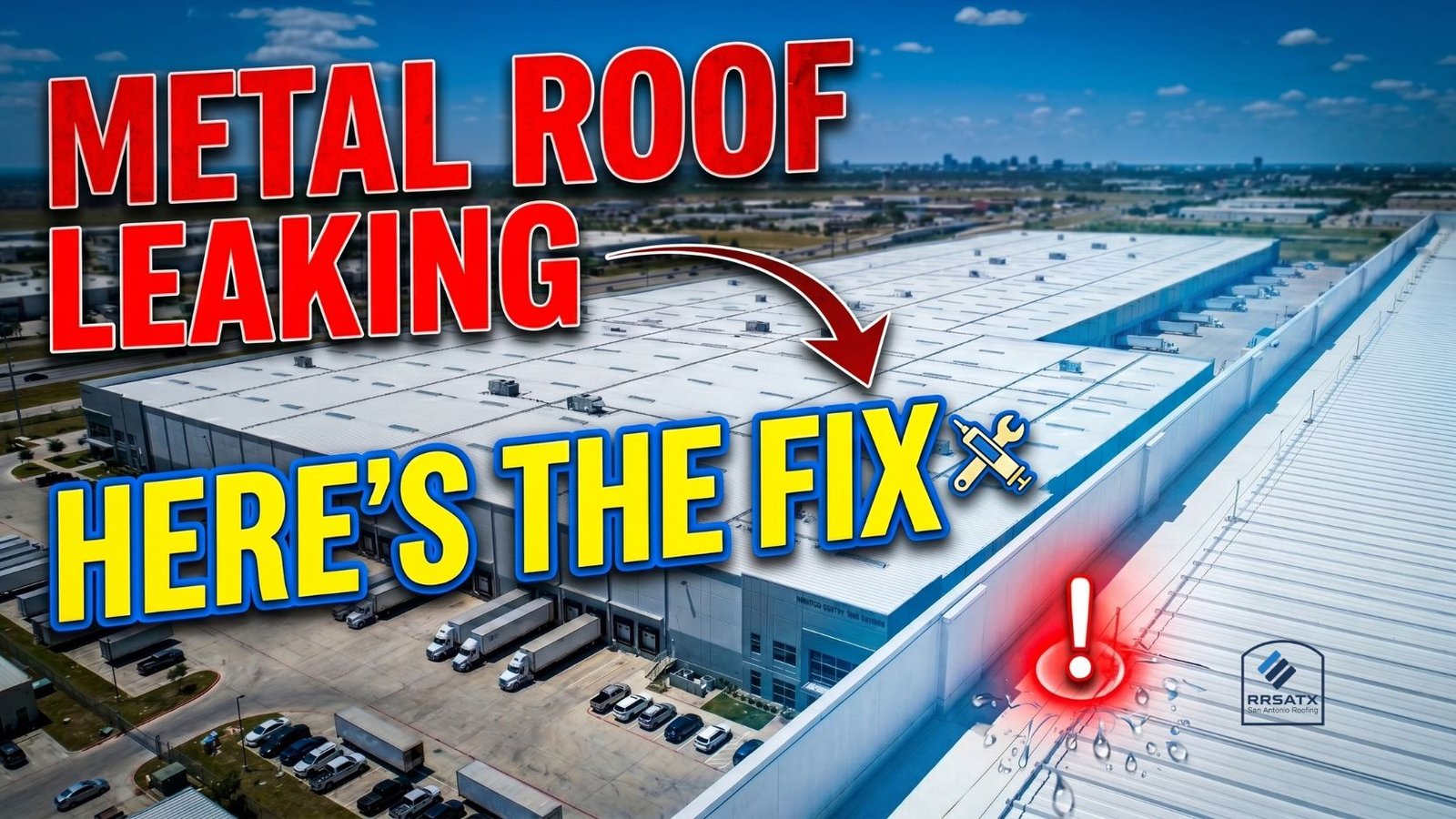
A metal roof leaking usually needs a targeted repair, not a guess. The real fix is to find the exact failure point most often fasteners, flashing, seams, sealant, rust, or storm damage and repair that area before water spreads into the decking, insulation, or interior finishes.
At RRSATX: San Antonio Roofing Company, we bring 40 years of personal roofing experience and more than 80 years of combined crew expertise to metal roof repair in San Antonio. That local experience matters because South Texas heat, hail, wind, and heavy rain can break down even a well-installed metal roof over time.
Key takeaway: if your metal roof is leaking, the best solution is finding the source, not just covering the stain.
What Is The Fastest Real Fix For A Leaking Metal Roof?
The fastest real fix is a professional leak inspection followed by a repair at the exact source of the water intrusion.
A temporary patch may stop active dripping for a short time, but it does not solve hidden issues like:
- Loose or backed-out screws
- Failed washer seals
- Cracked flashing
- Open seams
- Rusted panels
- Storm-lifted edges
- Damaged roof penetrations
For standing seam metal roofs, the leak may be at a transition, flashing detail, or penetration rather than the panel itself. For corrugated metal roofs, the problem is often fasteners, overlaps, or degraded sealant.
What Usually Causes A Metal Roof To Leak?
A metal roof leak almost always comes from one of a few common problem areas.
The Most Common Leak Sources Are:
- Fasteners that loosen over time
Heat expansion and contraction can back screws out or damage the washer seal. - Failed sealant or caulking
Sealant dries out, cracks, or separates, especially under Texas sun. - Damaged flashing
Chimneys, skylights, vents, wall transitions, and roof edges are frequent leak points. - Open seams or panel movement
This is common on aging systems or roofs exposed to wind uplift. - Rust or corrosion
Older panels may develop pinholes or weak spots. - Storm damage
Hail dents, lifted trim, and wind-driven rain can create hidden entry points. - Problem areas around penetrations
Pipe boots, HVAC curbs, and satellite mounts often fail first.
Which Repair Actually Solves The Problem?
The right repair depends on where the leak is coming from. Here’s the simplest way to think about it:
| Leak Source | Common Fix | When Replacement Is Better |
| Loose fasteners | Replace screws and washers, reseal as needed | If there are many failing fasteners |
| Failed flashing | Reflash the area with compatible materials | If multiple flashing points are failing |
| Open seams | Seal or repair seam connection | If seams are separating across large sections |
| Rust holes | Patch localized damage | If corrosion is widespread |
| Storm damage | Repair or replace damaged panels | If hail or wind affected large areas |
| Penetration leaks | Replace boots or flashing details | If the roof has multiple penetration failures |
Important: A quick bead of sealant is not a permanent solution if the flashing, fastener, or panel is already failing.
Should You Repair Or Replace A Leaking Metal Roof?
You can often repair a leaking metal roof if the damage is localized and the roof structure is still sound.
Replacement makes more sense when you have:
- Repeated leaks in different areas
- Widespread rust or corrosion
- Multiple failed fasteners
- Large storm-damaged sections
- A roof that has already been patched several times
- An aging system near the end of its service life
For many homeowners and commercial building owners, a professional inspection helps determine whether a repair will hold or whether replacement is the smarter long-term investment.
Why Does San Antonio Weather Make Metal Roof Leaks Worse?
San Antonio weather is hard on metal roofing systems.
Heat causes metal to expand and contract. Over time, that movement can loosen fasteners, crack sealant, and stress flashing. Add in hail, heavy rain, high winds, and strong UV exposure, and small weaknesses can turn into active leaks fast.
That’s why local roof inspection matters so much for:
- Homeowners with roof leaks or storm damage
- Property owners with aging roofs
- Commercial building owners
- Home buyers and sellers needing roof inspections
- Insurance claim situations
When Should You Call A San Antonio Roofing Contractor?
You should schedule an inspection if you notice:
- Water stains on ceilings or walls
- Dripping during rain
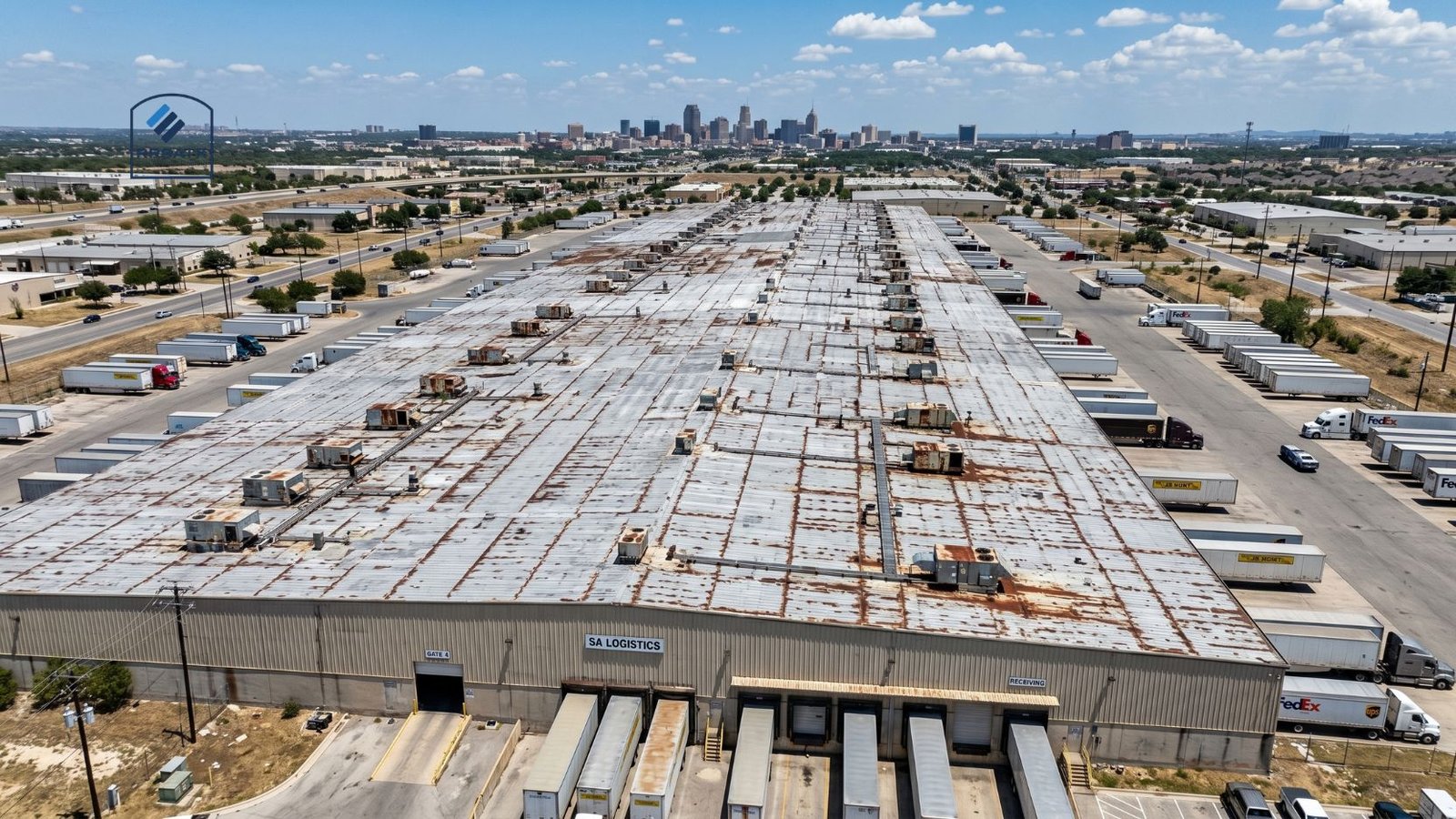
- Rust streaks on the metal surface
- Loose screws or lifted trim
- Damaged flashing around vents or chimneys
- Dents after hail
- Musty smells in the attic
- A roof older than 15–20 years
If you’re in San Antonio, RRSATX serves property owners from:
- 4324 Monterey St, San Antonio, TX 78237
- 318 E Nakoma Dr #210, San Antonio, TX 78216
We inspect both residential and commercial metal roofing systems and recommend the most practical repair based on the actual condition of the roof.
FAQs
Why Is My Metal Roof Leaking Around Screws?
The screws or washers may be worn, loose, or no longer sealing properly. Thermal movement and Texas weather can accelerate that failure.
Can A Leaking Metal Roof Be Repaired Without Replacing The Whole Roof?
Yes. If the leak is isolated, a targeted repair is often enough. If damage is widespread, replacement may be the better option.
Is A Metal Roof Leak An Emergency?
It can be. If water is actively entering the home or building, or if the leak is near electrical systems, call for an inspection right away.