Replacing a roof is a big project, and choosing between a roof overlay and a full tear-off can feel confusing. Many homeowners want to save money, but they also want a safe home and a roof that lasts. This guide breaks down both options in simple language so you can make the best choice for your home.
A homeowner in a forum once said, “I didn’t even know overlays were a thing until a contractor mentioned it—but then I worried about what I wasn’t being told.” That’s exactly why knowing the difference matters.
What Is a Roof Overlay?
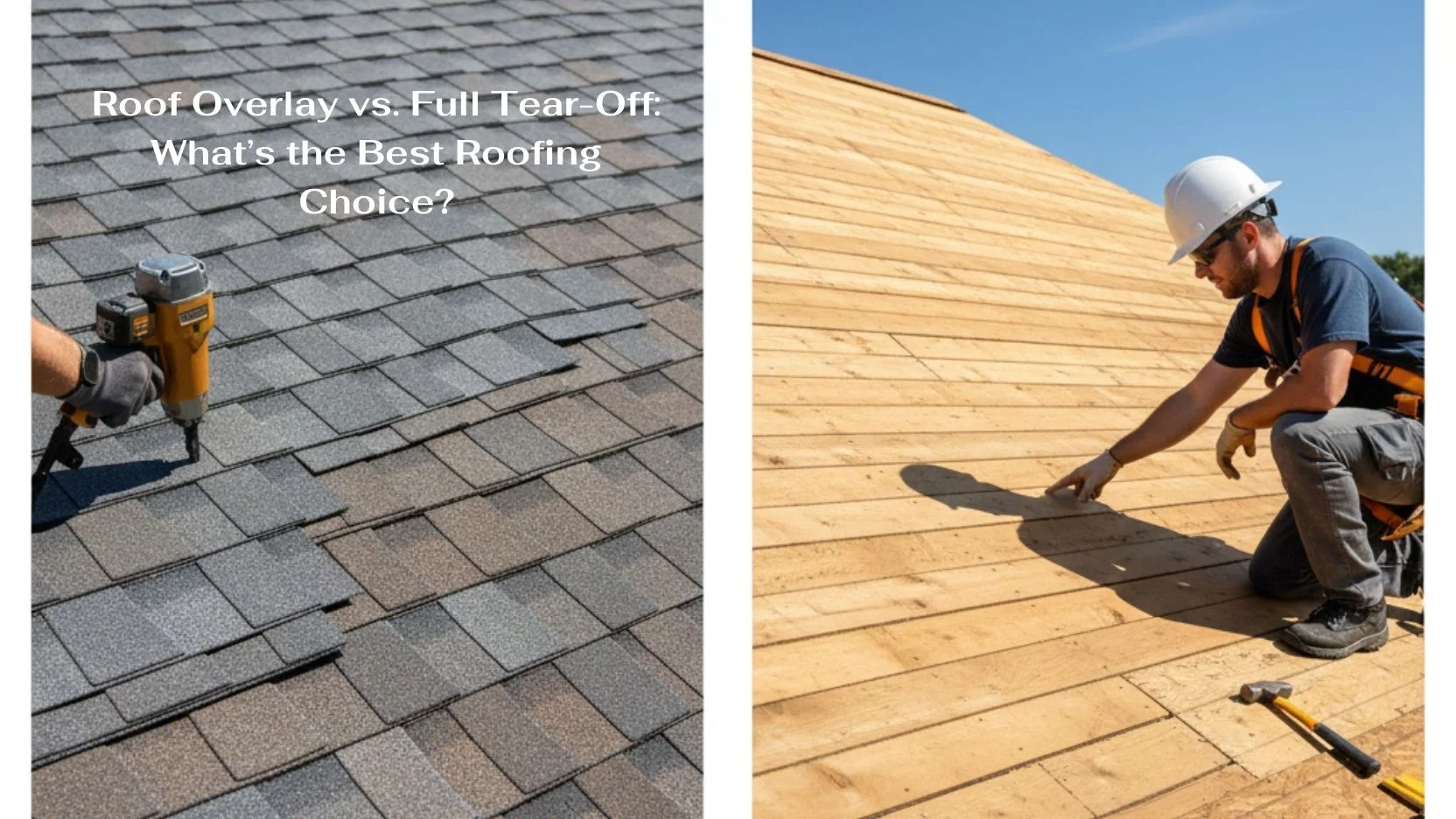
A roof overlay means placing new shingles on top of your old ones. No tear-off. No exposing the decking. It’s fast and usually cheaper.
People choose overlays because they want a quick fix. But overlays come with limits. According to the roofing system basics on Wikipedia , a roof is designed to hold only so much weight. Adding another layer pushes it.
As one roofer said, “People pick overlays because they think it’s the fastest fix but they don’t always realize what they’re giving up.”
What Is a Full Tear-Off?
A full tear-off means removing everything: shingles, underlayment, and sometimes damaged decking. The crew exposes the full roof so they can repair anything underneath.
Roofing pros often prefer tear-offs. A contractor on Angi’s roofing replacement guide explains why: hidden problems like rot, leaks, or soft wood are common.
One pro put it simply: “When we tear a roof off, we see things no one expected: soft wood, pests, old leaks. You can’t fix what you can’t see.”
Cost Comparison: Overlay vs. Tear-Off
Overlays are cheaper at first. Tear-offs cost more because there is more labor and disposal.
According to HomeAdvisor’s roofing cost data , overlays can save money upfront, but tear-offs offer longer lifespan and better long-term performance.
A homeowner said it best: “The cheapest option isn’t always the least expensive long-term.”
Pros and Cons of Each Method
Roof Overlay Pros
- Lower upfront cost
- Faster installation
Roof Overlay Cons
- Adds weight to your home
- Can hide existing damage
- Shorter lifespan
- May not meet building codes
Full Tear-Off Pros
- Lets roofers fix wood, leaks, and soft spots
- Supports longer warranties
- Better for resale value
Full Tear-Off Cons
- Higher upfront cost
- More labor and cleanup
To see how real homeowners feel, check contractor feedback on Yelp’s roofing company reviews . Many people mention the difference in long-term results.
What Homeowners Should Consider Before Choosing
Here are the key things to think about:
- Condition of your current roof – If it’s damaged, an overlay won’t help.
- Local building codes – Many places allow only one overlay.
- Future plans – If you want to sell soon, a tear-off may add value.
- Contractor recommendations – Ask for photos of decking and hidden issues.
A reliable roofer will show you what’s under your shingles before recommending anything. “A good roofer should show you photos of what’s under your shingles before you decide,” said one homeowner.
For more real-world stories, look at discussions inside Reddit’s Roofing community .
Final Thoughts
Both options work in different situations. But for most homes, a full tear-off is the stronger long-term choice. It helps protect your home, fixes hidden problems, and gives you the best chance at a long-lasting roof.
When choosing a contractor, always check reviews on Angi or Yelp to make sure the advice you’re getting is honest.