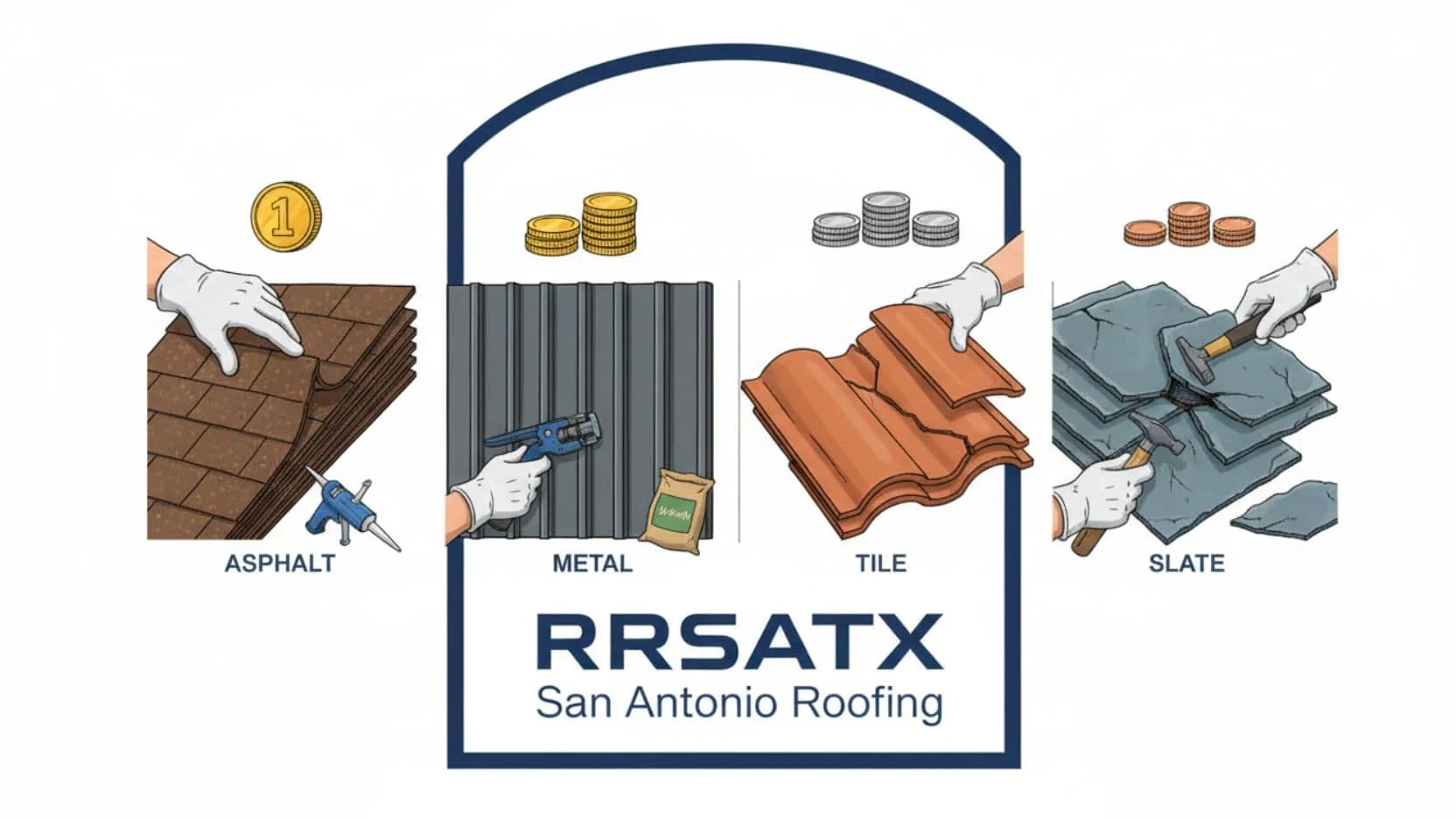
If your roof starts leaking during a heavy rain, the last thing you want is a surprise repair bill. Roof repairs can vary widely in price depending on the material, the extent of the damage, and even where you live. Understanding what goes into these costs helps you plan ahead, avoid being overcharged, and make smart decisions about your home.
Let’s walk through the average repair costs for different roofing materials and learn a few ways to keep those expenses under control.
Asphalt Shingles: Affordable and Common, But Not Maintenance-Free
Asphalt shingles are by far the most common roofing material in the U.S. They’re budget-friendly and easy to repair, which makes them a top pick for many homeowners. According to Angi’s 2025 Roof Repair Cost Guide, fixing asphalt shingles typically costs between $400 and $1,200.
Most homeowners choose asphalt because it’s affordable, but as one roofing pro on HomeAdvisor explains, “Repairs can add up over time, especially if your roof is more than 10 years old.”
The most common issues are curled or missing shingles and leaks around flashing. Regular inspections after heavy storms can catch small problems before they become costly ones.
Metal Roofs: Durable but Pricier to Fix
Metal roofs are known for their incredible lifespan often lasting 40 to 70 years but that longevity comes at a price when repairs are needed. Fixing metal roofing can range from $600 to $2,000, depending on the issue and type of metal.
According to Forbes Home’s roofing cost comparison, metal roofs often need specialized labor. Repairs might include tightening fasteners, sealing leaks, or replacing corroded panels. One contractor said, “Metal roofs last forever, but when they leak, it’s usually a specialized fix that takes expertise.”
Tile Roofs: Long-Lasting but Labor-Intensive Repairs
Tile roofs are loved for their beauty and long life, but they’re among the most labor-intensive to repair. Costs typically range from $700 to $2,500, depending on the tile type—clay, concrete, or composite.
Modernize’s roofing cost guide notes that cracked tiles and damaged underlayment are common issues. Replacing one broken tile can sometimes mean removing several others to access the problem area. As one roofer put it, “Tile looks beautiful, but repairing it is like solving a puzzle you have to move multiple pieces to fix one.”
Slate Roofs: Elegant, Expensive, and Expert-Only Repairs
Slate roofs are often seen on historic or high-end homes because of their timeless look and exceptional lifespan—sometimes over 100 years. However, repairs can easily reach $1,000 to $3,000 or more, according to Angi’s roofing pros.
Because slate is heavy and fragile, it requires a roofer with specialized skills and tools. Even replacing a few tiles can take hours. For homeowners who love the look, the investment is worth it but it’s important to plan for higher maintenance costs.
Flat Roofs: Economical but Prone to Drainage Issues
Flat roofs, often found on modern or commercial-style homes, are relatively affordable to repair—usually between $300 and $1,000. But they have one major weakness: drainage.
Ponding water and cracks in the rubber or membrane material are the most common problems. Routine maintenance, like keeping gutters clear and checking for pooling after rain, can prevent damage. Homeowners can find reliable maintenance tips and contractors on Yelp.
How to Reduce Roof Repair Costs (Pro Tips)
While you can’t always prevent storm damage, you can take steps to keep repair costs low:
- Schedule annual inspections. Catching issues early prevents more expensive damage later.
- Keep gutters clean to avoid water buildup.
- Trim nearby trees to prevent falling branches.
- Get multiple quotes before committing to any repair. Sites like Yelp or HomeAdvisor can help you find trusted local roofers.
As one roofing expert shared, “A little maintenance every season saves a lot of money down the line.”
Conclusion
No matter what type of roof you have, understanding repair costs gives you power as a homeowner. Asphalt may be the cheapest to fix, but it needs more frequent care. Slate and metal last longer, yet they require specialized (and more expensive) repairs. The key is prevention: regular maintenance can cut repair costs dramatically over time.
Knowing your roofing material, getting estimates from multiple contractors, and planning ahead can help you protect your home and your wallet.