
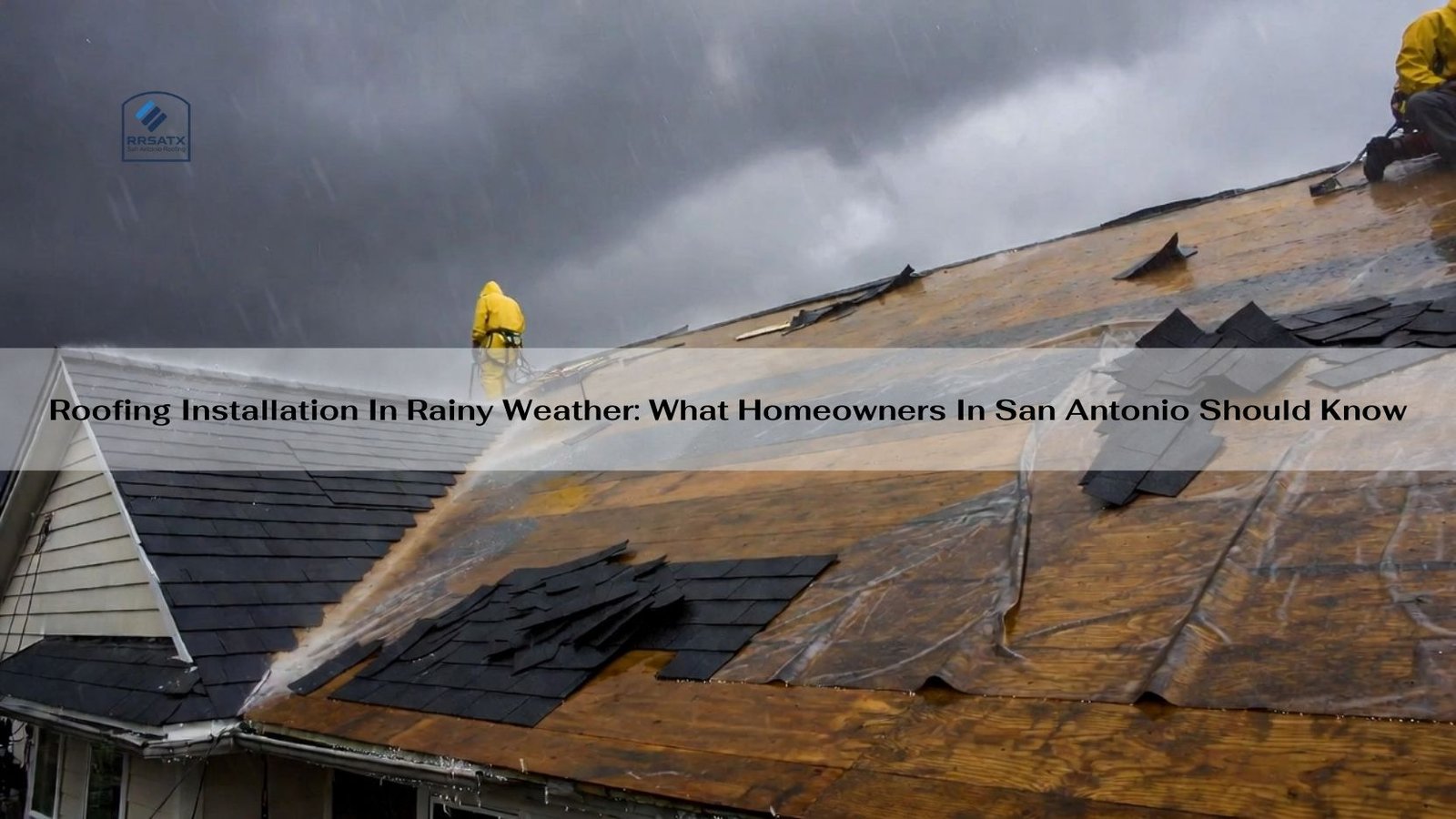
With years of hands-on roofing experience in San Antonio, we’ve worked through sudden Gulf storms, pop-up showers, and extended rainy weeks. Weather delays are common in South Texas, and improper installation during rain is one of the leading causes of premature roof failure.
Roofing installation in rainy weather is not recommended because moisture can damage decking, weaken underlayment adhesion, and void manufacturer warranties. However, emergency temporary protection can be safely installed during light rain.
Below is what you need to know before scheduling or continuing a roofing project in wet conditions.
Can A New Roof Be Installed In The Rain?
In most cases, full roof installation should be postponed during active rain.
Roof systems are designed to repel water once fully sealed. During installation, however, the structure is exposed.
Risks of installing during rain:
- Wet roof decking leading to rot or mold
- Trapped moisture under shingles
- Poor adhesion of underlayment
- Slippery conditions increasing safety hazards
- Potential warranty issues
Key takeaway: A dry installation surface is critical for long-term roof performance.
What Happens If Roof Decking Gets Wet?
Wet decking can compromise the structural integrity of your roof system.
Most residential roofs in San Antonio use plywood or OSB decking. These materials absorb moisture quickly.
If exposed to rain:
- Wood can swell or warp
- Fasteners may loosen over time
- Mold growth may begin within 24–48 hours in humid conditions
Professional crews will inspect and dry decking before proceeding. Severely saturated sections should be replaced.
Is It Ever Safe To Work On A Roof During Light Rain?
Limited emergency work can be done safely, but full replacement should wait.
Situations where roofers may work during light rain:
- Installing emergency tarps
- Securing loose shingles after storm damage
- Temporary leak mitigation
Safety measures include:
- Non-slip footwear
- Harness systems
- Minimal tear-off exposure
However, complete roof replacement during steady rainfall is not considered best practice.
How Does Rain Affect Shingle Installation?
Asphalt shingles require dry conditions for proper sealing.
Shingles rely on heat-activated seal strips. If installed wet:
- Adhesive may not bond correctly
- Shingles can lift in wind
- Water may become trapped underneath
In San Antonio’s climate, high humidity already slows curing. Adding rainfall increases failure risk.
Metal roofing is less moisture-sensitive during installation but still requires dry decking.
What Should You Do If It Starts Raining During Installation?
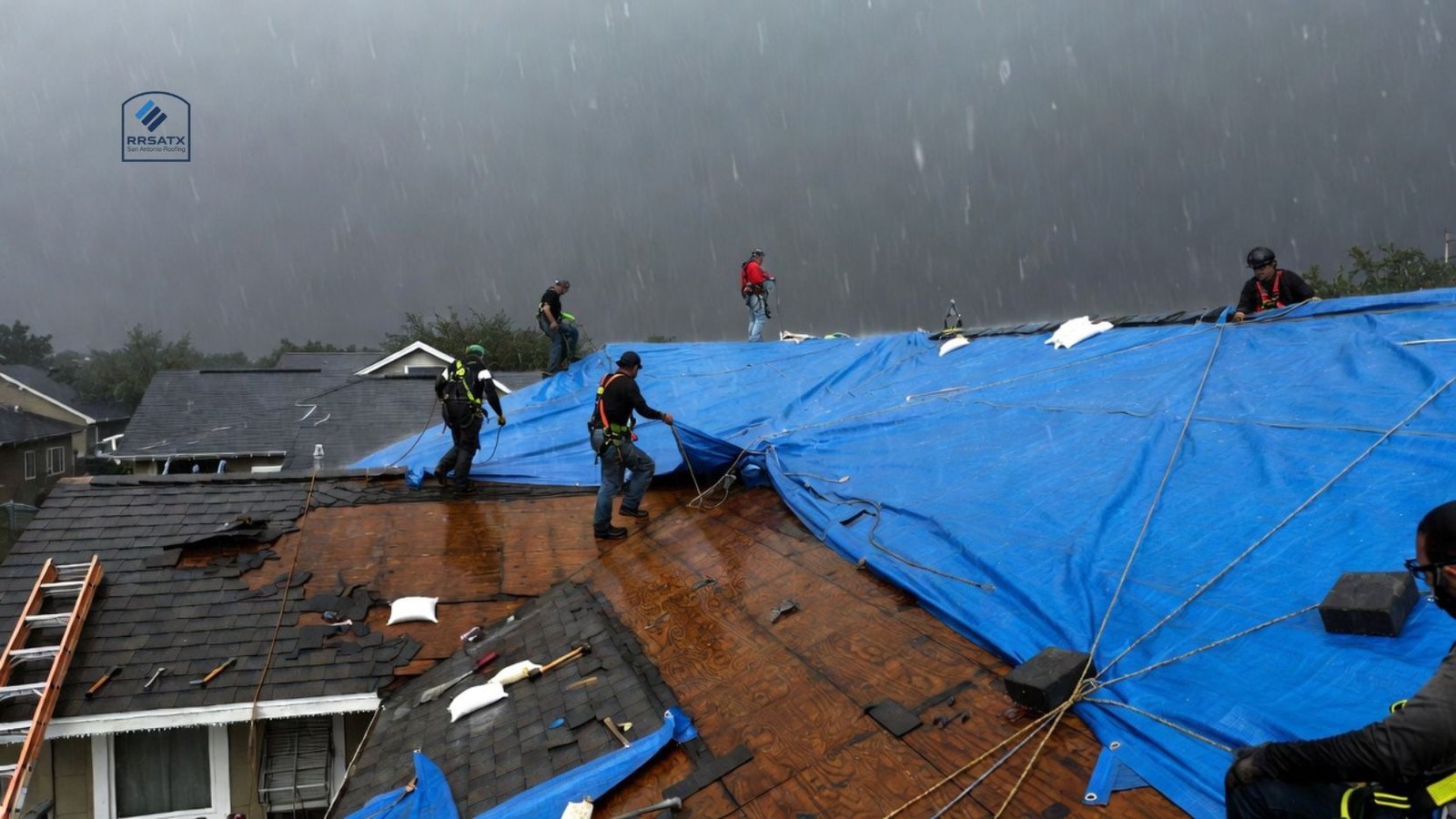
Professional crews should immediately secure and cover exposed areas.
Standard procedures include:
- Covering open sections with heavy-duty tarps
- Protecting exposed decking
- Pausing installation until surfaces dry
- Inspecting materials before restarting
If your contractor continues full installation during active rainfall without protection, that is a red flag.
Does Rain Delay Insurance Roof Replacements?
Yes, weather delays are common and typically accepted by insurance carriers.
Insurance timelines account for:
- Material availability
- Contractor scheduling
- Weather interruptions
Rushing installation to meet deadlines can cause more damage than waiting a few days.
Proper documentation of weather delays protects both homeowner and contractor.
How Long Should You Wait After Rain To Resume Roofing?
Roofing should resume only after the decking and underlayment are completely dry.
In warm San Antonio weather:
- Light rain may dry within several hours
- Heavy rain may require 24+ hours
- High humidity can extend drying time
Contractors should visually inspect and physically check moisture levels before continuing.
Key takeaway: Dry conditions protect your investment and your warranty.
Are There Roofing Materials Better For Rainy Climates?
Some materials handle moisture exposure better than others—but all require dry installation.
Comparison:
| Material | Installation Sensitivity | Long-Term Rain Resistance |
| Asphalt Shingles | High | Good |
| Metal Roofing | Moderate | Excellent |
| Tile Roofing | Moderate | Excellent |
| TPO/Flat Roofing | High | Good |
Metal roofing systems often perform best long-term in storm-prone regions like South Texas.
Local Considerations In San Antonio, TX
Homes near Monterey St and Nakoma Dr often experience:
- Sudden afternoon storms
- Seasonal tropical moisture
- High humidity even without rainfall
Because of this, experienced contractors monitor radar closely and stage projects strategically.
In storm season, scheduling flexibility is critical.
FAQs
Will Rain Ruin A Partially Installed Roof?
If left exposed without protection, yes. Proper tarping and drying can prevent permanent damage.
Can Underlayment Get Wet Before Shingles Go On?
It can tolerate light exposure briefly, but prolonged moisture can reduce effectiveness and adhesion.
Is It Cheaper To Install A Roof During Rainy Season?
Not necessarily. Material pricing remains consistent, and weather delays may extend timelines.