As a roofing content specialist who has worked with contractors and property owners across Texas for over a decade, I’ve seen one issue come up repeatedly: homeowners sign contracts or insurance paperwork without fully understanding the terminology.
The most important roofing terms every homeowner in San Antonio should know are: flashing, decking, underlayment, pitch, shingles, ventilation, fascia, soffit, and drip edge. Understanding these core components helps you read roofing estimates, insurance reports, and inspection summaries with confidence.
Below is a clear, practical breakdown of essential roofing vocabulary written specifically for homeowners and business owners in South Texas.
What Are The Basic Parts Of A Roof And Their Names?
A roof is made up of structural layers, protective materials, and drainage components working together to keep water and heat out.
Here’s a simplified breakdown:
Structural Components
| Term | What It Means | Why It Matters |
| Decking (Sheathing) | The wooden boards (usually plywood or OSB) attached to rafters | The foundation shingles are installed on |
| Rafters/Trusses | Structural framing that supports the roof | Determines strength and load capacity |
| Roof Pitch (Slope) | The steepness of the roof | Affects drainage and material choice |
Key takeaway: If decking is damaged, everything above it must be removed and replaced.
What Does Flashing Mean In Roofing?
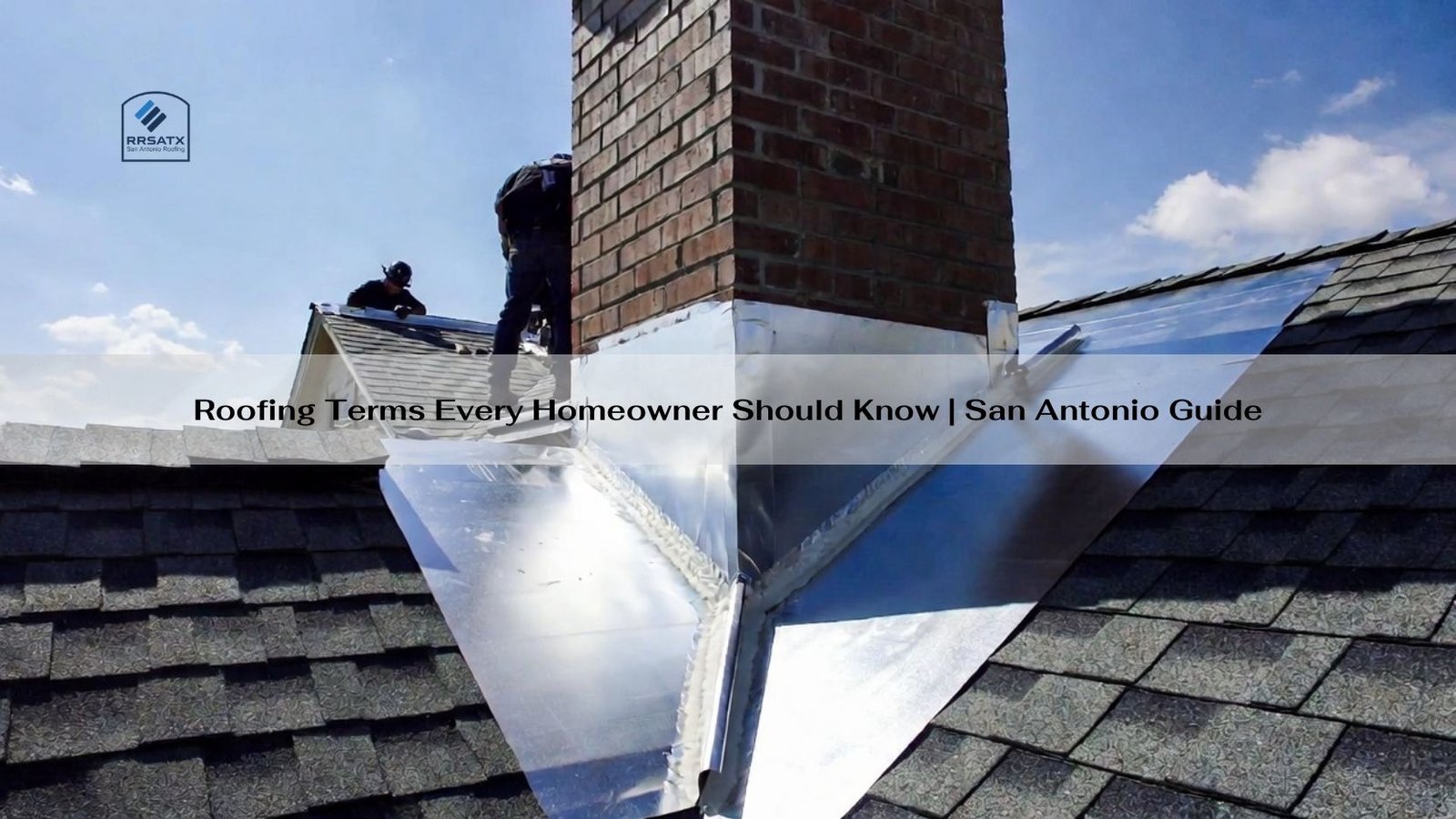
Flashing is thin metal installed around roof joints to prevent water leaks.
In San Antonio, where heavy rainstorms and wind-driven rain are common, flashing is one of the most critical components of leak prevention.
Common flashing locations:
- Around chimneys
- At roof valleys
- Around skylights
- Where roof meets walls
If flashing fails, water will almost always find its way inside.
What Is Underlayment In Roofing?
Underlayment is a protective water-resistant barrier installed between decking and shingles.
Think of it as a secondary defense layer.
Types commonly used in Texas:
- Felt underlayment (traditional, budget option)
- Synthetic underlayment (stronger, more tear-resistant, better for high heat)
In hot climates like San Antonio, synthetic underlayment typically performs better under prolonged UV and heat exposure.
Understanding Roof Slope And Pitch
Roof pitch describes how steep your roof is and directly affects drainage and material selection.
Pitch is expressed as a ratio (e.g., 6:12 means the roof rises 6 inches for every 12 inches horizontally).
Why it matters:
- Steeper roofs shed water faster
- Low-slope roofs need specialized materials
- Insurance adjusters factor pitch into labor costs
Higher pitch = higher installation cost due to safety requirements.
Types Of Roof Shingles Explained
Shingles are the outermost protective layer of your roof.
Common types in San Antonio:
1. Asphalt Shingles (Most Common)
- Affordable
- 20–30 year lifespan
- Good for residential homes
2. Architectural Shingles
- Thicker, dimensional look
- Better wind resistance
- Longer lifespan
3. Metal Roofing
- High durability
- Reflects heat
- Popular for commercial buildings
Key takeaway: Wind resistance ratings are especially important in South Texas storm zones.
What Is Roof Decking?
Roof decking is the wooden surface attached to your roof framing that supports all roofing materials.
If an inspection report says “decking rot” or “soft spots,” it means moisture has penetrated through shingles and underlayment.
Signs of decking issues:
- Sagging areas
- Spongy feeling when walked on
- Interior ceiling stains
Decking replacement increases total project cost and is often noted in insurance claims.
Roofing Terminology For Insurance Claims
If you’re filing a claim in San Antonio after hail or wind damage, these terms often appear:
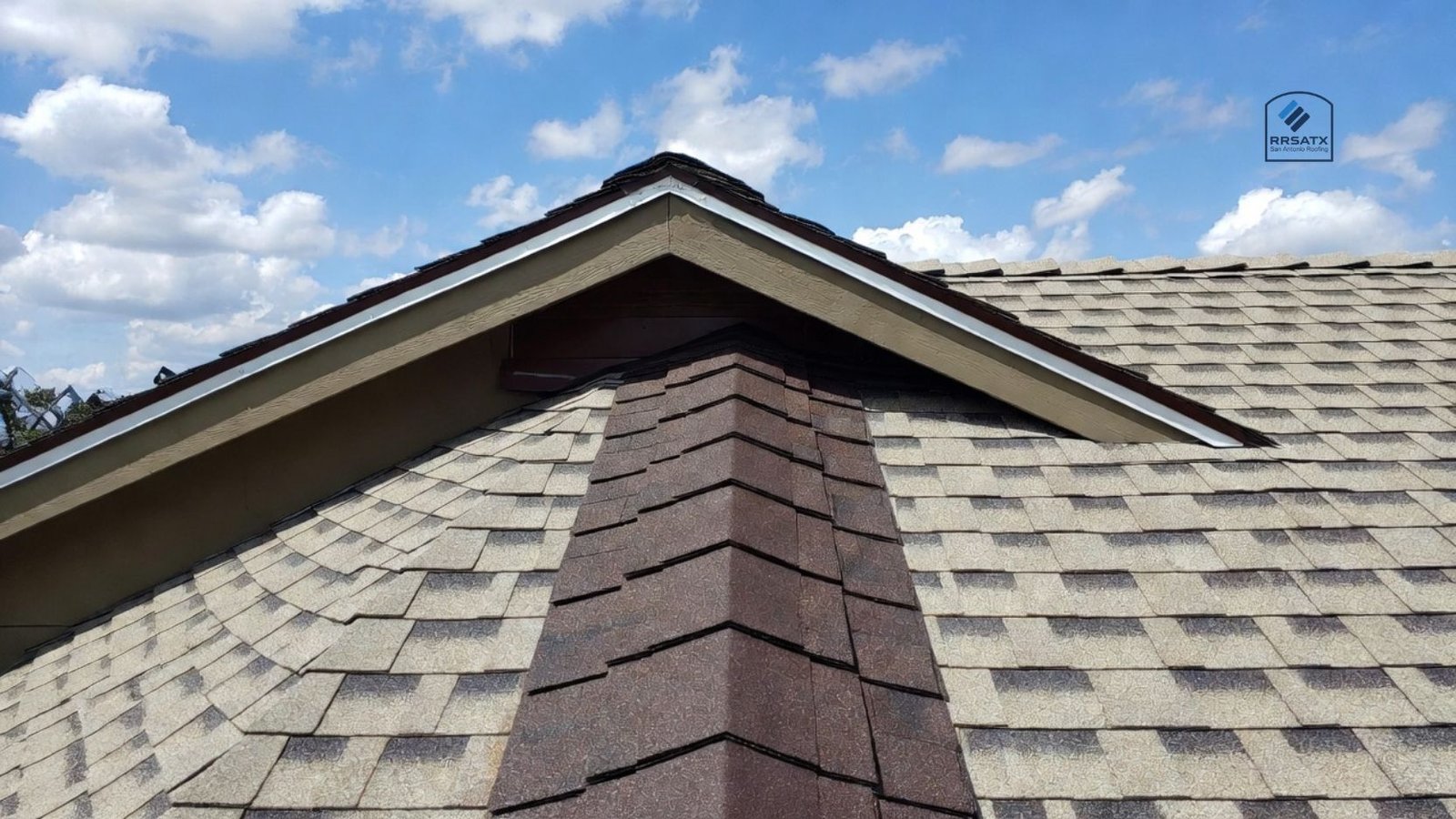
- Ridge cap – Shingles covering the roof peak
- Valley – Where two roof slopes meet
- Granule loss – Protective coating worn off shingles
- Functional damage – Damage affecting performance (insurance-relevant)
- Cosmetic damage – Appearance-only damage
Understanding the difference between cosmetic and functional damage is critical in claim approval decisions.
How To Read A Roofing Estimate
A professional roofing estimate should clearly break down materials, labor, and scope of work.
Look for:
- Tear-off and disposal details
- Underlayment type specified
- Shingle brand and model
- Flashing replacement included or not
- Warranty information
- Decking replacement cost per sheet
If the estimate lacks material details, request clarification before signing.
Roof Ventilation Terms You Should Know
Proper ventilation is essential in Texas heat.
Key terms:
- Ridge vent – Installed at roof peak for hot air escape
- Soffit vent – Intake vents under eaves
- Exhaust vent – Allows hot attic air to exit
- Balanced ventilation – Equal intake and exhaust airflow
Poor ventilation increases attic heat, shortens shingle life, and raises cooling bills.
Gutter Terminology For Homeowners
Gutters protect foundations from water damage.
Important terms:
- Downspout – Vertical pipe directing water down
- Drip edge – Metal edge directing water into gutters
- Fascia – Board gutters attach to
- Gutter apron – Extension under shingles into gutter
In heavy Texas rainstorms, improper gutter slope can cause overflow and foundation issues.
FAQs
What Roofing Term Should Every Homeowner Understand First?
Flashing. Most roof leaks originate from flashing failures not shingles.
What Does “Roof Decking Replacement” Mean On An Estimate?
It means damaged plywood or OSB beneath your shingles must be removed and replaced before new materials are installed.
How Do I Know If My Roof Pitch Affects Insurance Pricing?
Steeper roofs require additional safety equipment and labor time, which often increases claim estimates.