Roof valleys are one of the hardest-working parts of your roof. They move rainwater, melting snow, and debris down to your gutters. When they fail, even a small problem can turn into a wet ceiling, peeling paint, or mold. The good news is that most valley leaks have simple causes you can understand and spot early.
What Is a Roof Valley and Why It Leaks
A roof valley is the place where two roof slopes meet. Because valleys carry a lot of water, they face more wear than other areas.
One contractor put it simply: “If a roof is going to leak, nine times out of ten, it’s at the valley.” Insights like this are common on roof valley leak issues from Angi.
Top Causes of Roof Valley Leaks
1. Poor Installation
If shingles are not layered the right way or nails are placed too close to the valley line, water can slip underneath. This is one of the most common issues noted in common roof leak causes on HomeAdvisor.
2. Worn or Damaged Flashing
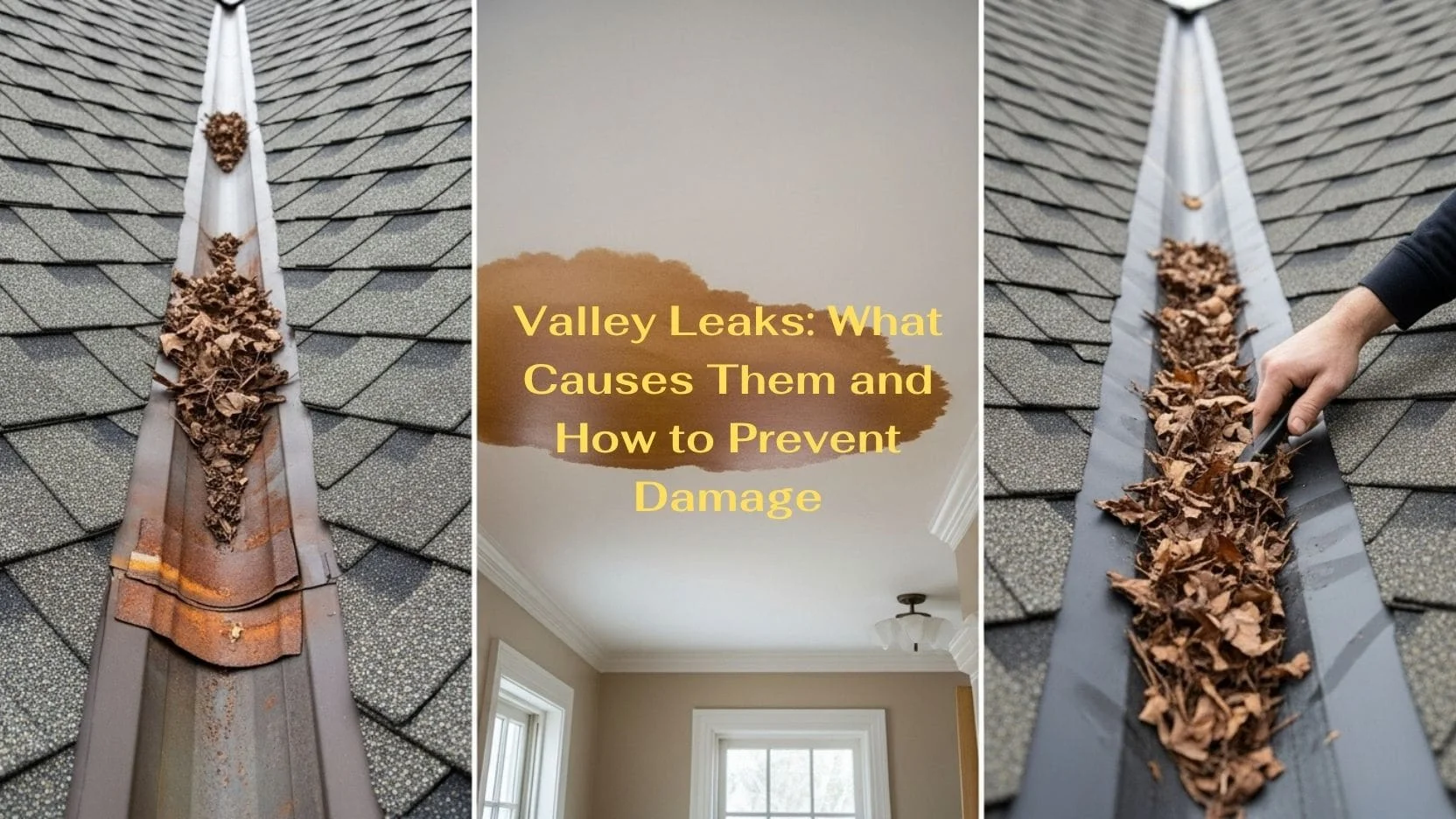
Flashing is the metal that protects the valley. When it ages or rusts, it can pull away and let water in. Homeowners on valley flashing problems in Reddit forums often share photos of rusted metal causing hidden leaks.
3. Debris Buildup
Leaves, pine needles, and dirt can pile up in the valley. When water can’t flow, it backs up under the shingles. As one homeowner said online: “I thought it was just leaves, but that little pile cost me a whole ceiling repair.”
4. Ice Dams
In colder climates, ice can form along the edges of the roof. This pushes melting snow back into the valley and under the shingles.
5. Aging Materials
Over time, shingles lose granules and become brittle. This makes them less able to protect the valley. Yelp-listed roofers who share roof maintenance tips often warn homeowners about valleys wearing out long before the rest of the roof.
How to Spot a Valley Leak Early
Early signs help you avoid major damage:
- Brown ceiling spots
- Lifting shingles near the valley
- Piles of granules in the gutters
- Water trails on interior walls
A roofer on Yelp mentioned: “Most people call us when the stain is already the size of a dinner plate. By then, the valley has been leaking for months.”
How to Prevent Valley Leaks
A few simple steps go a long way:
- Keep valleys clear of leaves and branches.
- Get a yearly roof inspection.
- Make sure your roofer installs proper metal flashing during replacements.
- Check that the valley design fits your climate. You can learn more from the structural details in roof valley design on Wikipedia.
One long-time homeowner summed it up well: “I just clean the valley every fall. It takes five minutes, and I haven’t had a leak in years.”
Conclusion
So, what causes valley leaks? Most come from poor installation, worn flashing, debris buildup, ice dams, or old materials. When you know these risks, you can prevent costly repairs and keep your home dry. Regular care, simple checks, and proper installation make all the difference.