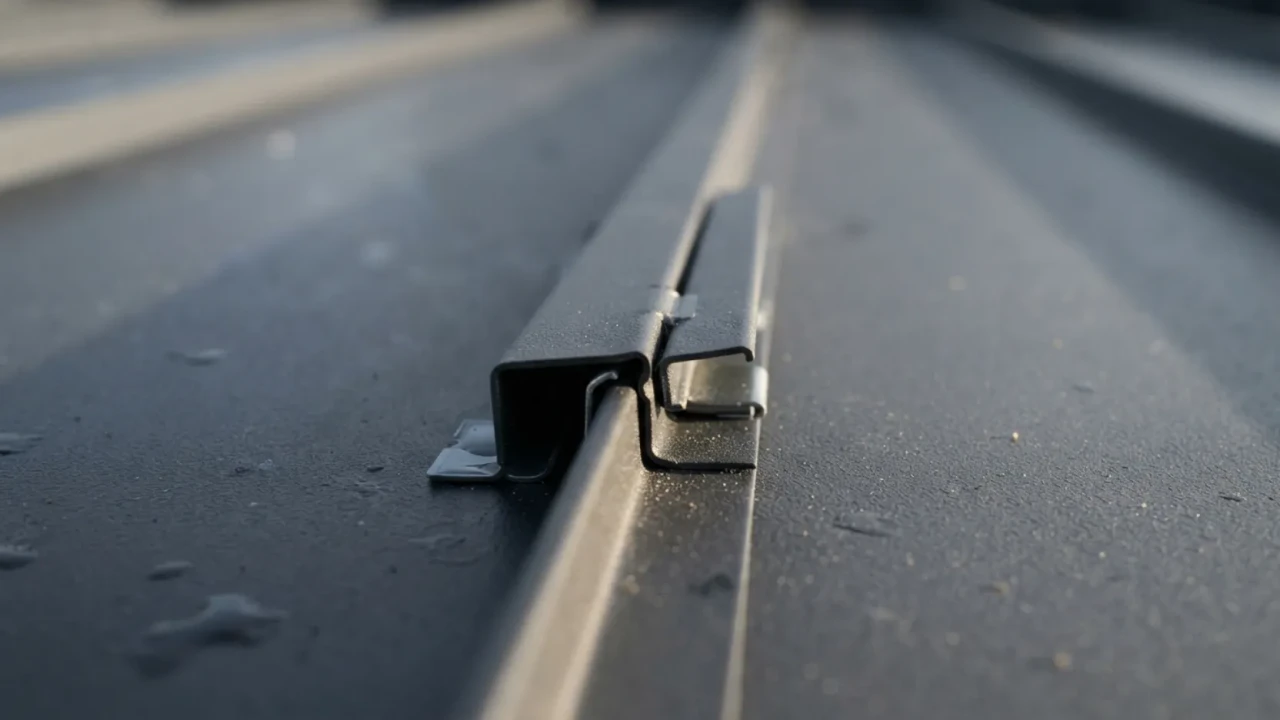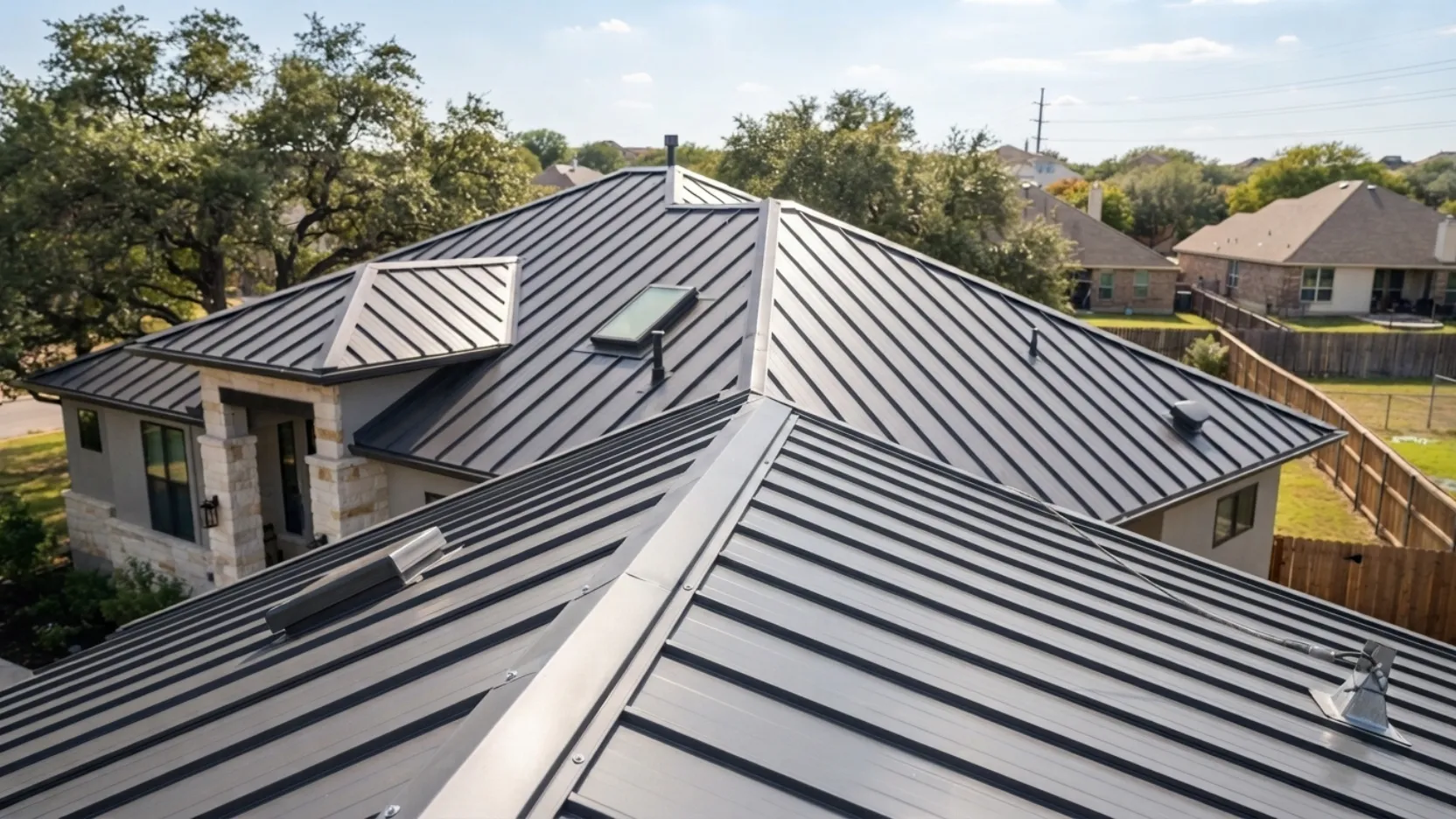
What are the hidden costs of metal roofing

What Are The Hidden Costs Of Metal Roofing?

Home 9 Metal Roofing San antonio 9 What Are The Hidden Costs Of Metal Roofing?
Hidden Costs of Metal Roofing San Antonio TX: Complete 2026 Guide | Affordable Roofing Contractors San Antonio
Metal Roofing Cost Guide San Antonio, TX

The quoted price per square is only one part of what you will actually pay. This guide exposes every cost that metal roofing salespeople do not mention upfront, how much each one adds to your total in San Antonio, and how to protect yourself before you sign a contract.

Hidden costs of metal roofing Installation · Underlayment · Permits Full cost guide · San Antonio 2026 Residential · Noise · Maintenance · Insurance Updated 2026
R
Ted
With over 30 years of residential and commercial metal roofing experience across San Antonio and Bexar County, our crews have installed, repaired, and replaced thousands of metal roofs in the Texas climate. Every guide we publish is built on real on-the-ground experience with local material costs, permit requirements, and the specific challenges Texas weather creates for metal roofing systems not generic contractor advice copied from a national website.
· affordableroofingcontractorssanantonio.com · Licensed and Insured · $2M Liability Coverage · 100+ Five-Star Reviews
$3–9/sqft
Average hidden cost add-ons beyond the base panel price in San Antonio
30%+
How much the final installed cost can exceed the original quote when hidden costs are not disclosed
8
Distinct hidden cost categories every San Antonio homeowner should ask about before signing
40+ yrs
Expected metal roof lifespan when all installation costs are done right the first time

Metal roofing is one of the best long-term investments a San Antonio homeowner can make. It outlasts asphalt shingles by decades, handles Texas hail and heat better than most alternatives, and can lower your energy bills with a reflective coating. But the sticker price on a metal roof quote is almost never the price you end up paying.

The gap between the quoted price and the final invoice is where homeowners get surprised. Underlayment upgrades, decking replacement, permit fees, drip edge and flashing costs, noise mitigation, insurance adjustments, and long-term maintenance expenses all add up. In San Antonio, those add-ons commonly push the real installed cost 20 to 35 percent above the number a salesperson puts in front of you on day one.

This guide covers every hidden cost category in detail. Each section tells you what the cost is, why it exists, how much it typically adds in the San Antonio market, and what questions to ask before you sign anything.

The rule that keeps San Antonio homeowners from getting surprised at contract signing: always ask for a fully itemized quote

A quote that gives you one lump-sum number is hiding something. A legitimate metal roofing contractor in San Antonio will provide a line-item breakdown that separates material costs, labor, underlayment, decking, permits, flashing, drip edge, and any disposal or removal fees. If a contractor resists providing that breakdown, that is a significant red flag. The contractors who do not itemize are often the ones whose final invoice looks nothing like the original estimate.
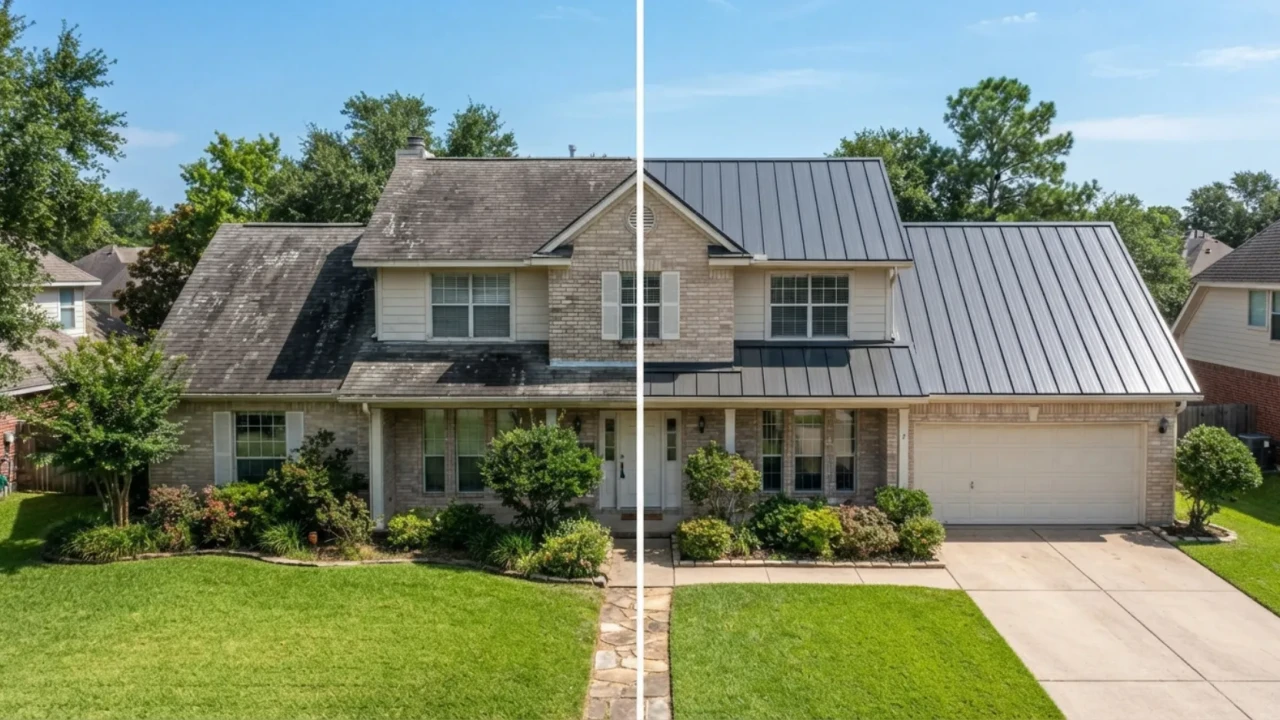
Metal roofing installation cost breakdown San Antonio TX showing hidden fees and line items
A fully itemized metal roof quote in San Antonio should list panel material, labor, underlayment, decking, permits, and all accessory costs separately. A single lump-sum number is a warning sign.
● ● ●
Eight hidden cost categories every San Antonio homeowner must understand
What the quote does not tell you about metal roofing costs in San Antonio
01
Underlayment upgrades the cost below the panels that gets skipped in low quotes
The cheapest quotes often use standard felt under a metal roof. That is the wrong product and creates long-term problems.
Underlayment

Metal roofing expands and contracts with temperature changes. In San Antonio, where summer roof surface temperatures can reach 160 degrees Fahrenheit and drop significantly on winter nights, that thermal movement is significant. Standard 15 or 30-pound felt underlayment was designed for asphalt shingles. It tears, degrades, and off-gasses at the temperatures a Texas metal roof reaches in July. The right underlayment for a metal roof in San Antonio is a synthetic or self-adhering product rated for the temperature range and designed to allow some slip as the metal panels move.
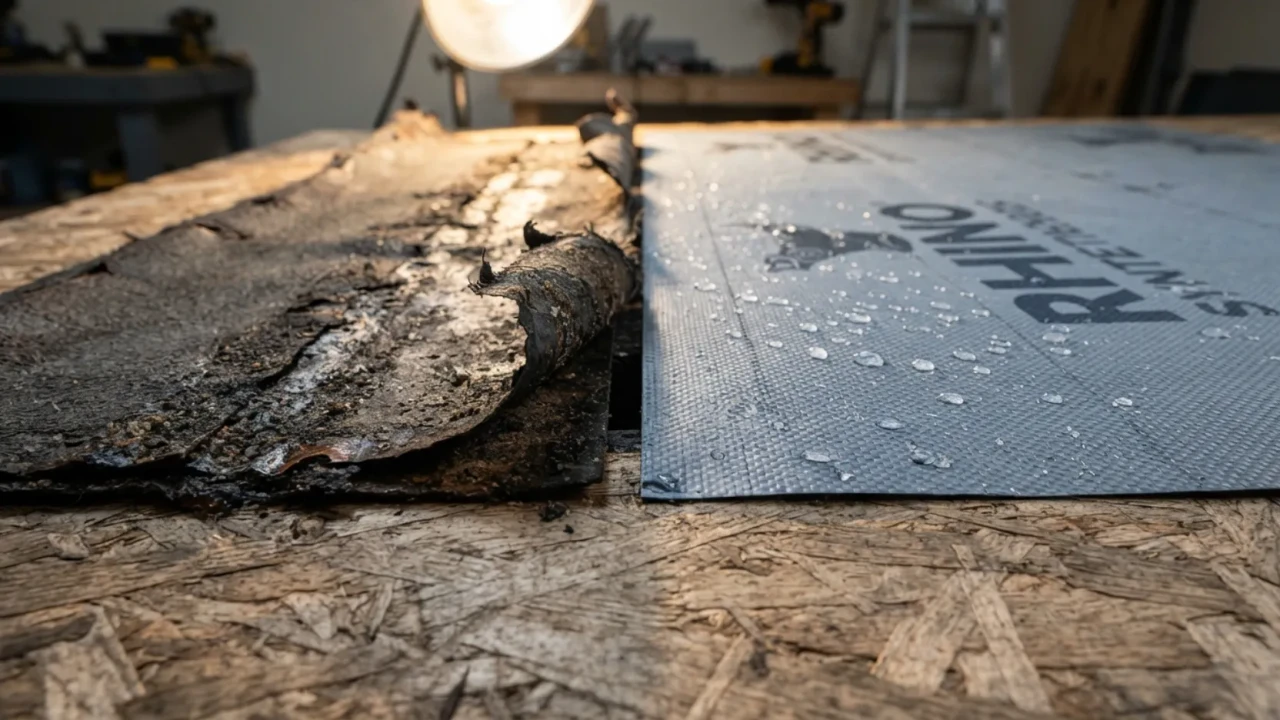
Metal roof underlayment comparison synthetic vs felt San Antonio

Why it matters in San Antonio: When a contractor quotes you a low panel price and does not specify the underlayment product, you are likely getting felt paper. On a 2,000 square foot roof, upgrading from standard felt to a proper synthetic underlayment for metal roofing adds $600 to $1,400 to the total cost. Self-adhering ice-and-water barrier, which some high-quality installations use across the entire deck, can add $1,500 to $3,000.

A low quote that uses the wrong underlayment will cost you far more in the long run. Trapped moisture, condensation between the underlayment and the panel, and felt degradation can void a metal panel warranty and cause deck rot even on a roof with zero visible damage from the outside.

Standard felt (15 or 30 lb): Wrong for metal; degrades under heat and off-gasses Synthetic underlayment: Correct base product for most San Antonio metal installations Self-adhering membrane: Premium option; best vapor control and leak protection Peel-and-stick at eaves: Code-required in some applications; often excluded from base quotes
$0–300
felt
Standard felt paper (what low quotes often include): 15 or 30-lb asphalt felt. Technically meets minimum code in some jurisdictions but is wrong for metal roofing in Texas. Expect premature degradation under sustained heat.
$600–1,400
upgrade
Synthetic underlayment upgrade on a 2,000 sqft roof: Products like GAF Tiger Paw, Owens Corning ProArmor, or equivalent. The correct product for metal roofing that handles temperature extremes and allows panel slip.
$1,500–3,000
premium
Full self-adhering underlayment (peel-and-stick across the whole deck): Maximum moisture protection; often specified for low-slope metal applications or for homeowners who want the highest possible standard of protection.
Ask every contractor this specific question before signing: "What underlayment product are you using, and is it rated for metal roofing?" If they say felt paper, or if they cannot name the product, that is a red flag. The underlayment spec should be written on the quote, not verbally promised.
Underlayment questions to ask before signing
  • Underlayment product name and manufacturer listed on the written quote
  • Product confirmed as rated for metal roofing temperature ranges, not just asphalt shingles
  • Self-adhering membrane specified at eaves, valleys, and penetrations at minimum
  • Upgrade cost itemized separately so you can compare it across quotes
  • Underlayment warranty coverage period confirmed in writing
02
Decking replacement and structural repairs what they find when the old roof comes off
Rotted plywood, damaged sheathing, and soft decking are almost never included in the original quote but are almost always found during a tear-off
Decking

When the old roofing material comes off and the deck is exposed, what the crew finds can add hundreds or even thousands of dollars to the project that were not in the original estimate. Rotted plywood from years of small leaks, soft spots from improper ventilation causing moisture buildup, damaged sheathing from pest activity or previous poor repairs, and delaminated boards that will not hold metal fasteners are all common discoveries in San Antonio homes with older roofs.

The honest truth is that no contractor can give you a final number for decking replacement before the tear-off happens. What they can do is tell you their per-sheet pricing for replacement and whether they do a thorough pre-inspection from the attic before starting work. An attic inspection before the tear-off significantly reduces surprises because soft spots, staining, and delamination are often visible from below before the old material is removed.
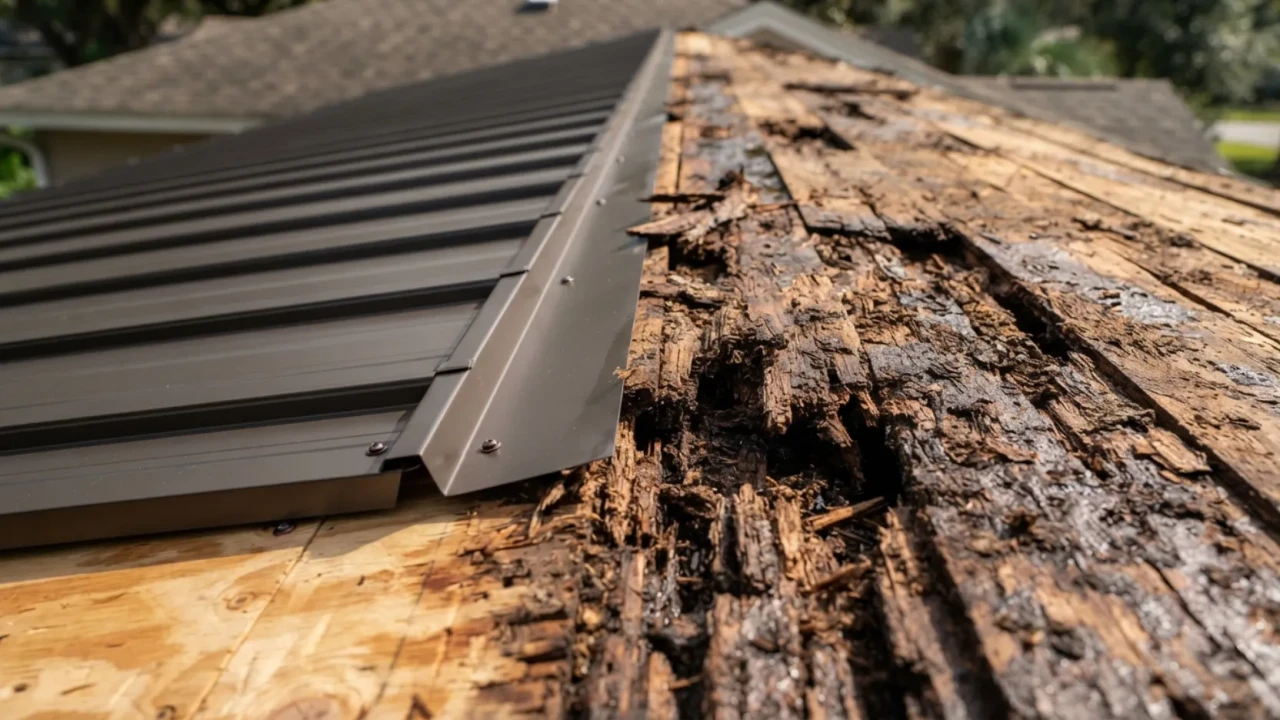
Rotted plywood sections: $75 to $150 per sheet replaced, plus labor Delaminated OSB: Common in San Antonio homes built in the 1990s; absorbs moisture over time Rafter damage: Structural repair requiring a licensed contractor; adds significant cost Improper decking thickness: Metal roofing may require 5/8" plywood vs. the 7/16" OSB that was under an asphalt roof
Rotted roof decking discovered during metal roof installation San Antonio TX
Rotted or delaminated decking discovered during a tear-off is one of the most common unexpected costs in San Antonio metal roofing projects. Pre-inspection from the attic reduces but does not eliminate these surprises.
$75–150
per sheet
Individual plywood or OSB sheet replacement: Cost per sheet including material and labor to remove the damaged board and install a new one. A roof with 5 to 10 bad sheets adds $375 to $1,500 to the project.
$800–2,500
section
Significant decking section replacement: When a full slope or large section has widespread rot or delamination. Common on homes with ventilation problems or long-standing slow leaks that were never properly repaired.
$2,000–8,000+
structural
Rafter or structural repair: When rot or damage has reached the structural framing, a licensed structural contractor is required in addition to the roofing crew. This is uncommon but does happen on very neglected roofs.
Pro tip

Ask your contractor to walk the attic with you before the project starts. Bring a flashlight and look for staining on the underside of the decking, soft spots you can press with your hand, daylight coming through, or areas where the wood surface looks dark or crumbly. Identifying problem areas before the old roof is removed gives you a better estimate of what the total decking cost will be and avoids the awkward mid-project conversation about additional charges.

Decking cost protection checklist
  • Attic inspection completed before tear-off to identify visible rot or staining
  • Per-sheet replacement price confirmed in writing before work begins
  • Decking thickness requirement for metal roofing confirmed some applications require 5/8" plywood
  • Any structural concerns flagged and referred to a licensed structural contractor
  • Total maximum decking cost estimated so there are no unlimited open-ended charges
03
Permit fees and city inspections what San Antonio requires and what happens if you skip it
Roofing without a permit in San Antonio is a code violation that can affect your insurance coverage and home sale
Permits

In San Antonio and throughout Bexar County, a full roof replacement requires a permit from the City of San Antonio Development Services Department. The permit triggers a city inspection when the work is complete. That inspection confirms the installation met current building code, which in Texas now follows the 2021 International Residential Code and local amendments.

Many low-bid contractors skip the permit because it adds cost, requires a city inspection that could identify installation errors, and slows down the project. From the homeowner's perspective, skipping the permit is a serious problem: your homeowner's insurance may deny a future claim on the roof if they discover it was installed without permits, and you may be required to disclose the unpermitted work when you sell your home, which can kill a deal or force you to have the work inspected and corrected at your own expense.

San Antonio permit fee: Typically $150 to $350 for a residential roof replacement Bexar County unincorporated areas: Separate permit jurisdiction; fees vary by municipality HOA approval: Many San Antonio HOAs require approval for metal roofing; fee and timeline vary Re-inspection fee: $75 to $150 if the first inspection fails and a second visit is required
$150–350
permit
Standard City of San Antonio roofing permit fee: Based on project valuation. A legitimate contractor pulls this permit before starting work, not after. If a contractor says permits are not required for your project, verify that independently with the city.
$0–75
inspection
City inspection fee: Often included in the permit fee. The inspection confirms code compliance. This is a benefit to the homeowner, not a hassle it means a city inspector has verified the installation was done to standard.
Varies
HOA
HOA application and approval: Many San Antonio neighborhood associations require written approval before a metal roof installation can begin. Application fees are typically $50 to $200, but the timeline can add weeks to the project. Get this started before signing the roofing contract.
If a contractor tells you permits are not needed for your roof replacement in San Antonio, that is not accurate for most residential projects. You can verify by calling the City of San Antonio Development Services Department directly at (210) 207-1111. Do not let a contractor skip this step the consequences land on you as the homeowner, not on them.
Permit and compliance checklist
  • Permit cost listed as a separate line item in the written quote
  • Contractor confirms they pull the permit in their name before starting work
  • HOA approval process started before the project is scheduled if applicable
  • Permit number provided to you before tear-off begins you should have this on file
  • City inspection scheduled and passed before the contractor considers the job complete
04
Flashing, drip edge, and trim accessories the components that make up 10 to 20 percent of the real cost
Panel pricing almost never includes the flashing, trim, ridge caps, and edge details that complete the system
Accessories

When a salesperson quotes you a metal roof by the square foot, they are usually quoting the panel cost. The metal panels are the visible part of the roof, but they are not the whole system. Flashing at the chimney, skylights, vents, and wall connections; drip edge along every eave and rake; ridge cap at the peak; transition trim where the roof meets different surfaces; and valley metal or tape in every drainage valley are all separate cost items that complete the waterproofing system.

These accessories are not optional. A metal roof without correct flashing will leak. A metal roof without proper drip edge will have water running behind the fascia and rotting the wood. But because they are often not included in the panel-price quote, homeowners can get to the contract stage thinking they are getting a deal and then see the final number jump significantly when accessories are added.
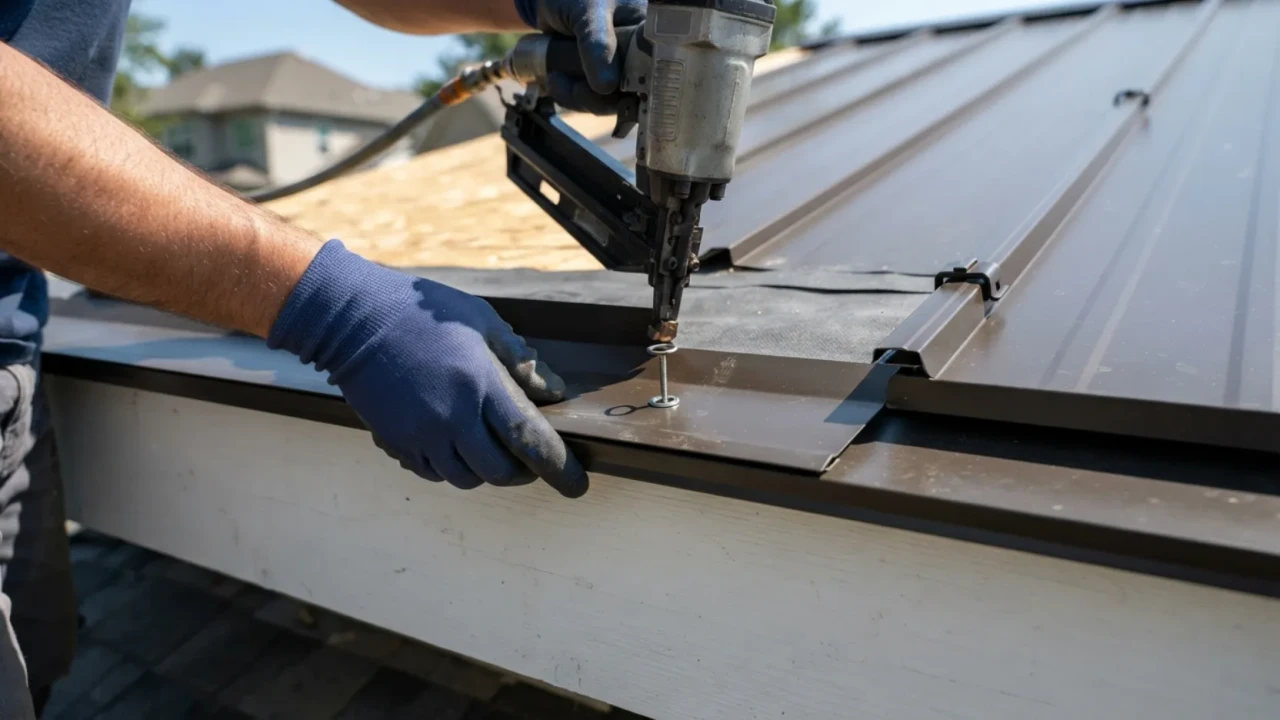
Metal roof flashing and drip edge installation San Antonio TX showing trim accessories
Flashing, drip edge, ridge cap, and trim accessories are essential components that must be included in any accurate metal roof quote. Omitting them from the estimate is one of the most common ways low bids misrepresent the real cost.
Chimney flashing: $300 to $600 per chimney; step flashing and counter flashing required Skylight flashing: $200 to $450 per skylight depending on size Drip edge: $1.50 to $3.00 per linear foot installed; a 2,000 sqft home may need 200+ feet Ridge cap: $4 to $9 per linear foot; runs the full length of every ridge line Valley metal: $3 to $6 per linear foot in every roof valley Pipe boot flashings: $50 to $150 per penetration for plumbing vents and HVAC pipes
$800–1,800
typical
Total flashing, drip edge, and trim cost on a typical 2,000 sqft San Antonio home: Includes drip edge on all eaves and rakes, ridge cap, pipe boot flashings, and wall flashing. Does not include chimney or skylight work.
$1,500–3,500
complex
Flashing and trim on a complex San Antonio roof with multiple chimneys, skylights, and roof-to-wall transitions: Custom fabricated metal flashing that must be bent to match the specific angles of your roof adds significant labor and material cost.
Key question

Ask the contractor: "Does your quote include all flashing, drip edge, ridge cap, valley metal, and pipe boot flashings?" Get a yes or no in writing. If the answer is yes, the quote should show these as line items or include a written statement that all accessories are included in the lump sum. If any of these items are listed as "additional" or "if needed," your quote is not complete and the final number will be higher.

Flashing and accessories checklist
  • Drip edge listed as a line item on the quote with linear footage specified
  • Ridge cap included and shown separately with linear footage
  • Valley metal or tape included for every roof valley
  • Pipe boot flashings included for all visible plumbing vent penetrations
  • Chimney and skylight flashing quoted as a specific line item, not lumped into "misc"
  • All flashing material specified: aluminum, galvanized steel, or copper and compatible with the panel type
05
Old roof tear-off, removal, and disposal fees costs that vary based on existing layers and weight
Tearing off an existing roof and disposing of the material is a significant labor and hauling cost that often shows up as an add-on
Tear-Off

When a metal roof is installed over an existing asphalt shingle roof, the old material needs to be removed and properly disposed of. In San Antonio, roofing material cannot be thrown into a standard dumpster without extra fees, and depending on the material weight and the number of existing layers, disposal costs can run $500 to $2,000 for a standard residential roof. If the home has two or three existing layers of shingles stacked on the deck, the labor to remove them increases as well.

Some contractors offer metal roofing installed directly over existing shingles without tear-off. This is sometimes acceptable for specific installations and can save removal costs in the short term, but it is not always the right call. Metal roofing over multiple existing layers can mask deck problems, void the metal panel warranty in some cases, and create a heavier total roof load on the structure.

Single layer asphalt shingle removal: $1.00 to $1.75 per sqft labor Double layer removal: $1.50 to $2.50 per sqft labor; more debris, more time Disposal/hauling fee: $300 to $600 for a standard 2,000 sqft residential roof Dumpster rental (if separate): $300 to $500 for 7 to 10 days
$500–1,200
single layer
Single layer asphalt shingle tear-off and disposal on a 2,000 sqft San Antonio home: Labor to strip the existing shingles, felt, and any damaged flashing, plus hauling and disposal. Should be a line item on every complete quote.
$900–2,200
double layer
Two-layer tear-off and disposal: Common on San Antonio homes that had one re-roof done over the original layer. Twice the weight, twice the debris, and more care required to avoid damaging the decking during removal.
If a contractor is offering you metal roofing installed over your existing roof without tear-off, ask these two things before agreeing: Will the metal panel warranty be honored without a tear-off? And how many existing layers are already on the deck? Texas building code typically limits total roofing layers. Installing over an already stacked roof can push you into a code violation and a forced full tear-off at the next re-roof.
Tear-off and disposal checklist
  • Tear-off labor cost listed as a separate line item, not buried in "installation"
  • Number of existing roof layers confirmed before work starts
  • Disposal method confirmed: contractor-provided dumpster or hauling; not left on your property
  • Metal panel manufacturer warranty verified as valid for the installation method chosen (over or tear-off)
  • Deck condition assessment included as part of the tear-off scope
06
Noise mitigation and insulation what nobody tells you about rain noise on a metal roof
An uninsulated metal roof in San Antonio sounds like a drum kit during a thunderstorm. The fix costs money and should be part of the original quote.
Noise

Rain noise is one of the most common complaints from homeowners who had a metal roof installed without proper noise mitigation built into the system. On a well-insulated home with a properly designed metal roofing system, rain noise is minimal inside the living space. On a home where the metal panels were installed directly over open framing, inadequate underlayment, or without attic insulation, the rain sounds like it is landing directly in the room.

The good news is that noise mitigation is straightforward. The bad news is that it adds cost that is often not mentioned in the initial quote. In San Antonio's climate, the combination of a synthetic underlayment specifically rated for noise reduction, proper attic insulation (required for energy code compliance anyway), and in some cases a foam closure strip beneath the panel ribs provides meaningful noise reduction without expensive structural changes.
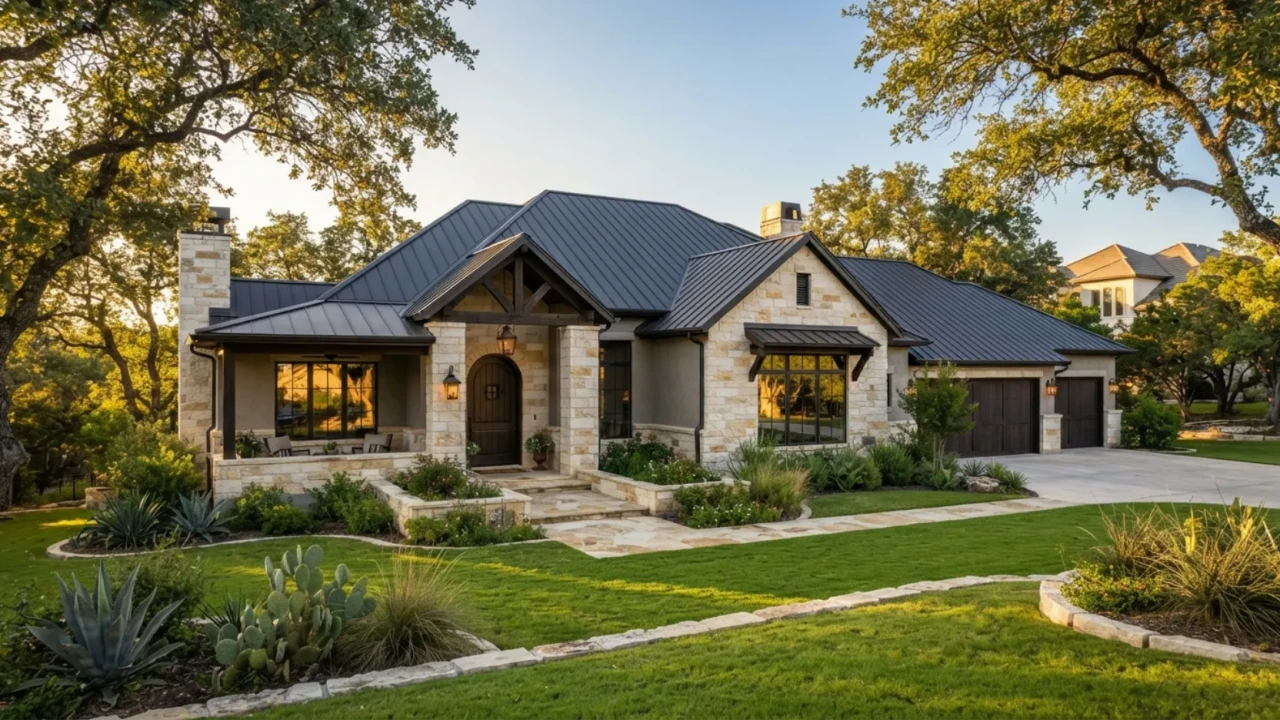
Metal roof insulation and noise reduction system installation San Antonio TX residential
Proper insulation beneath a metal roof dramatically reduces rain noise and also improves energy performance in San Antonio's extreme summer heat. This cost should be discussed and included in the original scope, not treated as an afterthought.
Acoustic underlayment: $0.50 to $1.00 per sqft premium over standard synthetic product Attic insulation upgrade: $1,500 to $4,000 depending on existing insulation levels Foam closure strips: $150 to $350 for a typical residential roof; closes gaps under panel ribs Spray foam at rafter bays: Premium approach; adds $2,000 to $5,000 but transforms both noise and energy performance
$300–700
basic
Acoustic underlayment upgrade plus foam closure strips: The minimum recommended noise mitigation package for a metal roof in San Antonio. Brings rain noise to an acceptable level on most residential applications with decent attic insulation already in place.
$1,500–4,000
full
Full noise mitigation with attic insulation upgrade: Acoustic underlayment, foam closures, and attic insulation brought up to current Texas energy code levels. Recommended for homes with little or no existing attic insulation. Also reduces summer cooling costs significantly.
Noise and insulation checklist
  • Contractor asked directly about noise performance expectations for the installation
  • Underlayment product verified as providing noise attenuation, not just moisture protection
  • Foam closure strips included at all open panel rib locations
  • Existing attic insulation level assessed before deciding on additional insulation
  • Energy code requirements for attic insulation in Bexar County reviewed metal roofing changes the thermal envelope calculation
07
Insurance premium changes and coverage adjustments the ongoing cost that most salespeople never mention
A metal roof can save or cost you money on homeowner's insurance depending on the product, the rating, and your carrier's policy
Insurance

Metal roofing is frequently marketed with the promise of lower homeowner's insurance premiums. That can be true, but it is not automatic, and the picture is more complicated than most salespeople let on. Whether a metal roof lowers your premium depends on the impact resistance rating of the specific product, your current insurance carrier's discount structure for metal roofing in Texas, and whether your policy includes a cosmetic damage exclusion that affects future claims.

In Texas, many carriers offer discounts for Class 4 impact-resistant roofing materials, which is the highest hail resistance rating. Some metal products qualify, and some do not. A Class 4 rated metal panel on a San Antonio home can reduce insurance premiums by 20 to 30 percent with certain carriers. But if the panel you are installing is not Class 4 rated, or if your carrier does not offer a discount for metal roofing specifically, you may see no premium reduction at all.

Class 4 impact rating discount: 20 to 30% premium reduction with qualifying Texas carriers Non-rated metal panels: May receive no discount; verify before purchasing based on insurance savings claims Cosmetic damage exclusion: Some carriers add this for metal roofs; denting from hail may not be covered Coverage gap during installation: Some policies require notification before roof replacement; failing to notify can create a coverage gap
Before you buy

Call your insurance agent before signing a metal roofing contract. Ask three specific questions: Does the panel the contractor is proposing qualify for a Class 4 impact-resistant discount with our carrier? Will switching to a metal roof trigger any changes to my coverage terms, including cosmetic damage exclusions? And do I need to notify you before the installation begins to maintain continuous coverage? Getting those answers in writing from your agent protects you from unexpected premium changes and coverage gaps after the installation is complete.

Insurance checklist before installing a metal roof
  • Metal panel's impact resistance rating confirmed with the manufacturer Class 3 or Class 4
  • Current insurance carrier contacted about available discounts for the specific panel being installed
  • Policy reviewed for cosmetic damage exclusion language that may apply after metal roofing is installed
  • Insurance carrier notified before the project starts to maintain continuous coverage
  • Any promised premium savings from the roofing contractor verified independently with your agent
08
Long-term maintenance costs what "low maintenance" actually means for a metal roof in San Antonio
Metal roofs are sold as maintenance-free. They are not. Here is what you will actually spend over the life of the roof.
Maintenance

Metal roofing is legitimately lower maintenance than asphalt shingles over a 40 to 50 year period. But the phrase "low maintenance" gets used in sales pitches to suggest the roof will never need attention. That is not accurate. A metal roof in San Antonio will need sealant and fastener inspections every three to five years, periodic recoating after 15 to 20 years depending on the product, and gutter cleaning that is just as important as it is on any other roof type.

The maintenance cost that surprises most homeowners is the recoating cycle. Painted and Galvalume coatings on exposed-fastener metal panels begin to fade and chalk after 15 to 25 years in the Texas sun. Recoating with a metal roof coating system adds years to the roof's life but is a real cost that should be factored into your lifetime cost comparison when deciding between metal and other roofing options.
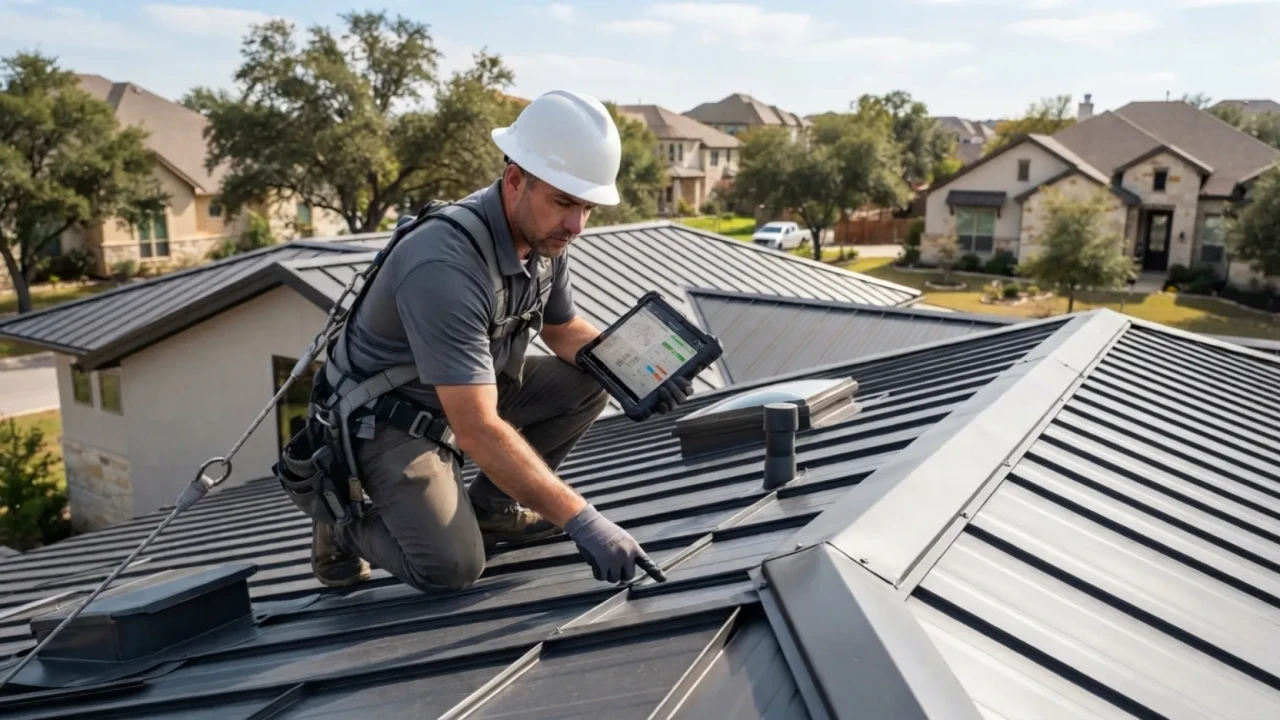
Metal roof maintenance inspection and recoating San Antonio TX Bexar County
Periodic inspections every 3 to 5 years, sealant maintenance, and recoating after 15 to 20 years are the realistic maintenance costs of a metal roof in San Antonio. These should factor into your lifetime cost calculation.
Annual gutter cleaning: $150 to $350 per year; same as any residential roof 3 to 5 year inspection and sealant touch-up: $200 to $500 per visit Full fastener inspection at 10 to 12 years: $600 to $1,800 depending on roof size Panel recoating at 15 to 25 years: $1.50 to $3.00 per sqft; $3,000 to $6,000 on a typical San Antonio home
$200–500
every 3–5 yrs
Routine inspection and sealant maintenance: A contractor walks the roof, checks all fasteners and sealant conditions, and makes minor repairs. The single most cost-effective maintenance step that prevents expensive repairs down the road.
$3,000–6,000
at 15–25 yrs
Full panel recoating (elastomeric or metal roof coating system): Applies a new waterproof and UV-reflective layer over the original panels. Extends roof life significantly and restores energy efficiency. Relevant primarily for exposed-fastener panel systems; standing seam requires less frequent recoating.
$600–1,800
at 10–12 yrs
Full-roof fastener inspection and replacement pass: All screws checked and replaced where the EPDM washer has failed or the fastener has backed out. The most common maintenance repair on screw-down metal panel systems after the first decade in San Antonio's climate.
Over 40 years, the total real cost of owning a metal roof in San Antonio includes the initial installation, the maintenance visits, a likely recoating, and potentially a fastener pass. That total cost should be compared against the cost of replacing asphalt shingles two or three times over the same period. For most San Antonio homeowners, metal still wins on lifetime cost but the comparison is more nuanced than "metal is cheaper because it lasts longer."
Lifetime maintenance cost checklist
  • Maintenance schedule confirmed with the manufacturer: how often should this specific panel system be inspected?
  • Recoating cycle noted for the panel type installed standing seam vs. exposed-fastener systems differ significantly
  • Gutter maintenance planned: metal roofs shed water efficiently, which means gutters fill faster after heavy San Antonio rain events
  • Fastener inspection at 10 to 12 years budgeted into long-term ownership costs
  • Warranty reviewed: what maintenance is required to keep the manufacturer warranty valid?
● ● ●
Complete hidden cost reference by category
What a fully loaded metal roof really costs in San Antonio 2026

This table assumes a 2,000 square foot single-story San Antonio home with a moderate roof pitch, single layer of existing asphalt shingles, one chimney, and no skylights. Your home may cost more or less depending on complexity.

Hidden cost category Typical range added (San Antonio) Included in base quote? How to verify
Underlayment upgrade (synthetic from felt) $600 to $1,400 Rarely Ask for product name in writing on the quote
Decking replacement (average 5 to 10 bad sheets) $375 to $1,500 Never found at tear-off Ask for per-sheet price upfront; attic inspection before tear-off
Permits and city inspection $150 to $350 Sometimes Ask if permit is included; get permit number before work starts
Flashing, drip edge, ridge cap, and trim $800 to $1,800 Often excluded from panel quotes Ask for each item as a separate line on the quote
Tear-off and disposal (single layer) $500 to $1,200 Sometimes Ask how many existing layers; confirm disposal is included
Noise mitigation (underlayment and foam closures) $300 to $700 Rarely discussed Ask contractor directly about rain noise performance
Insurance premium impact Varies; savings not guaranteed Requires your own inquiry Call your agent before signing; get Class 4 rating in writing
Lifetime maintenance (per-year average over 40 years) $200 to $400 per year average Never included in installation cost Ask for manufacturer maintenance schedule documentation
Complete metal roofing cost comparison San Antonio TX showing base price vs true installed price
The gap between the base panel price quoted by a salesperson and the true installed cost of a metal roof in San Antonio commonly runs 20 to 35 percent. Understanding each cost category before signing prevents budget surprises.
● ● ●
Complete hidden cost checklist for San Antonio homeowners evaluating metal roofing
Run through every item on this list before comparing quotes or signing a contract
Before you get quotes
  • Walk the attic with a flashlight before any contractor visits note any staining, soft spots, or visible light through the decking
  • Count the existing roof layers from the edge of the eave two or more layers changes tear-off cost significantly
  • Call your insurance agent to ask about Class 4 discounts and whether the installation requires advance notification
  • Check whether your HOA requires approval for metal roofing start that process now if so
  • Identify all penetrations: chimney, skylights, plumbing vents, HVAC units each one needs flashing that adds to cost
When reviewing quotes
  • Reject any quote that does not itemize the line items separately panel, labor, underlayment, accessories, permits, disposal
  • Confirm underlayment product is named and rated for metal roofing, not standard felt paper
  • Confirm flashing, drip edge, ridge cap, valley metal, and pipe boots are included not listed as "if needed"
  • Ask for the per-sheet decking replacement price in writing so you know the cost before tear-off begins
  • Confirm permit is included and will be pulled before work starts
  • Ask whether foam closure strips and noise mitigation underlayment are included
  • Ask for the manufacturer's maintenance schedule documentation for the specific panel system being installed
Before final payment
  • City inspection passed and documented before final payment is released
  • All decking replacement sheets counted and confirmed at the price quoted per sheet
  • Warranty documentation received: manufacturer warranty for panels, workmanship warranty from contractor
  • Permit finalized and closed with the city contractor should provide confirmation
  • All job site debris removed and cleaned up metal scraps, old fasteners, and packaging included
● ● ●
Common questions answered
FAQs
Q
How much more does a metal roof actually cost compared to the quoted price in San Antonio?
In San Antonio, the final installed cost of a metal roof commonly runs 20 to 35 percent above the base panel price quote when all hidden costs are included. On a home where the base panel and labor quote is $15,000, a realistic final number after underlayment, decking, permits, flashing, tear-off, and accessories is often $18,000 to $20,000 or more. The way to close that gap is to get a fully itemized quote from the start. Any contractor who provides a complete line-item breakdown upfront will give you a more accurate final number, even if their initial quote looks higher than a competitor's vague lump-sum number.
Q
Is a metal roof worth it in San Antonio when you include all the hidden costs?
For most San Antonio homeowners, yes when you do the honest lifetime cost calculation. A properly installed metal roof lasts 40 to 60 years in the Texas climate with appropriate maintenance. Over that period, an asphalt shingle roof in San Antonio typically needs to be replaced two to three times, with each replacement carrying its own full cost. The hidden costs of metal roofing are real but they are one-time upfront costs. The lifetime maintenance cost of metal is significantly lower than the cumulative replacement cost of asphalt over the same period. The calculation changes if you do not plan to stay in the home long enough to recoup the higher upfront investment, which is why it is worth considering your time horizon before committing.
Q
Can I install metal roofing over my existing shingles to avoid tear-off costs?
Sometimes, but it is not always the right decision for a San Antonio home. Installing metal over a single layer of existing shingles is permitted in some cases and can save the $500 to $1,200 tear-off cost. But it comes with trade-offs: you cannot inspect and repair the decking, the extra layer adds weight to the structure, some metal panel manufacturer warranties require a clean deck installation, and any hidden deck problems will continue to worsen beneath the new roof without being discovered. On a newer home with a single layer of shingles and a clean attic inspection, the over-install option may be reasonable. On a home with multiple existing layers, any known leak history, or aging framing, the tear-off is the right call even with the added cost.
Q
Will a metal roof lower my homeowner's insurance in San Antonio?
It can, but it is not guaranteed. In Texas, insurance carriers are required to offer discounts for impact-resistant roofing products that carry a Class 4 UL 2218 rating, which is the highest hail resistance certification. Many metal roofing products qualify for this rating, but not all do. Whether you receive a discount also depends on your specific carrier's discount structure and your policy type. Some San Antonio homeowners see premium reductions of 20 to 30 percent after installing a Class 4 rated metal roof. Others with carriers that do not offer impact-resistant discounts see little or no change. The right approach is to get the specific product's rating in writing from the manufacturer and bring it to your insurance agent before the project is approved.
Q
How noisy is a metal roof during a San Antonio rainstorm?
On a metal roof with a proper synthetic underlayment, foam closure strips, and adequate attic insulation, rain noise inside the home is comparable to what you would hear with an asphalt shingle roof. The problem occurs when metal is installed over open framing without attic insulation or with inadequate underlayment. In those cases, rain noise can be significantly louder than a shingle roof. San Antonio averages around 30 inches of rain per year, and the city sees intense short-duration thunderstorms that are particularly loud on an uninsulated metal roof. The noise mitigation package adds $300 to $700 to the project but is worth including from the start rather than trying to address it after the roof is already installed.
Q
What maintenance does a metal roof in San Antonio actually need?
A metal roof in San Antonio should be inspected every three to five years by a licensed roofing contractor. Each inspection checks fastener condition, sealant integrity at all penetrations and ridge caps, panel seam condition, and the status of all flashing. Minor sealant repairs found during an inspection cost $200 to $500 and prevent far more expensive repairs later. Gutters should be cleaned at least once per year. Exposed-fastener panel systems should have a full fastener inspection at 10 to 12 years, and most painted metal panels benefit from a recoating with an elastomeric or metal roof coating product at 15 to 25 years depending on the original coating quality. Standing seam systems require less frequent maintenance than exposed-fastener systems and generally hold up better over the long term in San Antonio's climate.
More from RRSATX: San Antonio Roofing Company
Explore more expert resources from RRSATX, your trusted San Antonio roofing company, with answers to common questions about metal roofing costs, maintenance, and property value. Learn how metal roofing compares to other materials and visit our Metal Roofing San Antonio service page for professional installation and repair solutions.

Get a fully itemized metal roof quote in San Antonio

We provide complete line-item estimates that show you every cost before you sign — panels, labor, underlayment, flashing, permits, and disposal. No surprises on the final invoice.