
[et_pb_section fb_built=”1″ admin_label=”section” _builder_version=”4.16″ global_colors_info=”{}”][et_pb_row admin_label=”row” _builder_version=”4.16″ background_size=”initial” background_position=”top_left” background_repeat=”repeat” global_colors_info=”{}”][et_pb_column type=”4_4″ _builder_version=”4.16″ custom_padding=”|||” global_colors_info=”{}” custom_padding__hover=”|||”][et_pb_code _builder_version=”4.27.7″ _module_preset=”default” hover_enabled=”0″ sticky_enabled=”0″]
Metal roofs are low-maintenance by design, but low-maintenance does not mean zero cost. This guide breaks down every real maintenance expense you will face on a San Antonio metal roof, how often each task comes up, what it costs in 2026, and which tasks you can skip versus which ones will cost you far more if you ignore them.
The single biggest selling point of a metal roof is its long lifespan. Manufacturers advertise 40, 50, even 70 years of service. What those advertisements do not always make clear is that those lifespans assume consistent maintenance. A metal roof that is never cleaned, inspected, or re-sealed will not reach 50 years. One that is maintained properly almost certainly will.
The good news is that metal roof maintenance is genuinely inexpensive compared to other roofing systems. Asphalt shingle roofs need significant attention every 5 to 7 years as shingles curl, granules wear off, and sections need replacing. A properly installed metal roof on a San Antonio home needs a fraction of that intervention. But “a fraction” is not zero, and this guide gives you the real numbers so you can budget honestly and avoid the expensive surprises that come from assuming nothing ever needs attention.
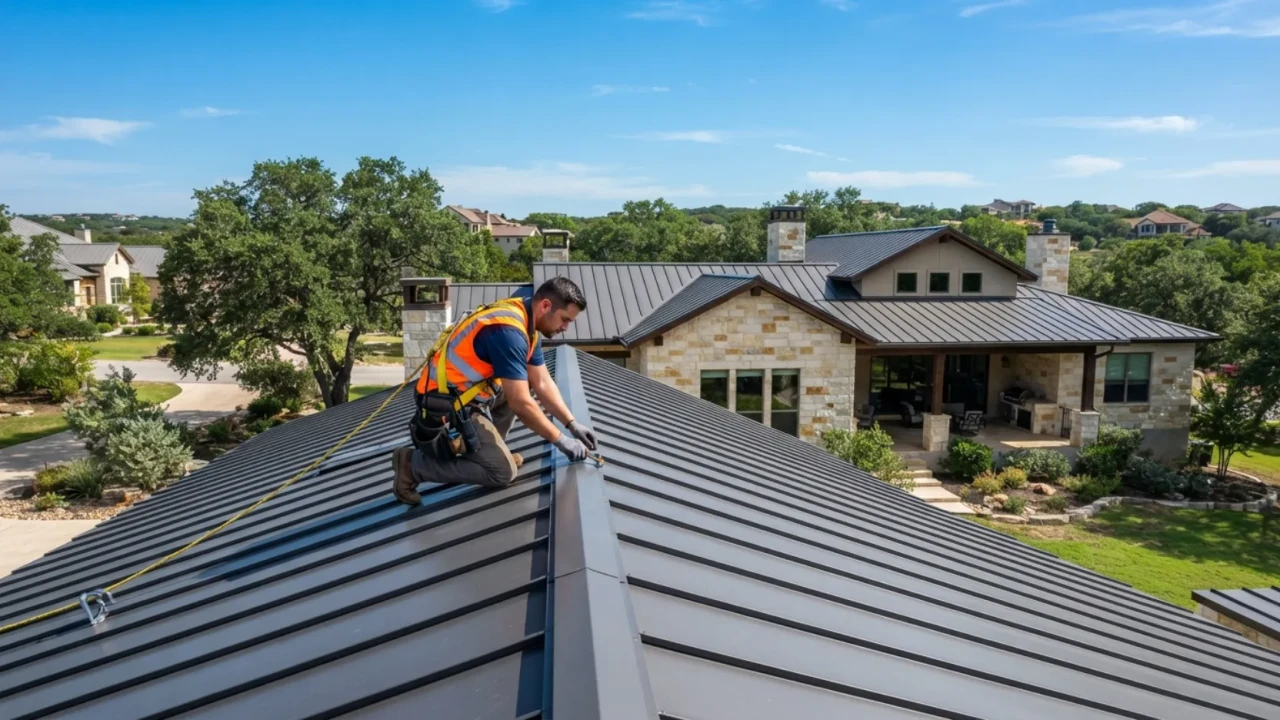
The most common way metal roof maintenance costs balloon is deferred neglect. A $150 inspection that catches a failing sealant joint at year five prevents the $800 flashing replacement and interior water damage repair that follows if that joint fails silently for two more rainy seasons. Every maintenance task in this guide follows the same logic: the cost of doing it on schedule is always lower than the cost of the damage it prevents.
Inspections
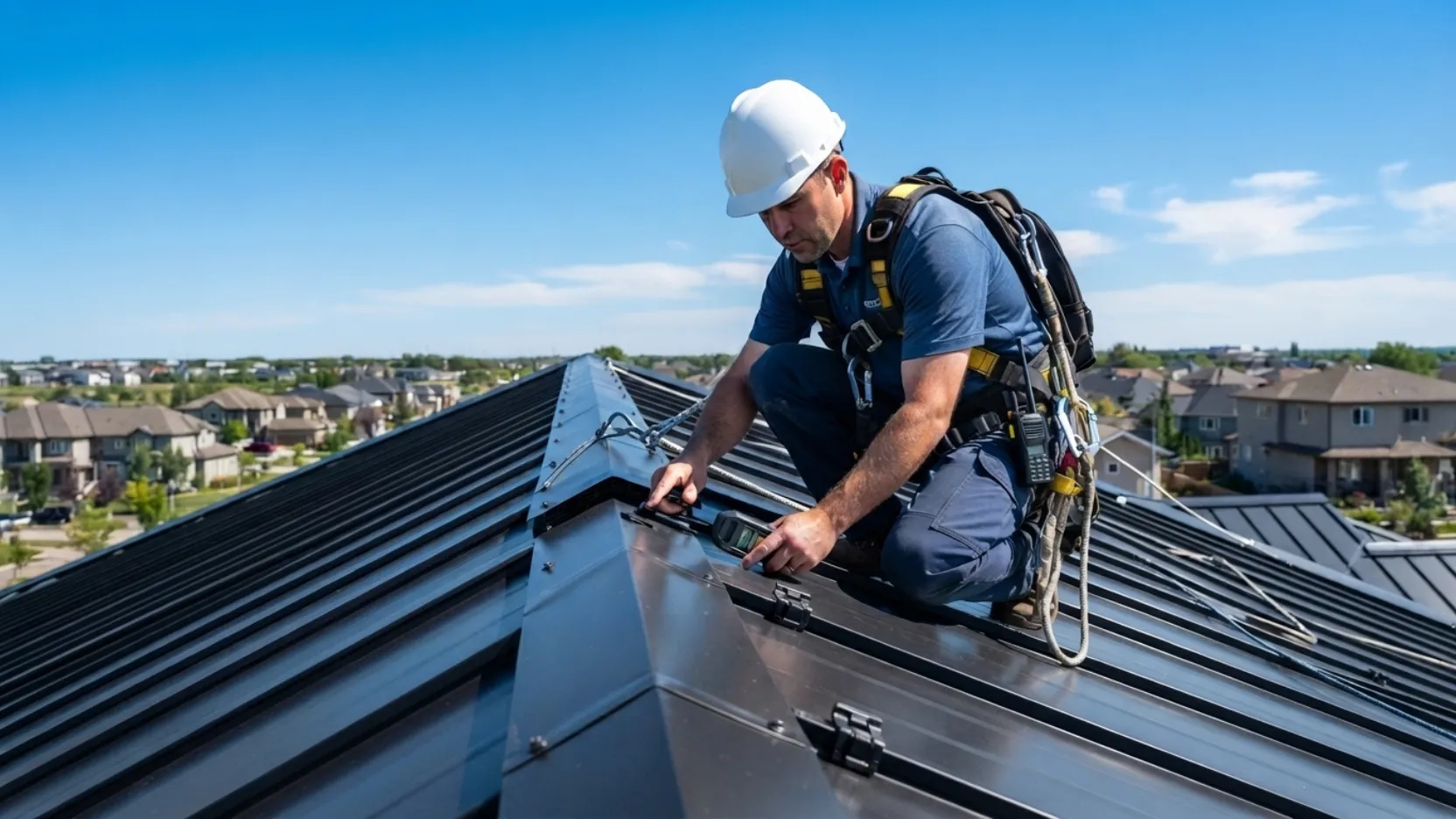
A professional metal roof inspection from a qualified San Antonio roofing contractor is the foundation of your entire maintenance program. It is the task that tells you what condition everything else is in. Without it, you are guessing. The inspector checks fastener condition, sealant integrity, coating wear, rust formation, flashing seals, debris accumulation in valleys, and the condition of ridge caps and gutters. That information drives every other maintenance decision.
How often: In San Antonio’s climate, a professional metal roof inspection every two to three years is the standard recommendation. After any major hail event or severe wind storm, an inspection is warranted regardless of where you are in that cycle.
What they look for: Fastener backing-out or washer deterioration, sealant cracking at all joints and penetrations, surface rust beginning at coating failures, debris accumulation in valleys and gutters, flashing gaps at chimneys, vents, and skylights, and any panel lifting or buckling from thermal stress.
- Contractor physically walks the roof no drive-by or attic-only assessments
- Written inspection report provided with photos of any issues found
- All penetrations checked: chimneys, pipe boots, skylights, HVAC curbs, vents
- Ridge cap fasteners and sealant verified
- Gutter and valley drainage confirmed clear
- Panel surface checked for rust formation and coating failure spots
Sealants and Fasteners
If you have a screw-down metal panel roof the most common type on San Antonio residential properties sealant maintenance and fastener inspection are the tasks that will define your maintenance budget over the life of the roof. The rubber EPDM washers on exposed fasteners compress and harden over years of thermal cycling. Sealant at joints, overlaps, and penetrations breaks down under UV exposure and movement. Neither failure happens overnight, but both are completely predictable and completely preventable.
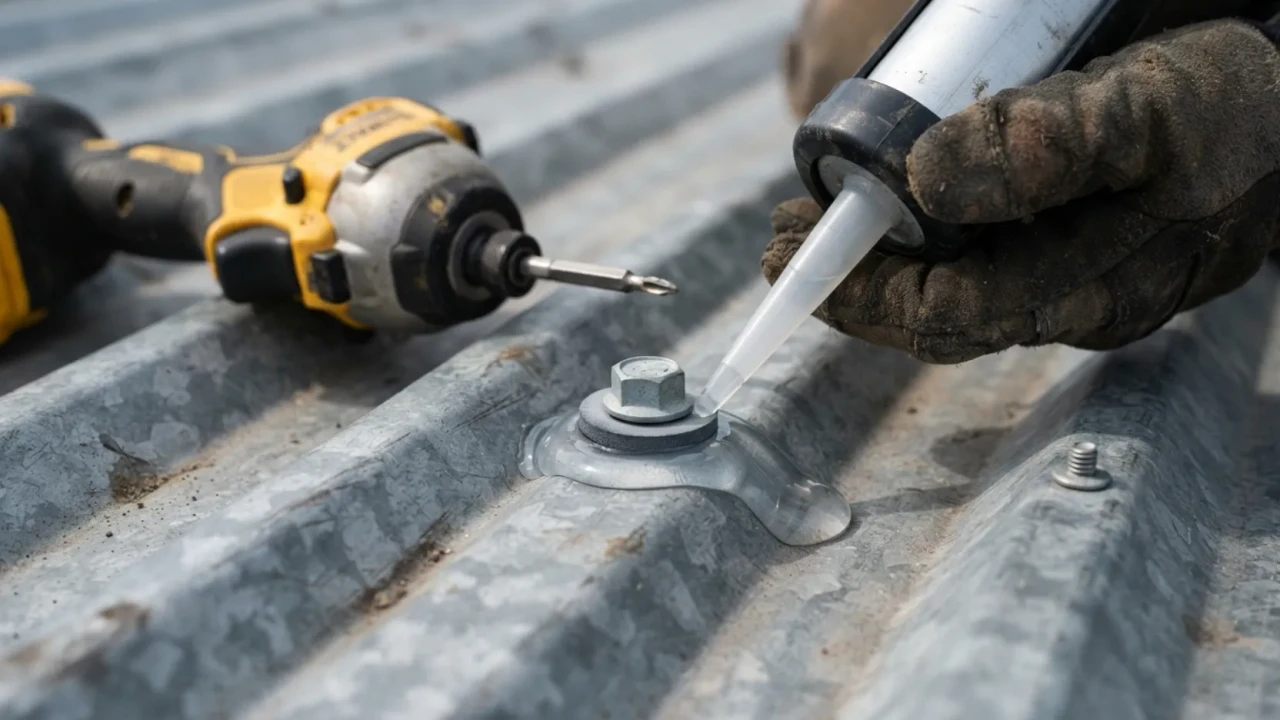
Standing seam metal roofs have fewer fastener exposure points because the fasteners are hidden beneath the panel seams. If you have a standing seam roof, your sealant maintenance is primarily at penetrations and ridge caps a simpler and less expensive maintenance profile than screw-down systems.
Combining sealant work with a scheduled inspection visit saves money. When a contractor is already on the roof conducting your biennial inspection, having them re-seal any identified failure points in the same visit avoids a second mobilization cost. Always ask for an estimate on combining inspection and minor sealant maintenance in a single call. For most San Antonio homes, this combined service runs $350 to $600 and covers the majority of routine maintenance needs for the next two to three years.
- Sealant type confirmed as compatible with your specific panel material and profile
- Old sealant fully removed before new product is applied not layered over failing caulk
- Replacement fasteners match original gauge and thread count for the panel
- EPDM washer size confirmed correct for the fastener head diameter
- Ridge cap sealant included in every re-sealing job this is where leaks start
- All penetrations treated: every pipe boot, vent collar, and flashing edge
Cleaning
Metal roofs do not need frequent washing, but they do need the debris removed from valleys, gutters, and any flat or low-slope sections where leaves, branches, and dirt accumulate. In San Antonio, oak trees are the primary culprit. Live oak and Texas live oak drop debris year-round, not just in fall, and that debris compacts into a wet mat that holds moisture against the panel surface. Moisture plus trapped debris equals accelerated corrosion the one thing a metal roof owner genuinely needs to avoid.
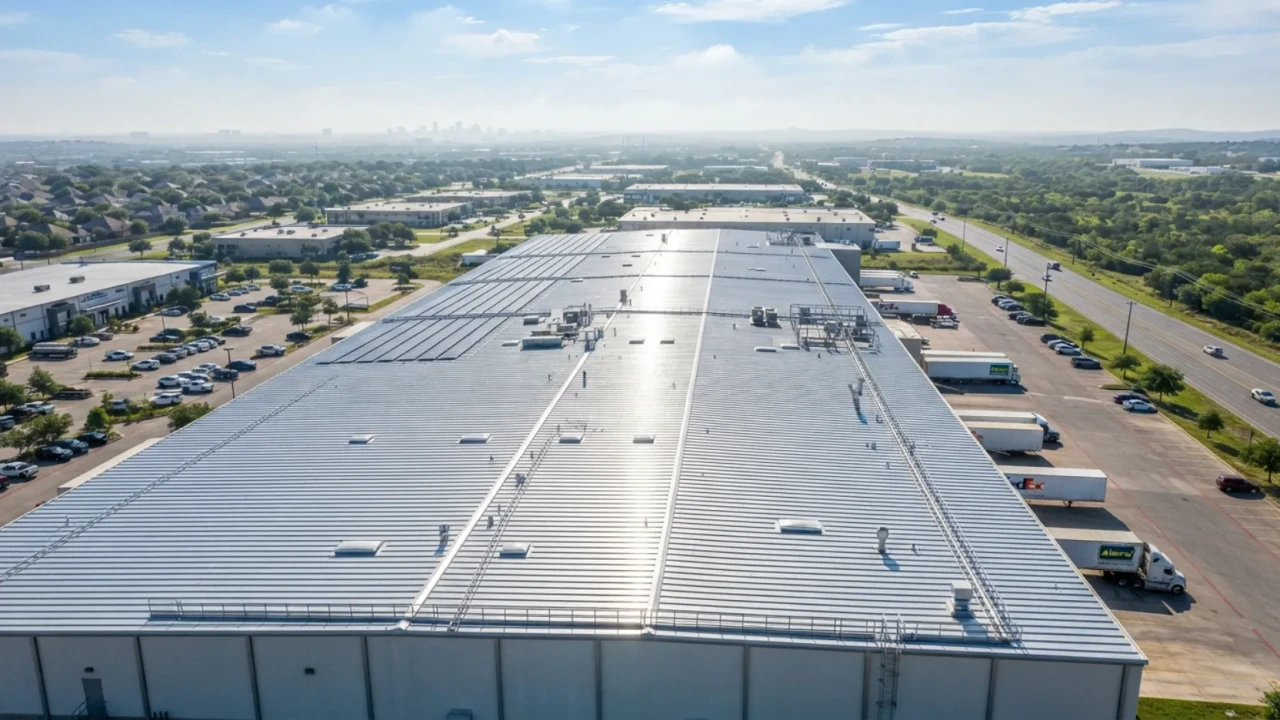
For most pitched residential metal roofs in San Antonio, a simple annual gutter cleaning and valley sweep is sufficient. Flat or low-slope commercial metal roofs may need quarterly debris removal depending on tree coverage. Algae and moss growth common on shaded north-facing slopes should be treated with a diluted zinc sulfate solution or a product specifically rated for metal roofing. Never use a high-pressure power washer on a metal roof, as it can damage coatings and force water under panel seams.
- Gutters cleaned at least once per year twice in areas with heavy live oak coverage
- All valleys swept clear of compacted leaf debris after heavy debris seasons
- Downspouts flushed to confirm water flows freely to grade
- Any branches within 6 feet of the roof surface trimmed back
- North-facing slopes inspected for algae or moss growth annually
- Only metal-safe cleaning products used no bleach directly on unpainted Galvalume
Coating
Every metal roof has a protective layer: paint, Galvalume (zinc-aluminum alloy), stone coating, or a combination. That protective layer is what stands between the raw metal and the elements. San Antonio’s average of 220 sunny days per year, combined with peak summer roof surface temperatures that can exceed 160 degrees Fahrenheit, degrades roof coatings faster than more temperate climates. Understanding when your coating needs attention and what that attention costs is the key to avoiding the much larger cost of panel replacement from rust.
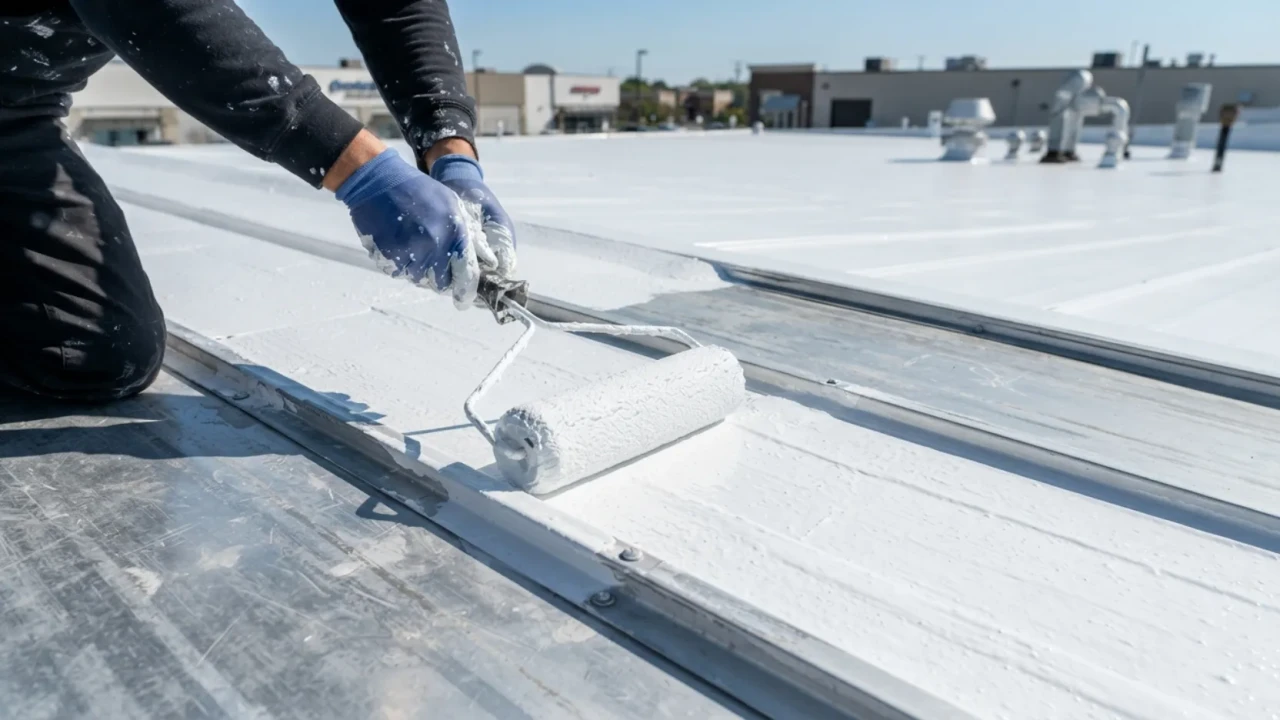
Most factory-applied painted metal roofs carry a 40-year paint warranty from the manufacturer. In practice, that warranty covers total paint failure not the gradual fading, chalking, and micro-cracking that allows UV and moisture to begin attacking the metal underneath. In San Antonio’s climate, small touch-up painting on areas showing early coating failure is a reasonable expectation around year 15 to 20. A full elastomeric roof coating application over an aging metal roof is a popular option at the 25 to 35 year mark as a cost-effective alternative to full replacement.
A full elastomeric coating application on a San Antonio metal roof pays back a significant portion of its cost through energy savings. Cool-roof rated coatings reflect 70 to 85 percent of solar energy versus the 25 to 40 percent typical of an aging painted metal surface. In San Antonio summers where cooling costs dominate utility bills, that reflectivity difference can reduce HVAC costs by 15 to 25 percent during peak cooling months. When evaluating a full coating job, factor the energy payback into your cost-benefit analysis it meaningfully changes the math.
- Annual visual check for chalking, fading, or bare metal spots at seams and fastener heads
- Any bare metal areas touch-primed and painted within one year of discovery
- Full coating assessment at year 15 to 18 earlier for west or south-facing roof sections
- Coating product confirmed as compatible with your specific panel material (Galvalume, steel, aluminum)
- Surface preparation includes rust treatment before any paint or coating is applied
- Elastomeric coating options evaluated at years 20 to 25 as an alternative to replacement
Gutters
One of the underappreciated characteristics of a metal roof is how effectively it sheds water. That is a benefit in a heavy rainstorm, but it also means your gutters receive a higher volume of fast-moving water than they would from a shingle roof with the same pitch. Combined with San Antonio’s intense but brief summer thunderstorms, metal roofs push a lot of water through the gutter system in a short time. A clogged gutter on a metal roof causes water to back up under the eave edge, which is one of the most damaging and hardest-to-diagnose sources of interior water intrusion on metal-roofed homes.
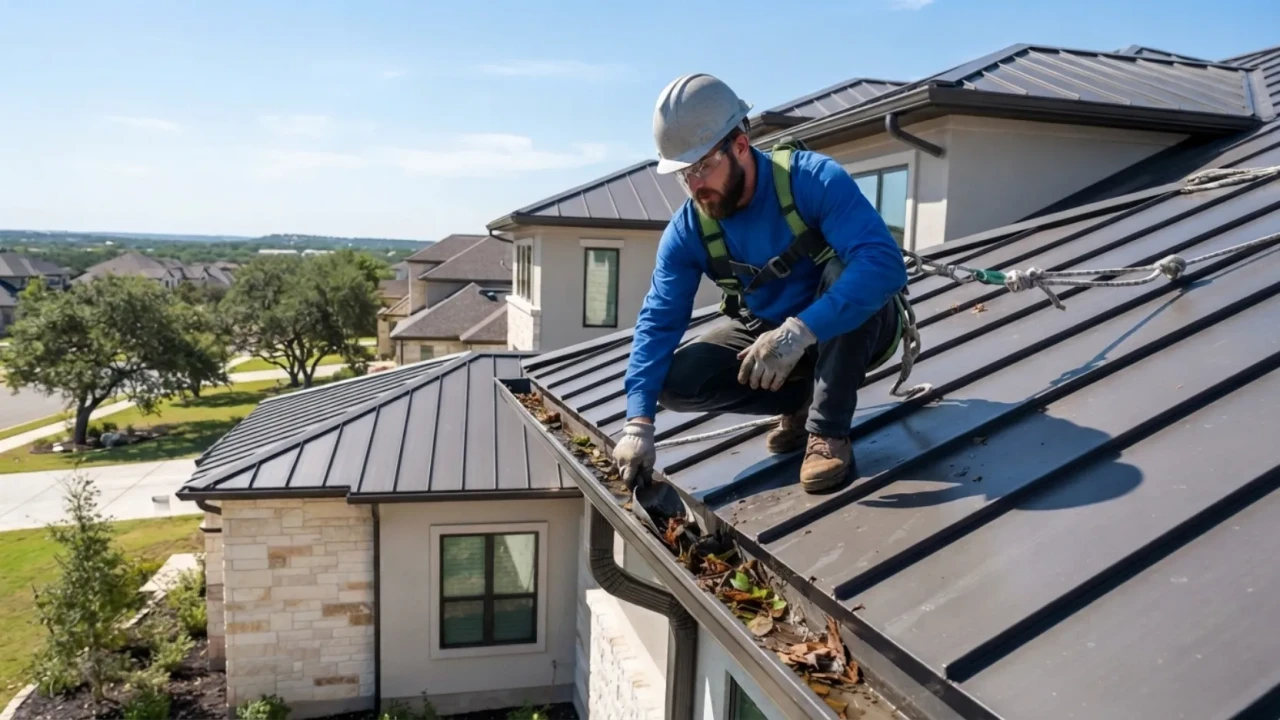
- Gutters cleaned at least once per year preferably in late fall after peak leaf drop
- Downspouts confirmed clear run water from the top and watch for proper flow at the base
- Gutter pitch checked: should slope 1/4 inch per 10 feet toward the downspout
- Gutter hangers re-secured anywhere gutters are sagging or pulling away from the fascia
- Eave edge checked for water staining after heavy rains indicates overflow or clogging
- Gutter guard system considered if annual cleaning is being skipped or delayed
Penetrations
Pipe boots the rubber or metal collars that seal around vent pipes where they penetrate the roof surface are the single most common source of active leaks on metal roofs in San Antonio. Neoprene and rubber pipe boots degrade under UV exposure and eventually crack, split, or pull away from the pipe they are sealing. This is completely predictable. On most San Antonio homes, pipe boots need replacement every 10 to 15 years regardless of the roof condition. The metal roof itself may have another 30 years of service life while the pipe boot is already failing.
The fix for a failed pipe boot is simple and inexpensive. The leak it causes if ignored is not. A cracked pipe boot during a San Antonio storm can introduce significant water into the attic and ceiling before the homeowner even notices moisture inside. Replacing pipe boots proactively at year 12 to 14 before they fail is the most cost-effective penetration maintenance strategy.
- All pipe boots visually inspected at every professional roof visit
- Rubber or neoprene boots flagged for replacement after year 12 regardless of appearance
- HVAC curb flashing sealant inspected every three to five years
- Chimney counter-flashing checked for separation from the mortar joints
- Skylight perimeter checked for sealant cracking or frame separation after temperature swings
- Boot replacements bundled into a single visit to minimize mobilization cost
The table below gives a realistic annual maintenance budget for a standard San Antonio residential metal roof (approximately 1,500 to 2,500 square feet). Not every task occurs every year inspection and sealant work follow a longer cycle. The “annualized” column smooths the costs across the intervals when each task comes up.
| Maintenance task | Frequency | Cost per occurrence | Annualized cost |
|---|---|---|---|
| Professional inspection | Every 2 to 3 years | $150 to $250 | $60 to $100 per year |
| Gutter cleaning and valley sweep | Annually (or twice per year) | $100 to $250 | $100 to $250 per year |
| Spot sealant touch-up (as needed) | Every 3 to 5 years | $200 to $400 | $50 to $100 per year |
| Pipe boot replacement (all boots) | Once at year 12 to 15 | $300 to $700 | $25 to $55 per year |
| Fastener inspection and localized replacement | Every 5 to 7 years | $400 to $900 | $65 to $130 per year |
| Coating touch-up (isolated areas) | Once at year 15 to 20 | $200 to $500 | $12 to $30 per year |
| Tree trimming (roof clearance maintenance) | Every 2 to 3 years | $150 to $400 | $60 to $150 per year |
Total annualized maintenance budget estimate: $370 to $815 per year for most San Antonio residential metal roofs. Toward the lower end for newer, well-installed roofs with minimal tree coverage. Toward the upper end for older roofs, homes under heavy tree canopy, or screw-down systems in their second decade.
For comparison: a standard asphalt shingle roof in San Antonio typically carries an annualized maintenance and early replacement budget of $600 to $1,200 per year when averaged across its 20 to 25 year lifespan. The metal roof’s maintenance cost advantage compounds over time because its lifespan is two to three times longer.
- Clean gutters and downspouts twice per year if under heavy tree canopy
- Clear all valleys of accumulated leaf and debris buildup
- Visually inspect the roof from the ground after every significant hail event
- Trim any branches within 6 feet of the roof surface
- Check downspout drainage routes extensions should direct water at least 4 feet from the foundation
- Schedule a professional metal roof inspection with a written report
- Address any sealant or fastener issues identified in the inspection report before the next wet season
- Inspect north-facing slopes for algae or moss formation
- Check gutter hangers and fascia attachment points re-secure any that have pulled
- Full sealant inspection and targeted re-sealing at all penetrations and ridge caps
- Fastener inspection pass replace any backed-out, over-driven, or failed-washer screws
- Gutter system evaluation confirm sizing is adequate for the volume from a metal roof
- Replace all rubber or neoprene pipe boots proactively regardless of visible condition
- First major sealant replacement pass if not already done on a 5-year cycle
- Coating assessment spot touch-up any areas showing bare metal or early rust
- Full elastomeric coating application evaluation often more cost-effective than replacement
- Major fastener replacement pass if not completed in the prior decade
- Gutter replacement evaluation 25-year-old aluminum gutters are nearing end of service life
- Full comprehensive inspection to establish the remaining service life of the roof system
How much does it cost to maintain a metal roof per year in San Antonio?
Do metal roofs require a lot of maintenance?
What maintenance does a metal roof need in San Antonio specifically?
How often should a metal roof be inspected?
What happens if I skip maintenance on my metal roof?
Is a metal roof cheaper to maintain than an asphalt shingle roof?
Get a free metal roof maintenance inspection in San Antonio
Not sure what condition your metal roof is in or what maintenance it actually needs? We will walk your roof, give you an honest assessment, and tell you exactly what it will cost with no pressure and no upselling.
[/et_pb_code][/et_pb_column][/et_pb_row][/et_pb_section]