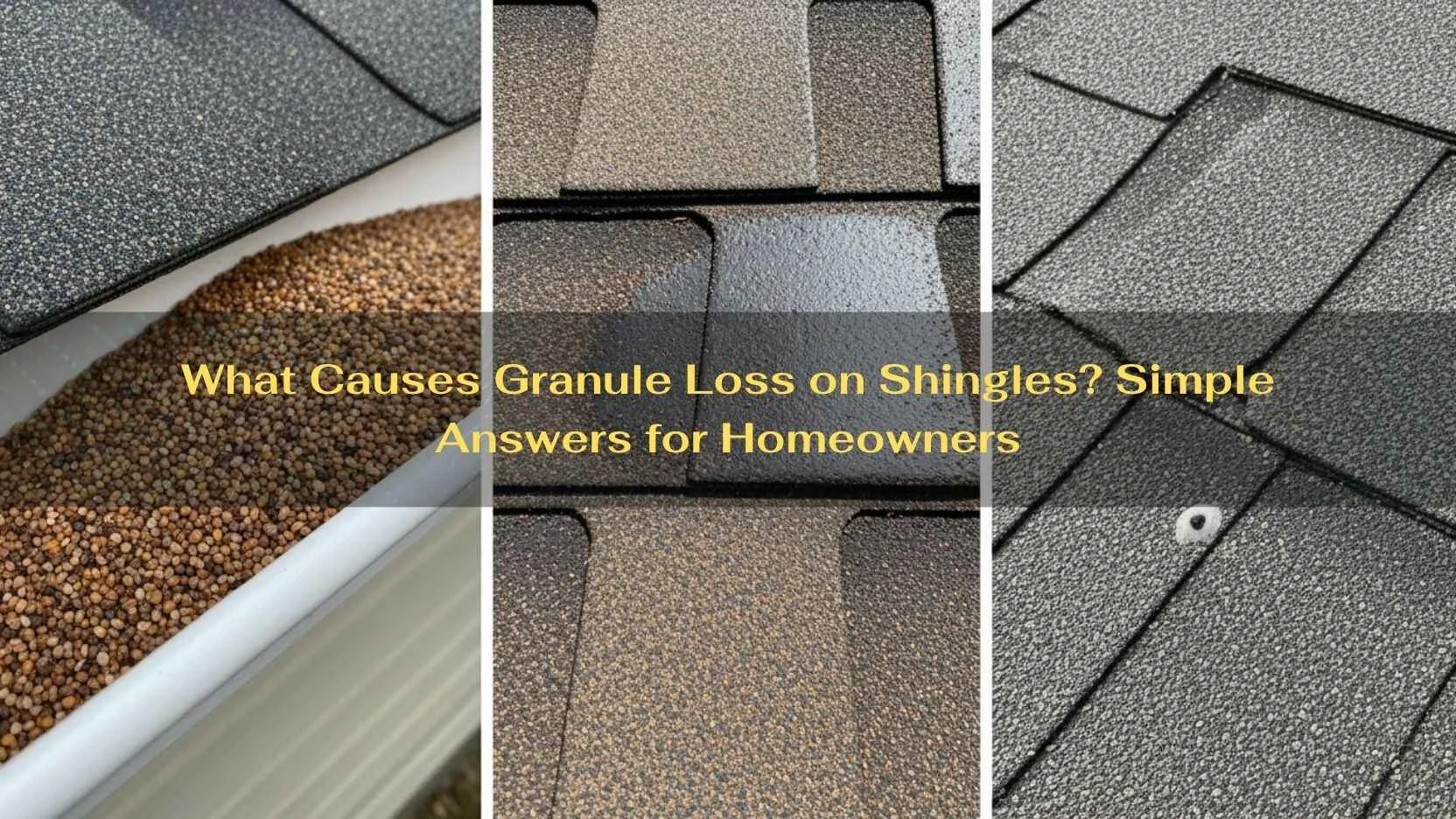
If you’ve ever found sand-like bits in your gutters or on your driveway, your shingles may be losing granules. These tiny stones play a big role in protecting your roof. When they fall off too fast, your roof can age quicker and break down long before it should. The good news? Most granule loss has simple, clear causes you can understand and watch for.
What Are Granules and Why They Matter
Granules are the rough, colored coating on asphalt shingles. They shield your roof from sun damage and weather.
A homeowner once said online, “I thought granules were just decoration. I didn’t know they were the armor on my roof.” The technical notes on asphalt shingle construction from Wikipedia explain how these granules help block UV rays and give shingles their long-term strength.
Normal vs. Problematic Granule Loss
Some granule loss is completely normal. New roofs often shed extra granules during the first few months. Think of it like breaking in new shoes.
But heavy, ongoing shedding is not normal. Angi explains in its guide to shingle wear and granule loss that constant granule shedding can signal deeper problems.
A roofer put it in plain words: “If the gutters look like a sandbox after every storm, something’s wrong.”
Top Causes of Granule Loss
1. Aging Shingles
As shingles age, they dry out and become brittle. This makes granules fall off more easily. HomeAdvisor’s breakdown of roof aging and material breakdown shows that roofs nearing the end of their lifespan lose granules at a faster rate.
2. Hail Damage
Hail knocks granules loose on impact. Even small storms can leave bald spots. Homeowners on real homeowner roof problems in Reddit threads often post before-and-after photos showing granule loss just from one storm.
3. Poor Ventilation
When an attic overheats, shingles age much faster. Overheated shingles lose granules the same way dry skin flakes.
4. Foot Traffic
Walking on a roof can scrape off granules. Contractors often say, “Every step on a hot shingle is like sandpaper rubbing against it.”
5. Manufacturing Defects
Though rare, defective shingles can shed granules early. This usually shows up as random bald patches.
How to Spot Granule Loss Early
You don’t need to climb on your roof. Just look for a few simple signs:
- Granules in gutters or at the bottom of downspouts
- Smooth, shiny spots on shingles
- Bald patches or exposed asphalt
- Dark streaks that weren’t there before
Many Yelp roofing contractors who share roof inspection tips note that early granule loss is one of the easiest signs homeowners can catch on their own.
One inspector shared: “Most people call me after they see bald spots. But usually, the first clue was in the gutters months earlier.”
How Homeowners Can Prevent Granule Loss
A few simple habits can help protect your shingles:
- Limit walking on your roof.
- Keep attic ventilation working properly.
- Schedule yearly roof inspections.
- Choose high-quality shingles when replacing your roof.
The structural overview in asphalt shingle construction helps explain why quality matters: better-made shingles hold granules longer and resist heat breakdown.
Conclusion
So, what causes granule loss on shingles? Most of the time, it’s aging, hail, heat buildup, foot traffic, or defects. Some shedding is normal, but heavy, ongoing loss tells you your roof needs attention. When you understand the causes, you can act early and extend the life of your home’s most important shield.