
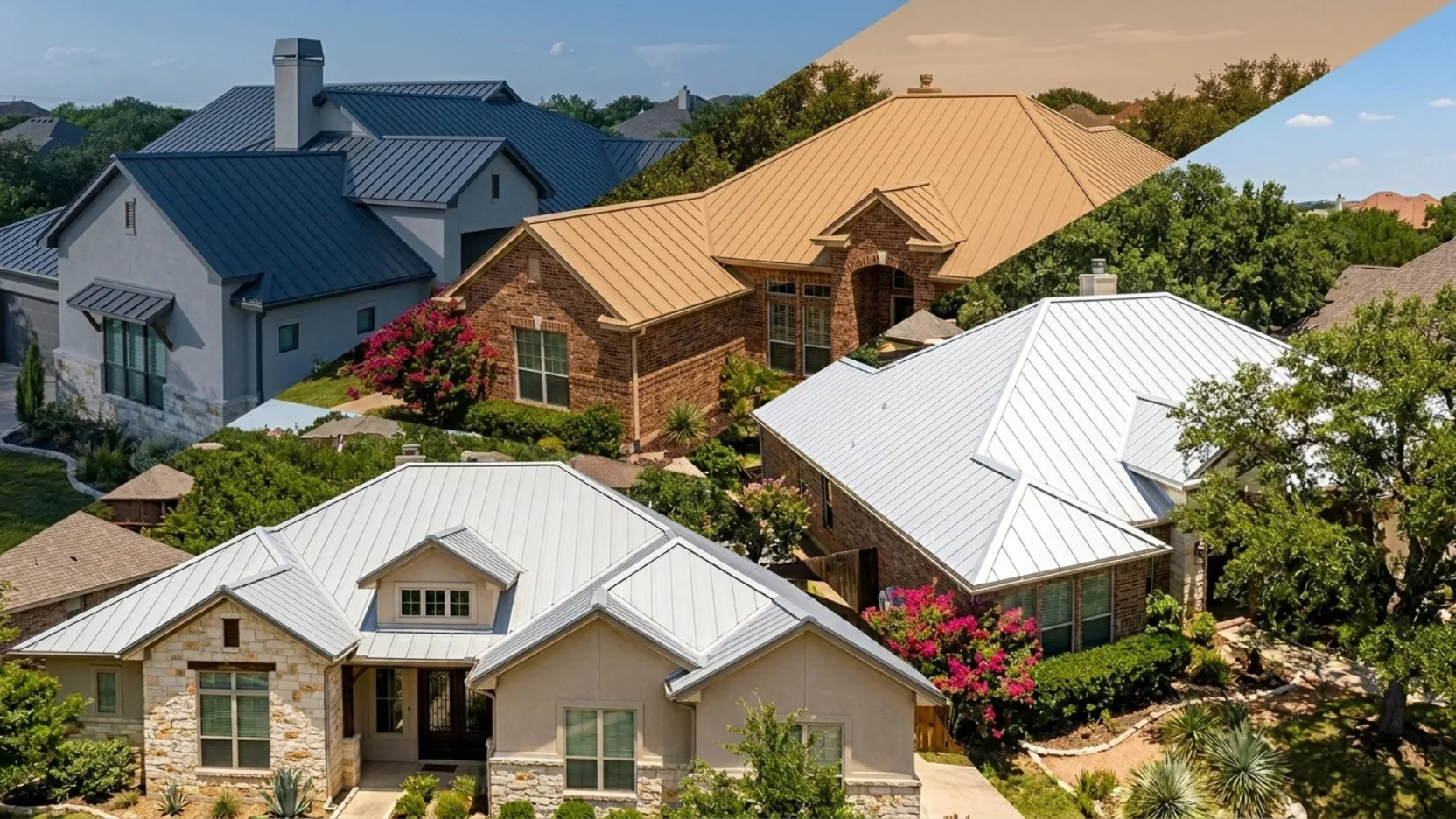
In San Antonio summers, roof color is one of the highest-leverage cooling decisions you can make. Light metal can absorb about 40% less heat than dark asphalt, and cool-rated metal roofs commonly cut cooling costs about 10–25% for Texas homeowners.
Dark metal can hit about 170°F surface temperature on a July afternoon. White and light gray stay far cooler—but modern cool pigments mean a tan or medium gray can approach white-level reflectance without looking stark.
Color is only half the story. Coating chemistry, ENERGY STAR / CRRC ratings, attic insulation, and HOA rules decide real performance. San Antonio sits in IECC Climate Zone 2—cooling dominates from April through October, so winter “dark roof heat gain” barely matters here.
By the end of this guide, you’ll know which colors win on SRI, how cool coatings change the math, what savings look like locally, and how to balance curb appeal with CPS Energy bills.
Table of Contents
- Solar Reflectance, Emittance, and SRI
- Best Colors for San Antonio Cooling
- Cool Pigments and Coating Systems
- What the Energy Savings Look Like
- HOA, Curb Appeal, and Resale
- Common Questions About Metal Roof Color and Energy
- Next Steps for San Antonio Homeowners
Solar Reflectance, Emittance, and SRI
Solar reflectance is the share of solar energy bounced away (0–1). Thermal emittance is how fast the surface dumps absorbed heat—metal is naturally strong here. SRI combines both; ENERGY STAR steep-slope targets start at SRI 29+.
Typical SRI bands:
- White: about 85–100+
- Light gray: about 60–80
- Tan / beige: about 50–68
- Medium brown: about 30–50
- Dark charcoal: about 10–25
- Standard black: about 0–5
Practical rule: never pick color from a chip alone. Ask for the CRRC or ENERGY STAR sheet for the exact panel + coating—two “medium grays” can differ by 20+ SRI points.
Best Colors for San Antonio Cooling
| Color category | Typical SRI | Energy performance | Best use in SA |
|---|---|---|---|
| Bright white | 85–100+ | Maximum cooling | Max savings; some HOAs restrict pure white |
| Light / silver gray | 60–80 | Excellent | Top residential recommendation |
| Tan / sandstone | 50–68 | Very good with cool pigments | Traditional SA styles |
| Light / slate blue | 40–60 | Good | Spanish / Mediterranean looks |
| Medium bronze (IR pigment) | 30–45 | Moderate | HOA-required warm tones |
| Dark charcoal | 10–28 | Poor for cooling | Avoid if energy is the priority |
| Matte black | 0–12 | Worst | Not recommended for SA residential |
For most Bexar County homes, light gray, tan, or sandstone with a certified cool coating (SRI roughly 55–75) balances savings, dirt visibility, and neighborhood fit.
Cool Pigments and Coating Systems
IR-reflective pigments let darker-looking colors bounce near-infrared heat. A cool dark bronze might hit SRI 35–45 vs 10–15 for a traditional dark bronze that looks almost identical.
Prefer PVDF / Kynar 500 for new panels (30-year-class film warranties). SMP is a mid-tier option. Bare Galvalume often lands around SRI 60–70 without paint. Unpainted metallic finishes can be efficient but check HOA rules.
Elastomeric upgrade for existing dark metal
If panels are sound, a white/light elastomeric cool coat can lift SRI from the teens to about 80–90, drop attic temps 20°F+, and cost about $1.50–$3.50/sq ft vs $8–$15/sq ft for full replacement. Check current CPS Energy cool-roof rebates before you sign—programs change yearly.
What the Energy Savings Look Like
DOE / Oak Ridge research for hot climates points to about 10–25% cooling reduction. On a home spending about $200/month on cooling May–September, that is roughly $100–$250 per cooling season.
| Scenario | Est. annual cooling savings |
|---|---|
| Dark asphalt → light gray metal | $150–$350 |
| Dark metal → white/light metal | $100–$250 |
| Dark metal + elastomeric cool coat | $120–$280 |
| Light metal + attic insulation upgrade | $250–$500+ |
| Light metal on a poorly insulated attic | $75–$150 |
Attic insulation is the multiplier. Target R-38+; many pre-2005 San Antonio homes sit below that. Roof color alone cannot fix a weak attic.
Practical rule: project savings only after you know attic R-value. Pairing a cool roof with an insulation upgrade usually beats color alone.
HOA, Curb Appeal, and Resale
Spanish Colonial, Hill Country, and craftsman stock favor tan, sandstone, terracotta tones, light gray, and weathered silver—colors that also cool well with the right coating. Medium gray and tan tend to sell broadly; bright white can face HOA pushback in some communities.
Get HOA approval in writing before materials are ordered. Put color, coating, manufacturer, and SRI on the contract.
Common Questions About Metal Roof Color and Energy
Most efficient color here?
White and light gray. Tan/sandstone with cool coatings still clear ENERGY STAR thresholds for many products.
How much can I save?
Often about $150–$375/year on cooling for typical CPS Energy summer bills, more with insulation upgrades. Track two seasons of bills for your real number.
Does a dark roof help in winter?
Not enough in Climate Zone 2. Cooling penalties dwarf any mild winter benefit.
Can I cool an existing dark metal roof without replacing?
Yes—elastomeric cool coating when panels are structurally sound.
Tax credits?
ENERGY STAR–qualified metal roofs may qualify under federal residential energy credits (rules and caps change—confirm with a tax pro and keep product certs).
Next Steps for San Antonio Homeowners
Shortlist colors with SRI 29+, pull CRRC sheets, check HOA and CPS rebates, and measure attic insulation before you lock a dark palette.
If you want a San Antonio metal roof color and coating plan keyed to energy performance—not just a chip deck—RRSATX can inspect and quote it. Call 713-504-2341 or schedule online.