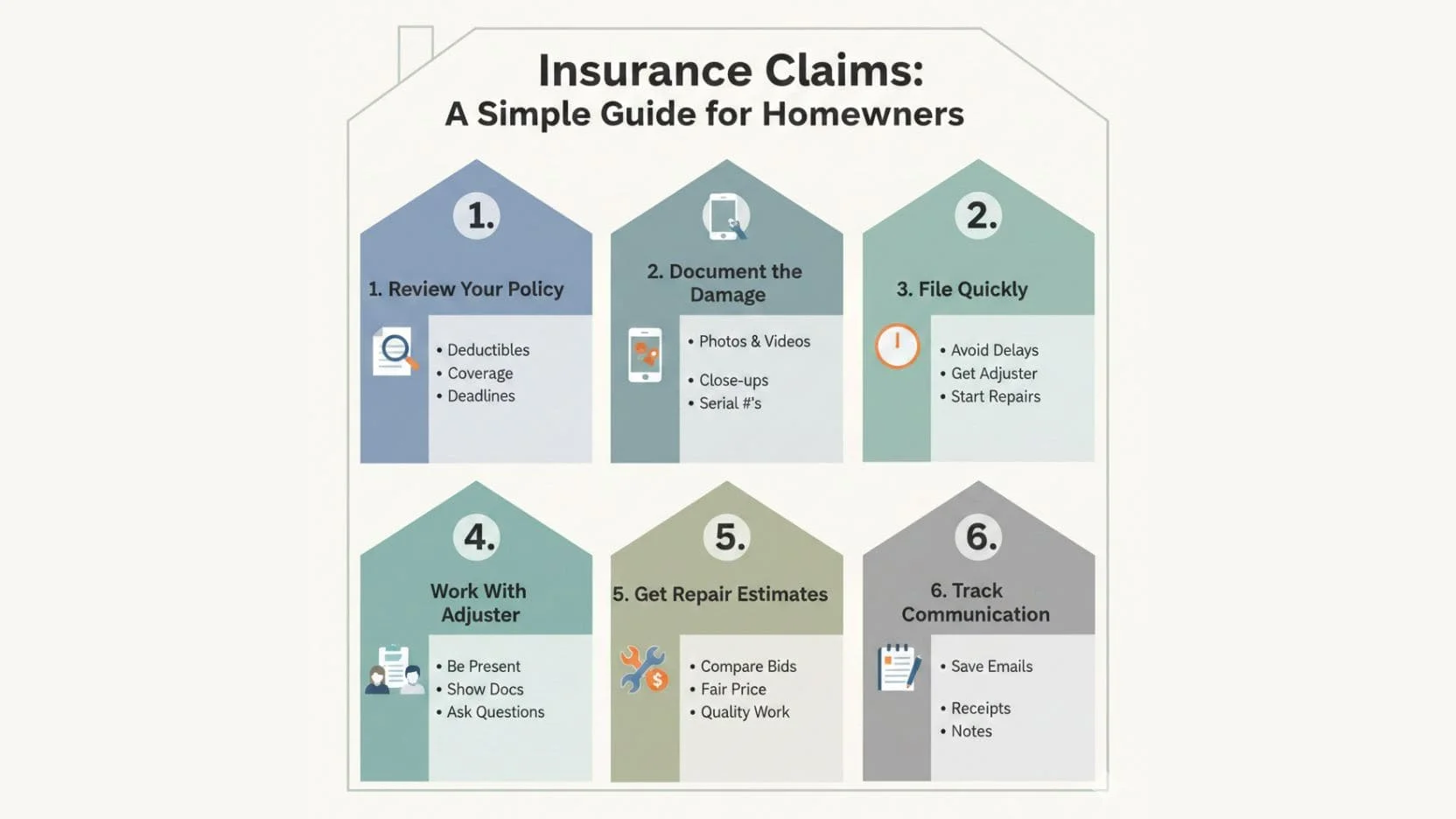
Filing an insurance claim can feel stressful, especially when you’re already dealing with damage to your home. The good news is that you don’t need to be an expert to get through the process smoothly. With the right steps and a little preparation, you can avoid delays and get the coverage your policy promises.
Below is a simple breakdown of how insurance claims work, what to expect, and how to protect yourself every step of the way.
What an Insurance Claim Really Is
An insurance claim is your formal request asking your insurance company to pay for damage covered under your policy.
As one homeowner put it, “I didn’t know I had to document everything. Once I learned that part, the whole claim went a lot faster.”
According to the National Association of Insurance Commissioners, most delays happen because homeowners don’t fully understand their coverage or skip key documentation.
Step 1: Review Your Policy
Before filing anything, read your policy or pull up a digital copy.
Homeowners often look up details on sites like HomeAdvisor when comparing what their policy should cover.
Look for:
- Deductibles
- Covered perils (wind, hail, fire, etc.)
- Exclusions
- Claim deadlines
A clear understanding now prevents surprises later.
Step 2: Document the Damage
Take photos and videos right away. The more you document, the better.
Pros on Angi say homeowners who take complete photos often get faster approvals because the adjuster can see everything upfront.
Try to capture:
- Wide shots of rooms
- Close-ups of damage
- Any damaged items with model/serial numbers
One contractor shared, “I tell every homeowner to pretend you’re collecting evidence. It makes a huge difference.”
Step 3: File the Claim Quickly
Most insurance companies have tight filing deadlines.
On forums like Reddit’s r/Insurance, many policyholders say the biggest mistake is waiting too long. Some even miss benefits because they filed late.
Filing early helps you:
- Get an adjuster assigned faster
- Avoid policy deadline issues
- Move repairs forward sooner
Step 4: Work With the Adjuster
Your insurance company will send an adjuster to inspect the damage.
According to user reviews on Yelp, homeowners who stay present during the inspection often feel more confident because they can point out damage the adjuster might miss.
Tips:
- Be home for the inspection
- Show the documents and photos you collected
- Ask questions
A homeowner shared, “When I walked the adjuster through the damage, the final payout matched what I expected.”
Step 5: Get Repair Estimates
You don’t have to use the contractor your insurer suggests.
Pros listed on HomeAdvisor Pros say getting at least two estimates helps you understand fair pricing.
This can help you:
- Avoid underpayments
- Compare repair quality
- Choose the best contractor
Step 6: Keep Track of All Communication
Save emails, texts, receipts, and notes.
According to resources from the Insurance Information Institute, organized homeowners have far fewer disputes and faster claim resolution.
Even a simple notebook works. The goal is to have everything in one place.
Final Thoughts
Insurance claims don’t need to be confusing. Once you know how the process works from reading your policy to documenting damage you can move through it with confidence.
The key is simple: stay organized, act quickly, and ask questions.