
Roofing guide · San Antonio, Texas
What Is Roofing Underlayment, and Which Type Do You Need?
The layer under your shingles or tile does quiet but important work. Here’s what it is and how the types differ.
The short answer
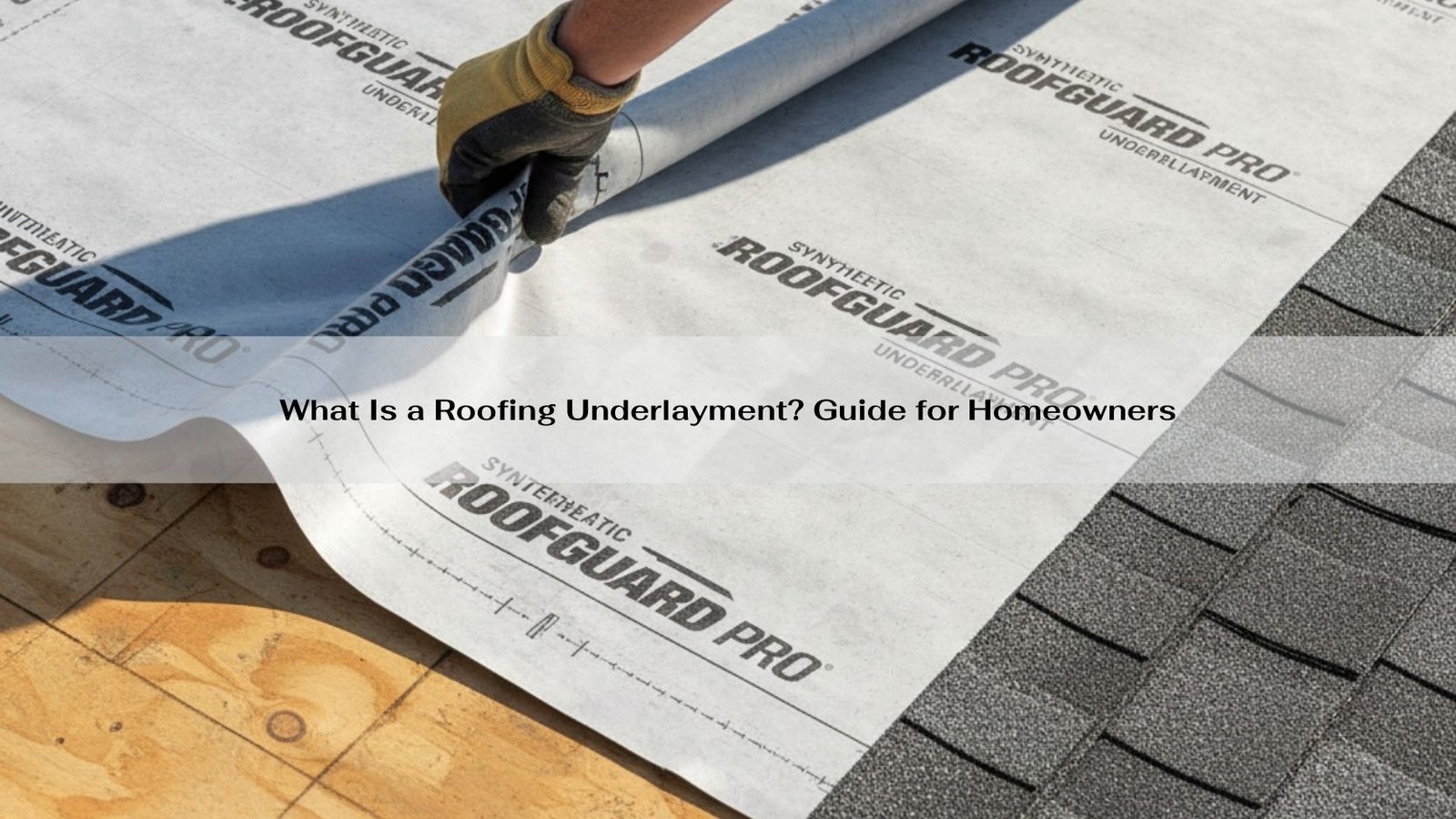
Roofing underlayment is the water-resistant layer installed on the roof deck under the shingles, tile, or metal. It is a second line of defense if wind-driven rain gets past the roof covering. The Texas Department of Insurance lists three common types: felt, synthetic, and self-adhered modified bitumen. [1] The right choice depends on the roof covering, the slope, and the manufacturer’s installation instructions.
What does underlayment do?
It’s the backup layer between the roof covering and the deck.
Shingles and tile shed most water, but wind can lift edges and drive rain underneath. Underlayment helps keep that water off the wood deck. It also protects the deck during installation, before the roof covering goes on.

What are the types?
Felt, synthetic, and self-adhered.
| Type | What it is | Things to know |
|---|---|---|
| Felt | Asphalt-saturated felt paper | Traditional; can tear more easily during installation |
| Synthetic | Woven or spun polymer sheets | Lighter and tear-resistant; see synthetic underlayment |
| Self-adhered modified bitumen | Peel-and-stick membrane that seals to the deck | Used at leak-prone areas or as a full-deck layer; see ice and water shield |
TDI lists all three as underlayment options for Texas homes. [1]
Which type do you need?
Follow the shingle maker’s instructions and the roof’s needs.
- Use what the shingle or tile manufacturer requires for its warranty; TDI says to install to the manufacturer’s instructions. [1]
- Consider self-adhered membrane at valleys, eaves, and around chimneys and walls.
- Ask whether a full self-adhered layer makes sense for added protection against wind-driven rain.
- Check that the estimate names the product, not just “underlayment.”
What RRSATX recommends
Ask each roofer which underlayment they use, where, and why. If two bids differ on underlayment, that is part of the price difference.
Next steps: what you can do, and what needs a pro
Know what goes under your roof before you sign.
You can safely:
- Ask which underlayment is in the bid.
- Ask where self-adhered membrane goes.
- Check the manufacturer’s requirements.
- Compare like with like.
Leave to a roofer: choosing and installing underlayment to the manufacturer’s instructions. RRSATX offers a free roof inspection with a photo report and a written estimate.
Local roofing service
About Affordable Roofing Contractors San Antonio
Affordable Roofing Contractors San Antonio, also known as RRSATX, is a father-and-son roofing business owned by Ted. Ted has 40 years of hands-on roofing experience. The company carries $2 million in liability insurance coverage. It offers free roof inspections and leak inspections, with no fee and no obligation, provides a photo report after the inspection, and gives a free written estimate before any work starts. If storm damage is involved, RRSATX can help as your roofer, not your adjuster: it can document damage and prepare an estimate, but it cannot act as a public insurance adjuster or negotiate a claim for you. [2] RRSATX provides a written workmanship warranty; this guide does not state its terms.
- Phone
- (713) 504-2341
- sales@affordableroofingcontractorssanantonio.com
- Address
- 4324 Monterey St, San Antonio, TX 78237
- Contact
- Request a free roof inspection
Roofing underlayment: questions answered
Can underlayment be replaced without a new roof?
Usually not on its own; it sits under the roof covering, so it is replaced during a re-roof.
Does underlayment stop leaks by itself?
No. It’s a backup, not a replacement for a sound roof covering and flashing.
Is synthetic better than felt?
Each has trade-offs. Follow the roof covering manufacturer’s instructions. [1]
Does tile need underlayment?
Yes. Tile roofs rely on underlayment beneath the tile.
Request a free roof inspection
Call or use the contact form. You get a photo report and a written estimate before any work starts.