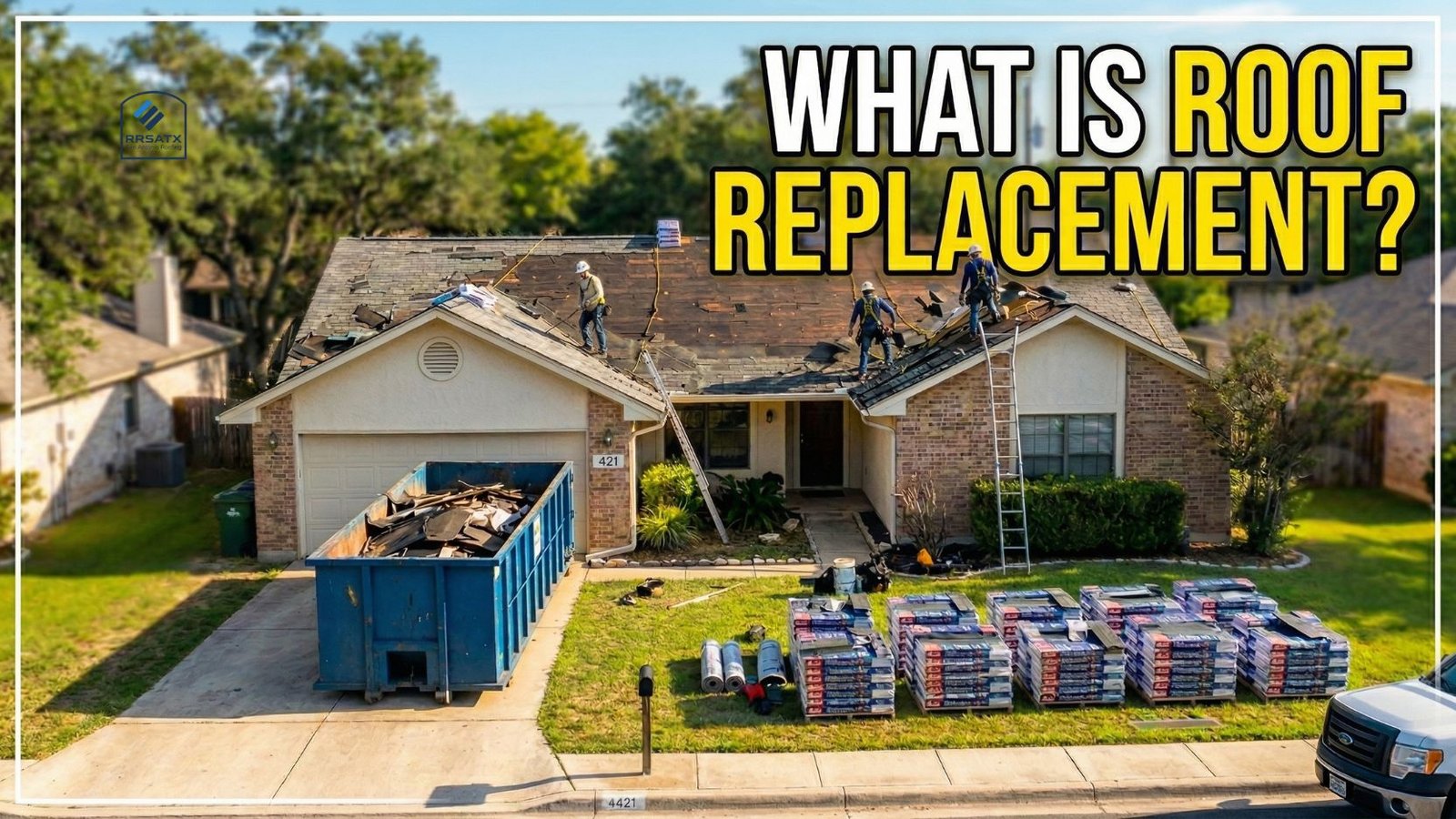
Roof replacement is the process of removing some or all of an existing roof system and installing a new one to restore protection, performance, and lifespan. For homeowners and commercial property owners in San Antonio, roof replacement is often necessary when a roof has widespread damage, repeated leaks, storm impact, or age-related failure that repairs can no longer solve cost-effectively.
At RRSATX: San Antonio Roofing Company, our team works with residential and commercial roofing systems in South Texas conditions, where heat, UV exposure, hail, and wind can shorten roof life. That local roofing experience matters because roof replacement decisions in San Antonio are rarely just about age; they’re about how the roof has performed under real weather stress.
What Does Roof Replacement Actually Include?
Roof replacement usually means removing old roofing materials and installing a new roofing system. Depending on the roof type and condition, this can involve more than just shingles.
A typical roof replacement may include:
- Removal of old shingles, metal panels, tile, or membrane
- Inspection of roof decking
- Replacement of damaged decking or substrate
- New underlayment
- Flashing replacement around penetrations and edges
- Ventilation upgrades if needed
- Installation of new roofing material
- Final cleanup and inspection
Key takeaway: A roof replacement is not just a cosmetic upgrade. It is a system-level project meant to restore waterproofing, structural reliability, and weather resistance.
When Do You Need A Roof Replacement Instead Of A Roof Repair?
You may need roof replacement when damage is widespread, recurring, or tied to overall roof age. A repair is often enough for isolated issues, but replacement makes more sense when the roof is failing in multiple areas.
Common signs replacement may be the better option:
- The roof is 15–20+ years old
- Leaks keep returning after repairs
- There are large areas of missing or damaged shingles
- Hail or wind damage affects multiple slopes
- Flashing, underlayment, and surface materials are all wearing out
- The roof is sagging or has structural concerns
- Repair costs are starting to add up repeatedly
For property owners in San Antonio, storm damage is a major factor. A roof may look repairable from the ground but still have compromised shingles, loosened fasteners, punctures, or flashing failure after hail and wind events.
What Happens During The Roof Replacement Process?
The roof replacement process starts with inspection and ends with a final quality check. Knowing the steps helps property owners prepare for the project.
Typical Roof Replacement Steps
| Step | What happens |
| Inspection | Contractor evaluates damage, age, ventilation, and roof condition |
| Estimate | You receive material options, scope of work, and pricing |
| Material selection | Choose shingles, metal, tile, or flat roofing system |
| Tear-off | Old roofing materials are removed |
| Deck inspection | Damaged wood or substrate is identified and replaced |
| Installation | New underlayment, flashing, and roofing material are installed |
| Cleanup | Debris is removed and magnetic cleanup is performed |
| Final walkthrough | Work is reviewed for completion and accuracy |
Key takeaway: A proper replacement addresses the entire roofing system, not just the visible top layer.
How Long Does A Roof Replacement Last?
A roof replacement can last anywhere from 15 years to 50+ years depending on the material, installation quality, and local weather conditions. In San Antonio, extreme sun, heat, and hail can reduce expected lifespan if the system is poorly installed or not maintained.
General lifespan ranges:
- Asphalt shingles: 15–30 years
- Architectural shingles: 20–30 years
- Metal roofing: 40–50+ years
- Tile roofing: 30–50+ years
- Flat or low-slope systems: varies by product and maintenance
The real lifespan depends on:
- Roof ventilation
- Material quality
- Installation standards
- Storm exposure
- Maintenance history
How Much Does Roof Replacement Cost?
Roof replacement cost depends on roof size, material, complexity, and underlying damage. There is no one-price-fits-all answer because two roofs of the same size can have very different labor and material needs.
Main cost factors include:
- Roof square footage
- Steepness and complexity
- Roofing material selected
- Tear-off requirements
- Decking repairs
- Flashing and ventilation upgrades
- Chimneys, skylights, and penetrations
- Storm-related insurance scope
For budget-conscious homeowners, the best approach is to compare the long-term value of repair versus replacement. A cheaper short-term repair may cost more over time if the roof is already near the end of its service life.
Is Roof Replacement Worth It For Older Roofs?
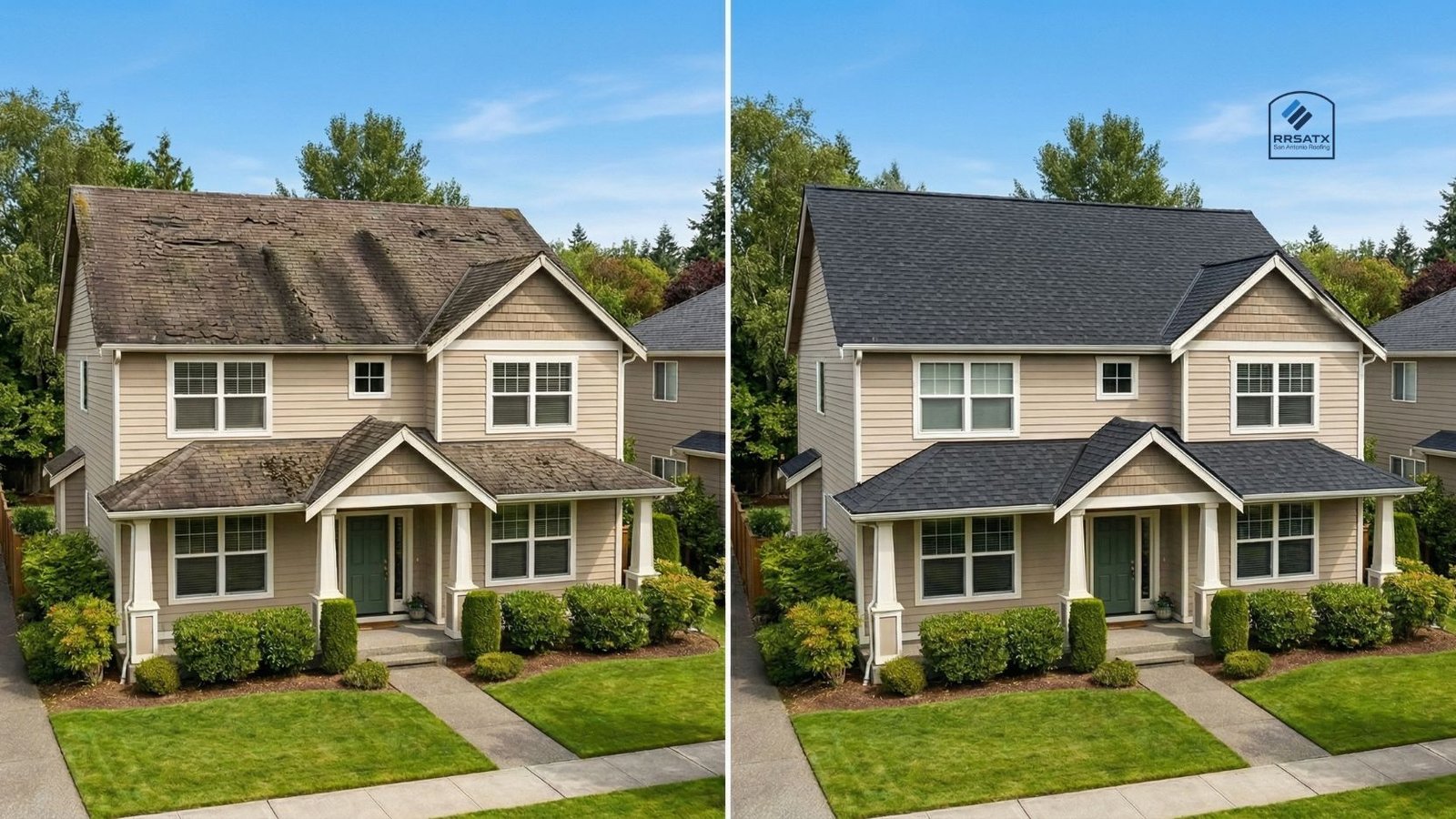
Yes, roof replacement is often worth it when an older roof has multiple weak points or ongoing leak issues. A new roof can reduce future repair costs, improve weather protection, and increase buyer confidence if the property will be sold.
Benefits of replacing an aging roof:
- Better leak protection
- Improved curb appeal
- Stronger storm resistance
- Potential energy-efficiency gains
- Higher property value
- Fewer emergency repairs
This is especially relevant for:
- Homes with roofs 15–20+ years old
- Properties being listed for sale
- Buildings with active leak history
- Owners dealing with insurance claims after storms
What Should San Antonio Property Owners Know Before Replacing A Roof?
San Antonio property owners should choose roofing materials and installation methods that can handle heat, UV exposure, hail, and strong wind. Local climate matters as much as budget.
Before replacing a roof, consider:
- Whether the current roof has storm damage
- Whether ventilation is adequate
- Which materials perform best in South Texas
- Whether insurance may cover part of the loss
- Whether the contractor understands local roof conditions
For homes and buildings near 4324 Monterey St, San Antonio, TX 78237 and 318 E Nakoma Dr #210, San Antonio, TX 78216, weather exposure can vary by roof orientation, surrounding trees, drainage, and prior storm history. That is why inspections should focus on the full roofing system, not just surface appearance.
How Do You Know If You Should Schedule A Roof Inspection Now?
You should schedule a roof inspection if you have leaks, visible damage, storm exposure, or a roof nearing the end of its lifespan. Waiting usually increases repair scope and interior risk.
You likely need an inspection if:
- You see water stains on ceilings or walls
- Your roof is over 15 years old
- Shingles are curling, cracking, or missing
- You recently had hail or wind damage
- You are buying or selling property
- You are filing or considering an insurance claim
Key takeaway: Roof replacement becomes easier to plan and less expensive to manage when issues are found early.
FAQs
What Is The Difference Between Roof Repair And Roof Replacement?
Roof repair fixes specific damaged areas, while roof replacement renews the roof system as a whole. Replacement is usually better when damage is widespread or age-related.
Can A Roof Replacement Help With Leaks?
Yes. If leaks are caused by failing materials, worn flashing, or system-wide deterioration, replacement can solve the root problem better than repeated patching.
How Do I Know If Insurance Will Cover Roof Replacement?
Insurance may cover replacement if the roof has qualifying storm damage, such as hail or wind impact. Coverage depends on your policy, the cause of loss, and inspection findings.