A metal roof is not a single material. It is a precisely engineered system of layers, coatings, substrates, and fasteners that work together to protect your home. This guide breaks down every component of a metal roof, explains what each one does, and tells you what to verify before you buy.
Most homeowners think of a metal roof as a single piece of metal nailed to the house. That picture is far from accurate. A modern metal roofing system is made up of six to eight distinct components, each with a specific job to do. The base metal is just the starting point. What sits above and below it, how the panel is finished, what it is fastened with, and what sits between the panel and the decking all determine how that roof actually performs over 40 to 70 years of Texas weather.
Understanding the composition of a metal roof matters because it is what allows you to compare quotes intelligently, ask the right questions before signing a contract, and recognize when a contractor is cutting corners on materials that will matter ten or twenty years after installation day. This guide covers every component of a metal roofing system in the order they appear from the inside of your attic to the outside surface of the panel.
Two contractors can both quote you a "Galvalume steel standing seam roof" and deliver products that differ dramatically in quality. The differences are in the gauge of the base metal, the thickness and formulation of the protective coating, the paint system applied over the coating, the underlayment specified beneath the panel, and the type of fasteners and clips used to hold the system together. A homeowner who understands what each layer does and what specification to ask for is in a far stronger position when comparing quotes than one who only looks at the price per square.
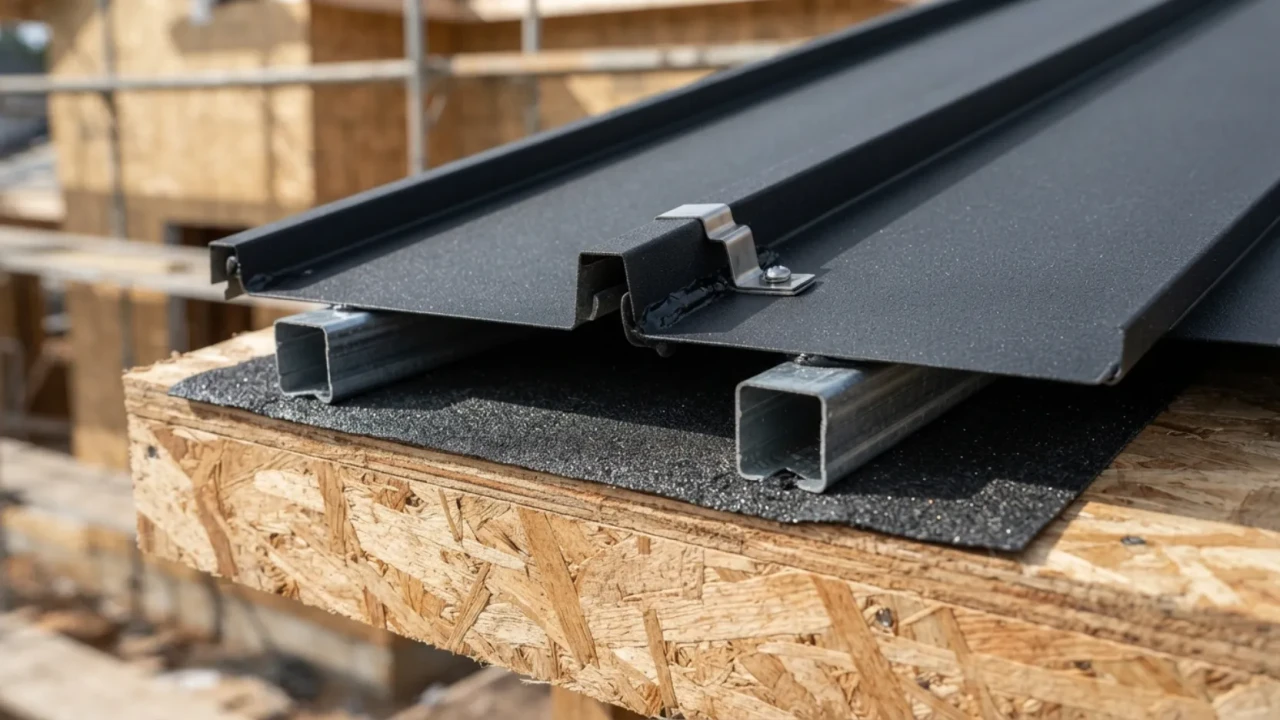
The base metal is the structural heart of a metal roofing panel. It is the layer that gives the panel its rigidity, its load-bearing capacity, and its resistance to impact. Everything else in the system, the protective coating, the paint finish, the fasteners, is either bonded to this layer or designed to protect it. The choice of base metal is the single most consequential decision in the composition of a metal roof.
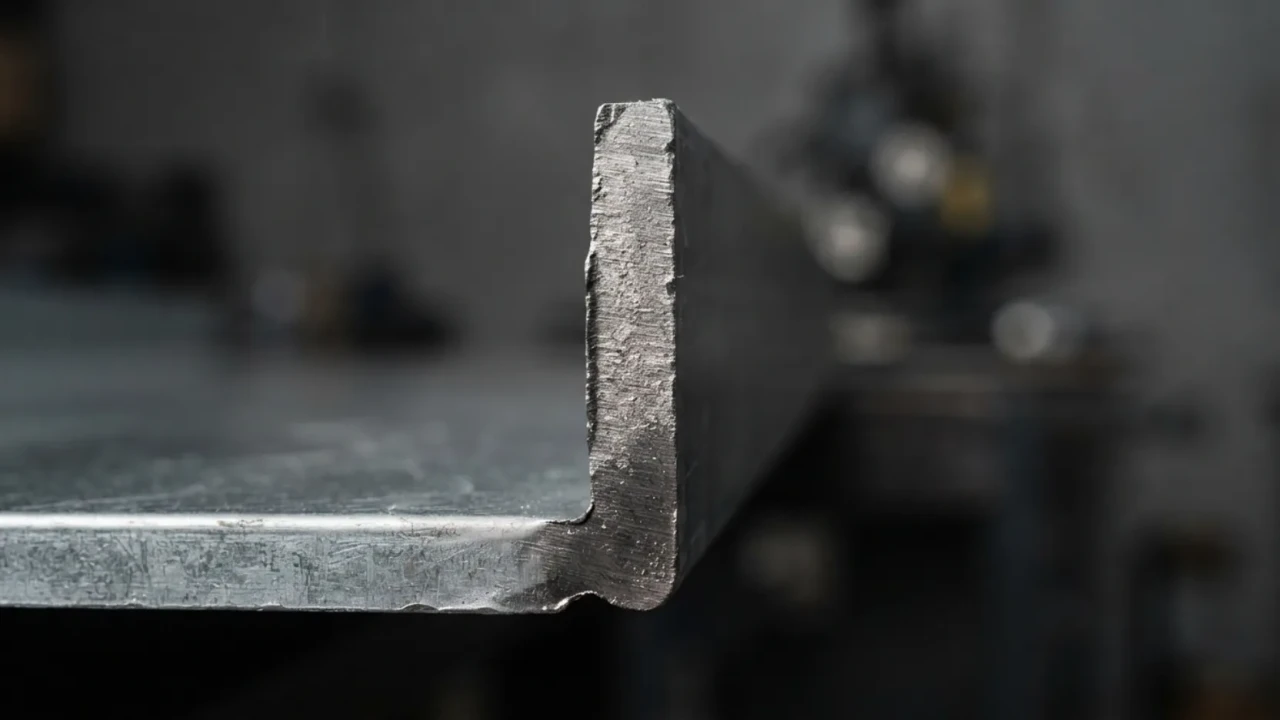
Steel is the most widely used base metal for residential and commercial metal roofing in the United States and in San Antonio specifically. Modern roofing steel is cold-rolled to precise thicknesses, designated by gauge. The higher the gauge number, the thinner the steel: 24-gauge steel is approximately 0.024 inches thick and is the standard for residential standing seam roofing, while 26-gauge at approximately 0.019 inches is used in some commercial applications and less demanding residential projects.
Aluminum is naturally rust-proof, roughly one-third the weight of steel, and the correct choice for properties near coastal or high-humidity environments. It is softer than steel, which makes it more vulnerable to denting under hail impact, a meaningful concern for San Antonio homeowners. Aluminum roofing panels are typically specified by thickness in inches rather than gauge: 0.040 inches is the standard residential minimum.
- Gauge specified in writing in the contract: 24-gauge minimum for residential standing seam steel in San Antonio
- Base metal type confirmed: steel, aluminum, copper, or zinc not a generic "metal panel" description
- For aluminum: thickness specified at 0.040" minimum for residential standing seam
- Material sourced from a domestic or certified-origin mill with traceable quality documentation
- Gauge verified independently if possible: a caliper measurement at delivery confirms what was quoted
Bare steel rusts. That is not a deficiency unique to metal roofing; it is a fundamental property of iron-based alloys exposed to oxygen and moisture. The metallic coating applied directly to the surface of the steel base is what prevents this from happening. Without it, a steel roofing panel would begin to rust within months of installation. The type, thickness, and chemical composition of this coating is one of the most critical specifications in the entire metal roofing system.
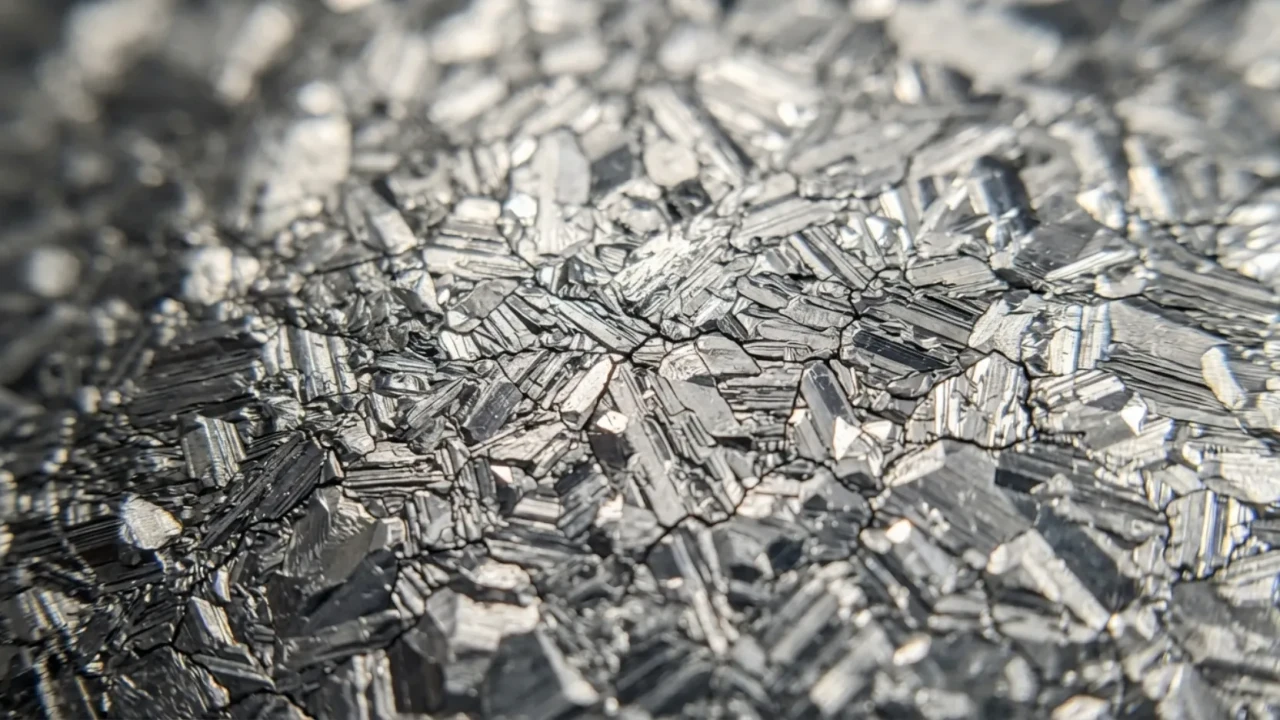
Galvalume is the industry-standard metallic coating for residential and commercial steel roofing panels in the United States. It was developed by Bethlehem Steel in the 1970s and has become the dominant coating for metal roofing because it significantly outperforms the older galvanized (pure zinc) coating in long-term corrosion resistance. Galvalume is composed of approximately 55% aluminum, 43.4% zinc, and 1.6% silicon applied to the steel surface by a continuous hot-dip process.
Why Galvalume outperforms galvanized: The aluminum component of the Galvalume coating creates a dense, stable oxide layer on the surface that is highly resistant to progressive corrosion. The zinc component provides sacrificial cathodic protection at cut edges, scratches, and any point where the coating is broken. These two mechanisms work together in a way that pure zinc coating cannot replicate. In accelerated corrosion testing and in real-world performance data spanning four decades, Galvalume-coated steel panels consistently outlast equivalent galvanized panels by a significant margin.
- Coating type specified as Galvalume (AZ coating) not galvanized (G coating) for all steel panels
- Minimum AZ55 coating weight confirmed for residential standing seam applications
- Isolation barrier specified wherever Galvalume panels contact concrete, mortar, or treated lumber
- Mill certification or product data sheet available from the contractor confirming the coating specification
- Copper or copper-containing materials confirmed absent from any component that contacts Galvalume panels
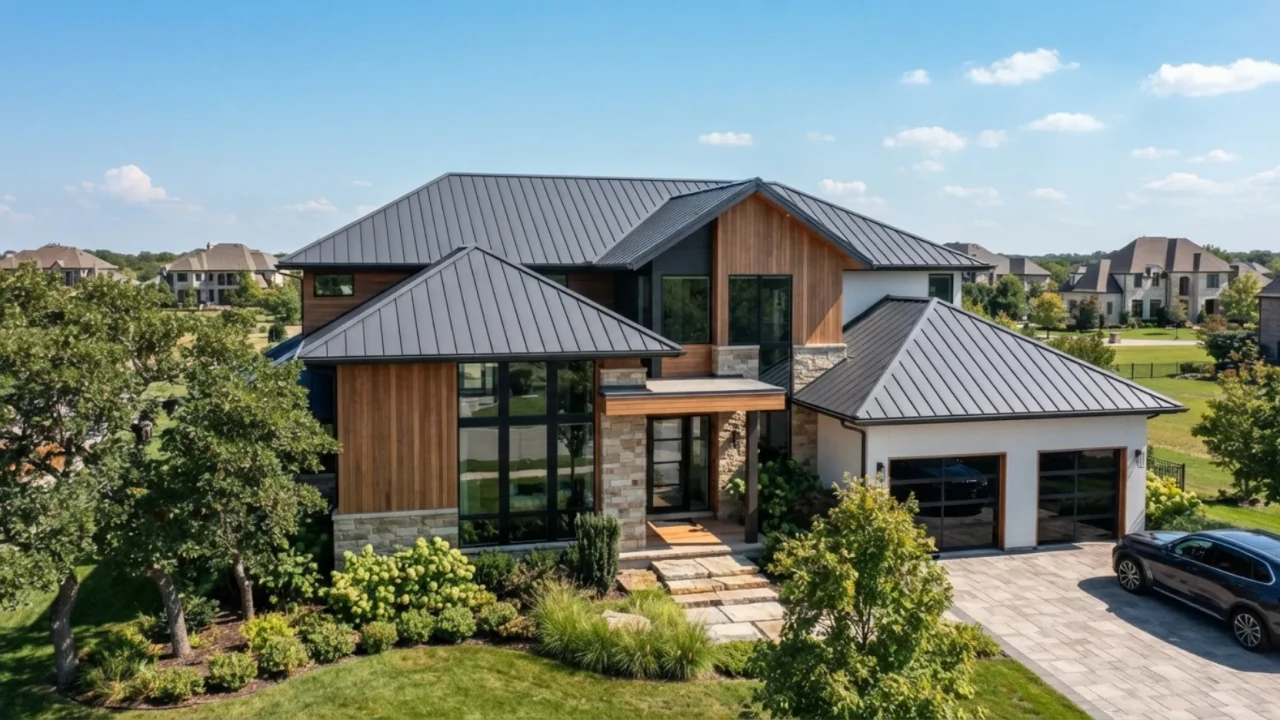
On colored metal roofing panels, the paint system sits on top of the metallic coating and is what you actually see from the ground. It serves two purposes: it provides the color and aesthetic appearance of the roof, and it adds another layer of protection against UV radiation, moisture, and environmental exposure. The quality of this paint system determines how the roof looks after 20 or 30 years under San Antonio's intense sun exposure, which is one of the highest UV environments in the continental United States.
There are two primary paint systems used on metal roofing panels: PVDF (polyvinylidene fluoride) and SMP (silicone-modified polyester). They look identical on day one. The difference appears over time, particularly in a market like San Antonio where annual UV exposure levels are extreme.
In San Antonio's UV environment, the difference between PVDF and SMP paint becomes visible within 10 to 15 years. SMP panels chalk, fade, and lose sheen noticeably faster than PVDF panels under the same exposure conditions. The upgrade from SMP to PVDF (Kynar 500) adds a modest amount to the panel cost, typically $0.30 to $0.80 per square foot, and pays for itself many times over in the form of a roof that still looks good at year 25 rather than one that needs recoating. For any residential standing seam installation in San Antonio, PVDF is the correct paint specification. Ask specifically for the trade name: Kynar 500 or Hylar 5000.
- Paint system specified as PVDF (Kynar 500 or Hylar 5000) for any residential standing seam roof in San Antonio
- Paint warranty terms reviewed: 40-year limited chalk and fade warranty is standard on PVDF systems
- Top coat thickness specified: minimum 0.7 mil dry film thickness for the PVDF color coat
- Back coat confirmed: the underside of the panel should be coated, not bare Galvalume
- Color selection verified against the panel manufacturer's current PVDF color chart, not a generic swatch
- Touch-up paint or color-matched sealant confirmed available for cut edges and fastener holes
The underlayment is installed over the roof decking and beneath the metal panels. It serves as a secondary moisture barrier in the event that water finds its way past the panel surface, and it provides additional protection to the structural deck during installation and before panels are fully secured. Selecting the wrong underlayment for a metal roof is a common installation error that can shorten panel life, cause noise problems, and even void the panel manufacturer's warranty.
The key thing homeowners need to understand is that traditional asphalt felt underlayment (felt paper) is not the correct specification for a metal roof. The temperatures that build up on a metal roof deck in the San Antonio summer can exceed 200 degrees Fahrenheit in some configurations. Standard felt paper degrades, releases volatile compounds that can stick to the underside of the metal panel, and fails at those temperatures over time. Metal roofing requires an underlayment specifically rated for high-temperature applications.
- Underlayment product specified by name in the contract not just "synthetic" or "felt"
- High-temperature rating confirmed: minimum 250 degree Fahrenheit rating for San Antonio metal roof applications
- Standard felt paper (15-lb or 30-lb) explicitly excluded from the contract specification
- Self-adhering membrane specified at all valleys, eaves, and penetration areas
- Ventilated underlayment confirmed for any zinc roofing installation
- Underlayment laps and fastening pattern confirmed to panel manufacturer's installation requirements
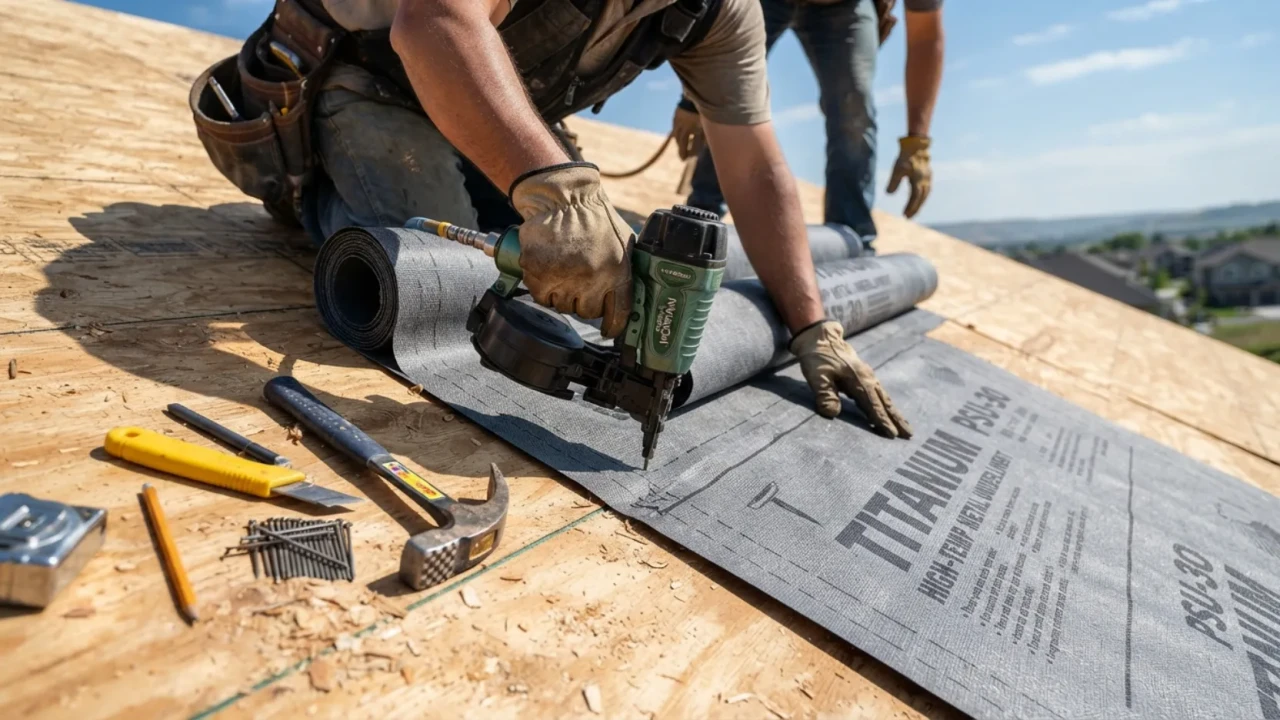
The fastening system is where most metal roof failures originate, and it is also where the most variation exists between a quality installation and a cost-cut one. Getting the base metal and coating right means little if the system is held together with the wrong type of fasteners at incorrect spacing and torque. Conversely, a properly designed fastening system is what allows a metal roof to handle decades of thermal expansion and contraction without developing leaks at every attachment point.
Standing seam floating clips: In a standing seam system, the panel is not directly screwed through its face. Instead, a metal clip is fastened to the deck and the panel seam snaps over or slides through this clip. The clip design allows the panel to move horizontally as it expands and contracts with temperature changes without stressing the fastener field. This is the fundamental mechanical reason why standing seam roofs outlast exposed fastener systems: the panels are free to move, so the metal is never fighting its own fasteners.
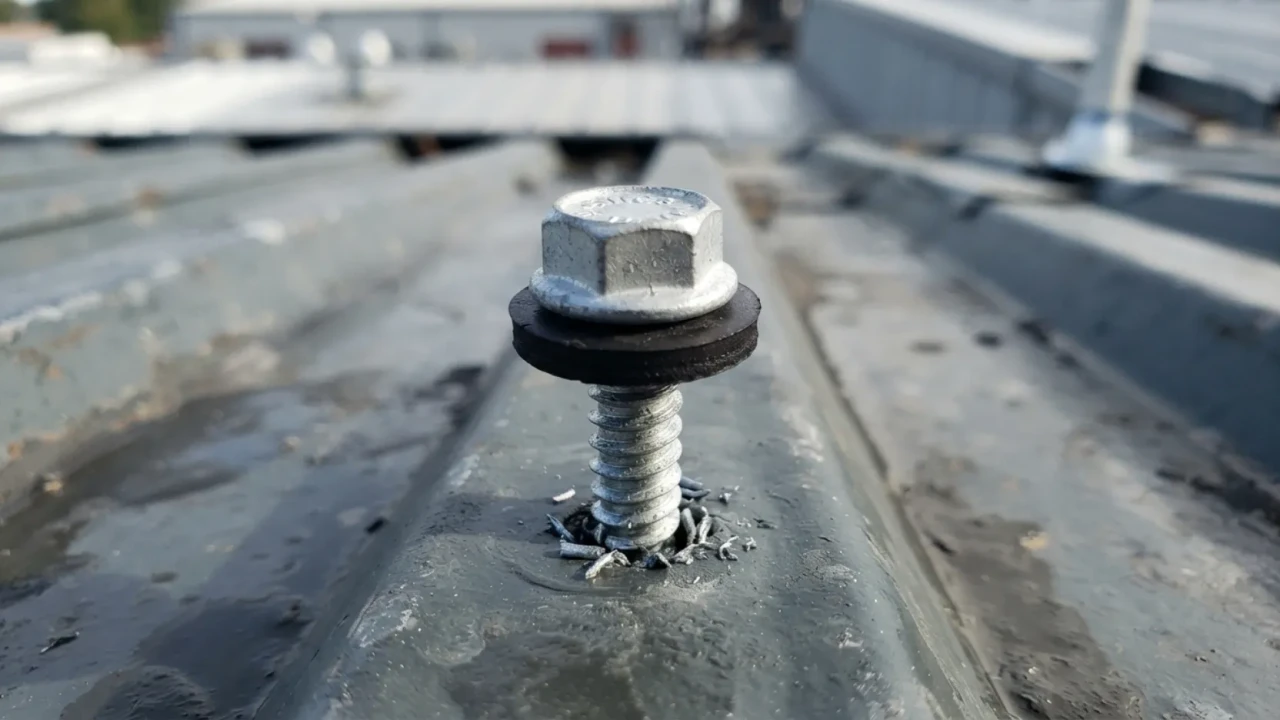
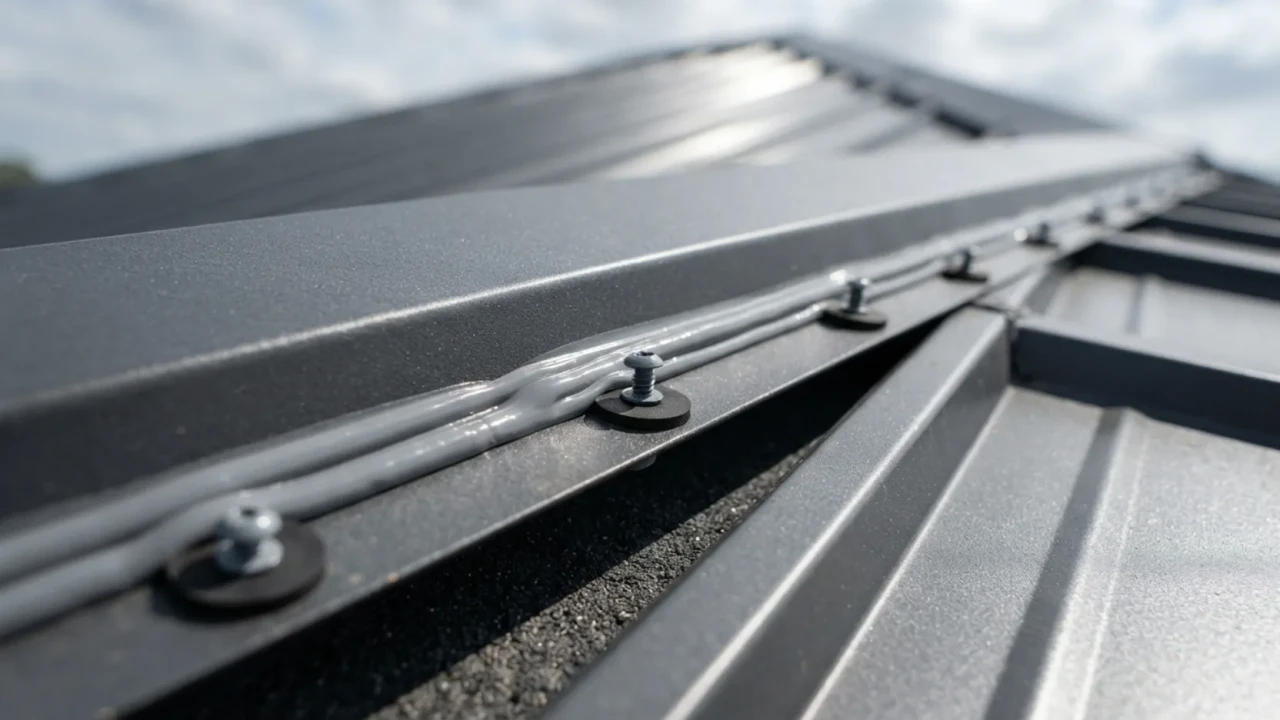
EPDM-gasketed screws (exposed fastener systems): In screw-down or corrugated panel systems, the fastener penetrates directly through the face of the panel. Each screw has an EPDM rubber washer bonded under the head that compresses when the screw is driven, creating a watertight seal. These washers harden, crack, and compress permanently over 10 to 15 years in San Antonio's temperature extremes, creating potential leak points at every fastener location.
Sealants and butyl tape: At panel overlaps, ridges, valleys, and penetrations, mechanical fasteners alone are not sufficient. Butyl tape (a flexible, non-curing sealant tape) is installed at panel overlaps in standing seam systems to seal the seam before the panels are crimped or snapped together. At ridge caps, penetrations, and transition flashings, a compatible sealant is applied in addition to mechanical fastening. The correct sealant is specified by the panel manufacturer and is not interchangeable with general-purpose caulk.
Over-driven screws are the leading cause of fastener-related leaks on exposed fastener metal roofs in San Antonio. When a roofing screw is driven too deep, it compresses the EPDM washer to the point where the rubber distorts and is extruded out from under the head. The washer may still look intact from above, but the seal is broken. A correctly driven screw should compress the washer just enough that a small amount of rubber is visible around the perimeter of the screw head without distortion. Many installation crews use clutch-set screw guns calibrated to the correct torque to prevent this. Ask your contractor whether their crews use torque-controlled drivers for exposed fastener work.
- Clip type confirmed for standing seam: fixed clip versus floating clip, and panel manufacturer's matching clip system specified
- Fastener material confirmed: stainless steel or manufacturer-approved zinc-coated fasteners for the panel material
- EPDM washer specification confirmed for all exposed fastener applications
- Torque-controlled drivers confirmed for exposed fastener installation
- Butyl tape specification confirmed at all panel overlaps in standing seam installations
- Sealant at ridges and penetrations confirmed as manufacturer-approved product, not generic silicone
- Fastener spacing confirmed to panel manufacturer's requirements, not contractor preference
Flashings are the sheet metal components installed at all transitions, edges, penetrations, and changes of direction on a roof. They are what seal the roof at chimneys, vent pipes, skylights, valleys where two roof slopes meet, and at the eave and ridge edges of the panel field. Flashing failures are responsible for a disproportionate share of metal roof leaks, particularly on roofs that are otherwise installed correctly. The panels themselves rarely fail. The transition points do.
In a properly composed metal roofing system, all flashings are fabricated from the same material as the panels or from a compatible material that will not cause galvanic corrosion. Copper flashings should never be installed on a steel or aluminum roof. Galvanized steel flashings should not be substituted for Galvalume-compatible trim components. The metal in every flashing and trim piece needs to have the same corrosion resistance as the panel it is protecting.
- All flashings fabricated from same material as panels or confirmed compatible material
- Copper flashings confirmed absent on any steel or aluminum panel system
- Ridge cap specified with dual-bead butyl tape sealant plus mechanical fasteners at the correct spacing
- Valley flashing gauge confirmed: at least as heavy as the panel material
- All pipe boots and penetration flashings confirmed as metal, not just foam or rubber boots
- Eave and rake trim confirmed to match panel manufacturer's trim system, not generic sheet metal
This table summarizes the correct specification for each component of a residential standing seam metal roof in San Antonio. Use it as a checklist when reviewing contractor proposals and material specifications.
| Component | Correct specification | What to reject | Why it matters |
|---|---|---|---|
| Base metal | 24-gauge Galvalume steel or 0.040" aluminum | 26-gauge or thinner for residential; bare steel with no coating | Structural strength, hail resistance, lifespan foundation |
| Metallic coating | AZ55 Galvalume minimum (55% Al, 43.4% Zn, 1.6% Si) | G90 galvanized (pure zinc only); unspecified coating | Primary corrosion protection on steel base |
| Paint system | PVDF (Kynar 500 or Hylar 5000), 70% resin content | SMP (polyester) for San Antonio UV exposure conditions | Color retention and UV resistance over 40+ year service life |
| Underlayment | High-temp synthetic, 250 degree F minimum rating | 15-lb or 30-lb felt paper anywhere under metal panels | Secondary water barrier; prevents heat-related adhesion to panel underside |
| Clips and fasteners | Manufacturer-matched floating clips; stainless or zinc-coated screws | Fixed clips only; galvanized fasteners in copper applications | Allows thermal movement; prevents fastener corrosion and leak points |
| Sealant | Butyl tape at overlaps; manufacturer-approved sealant at penetrations | Generic silicone caulk substituted for butyl tape at seams | Seam and penetration watertightness over decades |
| Flashings | Same material as panels or confirmed compatible alloy | Copper flashings on steel or aluminum panel systems | Prevents galvanic corrosion at all transition points |
| Ridge cap | Dual butyl tape beads plus mechanical fasteners at correct spacing | Single sealant bead only; fasteners without sealant | The ridge is the highest-probability leak point on any metal roof |
- Base metal type and gauge specified in writing: 24-gauge Galvalume steel minimum for residential standing seam
- Metallic coating confirmed as AZ55 Galvalume or better, not G90 galvanized
- Mill certification or product data sheet available from the contractor on request
- Isolation barrier confirmed for any contact between Galvalume panels and concrete, mortar, or treated lumber
- Paint system confirmed as PVDF (Kynar 500 or Hylar 5000), not SMP polyester
- Top coat dry film thickness minimum specified: 0.7 mil PVDF
- Paint warranty terms reviewed: 40-year limited chalk and fade warranty confirmed
- Back coat confirmed on underside of all panels
- Touch-up paint availability confirmed for cut edges
- Underlayment product specified by name: high-temp synthetic, minimum 250 degree F rated
- Felt paper explicitly excluded from specification
- Self-adhering membrane at valleys, eaves, and all penetration areas
- Floating clips confirmed for standing seam system, manufacturer-matched to panel profile
- Fastener material confirmed: stainless steel or manufacturer-approved zinc-coated screws
- Torque-controlled installation confirmed for all exposed fastener applications
- All flashings confirmed as same material as panels or compatible alloy
- Copper flashings confirmed absent on steel or aluminum roof systems
- Ridge cap installation method confirmed: dual butyl bead plus mechanical fasteners
- Butyl tape confirmed at all panel overlaps in standing seam systems
- Penetration sealant confirmed as manufacturer-approved product, not generic silicone
Want a metal roof installed to the right specification in San Antonio?
We will walk you through every component, confirm the correct specification for your home and budget, and give you a written estimate with the material details spelled out. Free inspection and free estimate, no pressure.