
A sudden storm rolls through, and now your roof might be hiding problems you can’t see from the ground. Spotting wind damage early is crucial for keeping your home safe, avoiding costly repairs, and making insurance claims easier. This guide will teach homeowners how to check for wind damage safely and effectively.
Understanding Wind Damage
Wind can be surprisingly destructive to your roof. Strong gusts can lift shingles, crack tiles, and scatter debris across your roof and yard. “I thought my roof was fine until I noticed the shingles curled after last week’s storm,” says one homeowner, Angi: Roof Wind Damage Signs.
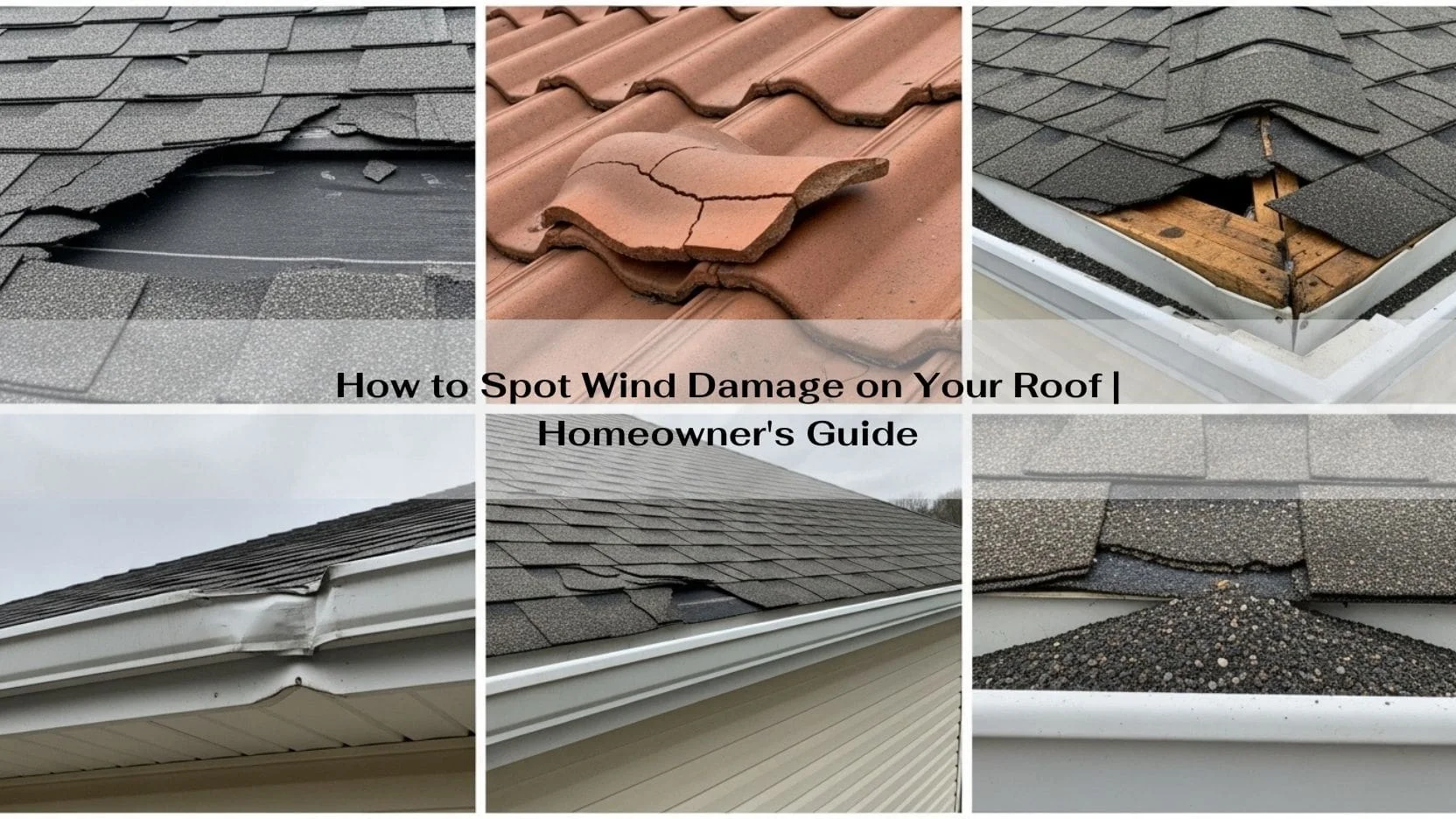
Some common types of wind damage include:
- Lifted or Missing Shingles: High winds can peel shingles off or loosen them.
- Cracked or Broken Tiles: Heavy winds can crack tiles or slate roofs, allowing water to seep in.
- Dented Flashing and Gutters: Metal components like flashing and gutters can get bent or dented.
- Granule Loss: Asphalt shingles lose protective granules, making the roof more vulnerable HomeAdvisor Guide on Roof Inspection.
Signs to Look for After a Storm
Missing or Lifted Shingles
Check for shingles that are curled, cracked, or completely missing. Even a few lifted shingles can let water in and cause leaks.
Cracked or Broken Tiles
Inspect any visible tiles for cracks or missing pieces. These weak spots can lead to water damage if not repaired promptly.
Dented Flashing and Gutters
Walk around your home and look for dents or bends in metal flashing, vents, and gutters. Damaged flashing can compromise your roof’s waterproofing.
Granule Loss
Look in your gutters for excess granules or black sand-like material. This indicates that shingles are losing their protective layer.
Debris Accumulation
Branches, leaves, and other debris on your roof can hide damage and clog gutters. Removing debris also lets you spot hidden problems The Spruce: Detecting Roof Damage.
Safety Tips for Roof Inspection
Roof inspections can be dangerous. Know when to DIY and when to call a professional. Always:
- Use sturdy ladders and wear non-slip shoes.
- Avoid walking on wet or icy roofs.
- Wear gloves and safety gear.
One homeowner shared, “I tried checking my roof alone, but realized it was too steep and called a pro” Reddit Homeowners Discussions.
Documenting and Acting on Damage
If you spot damage, take clear photos and notes. Documenting the issues helps with insurance claims and repair planning.
- Prioritize repairs based on severity.
- Contact licensed roofing professionals for major issues Yelp Roofing Services Reviews.
Conclusion
Spotting wind damage early can save homeowners a lot of stress and money. Look for lifted shingles, cracked tiles, dented metal, granule loss, and debris after storms. Inspect safely, document everything, and call a professional if needed. By taking these steps, you can protect your home and your wallet.