
Roofing guide · San Antonio, Texas
What Is Ice and Water Shield, and Does a San Antonio Roof Need It?
The name suggests cold climates, but this peel-and-stick membrane is useful on Texas roofs too.
The short answer
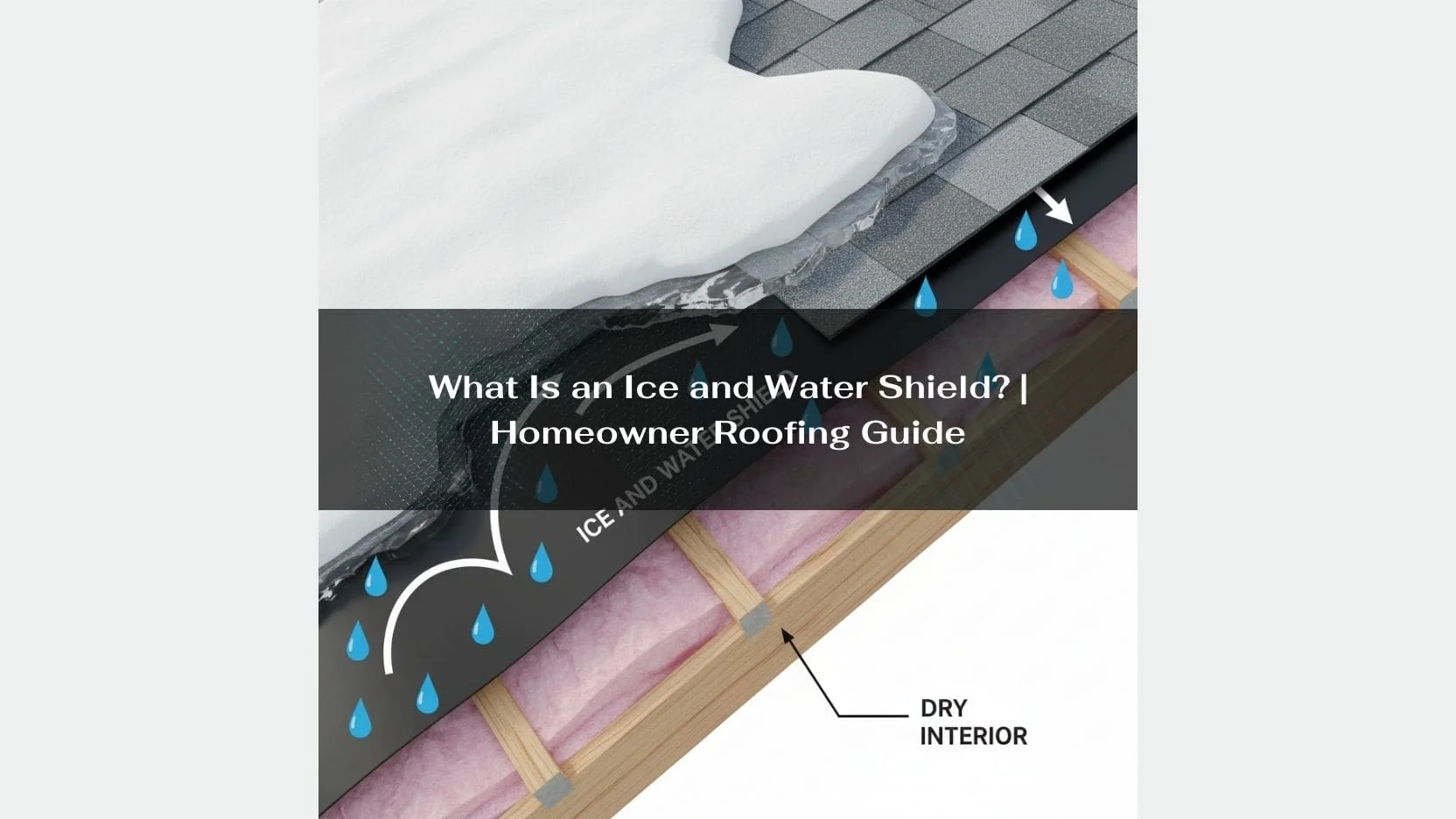
Ice and water shield is a common name for self-adhered modified bitumen underlayment, a peel-and-stick membrane that bonds to the roof deck and seals around nails. In San Antonio, ice is rare, but the membrane still helps keep wind-driven rain out at leak-prone spots such as valleys, eaves, and around chimneys and walls. The Texas Department of Insurance lists self-adhered modified bitumen as one of the underlayment types for Texas roofs. [1]
What is it?
A self-adhering waterproof membrane.
Unlike felt or synthetic underlayment, which is fastened in place, self-adhered membrane sticks directly to the deck. It seals around nails driven through it, which helps keep water from following fasteners into the deck.

Where does it go?
Leak-prone areas, or the whole deck.
| Location | Why |
|---|---|
| Valleys | Water concentrates where roof planes meet |
| Eaves and rakes | Wind-driven rain enters at edges |
| Around chimneys and walls | Flashing joints are leak-prone |
| Around pipes and skylights | Penetrations are weak points |
| Full deck | A full layer adds protection under the whole roof |
Placement should follow the roof covering manufacturer’s instructions. [1]
In San Antonio, the main threat is not ice but heavy rain pushed sideways by storm winds. If wind lifts shingle edges or tears some off, a sealed membrane underneath can limit how much water reaches the deck until repairs are made.
Does your roof need it?
Often at key spots; ask about a full layer.
- Ask whether the estimate includes it at valleys and around walls.
- Ask whether a full self-adhered layer is an option.
- Check that the product is named in the estimate.
Our guide to roofing underlayment compares all three types.
What RRSATX recommends
Ask each roofer where they put self-adhered membrane and why. It’s a detail that separates careful bids.
Next steps: what you can do, and what needs a pro
Know where the membrane goes before you sign.
You can safely:
- Ask if it’s in the bid.
- Ask where it goes.
- Compare bids on it.
- Keep the estimate.
Leave to a roofer: installing underlayment and membrane to the manufacturer’s instructions. RRSATX offers a free roof inspection with a photo report and a written estimate.
Local roofing service
About Affordable Roofing Contractors San Antonio
Affordable Roofing Contractors San Antonio, also known as RRSATX, is a father-and-son roofing business owned by Ted. Ted has 40 years of hands-on roofing experience. The company carries $2 million in liability insurance coverage. It offers free roof inspections and leak inspections, with no fee and no obligation, provides a photo report after the inspection, and gives a free written estimate before any work starts. If storm damage is involved, RRSATX can help as your roofer, not your adjuster: it can document damage and prepare an estimate, but it cannot act as a public insurance adjuster or negotiate a claim for you. [2] RRSATX provides a written workmanship warranty; this guide does not state its terms.
- Phone
- (713) 504-2341
- sales@affordableroofingcontractorssanantonio.com
- Address
- 4324 Monterey St, San Antonio, TX 78237
- Contact
- Request a free roof inspection
Ice and water shield: questions answered
Is it only for cold climates?
No. It also helps with wind-driven rain at leak-prone spots.
Can it be added later?
Not without removing the roof covering above it.
Is it the same as synthetic underlayment?
No. Synthetic is fastened; self-adhered sticks to the deck. [1]
Does it work under metal or tile?
Self-adhered membranes are made for different coverings; follow the maker’s instructions.
Request a free roof inspection
Call or use the contact form. You get a photo report and a written estimate before any work starts.