
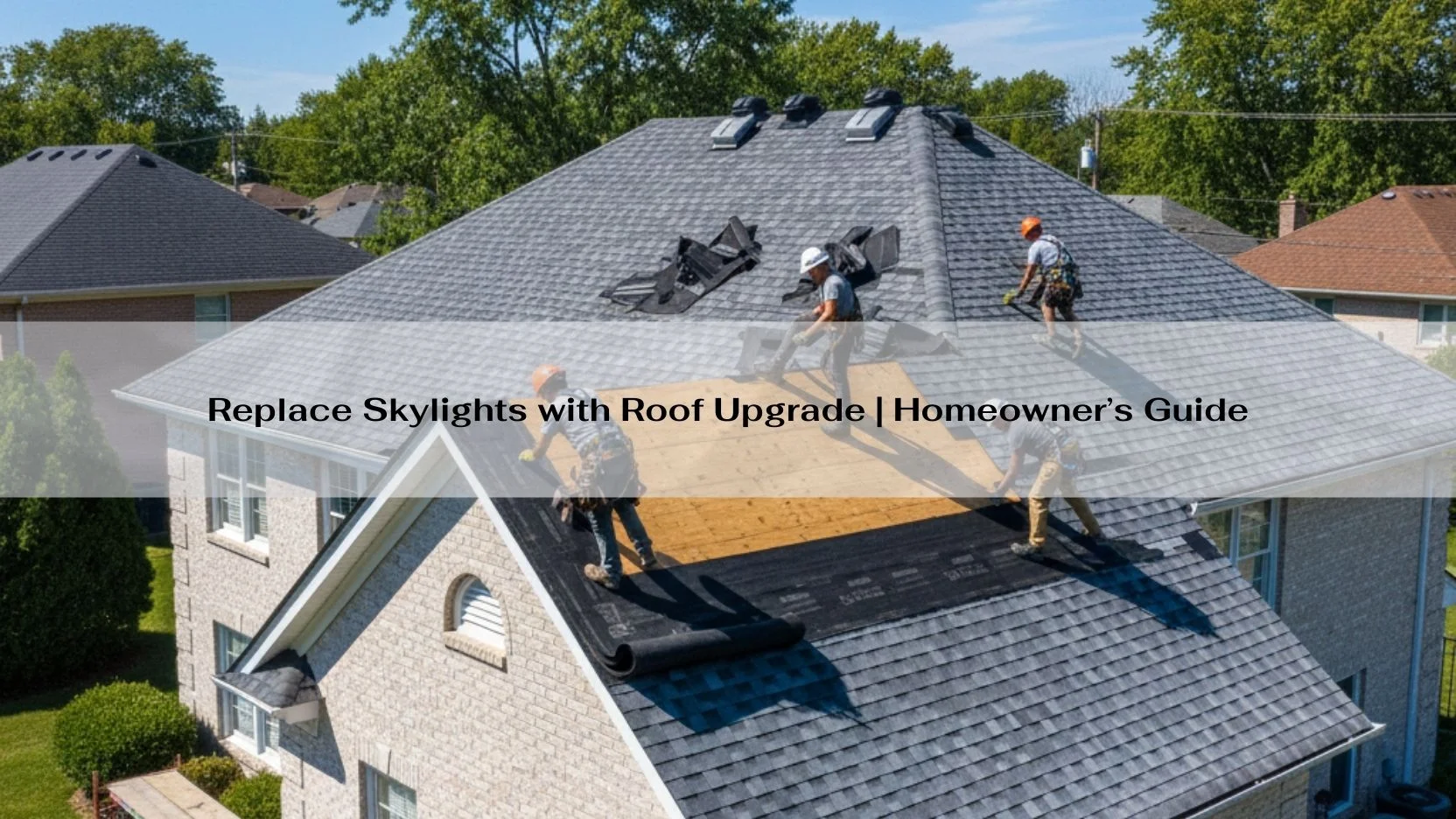
Have you noticed water stains around your skylight or felt drafts near it? Many homeowners face this dilemma: should you replace the skylights or go for a full roof upgrade? Choosing the right path matters because it affects your home’s energy efficiency, durability, and long-term value. While skylight replacement seems easier, a roof upgrade can solve multiple problems at once, from leaks to insulation issues. In this guide, we’ll walk you through everything you need to know about replacing skylights with a roof upgrade.
1. Why Consider Removing Skylights
Skylights bring natural light into your home, but they can also cause headaches. Common problems include leaks, drafts, and higher maintenance costs. Many homeowners find themselves constantly patching leaks or resealing skylights. As one homeowner shared on Reddit, “I was constantly fixing leaks, so I decided a roof upgrade made more sense.”
Replacing a skylight might cost around $1,000–$2,500, but frequent repairs can add up. Plus, skylights can reduce your home’s energy efficiency by letting heat escape during winter or letting it in during summer. Removing them during a roof upgrade can eliminate these issues for good.
2. Benefits of a Roof Upgrade
Opting for a full roof upgrade offers several advantages beyond just removing skylights:
- Energy Efficiency: New roofing materials and proper insulation can reduce heating and cooling costs. According to HomeAdvisor, the average roof replacement can improve energy performance significantly.
- Durability: Modern roofing materials last longer and withstand weather better than older roofs with skylights.
- Increased Home Value: Many buyers prefer homes without skylight issues. A fully upgraded roof can enhance your property’s resale value.
A homeowner on Quora mentioned, “Replacing the roof solved all my issues and added value to my house.” This sentiment is common among those who’ve upgraded their roofs.
3. Potential Drawbacks and Solutions
While a roof upgrade has clear benefits, there are some considerations:
- Loss of Natural Light: Removing skylights reduces sunlight. Solutions include installing tubular skylights or upgrading to LED daylight bulbs.
- Higher Upfront Cost: Roof upgrades can cost $7,500–$12,500 depending on size and materials. However, long-term savings on repairs and energy bills often outweigh the initial investment.
Planning ahead and exploring alternatives to natural light can help homeowners enjoy the benefits without feeling the loss.
4. How to Decide: Skylight vs Roof Upgrade
Here’s a simple checklist for homeowners:
- Is your roof old or damaged?
- Have skylights caused recurring leaks?
- Is your energy bill higher than expected?
- Are you planning to stay in your home long-term?
If you answer yes to one or more of these questions, a roof upgrade is likely the better option. It provides a long-term solution and reduces maintenance headaches.
5. Steps to Upgrade Your Roof and Remove Skylights
- Inspect Your Roof: Identify weak spots, leaks, and overall condition.
- Hire a Professional: Roof replacement is complex; a certified roofer ensures safety and quality.
- Remove Skylights Safely: Proper sealing and decking are crucial.
- Install New Roofing Materials: Choose durable, energy-efficient options.
- Final Inspection: Ensure all leaks are sealed and your roof meets local building codes.
For a detailed guide, This Old House provides step-by-step instructions for homeowners considering roof upgrades.
Conclusion
Replacing skylights with a roof upgrade is often a smart choice for homeowners dealing with leaks, drafts, or high maintenance. While it requires a larger upfront investment, the long-term benefits include better energy efficiency, increased property value, and peace of mind. By evaluating your roof’s condition and considering alternative lighting solutions, you can make an informed decision that saves money and improves your home for years to come.