
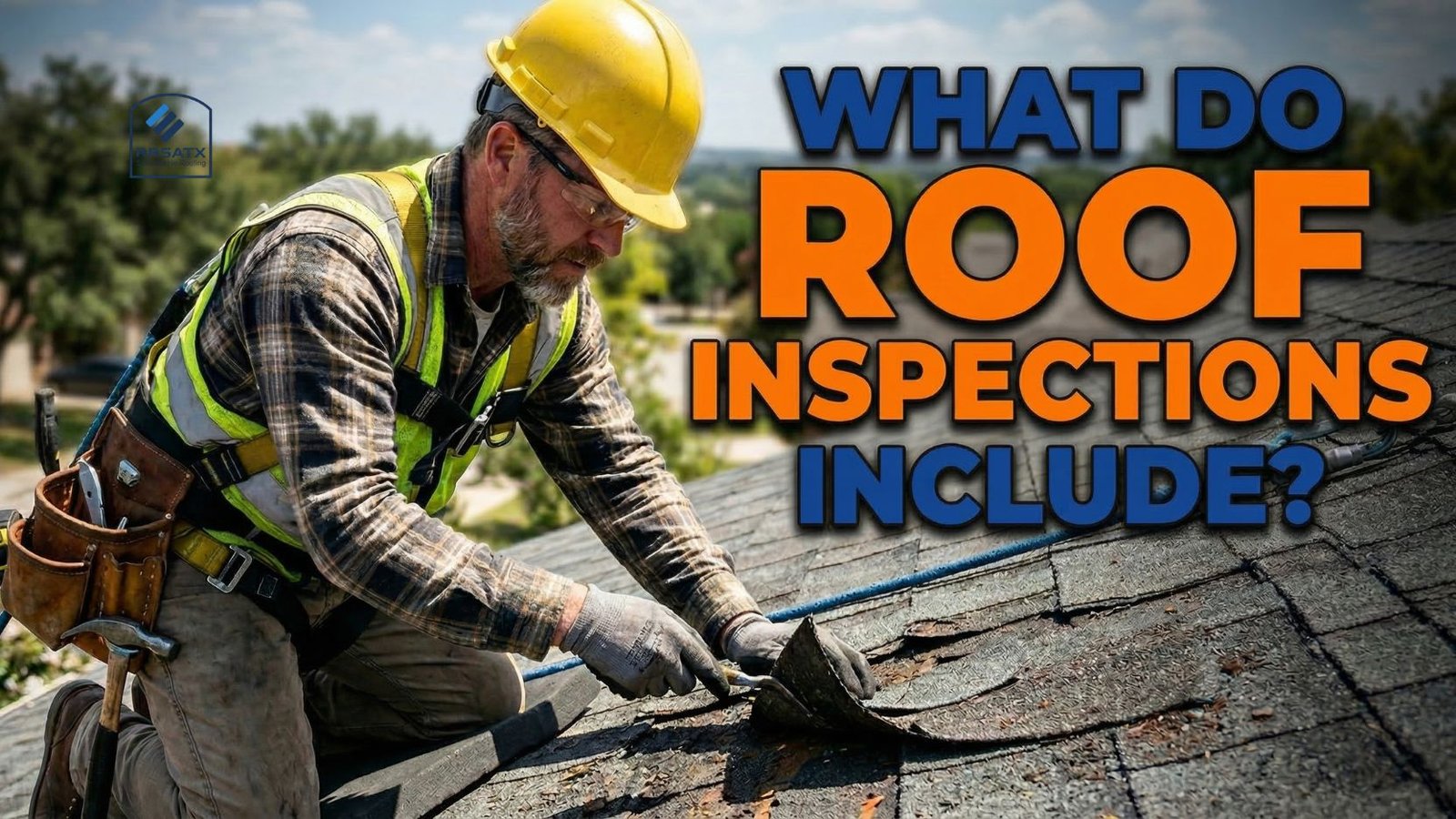
Family-owned since 2000, RRSATX: San Antonio Roofing Company builds its inspection process around the roof problems common in South Texas: heat stress, hail impact, lifted shingles, failed flashing, and hidden leaks. For San Antonio homes and commercial buildings, a roof inspection includes checking the roof surface, flashing, vents, gutters, drainage, attic conditions, and interior signs of water damage.
The answer: A proper roof inspection examines every part of the roofing system that can wear out, let water in, or shorten the roof’s lifespan.
What Does A Roof Inspector Check During A Full Inspection?
A full inspection covers both the outside and inside of the roof system.
| Area checked | What the inspector looks for | Why it matters |
| Roofing material | Missing shingles, cracked tiles, rust, punctures, lifted seams, granule loss | Surface damage often leads to leaks |
| Flashing and penetrations | Chimneys, skylights, pipe boots, valleys, wall joints | These are common leak points |
| Gutters and drainage | Clogs, loose sections, poor runoff, ponding water | Bad drainage can damage the roof edge and fascia |
| Structure and decking | Soft spots, sagging, uneven areas | Structural issues can point to rot or long-term water intrusion |
| Attic and interior | Water stains, mold, wet insulation, poor ventilation, daylight through decking | Interior signs often confirm hidden roof problems |
Key takeaway: A roof inspection is not just a quick look at shingles. It checks the full system that protects the building.
What Do Inspectors Look For On The Roof’s Exterior?
The exterior inspection focuses on the roof covering and visible wear.
For asphalt shingle roofs, inspectors usually check for:
- Missing or loose shingles
- Curling or blistering
- Granule loss
- Exposed nail heads
- Storm creasing from the wind
For metal roofs, they look for:
- Rust or corrosion
- Loose fasteners
- Open seams
- Dented panels from hail
- Failed sealant at joints
For tile, flat, or low-slope roofs, they may check for:
- Cracked or slipped tiles
- Ponding water
- Membrane splits
- Surface punctures
- Drainage problems
In San Antonio, this matters because long heat cycles, strong sun, and hail can age roofing materials faster than many owners expect.
Do Roof Inspections Include Flashing, Vents, And Other Leak-Prone Areas?
Yes. Flashing and roof penetrations are some of the most important parts of the inspection.
A good inspector checks areas such as:
- Chimney flashing
- Skylight edges
- Pipe boots
- Roof valleys
- Wall-to-roof connections
- Ridge vents and other exhaust vents
These spots fail more often because they involve seams, metal transitions, sealant, or movement. A roof can look fine from the ground and still leak around a vent pipe or chimney.
That is why many leaks are not caused solely by the main field of shingles. They often start with the details.
Are Gutters, Attic Spaces, And Ventilation Part Of A Roof Inspection?
They should be. A complete roof inspection includes drainage and attic conditions, not just the top surface.
Gutters And drainage
Inspectors check whether water can move off the roof correctly. That includes:
- Clogged gutters
- Loose downspouts
- Overflow marks
- Water pooling near edges
- Signs of fascia or soffit damage
Attic And Interior
The attic can reveal problems the outside view misses. Inspectors often look for:
- Water stains on the decking
- Damp insulation
- Mold or mildew smells
- Poor airflow
- Heat buildup
- Light showing through boards or joints
Poor ventilation can shorten a roof’s lifespan. On older roofs, especially those aged 15 to 20+, attic heat and trapped moisture can accelerate wear.
Can A Roof Inspection Find Storm Damage Or Help With Insurance Claims?
Yes, but it depends on what is visible at the time of inspection.
A storm damage inspection may document:
- Hail strikes
- Wind-lifted shingles
- Dented metal panels or vents
- Broken tiles
- Debris impact
- Water entry points
For insurance-related situations, photos and notes matter. A documented inspection can help show the roof’s condition after a storm. It can also help home buyers, sellers, and commercial property owners determine whether the roof needs immediate repair or should be monitored.
Important: A visual inspection can find many issues, but not every hidden problem can be confirmed without more testing or opening materials.
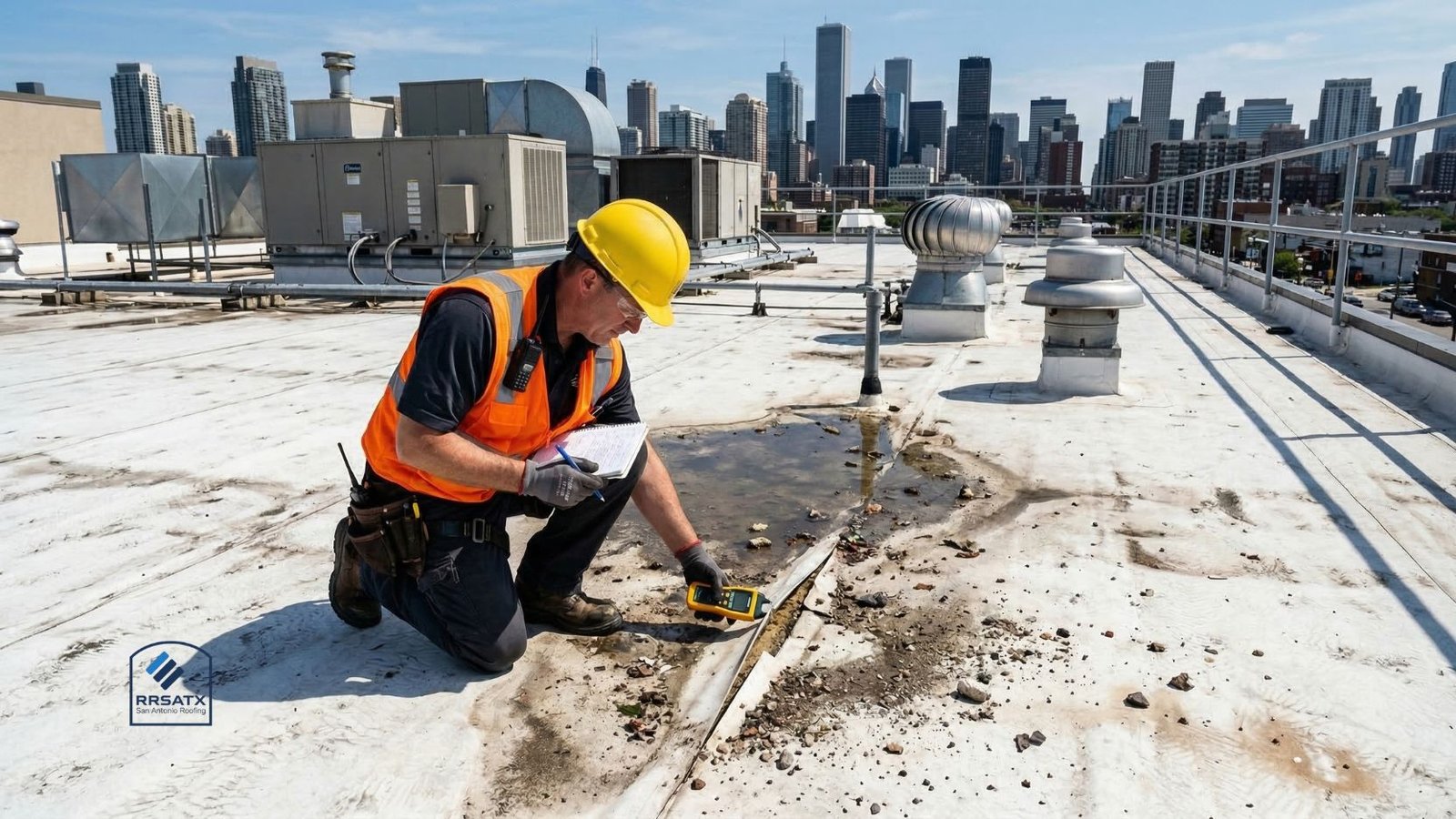
Is A Commercial Roof Inspection Different From A Residential One?
Yes. The goal is the same, but the roof systems are different.
Commercial inspections often focus on:
- Membrane seams
- Punctures from foot traffic
- Ponding water
- Roof drains
- Flashing around HVAC units
- Parapet walls
- Coating wear
Residential inspections usually focus more on shingles, tile, valleys, pipe boots, and attic conditions.
For commercial buildings, regular inspections help catch minor failures before they disrupt tenants, inventory, or operations.
What Is Usually Included In The Roof Inspection Report?
A professional roof inspection report should be clear and easy to understand.
Most reports include:
- A summary of the roof condition
- Photos of problem areas
- Notes on leaks, damage, or wear
- Areas that need repair soon
- Areas to monitor
- A repair-or-replace recommendation when appropriate
This is useful for homeowners, buyers, sellers, landlords, and commercial property managers because it turns the inspection into an action plan.
When Should You Schedule A Roof Inspection In San Antonio?
The best time is before a small issue becomes a major repair.
- You see water stains on ceilings or walls
- Your roof is 15 to 20+ years old
- A hail or wind storm just passed through
- You are buying or selling a property
- You manage a commercial building
- You want documentation for maintenance or insurance
FAQs
How Long Does A Roof Inspection Usually Take?
Most residential roof inspections take 30 minutes to 2 hours, depending on roof size, pitch, access, and whether attic or interior checks are included.
Can A Roof Inspection Tell Me Whether I Need Repairs Or A Full Replacement?
Yes. A good inspection shows whether the roof needs targeted repairs, maintenance, or a full replacement, based on damage, age, and the extent of the system’s failure.
Do Roof Inspections Include The Attic?
A complete inspection often does. Attic checks help confirm hidden leaks, ventilation issues, and moisture problems that may not be visible from the roof surface alone.