
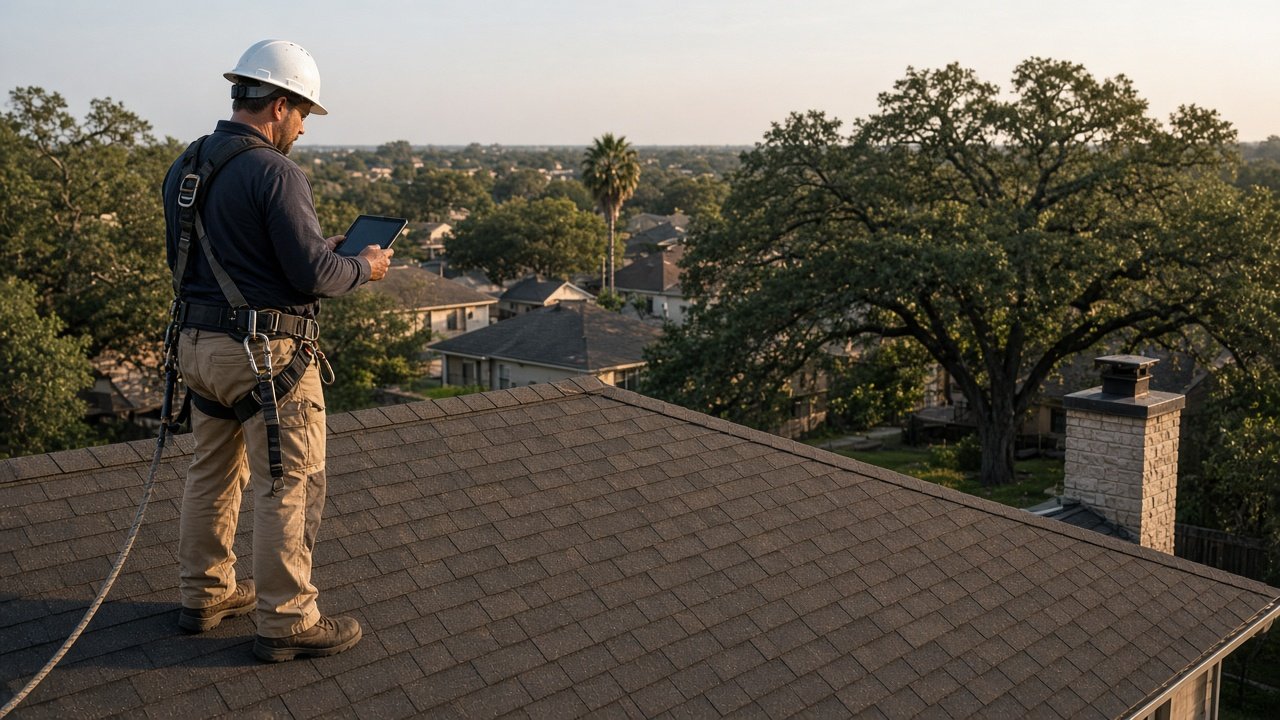
Roof inspections · San Antonio, Texas
How Long Does a Roof Inspection Take? What Sets the Pace in San Antonio
There is no honest single answer, because the roof and the reason for the visit set the pace. This guide explains what makes an inspection quicker or more involved, walks through each step, and shows how to get your San Antonio home ready so the visit goes smoothly.
The short answer
How long does a roof inspection take? It depends on the roof and the purpose of the visit. A simple, walkable single-story shingle roof with easy access is quicker to inspect than a steep, cut-up, two-story or tile roof. A storm damage documentation visit, or one that includes an attic check and a written photo report, takes longer than a routine look. When you book with RRSATX, we’ll give you a time estimate for your specific home.
How long does a roof inspection take, and why does it vary?
The length of a roof inspection follows the roof itself and what the inspection is for. A quick visual check and a full storm damage survey are very different visits.
IBHS’s RICOWI roof guide describes the goal of a roof survey as examining the roof system to evaluate the cause and extent of natural aging, normal wear, or damage from wind, hail, or other weather, and to collect data and document conditions at that point in time. [1] How much of that work a roof needs depends on its size, shape, material, access, and condition.
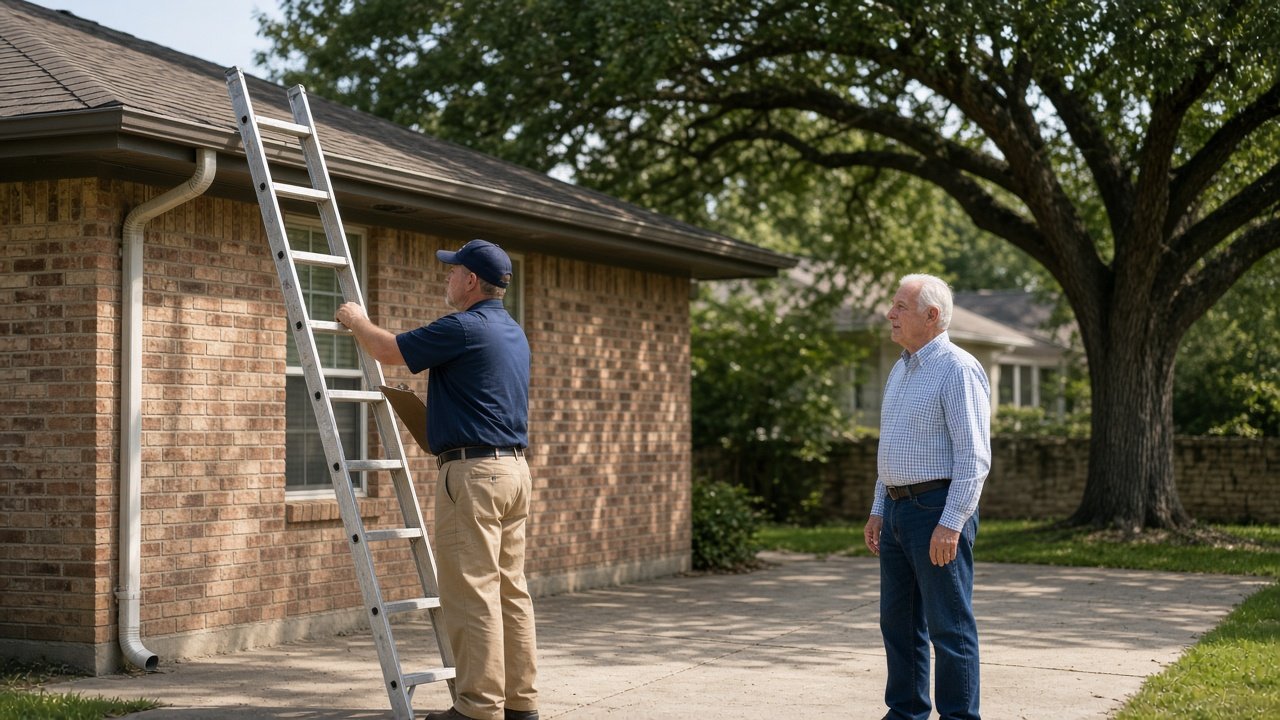
That is why RRSATX doesn’t quote a standard length. When you book, tell us about your roof and why you want it inspected, and we’ll give you a time estimate for your home. For a full overview of what the visit covers, see what roof inspections include.
What makes a roof inspection quicker or more involved
Most of what sets the pace is visible from the street. The bigger, steeper, and more complicated the roof, the more involved the inspection.
| Factor | Why it changes the length | What you can do |
|---|---|---|
| Roof size and stories | More roof area means more to walk and photograph. A two-story home needs a taller ladder setup. | Mention the number of stories when you book. |
| Pitch and safety setup | Steep roofs call for fall protection and slower, more careful movement. | Tell us if the roof is steep or hard to reach. |
| Roof complexity | Valleys, hips, dormers, chimneys, wall-to-roof transitions, skylights, plumbing pipes, and other penetrations each need a close look at the flashing. | Note any area that has leaked before. |
| Roof material | Tile isn’t walked like shingles, and metal roofs have their own seams and fasteners to check. | Let us know the roof type and its age if you know it. |
| Attic access | A blocked or hard-to-find hatch slows the interior check. | Clear a path to the hatch before the visit. |
| Purpose | A routine check is quicker than storm damage or insurance documentation, or an inspection for a home sale. | Tell us why you want the inspection. |
| Weather | Wet or windy conditions can make a roof unsafe and may mean rescheduling. | Keep a backup time in mind. |
| Report and photos | A written report with labeled photos takes more time on the roof and afterward. | Ask what kind of report you’ll receive. |
IBHS’s guide reflects the same factors in its pre-inspection interview: whether the roof is steep or low slope, roof and eave heights, existing access, and skylights and other roof openings. [1] Metal roofs have their own checklist; see RRSATX’s metal roof inspection page.

What happens during a roof inspection, step by step
A thorough inspection follows a set order, from a conversation on the ground to the written findings. Each step adds time, and each one matters.
- A short conversation. The inspector asks about your concerns, known leaks, the roof’s age, and past storms. IBHS lists known issues, leaking, age of the roof covering, roof type, maintenance history, and previous weather performance as things to ask about. [1]
- A walk around the house. A ground-level look identifies safety issues, roof staining or discoloration that may make a steep roof slick, and the materials on the roof. [1]
- Ladder setup. The inspector places the ladder and puts on fall protection where needed. IBHS equipment lists include a ladder, a digital camera, chalk or another way to mark the roof, a moisture meter, and proper fall protection. [1]
- A roof-level look. The inspector checks shingles or tiles, seal strips, roof edges, changes in slope, and penetrations, then the flashing at walls, chimneys, skylights, and valleys, along with seams and seals. [1]
- Hail and wind patterns, where relevant. After a storm, the inspector looks for damage patterns across the slopes.
- The underside of the deck. From the attic and inside the home, the inspector looks for stains and signs of leaks.
- Photos and notes. IBHS calls for collecting photos with notes during the survey. [1]
- Going over the findings. The inspector talks through what they found and follows up with the written report.
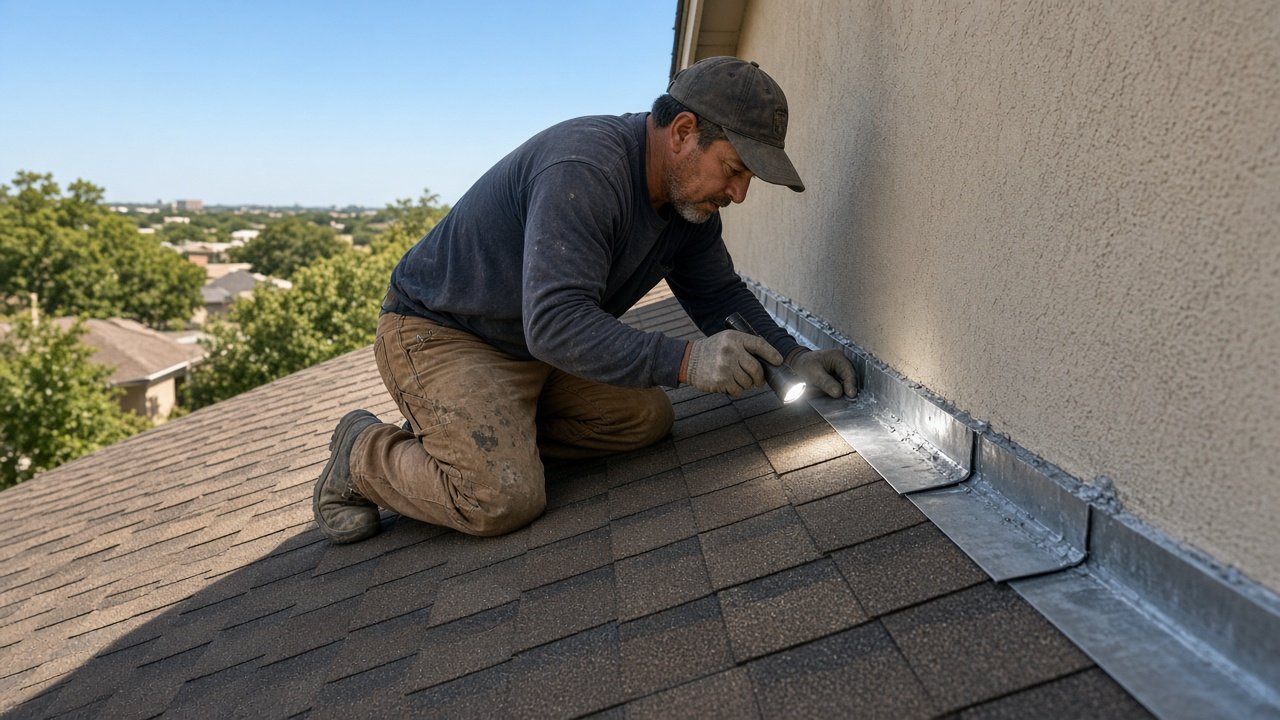
A roof with many walls, chimneys, and skylights simply has more flashing to check, which is a big reason complex roofs take longer.
Why the attic and ceiling check adds time
Some problems show up underneath the roof before they show up on top. Checking from inside is slower, but it can find leaks the surface doesn’t reveal.
IBHS’s guide describes viewing the underside of the deck from inside: checking ceilings for leaks and stains, checking the deck for leaks or stains around penetrations, perimeters, and corners, looking for diffuse sunlight coming through the deck, and looking for possible damage to structural supports. [1]
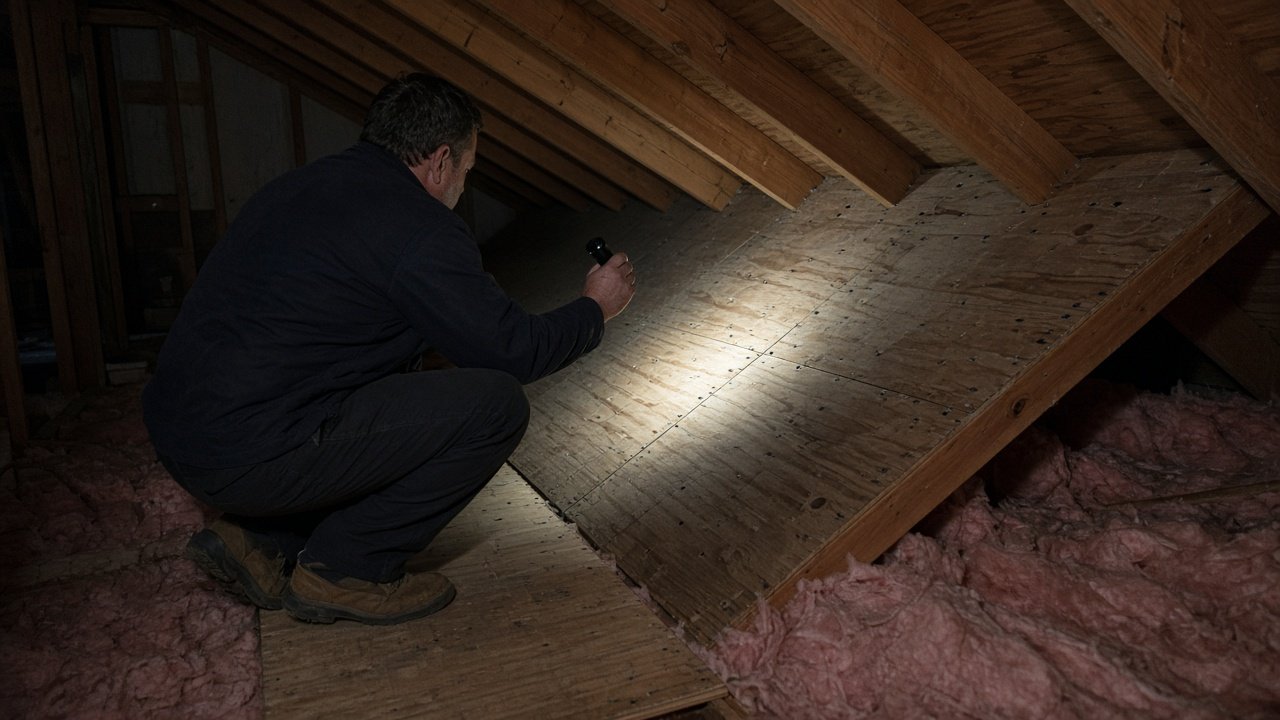
How quickly this goes depends on the hatch. An open, easy-to-reach hatch makes it simple. A hatch inside a packed closet or garage storage area slows things down.
Tile roofs in San Antonio take more care
Clay and concrete tile roofs are inspected more slowly and deliberately than shingle roofs. The reason is simple: tiles can break under foot traffic.
The Tile Roofing Industry Alliance says walking on any roof should be kept to a minimum, notes that most manufacturers do not warrant breakage due to foot traffic, and recommends a trained roofing professional for accessing the roof. It also says walking any roof requires extreme caution, describes careful stepping to avoid breaking tiles, and advises staying away from hips and valleys to avoid breaking cut tiles. [2]
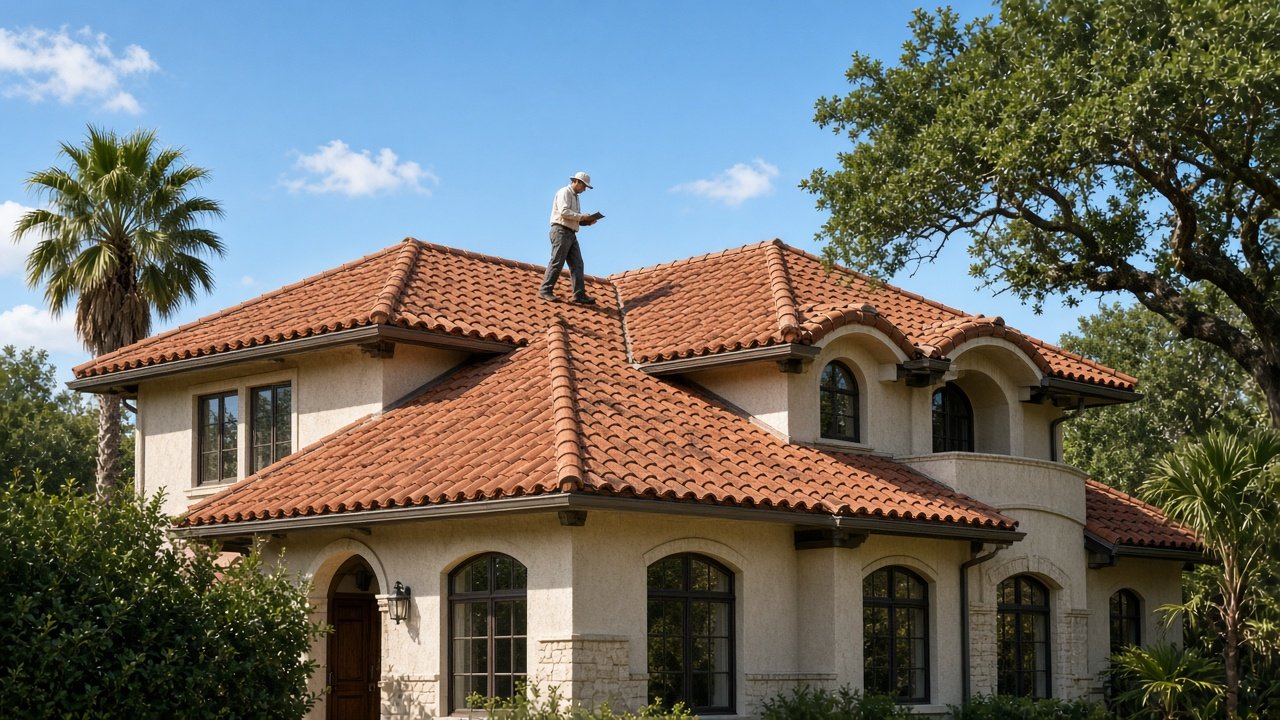
Because of that, some inspectors check parts of a tile roof from a ladder at the eaves or from the ground rather than walking the whole surface. Broken tiles should be replaced soon to avoid underlayment damage. [2] See RRSATX’s tile roofing page and the guide to roof tiles maintenance in San Antonio.
Storm damage inspections are more involved
After hail or high wind, the inspection is about documentation as much as diagnosis. That makes it a longer visit than a routine check.
For hail, IBHS’s guide calls for identifying, comparing, and documenting damaged and undamaged materials and damage patterns. [1] In practice, that means marking hits, photographing each slope, and checking soft metals and other surfaces for the same pattern. If you plan to talk with your insurer, that record matters.
RRSATX’s storm damage roofing service handles these visits. Before we arrive, you can look for obvious signs from the ground with the guide to DIY roof inspection tips after a storm. Stay off the roof.
A roofer’s inspection vs. a home inspector’s roof check
If you’re buying or selling, the home inspector’s roof check is part of a whole-house visit, not a dedicated roof inspection.
Under the Texas Real Estate Commission (TREC) standards of practice, home inspectors must inspect roof covering materials from the surface of the roof and report the vantage point they used. They are not required to inspect from roof level if they can’t safely reach or stay on the roof, or if walking on it could significantly damage the roof covering. They are also not required to identify latent hail damage or determine the roof’s remaining life expectancy. [3]
When to call a roofer as well
A roofing contractor’s inspection is a separate, roof-focused visit. If the home inspector couldn’t get on the roof, noted possible hail damage, or flagged something you want explained, RRSATX can take a closer look through a roof inspection.
How to help your roof inspection go faster
A little preparation keeps the inspector working on your roof instead of waiting on access.
- Clear a path to the attic hatch.
- Unlock side gates.
- Move vehicles out of the driveway so the ladder can be placed.
- Secure pets indoors or away from the work area.
- Note where and when leaks or stains appear, such as during heavy rain.
- Have prior repair records or insurance claim information on hand.
- Be available to talk at the start and at the end.
For more detail, see how to prepare your home for a roof inspection and how to schedule a roof inspection in San Antonio.
What you get after the inspection
The visit ends with findings you can use. IBHS’s guide calls for organizing and labeling photographs and reporting on findings after the survey. [1]
From RRSATX, that means a written report with photos showing what we found and where. The guide to how to read a roof inspection report explains what each part means. If the report shows damage, roof inspection vs. roof repair explains the difference between the two visits, and our roof repair team can take it from there.
Local roofing service
About Affordable Roofing Contractors San Antonio
Affordable Roofing Contractors San Antonio, also known as RRSATX, provides roof inspections, storm damage roofing, roof repair, and asphalt, metal, and tile roofing in San Antonio. When you call, tell us the roof type, the number of stories, and why you want the inspection, and we’ll give you a time estimate for your home.
- Phone
- (713) 504-2341
- sales@affordableroofingcontractorssanantonio.com
- Address
- 4324 Monterey St, San Antonio, TX 78237
- Contact
- Request a free roof inspection
Roof inspection timing questions answered
Why won’t you give me a standard length for a roof inspection?
Because roofs differ too much. Size, pitch, material, access, and the reason for the visit all change it. RRSATX gives you a time estimate for your specific home when you book.
Does a tile roof inspection take longer than a shingle roof inspection?
Usually, yes. Tiles can break under foot traffic, [2] so the inspector moves carefully and may check some areas from a ladder at the eaves or from the ground.
Is a storm damage inspection longer than a routine one?
Typically. It involves more documentation, including marking and photographing damage and comparing damaged and undamaged materials. [1]
Do I need to be home for the inspection?
It helps. Being there at the start lets you share known leaks and concerns, and being there at the end lets you ask questions about the findings. At minimum, leave gates unlocked and the attic accessible.
Does the home inspector’s roof check replace a roofer’s inspection?
Not necessarily. TREC standards don’t require home inspectors to walk a roof they can’t safely reach or to identify latent hail damage. [3] A roofer’s inspection focuses on the roof alone.
Can bad weather delay a roof inspection?
Yes. Wet or windy conditions can make a roof unsafe to walk, so the visit may need to be moved. Call (713) 504-2341 or use the contact page to book or reschedule.
Explore the roofing topic
More help with roof inspections
Related guideWhat do roof inspections include?The parts of the roof an inspector checks, inside and out.
Related guideHow to read a roof inspection reportWhat the findings, photos, and notes in your report mean.
Find out what your roof inspection will involve
Ask RRSATX for a free roof inspection and a time estimate for your San Antonio home.