
At RRSATX: San Antonio Roofing Company, our team works with property owners dealing with leaks, storm damage, aging roofing systems, and inspection needs tied to insurance or real estate. With decades of roofing experience represented across the company and regular exposure to San Antonio’s hail, wind, UV heat, and heavy rain, we know the warning signs that usually mean a roof needs professional attention.
You need a roof inspection when you notice leaks, missing or damaged roofing materials, signs of storm impact, visible sagging, rising roof age, or unexplained interior moisture. Even if there is no active leak, an inspection is smart after severe weather, before buying or selling a property, and when a roof is 15 to 20 years old or older.
What Are The Clearest Signs That You Need A Roof Inspection?
The clearest signs are water intrusion, visible roof damage, and recent severe weather exposure. If you can see or suspect damage, it is time to have the roof checked.
Common warning signs include:
- Water stains on ceilings or walls
- Dripping during rainstorms
- Missing, cracked, or curling shingles
- Damaged flashing around vents or chimneys
- Sagging roof sections
- Mold or mildew smells in the attic
- Granule buildup in gutters
- Debris impact after a storm
These symptoms often mean the roof system has been compromised somewhere, even if the damage appears minor from the ground.
Key takeaway: If moisture has entered the home, the issue may already be larger than the visible stain or drip.
Do You Need A Roof Inspection If Your Roof Is Not Leaking?
Yes, you may still need a roof inspection even if your roof is not leaking. Many roofing problems start silently and do not show interior symptoms until the underlayment, decking, or insulation has already been affected.
This is especially true in San Antonio, where roofs face:
- Intense UV exposure
- Repeated heat cycling
- Hailstorms
- Wind-driven rain
- Seasonal storm activity
A roof can have:
- Hail bruising
- Lifted shingles
- Cracked sealant
- Failing flashing
- Membrane wear on flat sections
None of those problems always cause an immediate leak, but they can shorten roof life and lead to expensive repairs later.
How Old Does A Roof Need To Be Before It Should Be Inspected?
A roof should be inspected regularly as it ages, and roofs around 15 to 20 years old deserve closer attention. Even if the roof still looks acceptable from the street, material wear can be well underway.
Aging roofs often develop:
- Brittle shingles
- Granule loss
- Faded or weakened seal strips
- Cracked flashing sealant
- Ventilation-related wear
- Soft decking in vulnerable areas
General Inspection Timing By Roof Condition
| Roof Condition | Recommended Action |
| Newer roof with no issues | Inspect after major storms or as part of routine maintenance |
| Roof 10–15 years old | Monitor more closely and inspect periodically |
| Roof 15–20+ years old | Schedule a professional inspection soon |
| Roof with repeated repairs | Inspect to determine if replacement is more cost-effective |
Key takeaway: Age alone does not always mean replacement, but it often means it is time for a professional evaluation.
Should You Get A Roof Inspection After A Storm In San Antonio?
Yes, a roof inspection after a hailstorm, high wind event, or heavy rain is often the safest next step. Storm damage is not always obvious from the ground, and hidden damage can worsen over time.
In San Antonio, post-storm roof inspections commonly look for:
- Hail strikes on shingles or metal
- Torn or lifted shingles
- Damaged ridge caps
- Bent flashing
- Punctures from debris
- Gutter or downspout impact damage
- Water entry around roof penetrations
After a storm, property owners should also watch for:
- New ceiling stains
- Damp attic insulation
- Loose shingles in the yard
- Water near skylights or vents
If you are considering an insurance claim, early documentation matters.
Do Home Buyers And Sellers Need Roof Inspections?
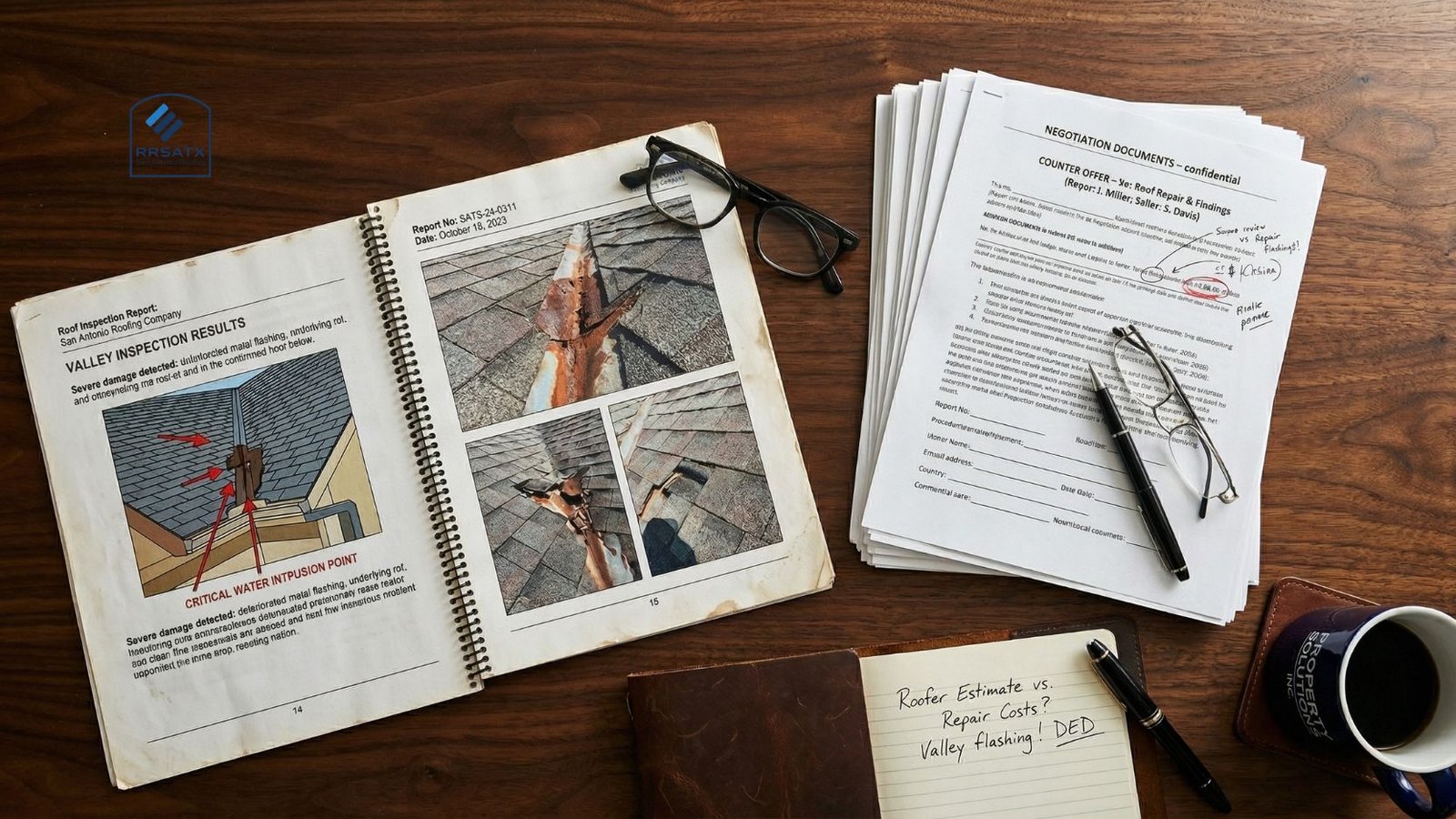
Yes, roof inspections are highly useful for both buyers and sellers. They help reduce surprises during negotiation and give a clearer picture of the roof’s condition and likely lifespan.
For buyers, an inspection can reveal:
- Existing leaks
- Deferred maintenance
- Storm damage
- Improper repairs
- Remaining roof life
For sellers, an inspection can help:
- Identify issues before listing
- Support pricing decisions
- Reduce closing delays
- Provide documentation to buyers
A general home inspection may mention the roof, but a dedicated roof inspection usually provides more detail about materials, flashings, drainage, and repair needs.
What If You Only See A Small Stain Or Minor Damage?
Even a small stain or isolated damage can justify a roof inspection. Roof leaks often travel before becoming visible indoors, which means the source may be far from the stain itself.
Minor-looking issues that deserve attention include:
- One missing shingle
- Small ceiling discoloration
- Slight bubbling paint
- Damp attic smell
- Drip that only appears in heavy rain
- One area of lifted flashing
These signs may point to:
- Slow moisture intrusion
- Storm-related weakness
- Failing sealant
- Vent penetration issues
- Early decking deterioration
Key takeaway: Small symptoms often represent a bigger roofing problem that has not fully surfaced yet.
How Often Should Commercial Buildings Get Roof Inspections?
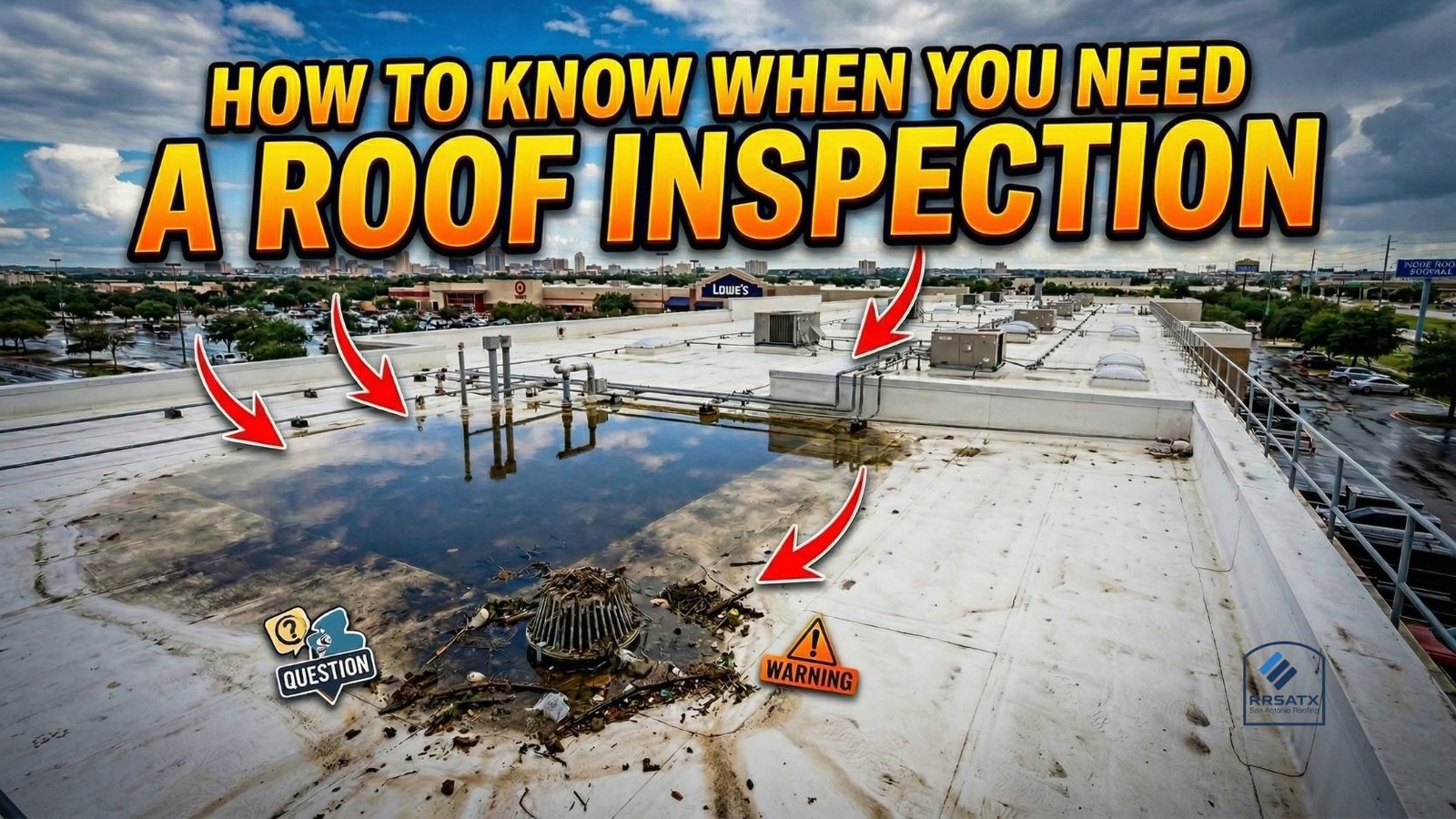
Commercial buildings should be inspected regularly, especially if they have flat or low-slope roofing systems. These roofs are more vulnerable to drainage issues, membrane wear, seam failure, and ponding water.
Commercial owners should schedule inspections:
- After major weather events
- As part of annual maintenance
- Before lease renewals or property transfers
- When interior leaks appear
- If rooftop equipment has been serviced recently
Common issues on commercial roofs include:
- Membrane punctures
- Open seams
- Drain blockage
- Flashing failure
- Ponding water
- Surface deterioration from sun exposure
Routine inspections can help commercial owners catch maintenance issues before they affect operations or tenant spaces.
When Is A Roof Inspection Urgent?
A roof inspection is urgent when there is active leaking, visible structural movement, severe storm impact, or signs that water is entering the building envelope.
Call for prompt inspection if you notice:
- Active dripping
- Sagging roof deck
- Ceiling bulging
- Large sections of missing shingles
- Tree or debris impact
- Water entering after a storm
- Sudden interior mold or mildew smell
In these cases, waiting can increase damage to insulation, drywall, framing, and electrical components.
Where Can San Antonio Property Owners Get A Roof Inspection?
San Antonio property owners looking for local roof inspection support can work with RRSATX: San Antonio Roofing Company, serving the area from:
- 4324 Monterey St, San Antonio, TX 78237, USA
- 318 E Nakoma Dr #210, San Antonio, TX 78216
This is relevant for homeowners with leaks, older roofs, storm concerns, real estate transactions, commercial properties, and insurance-related inspection needs.
FAQs
Can A Roof Have Damage Without Leaking?
Yes. A roof can have storm damage, lifted shingles, flashing issues, or membrane wear without showing an immediate leak.
Is One Missing Shingle Enough Reason For A Roof Inspection?
Yes. One missing shingle can expose underlying materials and allow water intrusion, especially during wind-driven rain.
Should I Get A Roof Inspection Before Filing An Insurance Claim?
In many cases, yes. A professional inspection can help identify visible storm-related damage and clarify the condition of the roof.