
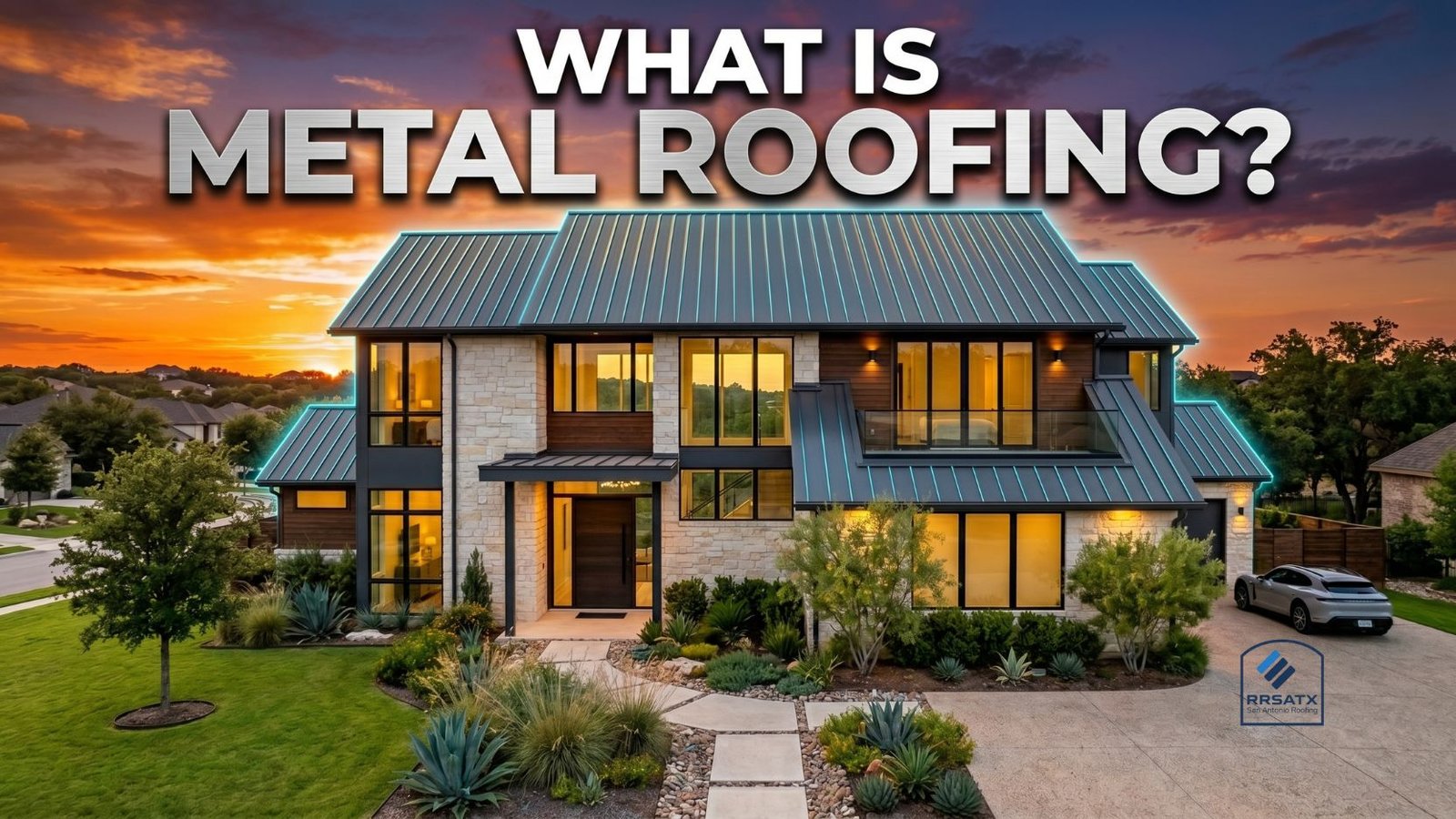
With decades of hands-on roofing experience working on homes and commercial buildings in South Texas, we’ve installed and repaired nearly every roofing system used in high-heat, hail-prone climates. Metal roofing is one of the most durable and misunderstood options we evaluate for property owners in San Antonio.
Metal-roofing is a roofing system made from steel, aluminum, copper, or metal alloys designed to provide long-term protection, energy efficiency, and resistance to wind, hail, and fire. It comes in panels or shingles and can last 40–70 years when properly installed.
What Is Metal Roofing Made Of?
Metal roofing is manufactured from coated or treated metals engineered to resist corrosion and weather damage.
Common materials include:
- Galvanized steel – Strong, affordable, coated to resist rust
- Galvalume steel – Steel with aluminum-zinc coating for enhanced corrosion resistance
- Aluminum – Lightweight and highly rust-resistant
- Copper – Premium option with extremely long lifespan
Key takeaway: Steel and aluminum are the most common residential and commercial metal roofing materials in Texas.
What Are The Main Types Of Metal Roofing?
There are two primary categories: panels and shingles.
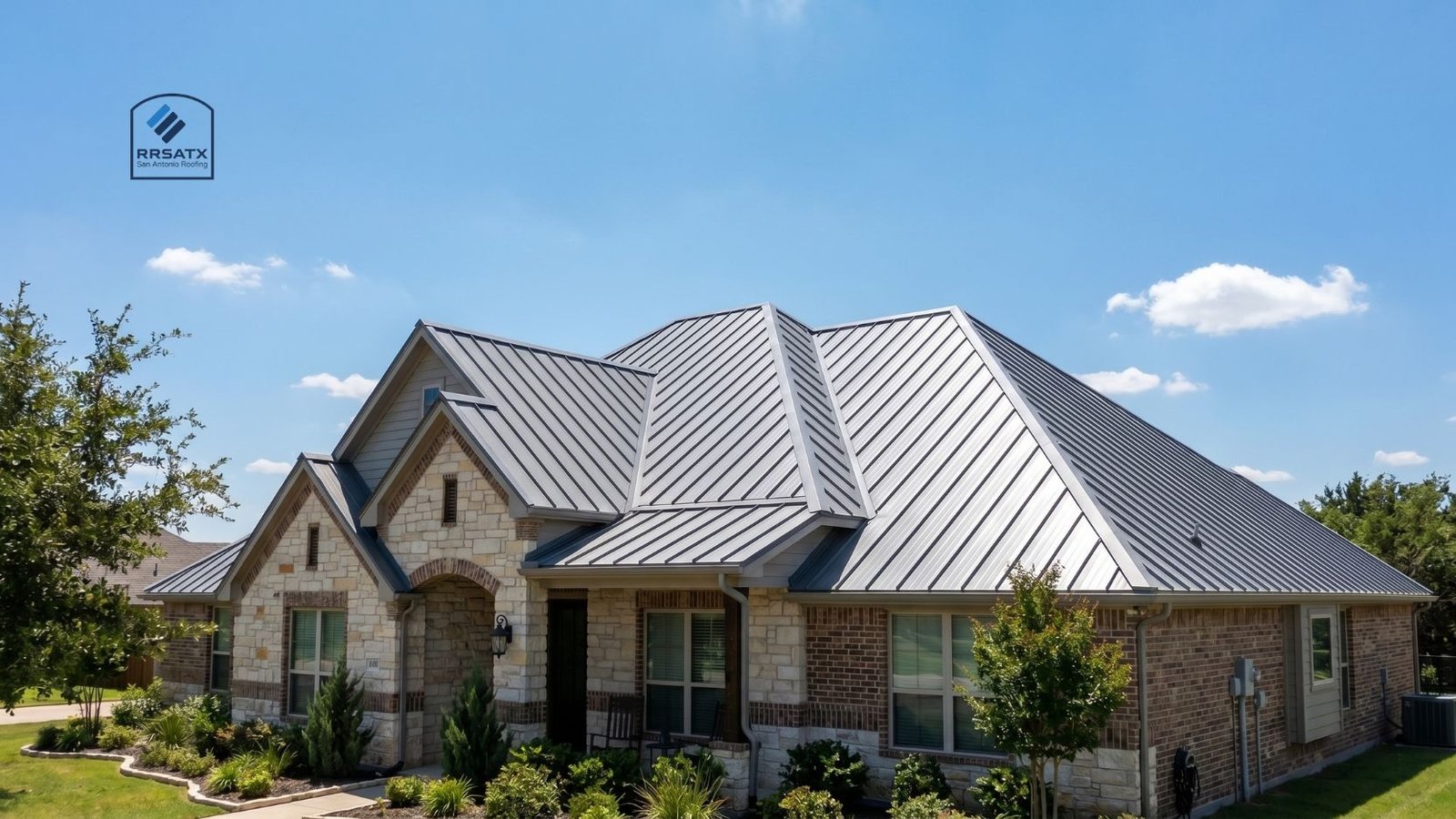
1. Standing Seam Metal-Roofing
Standing seam uses vertical panels with raised seams that lock together.
Best for:
- Residential upgrades
- Modern home designs
- Commercial buildings
- Low-slope applications
Why it’s popular: Hidden fasteners reduce leak risk.
2. Corrugated Metal Panels
Corrugated panels have exposed fasteners and a wave-like pattern.
Best for:
- Budget-conscious projects
- Agricultural or industrial buildings
- Simple roof designs
3. Metal Shingles
Metal formed to resemble asphalt shingles, slate, or tile.
Best for:
- Homeowners wanting traditional aesthetics
- HOA-regulated neighborhoods
How Long Does A Metal Roof Last?
A properly installed metal roof typically lasts 40–70 years.
Comparison:
| Roofing Material | Average Lifespan |
| Asphalt Shingles | 15–30 years |
| Metal-Roofing | 40–70 years |
| Tile Roofing | 50+ years |
In high-heat areas like San Antonio, metal often outperforms asphalt due to UV resistance.
Is Metal-Roofing Good For Texas Weather?
Yes. Metal roofing performs exceptionally well in South Texas conditions.
It offers:
- High wind resistance (often rated 120–140 mph)
- Strong hail resistance
- Fire resistance
- UV reflection to reduce attic heat
- Lower thermal expansion when properly installed
For homeowners with aging roofs (15–20+ years) or repeated storm damage, metal can be a long-term upgrade.
Is Metal Roofing Energy Efficient?
Yes. Metal roofing reflects solar radiant heat, which can reduce cooling costs.
Benefits include:
- Reflective coatings
- Reduced attic heat buildup
- Compatibility with solar panels
- Lower strain on HVAC systems
Key takeaway: In hot climates, energy savings can offset upfront cost over time.
Is Metal Roofing More Expensive Than Shingles?
Upfront cost is higher than asphalt shingles but lower over the long term.
Why?
- Longer lifespan
- Fewer repairs
- Reduced maintenance
- Potential insurance benefits
- Improved resale value
For budget-conscious but quality-focused homeowners, the decision often depends on how long they plan to own the property.
Is Metal Roofing Noisy In The Rain?
Not when installed correctly.
Modern metal roofing systems include:
- Solid decking
- Underlayment
- Insulation layers
These components significantly reduce noise, making them comparable to shingle roofs.
Who Should Consider Metal-Roofing?
Metal-roofing is ideal for:
- Homeowners with storm-damaged roofs
- Properties over 15–20 years old
- Commercial building owners
- Buyers or sellers needing long-term inspection solutions
- Insurance claim upgrades
In areas near 4324 Monterey St, San Antonio, TX and 318 E Nakoma Dr #210, San Antonio, TX, metal roofing is increasingly chosen for durability against regional weather patterns.
FAQs
Does Metal-Roofing Increase Home Value?
Yes. Its long lifespan and durability can improve resale appeal, especially in storm-prone markets.
Can Metal-Roofing Be Installed Over Shingles?
Sometimes. It depends on local building codes and roof condition. Structural inspection is required.
Does A Metal Roof Attract Lightning?
No. Metal does not increase lightning strikes. It is non-combustible and safer than many materials.