
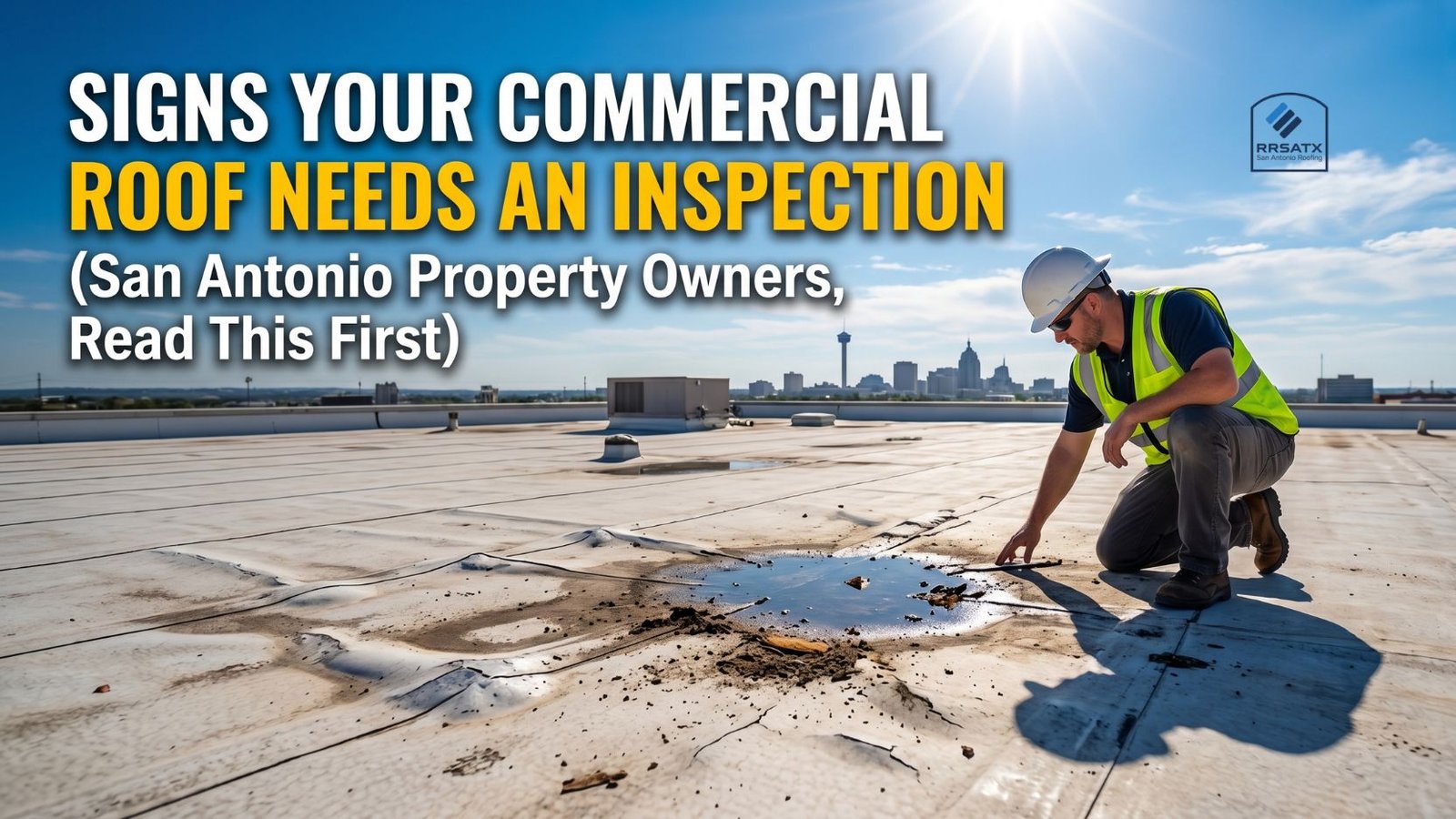
If you own or manage a commercial building in San Antonio, TX, waiting for an obvious leak before calling a roofer is one of the most expensive mistakes you can make. Most commercial roof failures give clear warning signs weeks or months before catastrophic damage sets in. Knowing what to look for and acting early can mean the difference between a $2,000 repair and a $40,000 replacement.
At RRSATX: San Antonio Roofing Company, we inspect commercial roofs across San Antonio daily, from older flat-membrane systems on the south side near Monterey St to multi-unit commercial properties in the north near Nakoma Dr. This guide is built on real field experience, not generic checklists.
How Do You Know If Your Commercial Roof Needs An Inspection?
Your commercial roof likely needs an inspection if it is 10 or more years old, has visible membrane bubbling or seam separation, shows interior water stains, or has experienced a recent hail or wind event in San Antonio.
Even without visible damage, commercial roofs should be inspected at least twice per year once before summer storm season and once after. San Antonio’s heat, UV exposure, and frequent severe weather accelerate roofing material degradation faster than in many other regions.
7 Clear Signs Your Commercial Roof Needs An Inspection Now
1. Standing Water Or Poor Drainage After Rain
Flat and low-slope commercial roofs are designed to drain. If water is still pooling 48 hours after a rainstorm, that is a problem.
Why it matters: Ponding water adds structural load and breaks down membrane material over time, leading to leaks and accelerated deterioration.
- Check drains and scuppers for debris blockages
- Look for low spots or sagging areas on the roofline
- Even small depressions can hold enough water to cause long-term damage
2. Bubbling, Blistering, Or Membrane Separation
If you can safely observe your roof surface and notice raised bubbles or areas where the membrane is lifting away from the substrate, that signals moisture trapped beneath the surface.
Key takeaway: Blistering means the roofing membrane has already lost adhesion in that area. Left unaddressed, it will crack and allow water penetration.
3. Visible Seam Or Flashing Failures
Seams and flashings are the most vulnerable points on any commercial roof. Over time especially under San Antonio’s summer heat these areas expand and contract, causing separation.
- Open seams are direct entry points for water
- Flashing around HVAC units, vents, and parapet walls fails most frequently
- Even small gaps at the seam edge can allow gallons of water in during a single storm
4. Interior Water Stains Or Active Leaks
Water stains on ceiling tiles, walls, or structural beams are a late-stage warning sign. By the time water appears inside, the roof membrane has already been compromised sometimes for months.
Do not assume one stain means one small problem. Water travels along decking and insulation before it drops, so the visible stain may be far from the actual breach point.
5. Roof Age Over 10 To 15 Years
| Roof System | Average Lifespan | Inspection Urgency After Year |
| TPO / PVC membrane | 15 to 25 years | 10 years |
| Modified bitumen | 10 to 20 years | 8 years |
| Built-up roofing (BUR) | 15 to 30 years | 12 years |
| EPDM rubber | 10 to 25 years | 10 years |
| Metal roofing | 25 to 40 years | 15 years |
If your commercial roof is approaching or past these thresholds, a professional inspection is not optional; it is overdue.
6. Recent Hail Or High-Wind Events
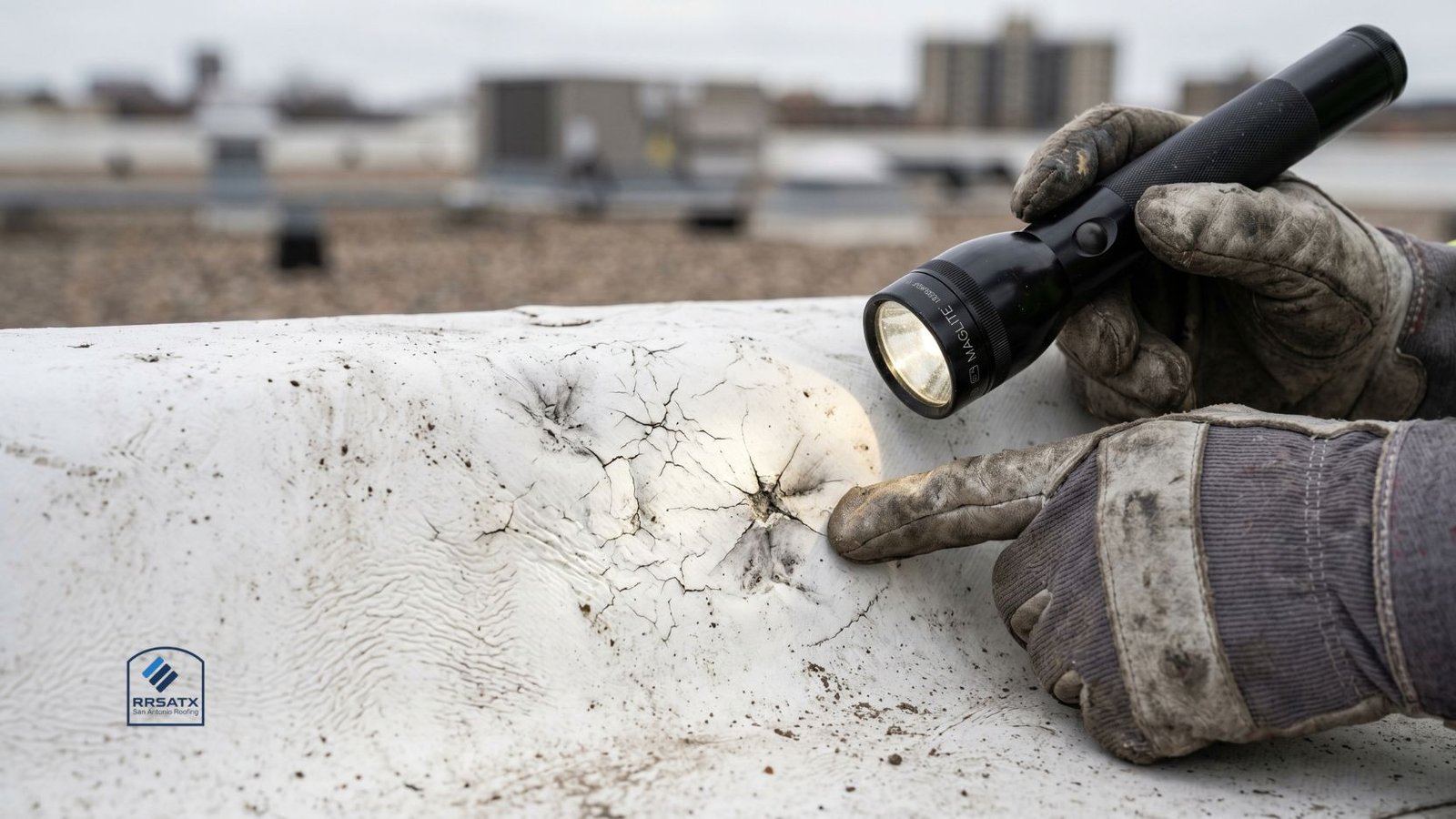
San Antonio sits in a high-frequency hail corridor. After any storm with hail larger than 1 inch or sustained winds above 50 mph, a post-storm inspection is critical.
Hail damage on commercial roofs is often invisible to untrained eyes but causes micro-fractures in membrane material that fail over the following months.
- Insurance claims require documented damage reports
- Delayed inspection means delayed claims and potential denial
- RRSATX: San Antonio Roofing Company provides documented inspection reports suitable for insurance submissions
7. Increased Energy Bills Without A Clear Cause
A compromised roofing system loses insulating value. If your HVAC costs have risen without changes in usage, the roof insulation may be wet or damaged.
Wet insulation conducts heat instead of blocking it, forcing your cooling system to work harder, a serious concern in San Antonio summers where temperatures regularly exceed 100 degrees.
What Happens During A Commercial Roof Inspection In San Antonio?
A thorough commercial roof inspection covers four core areas:
- Surface condition membrane integrity, ponding areas, visible cracks or splits
- Seam and flashing review all penetrations, edges, and termination points
- Interior evaluation ceiling staining, structural deck condition, insulation moisture
- Drainage assessment scuppers, gutters, internal drains, slope adequacy
A written inspection report should document every finding with photos, estimated remaining lifespan, and recommended repair priority levels.
Is A Commercial Roof Inspection Worth It Before Buying Or Selling a Property?
Yes always. A pre-purchase or pre-sale commercial roof inspection protects both buyer and seller.
For buyers, it reveals deferred maintenance that should be negotiated into the purchase price. For sellers, a clean inspection report adds credibility and reduces deal friction.
In San Antonio’s active commercial real estate market, undisclosed roof problems have derailed more closings than almost any other building system issue.
FAQs
How Often Should A Commercial Roof Be Inspected?
At minimum, twice per year once in spring before storm season and once in fall. After any major hail or wind event, schedule an inspection within 72 hours if possible.
How Much Does A Commercial Roof Inspection Cost In San Antonio?
Most professional commercial inspections range from $200 to $500 depending on building size and roof complexity. This cost is negligible compared to undetected damage that compounds over months.
Can I Inspect My Commercial Roof Myself?
You can do a ground-level visual check, but a qualified roofer identifies damage that is not visible from the ground or to an untrained eye particularly seam separation, membrane micro-damage, and flashing failures.
If your commercial property in San Antonio is showing any of these signs, do not wait for the next rainstorm to confirm the problem. Contact RRSATX: San Antonio Roofing Company for a professional commercial roof inspection. We serve properties across San Antonio, including locations near Monterey St and the Nakoma Dr corridor.