
As a roofing professional serving San Antonio businesses for over a decade, I’ve seen firsthand how Texas weather from intense UV exposure to sudden hailstorms can destroy commercial roofs that lack proper maintenance. A comprehensive commercial roof maintenance checklist can extend your roof’s lifespan by 10-15 years and prevent emergency repairs that cost 3-5 times more than preventive care.
For Texas businesses, preventive commercial roof maintenance isn’t optional; it’s essential to protecting your investment against our extreme climate conditions.
Why Do Texas Commercial Roofs Need Specialized Maintenance?
Texas presents unique challenges that accelerate commercial roof deterioration faster than most U.S. regions.
Our state experiences temperature swings of 30-40 degrees in a single day, intense UV radiation 250+ days per year, and sudden severe weather events including hail, tornadoes, and flash flooding. These conditions cause thermal expansion and contraction that weakens membrane seams, degrades sealants, and creates leaks.
San Antonio specifically sees:
- Summer roof surface temperatures exceeding 160°F
- UV index ratings of 11+ during peak months
- Occasional severe hail events (especially March-May)
- Heavy rainfall periods causing ponding water issues
Without regular inspections, minor issues become catastrophic failures often at the worst possible time.
What Should Be On Your Commercial Roof Maintenance Checklist?
A proper commercial roof maintenance program includes quarterly inspections and seasonal interventions. Here’s what Texas businesses must prioritize:
Quarterly Inspection Items
Drainage System Assessment
- Clear all drains, scuppers, and gutters of debris
- Check for ponding water (standing water lasting 48+ hours)
- Verify downspouts discharge away from foundation
- Inspect overflow drains for functionality
Membrane and Surface Evaluation
- Document any cracks, blisters, or punctures in roofing membrane
- Check seams and flashings for separation
- Look for UV degradation (chalking, fading, brittleness)
- Photograph problem areas to track progression
Penetration Points
- Examine all HVAC unit curbs and supports
- Inspect pipe boots and vent flashings
- Check skylight seals and frames
- Verify equipment anchoring hasn’t compromised roof integrity
Seasonal Texas-Specific Tasks
Pre-Summer (April-May)
- Apply reflective coatings to reduce heat absorption
- Reinforce seams before thermal expansion stress
- Trim overhanging tree branches before storm season
Pre-Winter (October-November)
- Clear debris that could trap moisture
- Inspect insulation for compression or water damage
- Check interior ceilings for existing leak stains
Post-Storm (Any Time)
- Document all visible damage with photos
- Remove debris immediately to prevent punctures
- Schedule professional assessment within 72 hours for insurance purposes
How Often Should Commercial Roofs Be Professionally Inspected In San Antonio?
Commercial roofs in San Antonio should receive professional inspections at least twice annually once before summer heat and once before winter plus after any severe weather event.
Many business owners attempt DIY inspections, but professionals identify problems invisible to untrained eyes. A certified roofer uses thermal imaging to detect trapped moisture, measures membrane thickness to assess remaining lifespan, and understands how specific roofing systems (TPO, EPDM, modified bitumen, metal) degrade in Texas conditions.
Key takeaway: DIY walkthroughs between professional inspections help, but expert evaluations catch problems before they cause interior damage or business interruption.
For properties with aging roofs (15-20+ years), increase professional inspections to quarterly intervals.
What Are The Warning Signs Of Commercial Roof Failure?
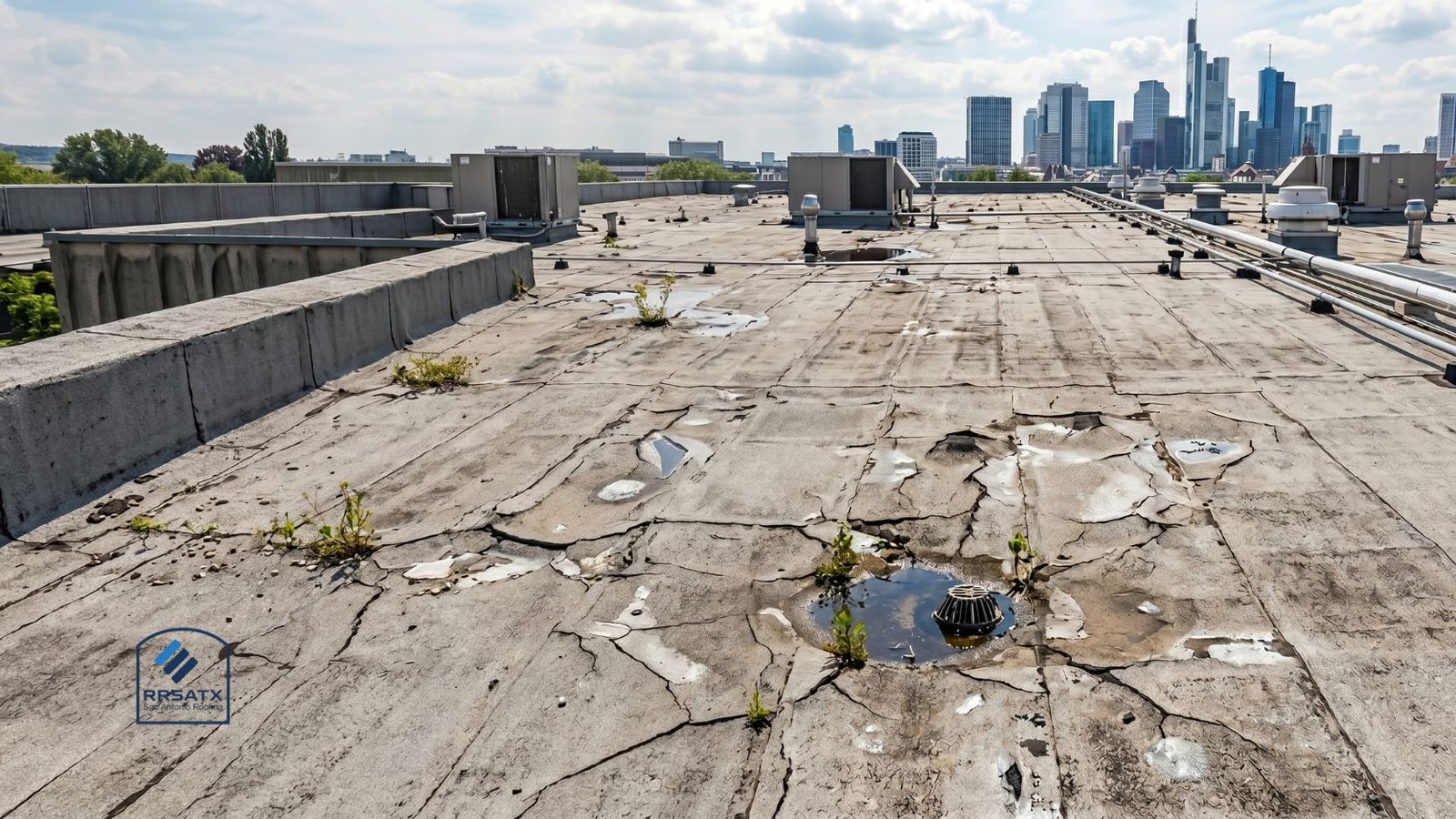
Recognizing early warning signs prevents emergency situations and potential business closure.
Exterior Warning Signs:
- Visible sagging or depression in roof sections
- Cracked or missing flashing around penetrations
- Membrane bubbling, especially after rain
- Excessive granule loss (for modified bitumen systems)
- Rust or corrosion on metal components
Interior Warning Signs:
- Water stains on ceilings or walls
- Musty odors suggesting hidden moisture
- Increased energy costs (damaged insulation)
- Visible daylight through roof boards
- Employee complaints about temperature inconsistencies
Don’t ignore minor issues. A small leak in Texas heat creates ideal conditions for mold growth and structural wood rot within weeks.
How Much Does Commercial Roof Maintenance Cost In Texas?
Preventive commercial roof maintenance typically costs $0.15-$0.75 per square foot annually in the San Antonio area, depending on roof size, system type, and accessibility.
For a 10,000 square foot commercial building, expect:
- Basic maintenance program: $1,500-$3,000/year
- Comprehensive program with repairs: $3,000-$7,500/year
Compare this to emergency repair costs:
- Minor leak repair: $800-$2,500
- Section replacement: $5,000-$15,000
- Complete roof replacement: $50,000-$150,000+
RRSATX: San Antonio Roofing Company has helped hundreds of Texas business owners implement cost-effective maintenance programs that extend roof life and prevent budget-breaking emergency repairs. Budget-conscious property owners find that systematic maintenance costs 60-80% less than reactive repairs over a roof’s lifetime.
What Documentation Should Texas Businesses Maintain?
Proper documentation protects your investment and streamlines insurance claims.
Essential Maintenance Records:
- Original roof installation date and warranty documents
- Photos from each inspection (dated and labeled)
- Detailed notes on repairs completed
- Invoices from all service providers
- Weather event documentation (date, severity, visible damage)
Create a digital folder accessible to property managers, insurance agents, and roofing contractors. When selling commercial property or filing insurance claims, comprehensive maintenance records demonstrate due diligence and can significantly impact outcomes.
Texas insurance companies increasingly require proof of regular maintenance before approving storm damage claims especially for roofs over 10 years old.
FAQs
How Long Do Commercial Roofs Last In Texas?
Commercial roof lifespan in Texas varies by material: TPO and EPDM systems last 15-25 years, modified bitumen 10-20 years, and metal roofing 30-50 years. Proper maintenance can extend these ranges by 30-50%, while neglect can reduce lifespan by half.
Can I Inspect My Own commercial roof between professional visits?
Yes, but with safety precautions. Use proper fall protection, never walk on wet roofs, and focus on visual ground-level inspections and interior checks. Leave detailed membrane inspections and repairs to certified professionals who understand liability and warranty implications.
What’s The Best Commercial Roofing System For San Antonio’s Climate?
White TPO and PVC membranes perform exceptionally well in San Antonio due to superior heat reflection and UV resistance. Metal roofing with reflective coatings also excels. The “best” system depends on your building structure, budget, and specific operational needs consult with local experts who understand Texas building codes and weather patterns.