
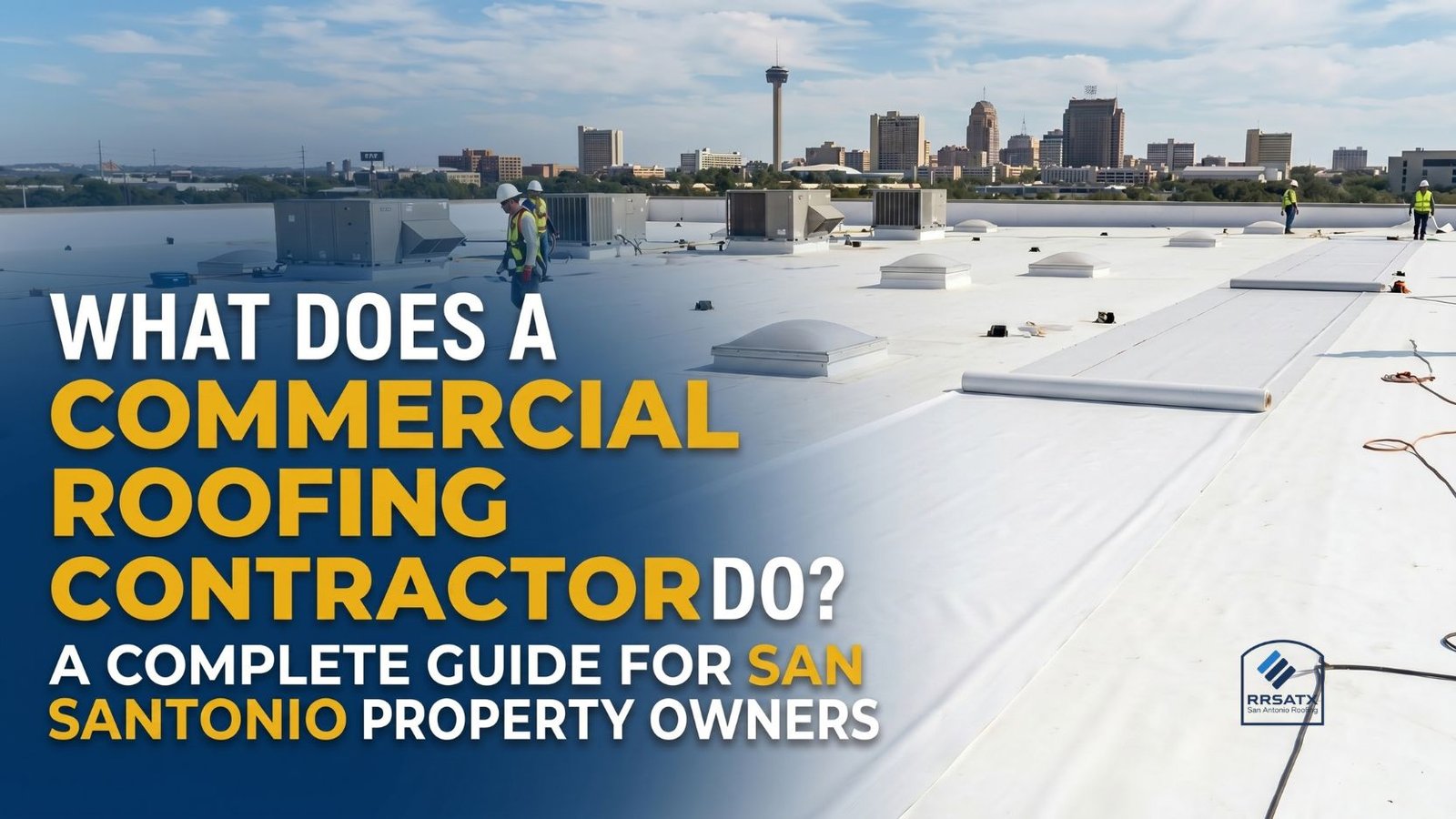
At RRSATX: San Antonio Roofing Company, our team has worked on commercial roofing projects across San Antonio for years from flat TPO installations to large-scale storm damage repairs. A commercial roofing contractor handles the full scope of roofing work for businesses, industrial buildings, and multi-unit properties, which is significantly more complex than residential roofing.
The direct answer: A commercial roofing contractor installs, repairs, inspects, and maintains roofing systems on commercial properties. They work with specialized materials like TPO, EPDM, modified bitumen, and metal roofing, and they manage projects that require code compliance, insurance coordination, and minimal business disruption.
What Does A Commercial Roofing Contractor Actually Do?
A commercial roofing contractor provides end-to-end roofing services for non-residential buildings. Their work spans new installations, repairs, preventive maintenance, and insurance-related documentation.
Here is a breakdown of core responsibilities:
- Roof installation and replacement — Installing flat, low-slope, or metal roofing systems on commercial buildings
- Leak detection and repair — Identifying the source of water intrusion and applying lasting, code-compliant fixes
- Storm damage assessment — Documenting hail, wind, and water damage for insurance claims
- Roof inspections — Conducting detailed structural and waterproofing assessments
- Preventive maintenance programs — Scheduled inspections and minor repairs to extend roof lifespan
- Code compliance work — Ensuring all roofing meets San Antonio city codes and Texas building standards
- Warranty management — Administering manufacturer and workmanship warranties
Key takeaway: Commercial roofing is not simply a scaled-up version of residential work. The materials, load requirements, drainage systems, and compliance standards are entirely different categories.
How Is Commercial Roofing Different From Residential Roofing?
Commercial and residential roofing differ in materials, slope, scale, and technical complexity.
| Factor | Commercial Roofing | Residential Roofing |
| Roof slope | Flat or low-slope | Pitched (steep) |
| Common materials | TPO, EPDM, modified bitumen | Asphalt shingles, tile |
| Project size | Large square footage | Smaller footprint |
| Drainage systems | Interior drains, scuppers | Gutters, downspouts |
| Code requirements | More complex | Standard residential code |
| Downtime concern | Business continuity required | Minimal disruption |
Commercial property owners in San Antonio need a contractor with specific experience in flat roofing systems, since San Antonio’s heat cycles and occasional severe weather create unique stress on commercial membranes.
What Types Of Commercial Roofing Systems Does A Contractor Install?
A qualified commercial roofing contractor works across multiple roofing system types depending on the building’s needs, budget, and climate exposure.
Common commercial roofing systems:
- TPO (Thermoplastic Polyolefin) — Highly reflective, energy-efficient, and ideal for San Antonio’s intense heat
- EPDM (Ethylene Propylene Diene Monomer) — Durable rubber membrane well-suited for flat roofs
- Modified Bitumen — Multi-layer asphalt system offering strong waterproofing
- Metal Roofing — Long-lasting and low-maintenance, often used on industrial or retail buildings
- Built-Up Roofing (BUR) — Traditional layered system with strong waterproofing performance
At RRSATX: San Antonio Roofing Company, we help commercial property owners select the right system based on building type, square footage, and long-term cost analysis, not just upfront price.
Do Commercial Roofing Contractors Handle Insurance Claims?
Yes. One of the most critical functions of a commercial roofing contractor is assisting property owners through the insurance claims process after storm damage.
This typically includes:
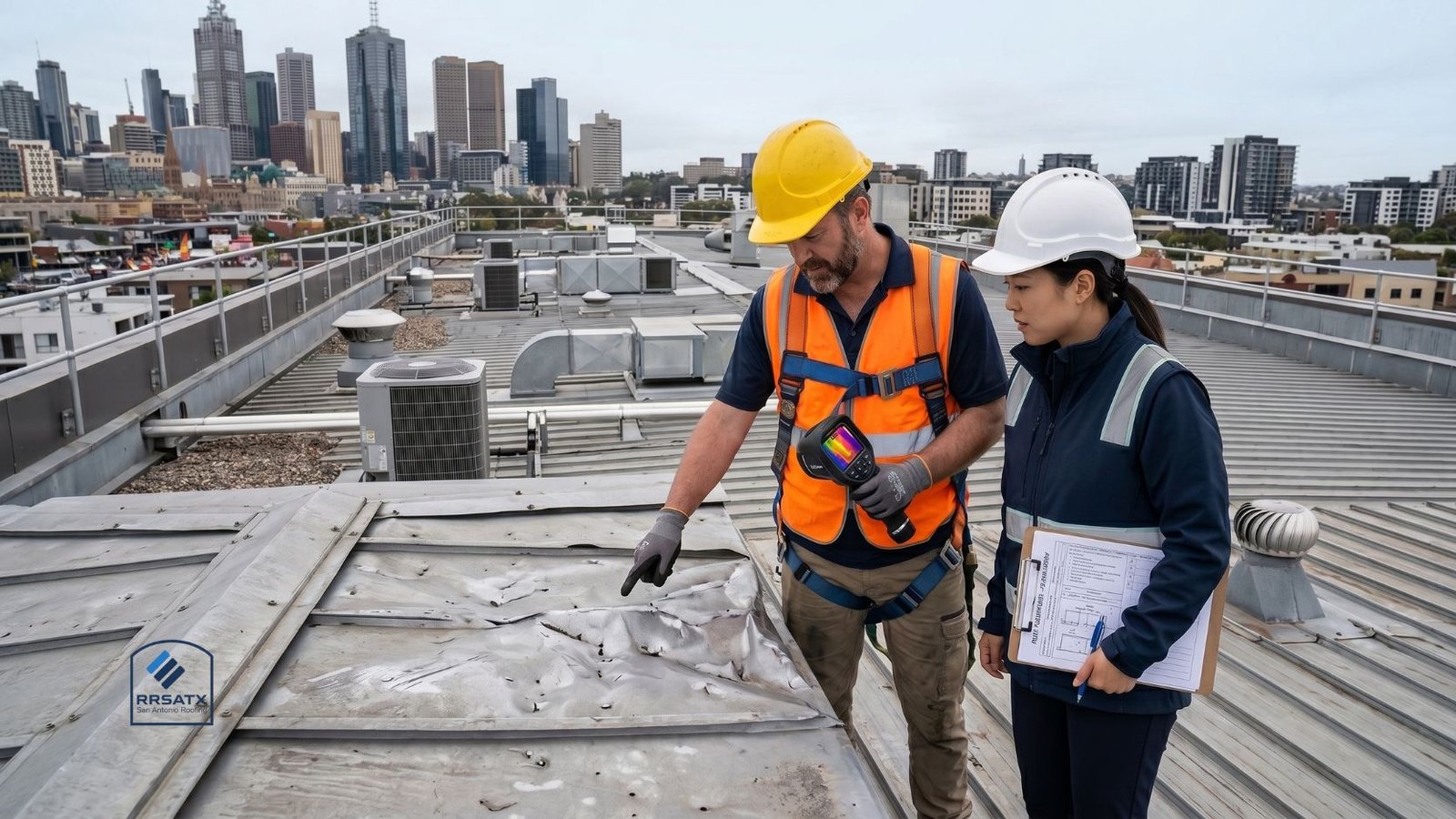
- Conducting a thorough damage inspection and photo documentation
- Preparing a detailed damage report that meets insurance adjuster standards
- Meeting with the adjuster on-site to walk through findings
- Providing accurate repair or replacement estimates aligned with the claim
- Completing the approved scope of work within the claim timeline
Key takeaway: Choosing a contractor experienced in insurance coordination can be the difference between a full roof replacement approval and a denied claim. San Antonio commercial property owners should verify that any contractor they hire has documented experience working with major insurance carriers.
How Often Should A Commercial Roof Be Inspected?
Most commercial roofing professionals recommend bi-annual inspections once in the spring and once in the fall. In San Antonio specifically, post-storm inspections after hail events are equally important.
Regular inspections help:
- Catch small leaks before they cause interior damage
- Maintain manufacturer warranty compliance
- Identify membrane shrinkage or seam failures early
- Extend roof lifespan by 5 to 10 years when addressed proactively
FAQs
How Long Does A Commercial Roof Replacement Take In San Antonio?
Most commercial roof replacements take between three and ten business days depending on square footage, roofing system type, and weather conditions. A qualified contractor will provide a realistic project timeline before work begins.
What Should I Look For When Hiring A Commercial Roofing Contractor In San Antonio?
Look for licensed and insured contractors with verifiable commercial project experience, local references, manufacturer certifications, and clear written contracts. Avoid any contractor who cannot provide proof of insurance or pressures you into a same-day decision.
Can A Commercial Roof Be Repaired Instead Of Fully Replaced?
Yes, in many cases. A professional inspection will determine whether targeted repairs can extend the roof’s service life or whether replacement is the more cost-effective long-term solution. At RRSATX: San Antonio Roofing Company, we always provide an honest assessment before recommending full replacement.