
[et_pb_section fb_built=”1″ admin_label=”section” _builder_version=”4.16″ global_colors_info=”{}”][et_pb_row admin_label=”row” _builder_version=”4.16″ background_size=”initial” background_position=”top_left” background_repeat=”repeat” global_colors_info=”{}”][et_pb_column type=”4_4″ _builder_version=”4.16″ custom_padding=”|||” global_colors_info=”{}” custom_padding__hover=”|||”][et_pb_code _builder_version=”4.27.7″ _module_preset=”default” hover_enabled=”0″ sticky_enabled=”0″]
The gauge of your metal roof determines how long it lasts, how well it survives Texas hail, and how much you pay. This complete guide breaks down every difference between 26 gauge and 29 gauge metal roofing so you can make the right call for your home or building.
Walk into any roofing supply house in San Antonio and you will find metal panels in a range of gauges. The two that come up most often for homeowners and light commercial building owners are 26 gauge and 29 gauge. The numbers confuse people, and for good reason: in metal roofing, a lower gauge number means thicker steel, not thinner. So 26 gauge is actually the stronger, heavier option and 29 gauge is the thinner, lighter, and less expensive one.
The question is not which gauge sounds better on paper. The question is which one is right for your specific roof, your climate, your budget, and how long you want this roof to last. In Texas, where summer heat pushes roof surface temperatures above 150 degrees and hailstorms roll through Bexar County every few years, the gauge decision matters more than it does in most parts of the country.
This guide covers every factor that separates 26 gauge from 29 gauge: thickness, strength, wind and hail resistance, lifespan, installation differences, cost, and the specific situations where each gauge makes sense. By the end, you will have a clear answer for your roof.
Metal gauge numbers run in reverse of what most people expect. The higher the gauge number, the thinner the metal. 29 gauge steel is thinner than 26 gauge steel. This is not a typo or a regional variation it is how the American Wire Gauge and sheet metal gauge systems have worked for over a century. When a contractor tells you they use 29 gauge panels, they are telling you they use thinner steel than a contractor who uses 26 gauge. Keep that in mind as you compare quotes and read product specifications.

Steel sheet metal gauge is a standardized measurement system that assigns numbers to specific thickness ranges. The system originated in the wire industry, where higher gauge numbers were used for thinner wire. That convention carried over into sheet metal, which is why the numbering feels backwards when you first encounter it.
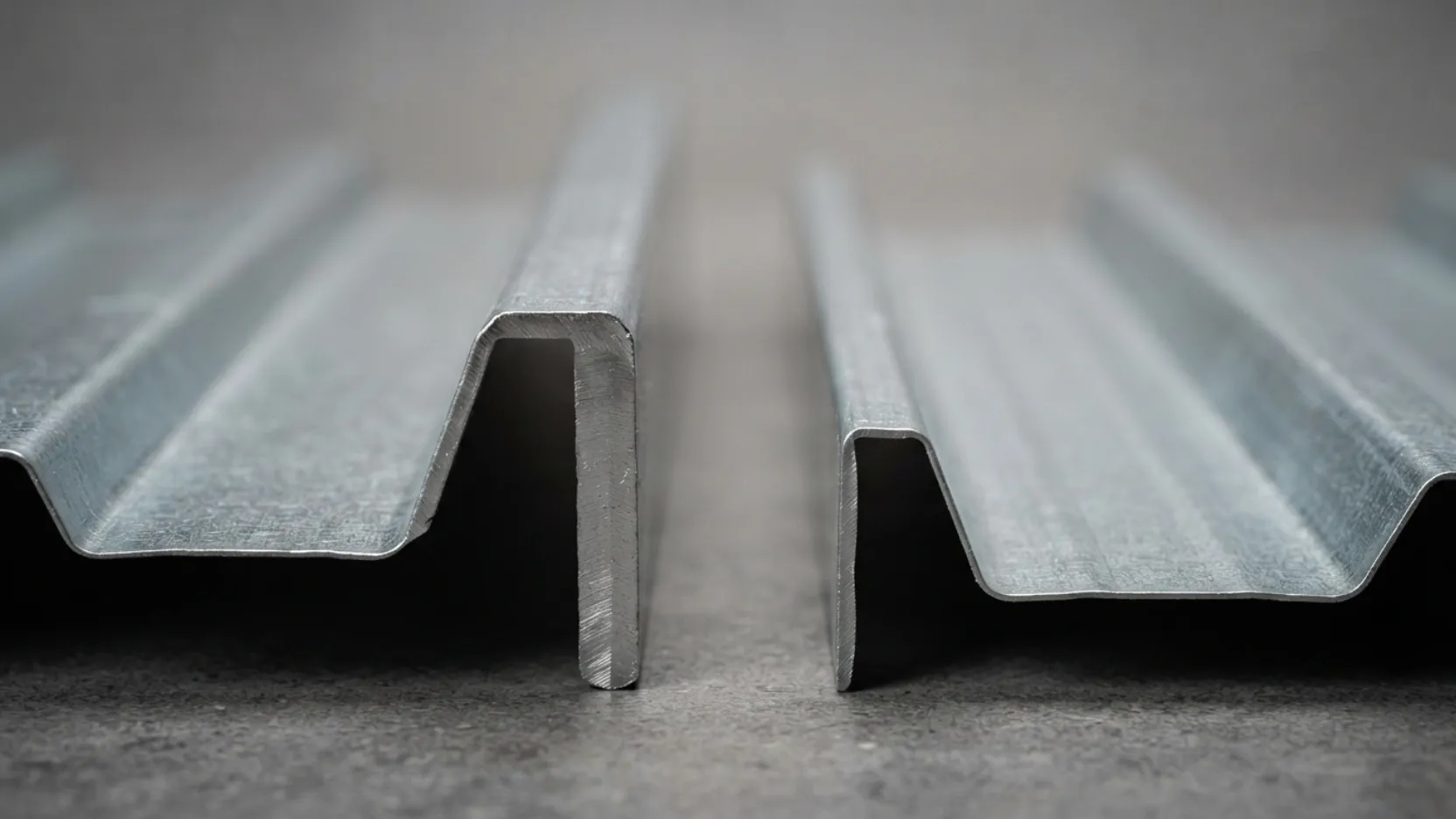
In the context of metal roofing panels, gauge refers to the thickness of the base steel before any coating, paint, or finish is applied. Here is what the two gauges you are comparing actually measure:
| Gauge | Base steel thickness (inches) | Base steel thickness (mm) | Weight per sq ft | Common applications |
|---|---|---|---|---|
| 26 Gauge | 0.0179″ | 0.455 mm | ~0.906 lb | Residential roofing, commercial roofing, agricultural buildings, standing seam systems |
| 29 Gauge | 0.0142″ | 0.361 mm | ~0.720 lb | Light agricultural buildings, sheds, utility structures, budget residential projects |
| 24 Gauge (reference) | 0.0239″ | 0.607 mm | ~1.156 lb | Premium residential, high-wind commercial, standing seam upgrades |
| 22 Gauge (reference) | 0.0299″ | 0.759 mm | ~1.500 lb | Industrial, heavy commercial, high-impact applications |
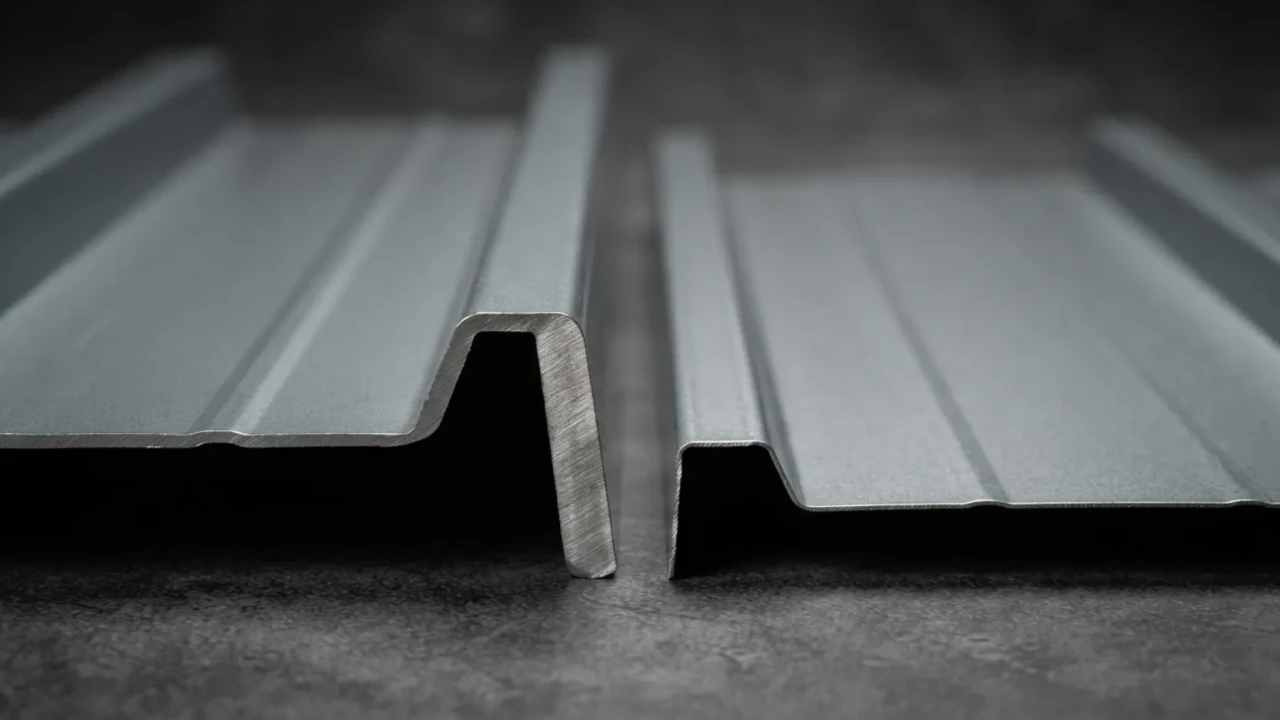
The thickness difference between 26 gauge and 29 gauge is approximately 0.0037 inches, or about 26 percent thicker for the 26 gauge panel. That may not sound like much until you consider that it translates directly into structural stiffness, dent resistance, and the ability to span between purlins without oil-canning (the wavy surface distortion you see on thinner metal panels in the sun).
Strength
The thicker the steel, the more resistant it is to denting, flexing, and structural deformation. This is not a marginal difference the 26 percent additional thickness in 26 gauge steel creates a measurably stiffer panel that performs differently under hail impact, wind load, and point loads from installers walking the roof during maintenance.
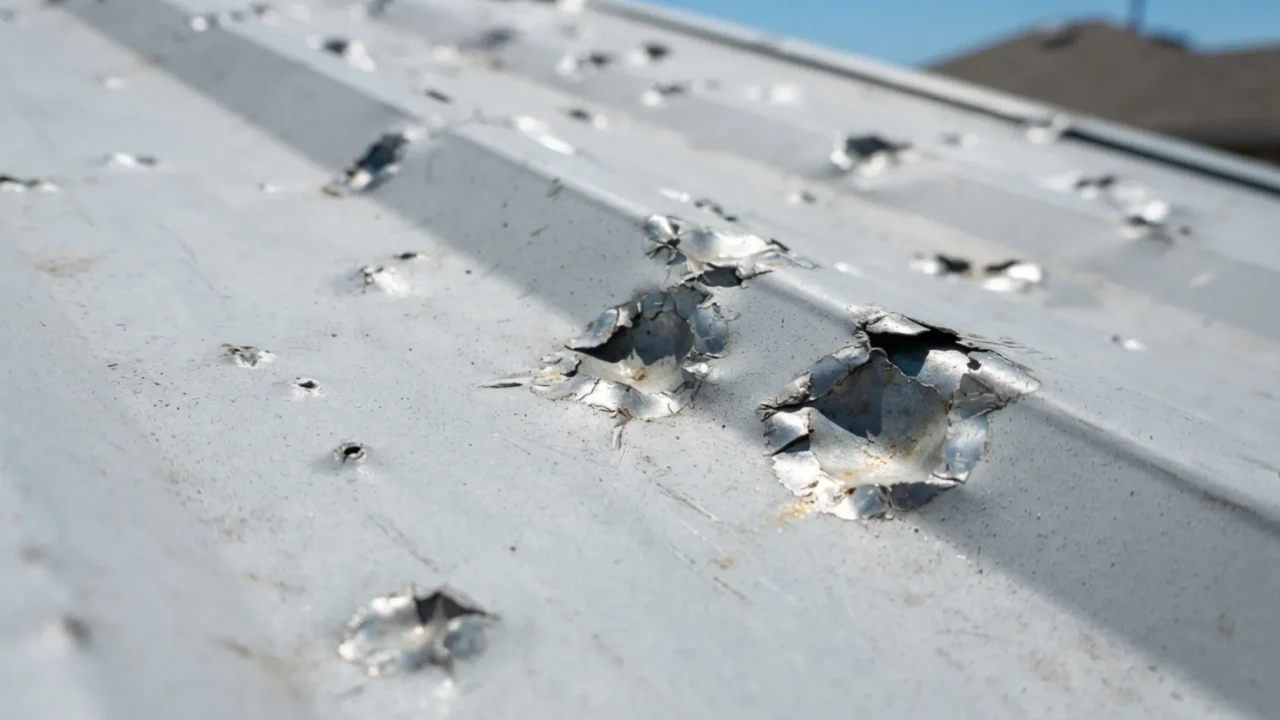
Hail resistance: San Antonio sits in one of the most active hail corridors in the United States. Golf-ball-sized hail (1.75 inches) is a realistic threat in Bexar County in any given spring season. At that size, 29 gauge panels will show visible denting on the flat face of the panel. The same hail event on a 26 gauge panel will cause significantly less cosmetic and structural damage. The difference is not whether the panel dents at all it is the degree of damage and whether it compromises the coating and accelerates rust.
Wind load and spanning: 26 gauge steel can span wider distances between purlins without flexing or deflecting under wind load. This matters for both structural performance and for the long-term integrity of the fastener connections, which flex-fatigue more quickly on thinner panels.
It is also worth noting that foot traffic during maintenance and repairs causes point-load denting. A 160-pound roofer walking on a 29 gauge panel spanning 24 inches between purlins can leave visible impressions in the flat pan area. The same roofer on 26 gauge panels leaves no marks. This matters every time your HVAC technician or a roofing contractor walks the roof for maintenance.
- 26 gauge is stronger, stiffer, and more resistant to hail denting in every category
- 29 gauge is adequate for utility buildings, sheds, and structures with no human foot traffic
- For any residential or commercial roof in San Antonio, 26 gauge is the stronger and safer choice
- Wind rating advantage for 26 gauge is meaningful in Texas where severe weather is a normal annual event
Lifespan
Metal roofing in general has a much longer expected service life than asphalt shingles. But gauge affects how long a specific metal roof actually lasts in practice. The reason comes down to coating integrity. When a metal panel dents or flexes repeatedly, it cracks the paint or Galvalume coating at the stress point. Once that protective layer is compromised, bare steel is exposed to moisture, oxygen, and the chemicals in rain. Rust begins, and it progresses fastest on the thinnest steel because there is less base metal to corrode before the panel fails structurally.
- Expected service life: 40 to 70 years with proper maintenance in Texas
- Coating integrity maintained longer due to reduced flexing and impact damage
- Hail impacts cause less coating loss per event
- Thermal expansion stress distributed across thicker panel cross-section
- Manufacturer warranties commonly extend to 40 years on painted finishes
- Lower lifetime maintenance cost despite higher initial price
- Expected service life: 20 to 30 years in a challenging climate like San Antonio
- Coating cracking more likely at flex points and fastener holes over time
- Hail events cause more coating loss, accelerating corrosion timeline
- Oil-canning and flexing stresses the paint film at panel edges
- Manufacturer warranties typically shorter: 20 to 25 years on painted finishes
- More frequent maintenance and earlier replacement typically required
Run the numbers before choosing the cheaper gauge. If a 29 gauge roof costs $18,000 installed and a 26 gauge roof costs $21,000 installed on the same house, the 26 gauge option costs $3,000 more upfront. But if the 29 gauge roof requires replacement in 25 years while the 26 gauge roof lasts 45 years, you are paying for two 29 gauge roofs in the same timeframe you pay for one 26 gauge roof. Factor in installation cost escalation over 25 years and the total cost comparison is not even close. The thicker gauge wins on lifetime value in virtually every realistic scenario in San Antonio.
- 26 gauge roofs in San Antonio realistically last 40 to 70 years with proper maintenance
- 29 gauge roofs in San Antonio realistically last 20 to 30 years in this climate
- Coating longevity is directly tied to how much the panel flexes and dents over time
- Lifetime value strongly favors 26 gauge in all but the most budget-constrained temporary structures

Cost
The cost difference between 26 gauge and 29 gauge metal roofing is real but smaller than most homeowners expect. The steel cost difference is the primary driver. Because 26 gauge steel contains approximately 26 percent more metal per square foot, it costs more at the raw material level. But installation labor is largely the same for both gauges, which means the installed price difference is a fraction of what you might assume.
One cost factor that is often overlooked: 29 gauge panels are more prone to oil-canning, which is the visible wavy distortion on flat-pan areas of the panel caused by internal stress in the steel. Oil-canning does not affect structural performance, but it is a cosmetic issue that bothers many homeowners after installation. Correcting it requires the panels to be replaced. With 26 gauge steel, oil-canning is far less common because the stiffer panel resists the surface distortion better.
- 26 gauge costs approximately $0.50 to $1.25 more per square foot in material cost over 29 gauge
- Total installed price difference on a typical San Antonio home: $1,500 to $3,000
- Lifetime value analysis consistently favors 26 gauge when the full replacement cycle is considered
- Oil-canning risk is higher with 29 gauge a cosmetic defect that is expensive to correct after installation
Installation
From a contractor’s standpoint, 26 gauge and 29 gauge panels go up differently. The thicker panel is heavier, stiffer, and requires slightly more care during cutting and forming. The thinner panel is easier to handle, cuts faster, and is lighter to carry up a ladder. But easier to install does not always mean better installed.
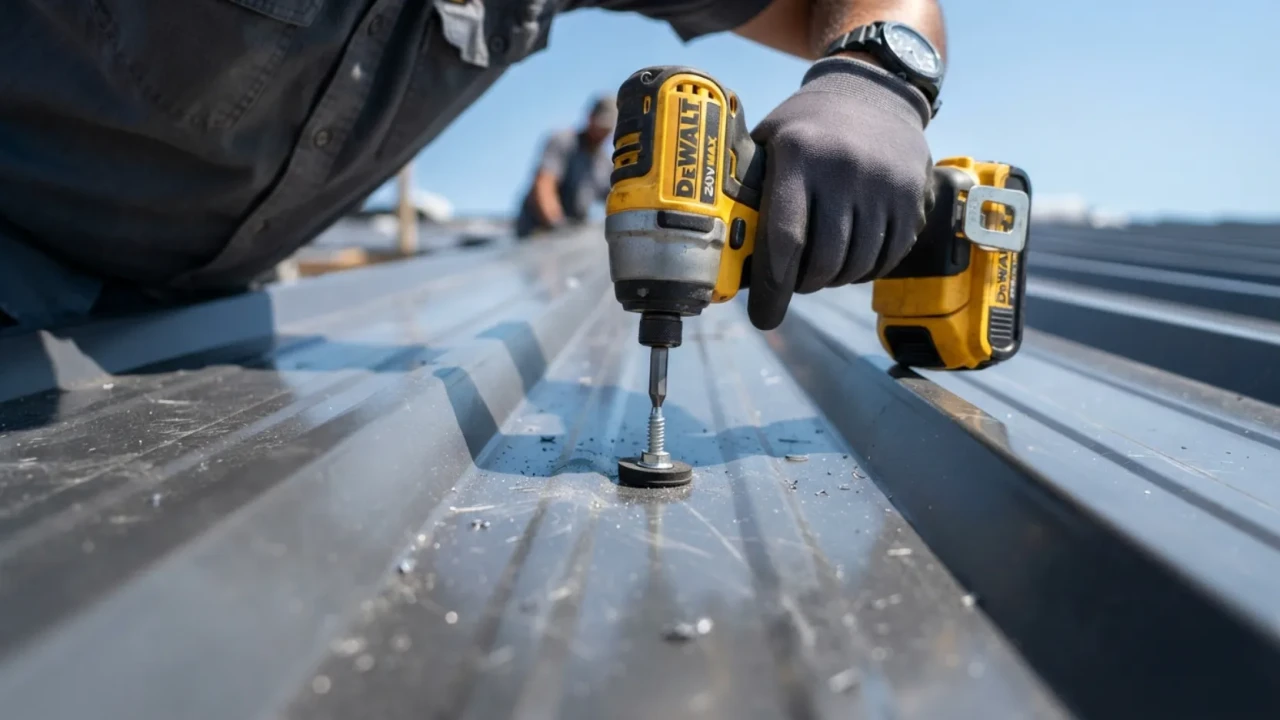
Fastening: Both gauges use the same EPDM-gasketed hex-head screws in most exposed-fastener applications. The critical difference is that 29 gauge panels are more susceptible to over-driving, which strips the fastener hole and creates a leak point. A fastener driven with the same power setting that works on 26 gauge will over-drive into 29 gauge steel more easily. Experienced metal roofing installers adjust their torque settings accordingly, but this is a common source of installation errors on thin gauge panels.
Cutting and forming: 26 gauge requires a dedicated metal-cutting blade or aviation snips rated for the heavier gauge. Tin snips that work fine on 29 gauge will struggle or produce rough edges on 26 gauge. For standing seam profiles, roll-forming equipment must be set correctly for the specific gauge to produce clean seams without distorting the panel geometry.
Ask your contractor specifically what gauge they plan to install and confirm it in writing on the quote. Some contractors specify gauge in the estimate and some do not. A quote that says “metal roofing panels” without specifying gauge leaves the door open for a cheaper gauge to show up on your roof. In the San Antonio market, 29 gauge is sometimes used to hit a lower price point on bids without the homeowner realizing the difference. Get the gauge number in writing before signing any contract.
- 26 gauge requires properly calibrated tools and an experienced crew verify your contractor’s equipment
- 29 gauge is more forgiving to cut but more vulnerable to over-driven fasteners during installation
- Always get the gauge number specified in writing on the contract before the job begins
- Ask to see a sample panel from the actual coil being installed not just a product brochure
Weather
San Antonio presents one of the more demanding environments for metal roofing in the United States. Summer roof surface temperatures regularly exceed 150 degrees Fahrenheit. Winter cold snaps drop overnight temperatures into the 20s. Severe thunderstorms produce large hail. Sustained wind events from south Texas weather systems apply load to roofing panels for extended periods. All of these stresses affect 26 gauge and 29 gauge steel differently.
| Weather factor | 26 gauge performance | 29 gauge performance | Which wins |
|---|---|---|---|
| Hail (1″ to 2″ diameter) | Minimal denting, coating largely intact after typical events | Visible denting, coating cracking at impact points | 26 gauge |
| Summer heat (150+ degree surface temps) | Thermal expansion managed well; less oil-canning and buckling | More prone to panel distortion and surface waviness in high heat | 26 gauge |
| Thermal cycling (summer-winter swings) | Stiffer panel absorbs expansion stress better at fastener points | Fastener holes experience more fatigue from repeated flex cycles | 26 gauge |
| Wind load (60 to 90 mph gusts) | Rated for higher wind zones in most panel profiles and fastener patterns | Lower rated wind resistance; more prone to panel uplift at edges | 26 gauge |
| UV exposure (intense Texas sun) | Coating performs similarly to 29 gauge; paint thickness matters more than base steel | Coating performs similarly to 26 gauge under UV alone | Tied (coating matters more) |
| Foot traffic during maintenance | No denting from normal foot traffic between purlins | Denting visible at foot contact points on flat pan areas | 26 gauge |
The only weather category where 26 gauge does not outperform 29 gauge is pure UV resistance, where the paint system and Galvalume coating matter more than base steel thickness. A 29 gauge panel with a premium PVDF (Kynar) paint finish will outlast a 26 gauge panel with a lower-quality polyester paint under UV exposure. But in every other weather category that matters in San Antonio, thicker steel wins.
- 26 gauge outperforms 29 gauge in every weather category except UV resistance, where coating quality matters more than gauge
- San Antonio hail risk makes dent resistance a critical selection factor 26 gauge is the appropriate minimum
- Thermal cycling over 40 years will fatigue 29 gauge fastener connections faster than 26 gauge connections
- Wind rating advantage for 26 gauge matters in severe Texas thunderstorm events
Best Use
The answer to “which gauge is better” is almost always 26 gauge for any structure where longevity and weather resistance matter. But that does not mean 29 gauge is never the right answer. There are specific situations where the thinner gauge makes sense, and understanding them prevents you from paying a premium for strength you do not need.
Some Texas homeowners insurance policies and certain local building codes now specify a minimum gauge for metal roofing on covered structures. In San Antonio and across Bexar County, some carriers offer premium discounts for 26 gauge (or thicker) metal roofing because the reduced hail damage claim history justifies a lower rate. Before choosing 29 gauge to save money upfront, ask your insurance agent whether your gauge choice affects your coverage or your premium. The savings on the roof may be more than offset by a higher annual insurance cost.
- 26 gauge is the right choice for virtually all residential and commercial roofing in San Antonio
- 29 gauge is appropriate for utility buildings, sheds, and temporary structures where longevity is not the priority
- Check your insurance policy before specifying 29 gauge some carriers require 26 gauge minimum for coverage eligibility or premium discounts
- Standing seam systems should always use 26 gauge or thicker 29 gauge standing seam is not a recognized standard product in most quality panel lines
Every factor covered in this guide in a single reference table. Use this when comparing contractor quotes or explaining the gauge decision to a spouse, partner, or property manager.
| Factor | 26 Gauge | 29 Gauge | Winner |
|---|---|---|---|
| Base steel thickness | 0.0179 inches (0.455 mm) | 0.0142 inches (0.361 mm) | 26 gauge (thicker) |
| Hail dent resistance | Significantly better on 1″ to 2″ hail events | Visible denting on golf-ball-sized hail | 26 gauge |
| Wind resistance rating | 130+ mph in most profiles | 90 to 110 mph in most profiles | 26 gauge |
| Expected lifespan (San Antonio) | 40 to 70 years with maintenance | 20 to 30 years in this climate | 26 gauge |
| Oil-canning tendency | Low stiffer panel resists distortion | Higher visible waviness common in Texas heat | 26 gauge |
| Material cost per sq ft | $4.25 to $6.75 (panels only) | $3.50 to $5.50 (panels only) | 29 gauge (cheaper) |
| Total installed price difference | $1,500 to $3,000 more than 29 gauge | Lower upfront on comparable project | 29 gauge (upfront) |
| Lifetime value | Strongly favored over full replacement cycle | Higher long-term cost when replacement cycle factored in | 26 gauge |
| Foot traffic walkability | No denting from normal maintenance foot traffic | Denting visible at contact points during maintenance | 26 gauge |
| UV resistance (coating-dependent) | Tied coating quality matters more than gauge here | Tied coating quality matters more than gauge here | Tied |
| Fastener over-driving risk | Lower stiffer steel resists screw over-driving | Higher thinner steel more susceptible to stripped holes | 26 gauge |
| Insurance considerations | Some carriers offer premium discounts or require 26 gauge minimum | May affect coverage eligibility on some Texas policies | 26 gauge |
| Best applications | Residential homes, commercial buildings, standing seam systems | Sheds, agricultural buildings, utility structures, temporary buildings | Depends on project |
- Decide on your minimum acceptable service life 20 years or 40-plus years changes the gauge decision
- Check your homeowners insurance policy for any gauge requirements or premium discount provisions
- Know whether you are in a high-frequency hail zone Bexar County qualifies, which points to 26 gauge minimum
- Identify whether the structure has regular maintenance foot traffic HVAC access, satellite dishes, or chimney work all require a roof that handles walking
- Determine your budget range so you can evaluate the 15 percent cost premium for 26 gauge in context
- Confirm gauge is explicitly stated in each quote do not assume all bids are using the same gauge
- Ask for the specific panel manufacturer and product line verify the gauge on the manufacturer’s published specification sheet
- Request the paint system specification: PVDF (Kynar) or SMP paint systems outperform standard polyester finishes regardless of gauge
- Confirm the substrate: Galvalume (aluminum-zinc alloy coated steel) outperforms standard galvanized in coastal and high-humidity climates
- Ask for the wind rating certification for the specific panel profile and fastener pattern being proposed
- Get the manufacturer warranty in writing compare coverage years and what is excluded
- Confirm gauge in writing on the signed contract before any deposit is paid
- Ask to see a coil tag or product label from the material delivered to the job site verify the gauge before installation begins
- Inspect panel edges at the cut ends during installation 26 gauge has a visibly thicker cross-section than 29 gauge
- Retain a copy of all manufacturer specifications and warranty documents after the project is complete
- Schedule a post-installation inspection at 12 months to verify fastener condition and sealant integrity
Is 26 gauge or 29 gauge better for roofing?
Why does a lower gauge number mean thicker metal?
How much more does 26 gauge metal roofing cost compared to 29 gauge?
Will 29 gauge metal roofing hold up to San Antonio hail?
What is oil-canning on a metal roof and does gauge affect it?
Is 24 gauge metal roofing worth the extra cost over 26 gauge?
Can I install 26 gauge metal roofing over my existing shingles in San Antonio?

Get a free metal roofing estimate in San Antonio
Tell us about your project and we will give you a clear, written estimate that specifies the gauge, panel profile, paint system, and warranty — so you can compare options with confidence.
[/et_pb_code][/et_pb_column][/et_pb_row][/et_pb_section]