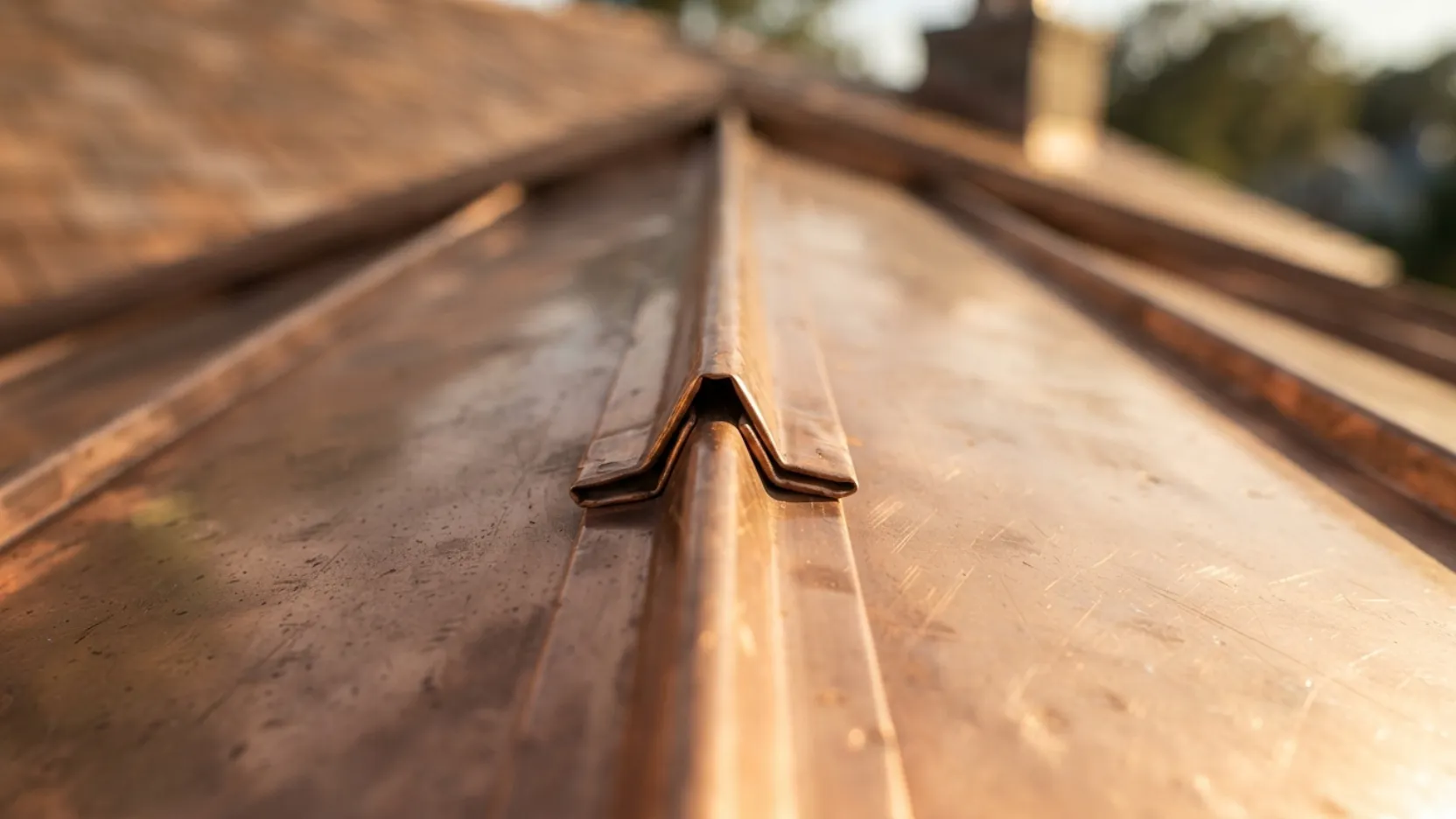
Copper roofing sits at the top of the residential roofing market for good reason. This guide breaks down exactly what you will pay per square foot in 2026, what drives those numbers up or down, and whether the investment makes sense for your San Antonio home.
Copper is the most expensive residential roofing material on the market, and it is also the longest-lasting. A properly installed copper roof in San Antonio can outlive the building it protects, and that is not marketing language. It is a straightforward reality of the material. But before you commit to that investment, you need a clear picture of what copper roofing actually costs per square foot, what makes that number move, and what you are getting in return.
This guide covers every cost layer, from raw copper material prices to San Antonio labor rates to the less obvious expenses most homeowners do not see coming until the contract is in front of them. We also break down which copper roofing style fits which property, and give you an honest comparison against other premium metal roofing options so you can make an informed decision before you pick up the phone.
That wide range is not a cop-out. It reflects real variation across copper roofing styles, roof complexity, and labor markets. A simple copper shingle roof on a single-story gable sits near the low end. A flat seam copper installation on a complex multi-slope roof with dormers sits at the high end. Everything in between depends on the specifics of your property. This guide will help you figure out where your project falls before you get a single quote.
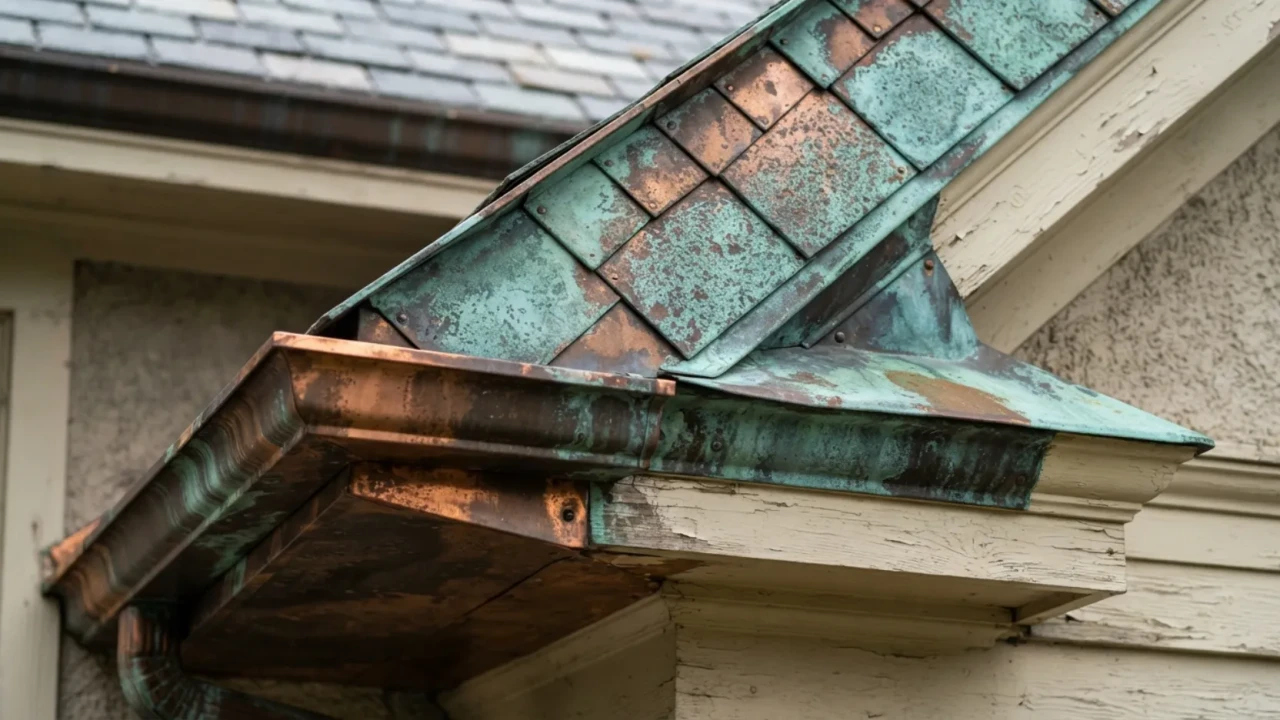
Not all copper roofing is priced the same. The three main styles standing seam panels, copper shingles, and flat seam sheet copper each carry different material costs, installation complexity levels, and labor requirements. Here is what each one costs in 2026 and what you are getting for your money.
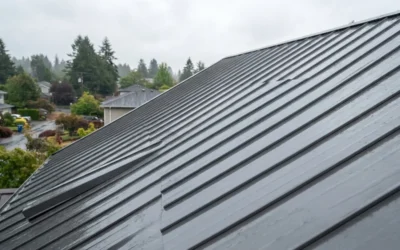
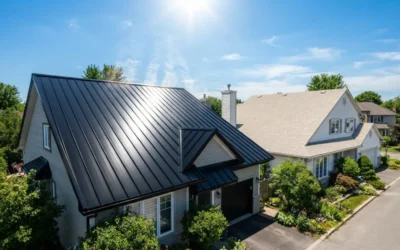
Standing seam copper is the most widely installed copper roofing system for residential properties. Long vertical panels run from ridge to eave with raised interlocking seams that conceal all fasteners. Because no screws or nails penetrate the panel face, standing seam eliminates the most common failure point in any metal roofing system: the exposed fastener. For San Antonio homeowners, that matters. A roof with no exposed fastener points has far fewer locations where heat cycling, UV exposure, and storm pressure can create a water entry path over the next several decades.
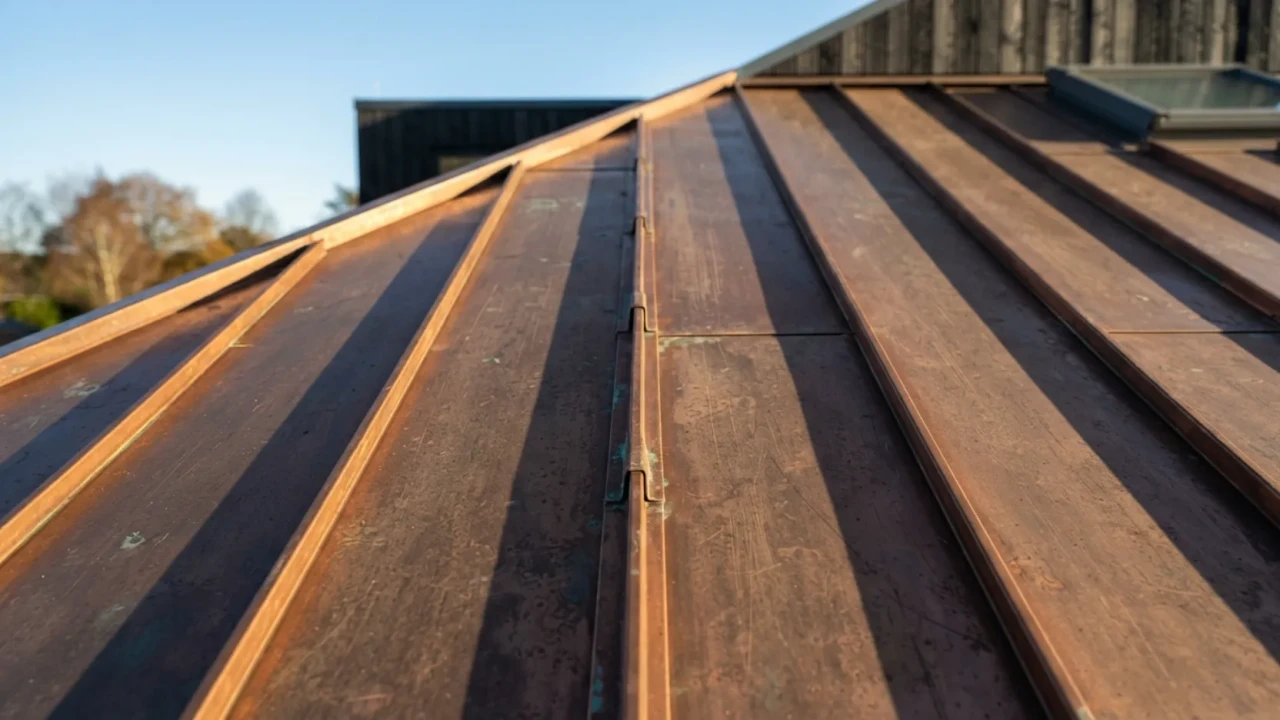
Standing seam copper can also be installed on lower-slope roofs that would not suit a shingle-based system, and the large panel format means fewer seams across the total roof area. Fewer seams translates to a cleaner architectural look and fewer potential water entry points across the life of the roof.
- Roof pitch above 6:12 adds safety scaffolding requirements and increases labor hours
- Multiple roof planes, valleys, and hips require more custom panel cutting and fitting time
- Dormers, skylights, chimneys, and HVAC penetrations each require custom copper flashing
- Old roof tear-off adds $1 to $3 per sq ft before new material is installed
- Decking repairs discovered after tear-off add $2 to $5 per sq ft for the affected areas
- Panel color or finish customization beyond standard mill-finish copper adds material cost
Copper shingles are stamped or formed copper pieces installed in overlapping rows, similar in pattern to traditional asphalt shingles but made from solid copper with a corresponding lifespan. They are the most affordable copper roofing option on a per-square-foot basis for materials, but the installation is far more labor-intensive than panels because each shingle must be individually fastened and fitted. That labor premium narrows the cost gap considerably on larger roofs.
The primary advantage of copper shingles over copper panels is their ability to conform to complex roof geometries. Curved roof sections, highly pitched turrets, and historic-style architectural details that would be difficult or impossible to execute with flat copper panels are well-suited to shingle installation. For San Antonio homeowners with Victorian, Craftsman, or Spanish Colonial Revival homes, copper shingles are often the most authentic-looking option.
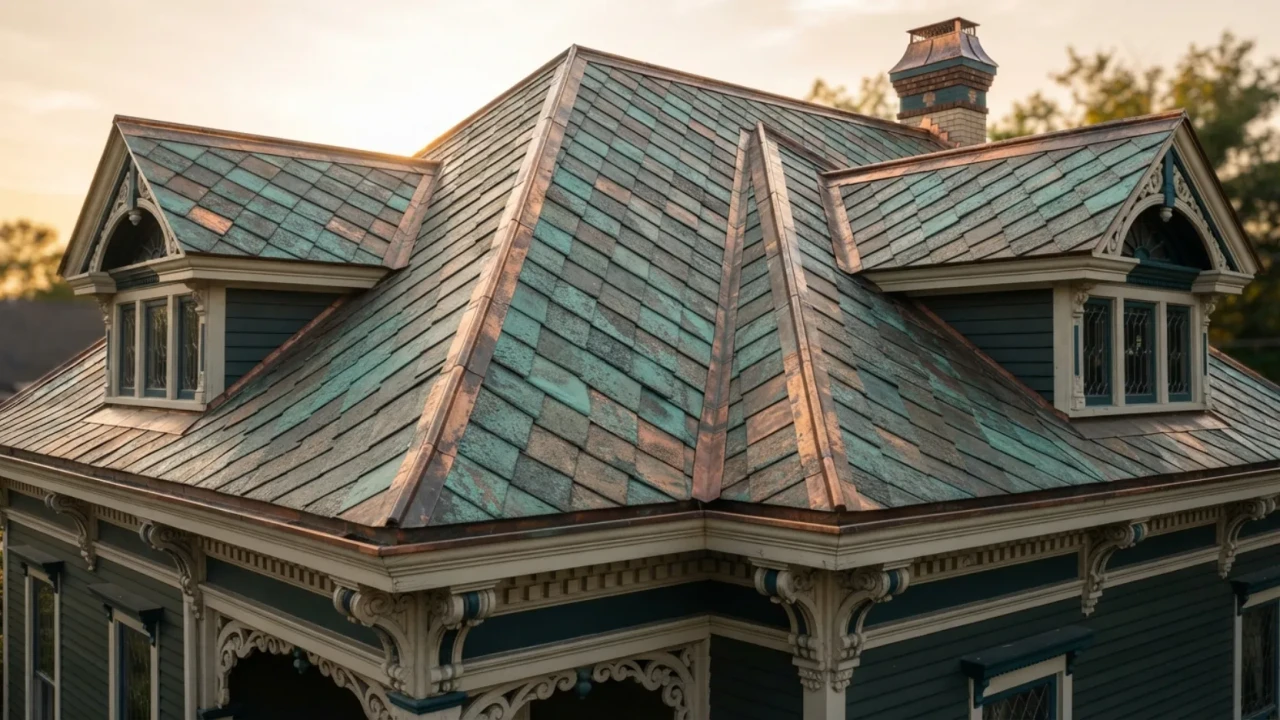
Copper shingles require a contractor with specific copper roofing experience. The interlocking nature of the installation and the need to maintain consistent spacing and alignment across a large roof area is not the same skillset as installing asphalt shingles or steel panels. In San Antonio, ask any contractor quoting copper shingle work how many copper shingle installations they have completed in the last 24 months and request references. The material is too expensive to hand to a crew that is learning on the job.
- The roof has curved sections, turrets, or conical shapes that flat panels cannot conform to
- Historic accuracy is a priority and the architectural style calls for a shingle-pattern appearance
- The project involves a partial roof area a porch, dormer face, or bay window roof section
- The HOA or local historic district requires a specific roof appearance that copper shingles best match
- The homeowner values easier localized repair over the reduced seam count of standing seam
Flat seam copper roofing uses rectangular copper panels that are soldered together at their edges, creating a completely flush surface with no raised seams or exposed mechanical fasteners of any kind. The result is the cleanest visual profile of any copper roofing system and also the most watertight because the soldered seams form a continuous copper membrane rather than a system of overlapping components. It is used primarily on low-slope or nearly flat roof sections where standing seam would not drain adequately.
The cost premium on flat seam comes almost entirely from labor. The soldering process is time-intensive and requires a sheet metal worker with specific copper soldering skills. The material itself is not dramatically more expensive than standing seam copper, but the installation hours per square foot are significantly higher. On large flat roof sections of premium homes, flat seam copper is often the only appropriate architectural choice, regardless of cost.
- Low-slope or nearly flat roof sections on premium residential or commercial properties
- Roof areas over bay windows, entryways, or architectural projections where a flush look is required
- Historic restorations where original flat seam copper must be matched exactly
- Projects where the owner requires a fully soldered watertight copper membrane rather than a mechanical system
- Architectural applications where the roof surface will be visible at close range and appearance is critical

Copper is unquestionably the most expensive metal roofing material. But cost per square foot is not the right metric to use when evaluating it against alternatives. The relevant comparison is total cost over the life of the roof. Here is how the major metal roofing options stack up for a San Antonio homeowner.
| Metal Roofing Type | Cost Per Sq Ft (Installed) | Expected Lifespan | Maintenance Level | Best For |
|---|---|---|---|---|
| Copper (standing seam) | $18–$30 | 80–100+ years | Minimal patina is self-protecting | Premium residential, long-term ownership |
| Copper (flat seam) | $30–$40 | 80–100+ years | Minimal soldered seams require no resealing | Low-slope sections, historic restoration |
| Copper (shingles) | $13–$21 | 80–100+ years | Low individual shingles replaceable | Complex roofs, historic architectural styles |
| Galvalume steel (standing seam) | $8–$16 | 40–70 years | Low inspect sealants every 10 years | Most residential roofs, strong value option |
| Aluminum (standing seam) | $6–$14 | 40–70 years | Low naturally corrosion resistant | Coastal properties, lightweight requirements |
| Zinc (standing seam) | $14–$22 | 80–100+ years | Minimal similar self-healing properties to copper | European architectural styles, sustainability focus |
| Stone-coated steel | $7–$15 | 40–70 years | Low coating inspections recommended | Traditional aesthetics with metal performance |
A steel standing seam roof is an excellent investment with a 40 to 70-year lifespan. A copper roof has a 100-plus-year lifespan and that difference is not incremental. It means the homeowner who installs copper will likely never need to replace it. The person who installs steel may replace it once. Over a 100-year horizon, the total cost of ownership on copper often proves comparable to or lower than premium steel, and significantly lower than asphalt shingles replaced every 20 years. For San Antonio homeowners planning long-term ownership, copper deserves serious consideration as a financial decision, not just an aesthetic one.
Two homeowners with identically sized roofs can receive copper roofing quotes that differ by 40 percent or more. Here is what drives those differences and how each factor applies specifically to San Antonio properties.
Larger roofs cost more in absolute terms, but they often come in at a lower cost per square foot because mobilization, setup, and site preparation costs get distributed across a larger material and labor base. A 1,000 sq ft copper roof project will cost more per foot than a 3,000 sq ft project with the same contractor. If you are planning a partial copper installation copper over a specific section of the roof only expect the per-foot cost to run higher than a whole-roof project.
Roof complexity is the single biggest source of quote variation on copper roofing jobs. A simple two-slope gable roof requires straight panel runs and minimal custom cutting. A roof with multiple valleys, hips, dormers, chimneys, skylights, and HVAC penetrations requires significantly more labor time and custom fabrication at every transition point. On a highly complex roof, labor costs can approach or exceed material costs, even on copper. In San Antonio, many older homes in historic neighborhoods like King William and Monte Vista have architecturally complex roofs that will generate quotes at the higher end of the range.
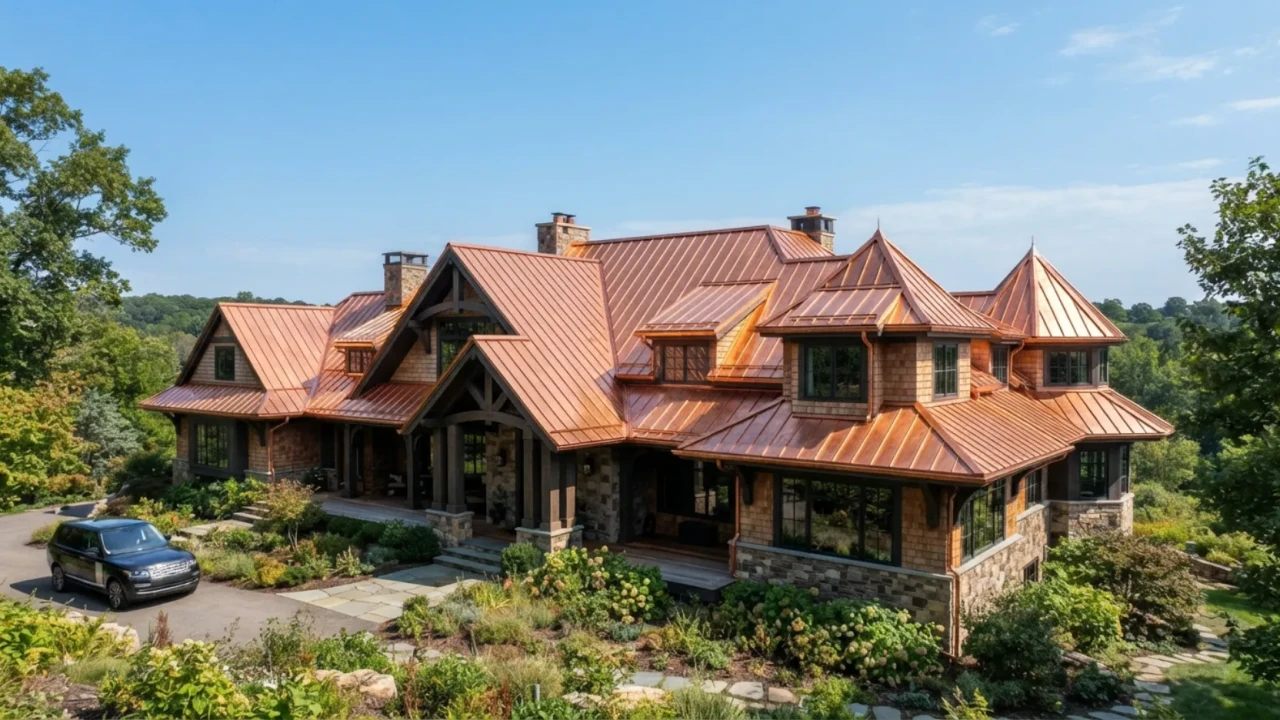
A steep roof pitch requires safety equipment, scaffolding, and additional crew time for every task. It also slows down the panel layout and fitting process. Roofs above 6:12 pitch will carry a steeper pitch surcharge from virtually every San Antonio contractor typically 15 to 25 percent above the base labor rate. Very steep roofs above 9:12 may require specialized rigging that adds further cost.
If copper is being installed over an existing roof, that old roof needs to come off first. Tear-off and disposal in San Antonio runs $1 to $3 per square foot depending on what is being removed. More importantly, tear-off often reveals damaged or soft decking underneath. Copper is a premium material, and installing it over compromised decking would be malpractice. Budget $2 to $5 per square foot for potential decking repair as a contingency on any existing-roof project. If the decking is in good condition, that money stays in your pocket.
Copper is a globally traded commodity, and its price moves with market conditions. Unlike steel roofing, where the market price is relatively stable, copper pricing can shift meaningfully between when you request a quote and when installation begins. Reputable contractors will note the copper price in effect at time of quote and may include a clause about significant commodity price changes. If copper prices rise substantially between quote and installation, expect a conversation about the difference. This is not unique to San Antonio it is a standard feature of copper roofing contracts industry-wide.
A copper roof done correctly uses copper flashings, copper valleys, and copper accessories throughout. Mixing copper with aluminum or galvanized steel hardware creates a galvanic corrosion risk where two dissimilar metals in contact with each other and moisture accelerate corrosion in the less noble metal. All flashings, drip edges, valleys, and penetration caps on a copper roof should be copper. If a contractor quotes copper panels with steel flashings to lower the price, that is a corner being cut that will cost you later. Some homeowners also choose to replace gutters with copper gutters at the same time, which adds to the project cost but completes the visual and material consistency of the installation.

A copper roof is a statement on a San Antonio property. It signals quality construction, premium materials, and long-term thinking. That perception translates into measurable real estate value both in buyer appeal and in the documented resale premium that metal roofing carries in Texas markets.
Metal roofing broadly increases home value by 60 to 70 percent of the installation cost when a home sells. On a $45,000 copper standing seam installation, that suggests a value increase in the range of $27,000 to $31,500 at time of sale. The actual return varies based on neighborhood, buyer profile, and local market conditions but in San Antonio's higher-end neighborhoods, a copper roof is a recognized differentiator that sets a property apart from comparable listings.
If you are buying a San Antonio home with an existing copper roof, treat the inspection differently than you would a standard metal or shingle roof. Copper roofing rarely fails in the same ways other materials do there are no granules to lose, no paint to peel, no washers to degrade. What you are inspecting is the condition of the flashings, the sealant at penetrations, the gutter attachment points, and whether any prior repairs were made with incompatible metals. A properly installed copper roof from 30 or 40 years ago is often in excellent condition. One that was maintained or repaired with galvanized steel components may show galvanic corrosion damage at those contact points.
- How long do you plan to own the home? Long-term owners benefit most from copper's per-year cost advantage
- Is the neighborhood price point consistent with a copper roof investment? Buyer expectations matter for resale ROI
- Does your insurance carrier offer any discount for Class A fire-rated metal roofing?
- Are there HOA restrictions on roofing material or color that would affect copper's appearance as it patinas?
- Is the existing decking in good enough condition to support a 100-year material? If not, the decking cost needs to be factored in
- Is partial copper over a specific visible section of the roof a more budget-appropriate option than a full copper replacement?
- Measure or estimate your roof's square footage (length x width x slope factor)
- Identify the roof's complexity level how many slopes, valleys, dormers, and penetrations
- Determine the roof pitch this affects safety requirements and labor costs
- Contact your insurance carrier about any discount for Class A metal roofing
- Check HOA rules or historic district requirements for roofing material and appearance
- Decide whether you want full copper or copper on specific architectural sections only
- Ask for proof of copper roofing experience specifically not just metal roofing in general
- Request references for copper roofing projects completed in the last 24 months in San Antonio
- Verify the contractor is licensed with TDLR and carries liability insurance and workers' compensation
- Confirm the quote includes copper flashings and accessories throughout not steel or aluminum
- Ask how the contractor handles copper commodity price changes between quote and installation
- Confirm a written warranty covers both materials and workmanship separately
- Confirm the specific copper gauge specified in the contract (16 or 20 oz per sq ft is standard)
- Verify the underlayment specified is compatible with copper (some synthetic underlayments are not)
- Confirm tear-off and disposal are included in the price or understand what they will add if not
- Understand the contingency process if damaged decking is discovered after tear-off
- Confirm the payment schedule does not require full payment before installation is complete
- Get the project start date and estimated completion timeline in writing
Get a copper roof quote from San Antonio's experienced metal roofing crew
We have quoted and installed copper roofing across San Antonio and Bexar County. If you are seriously considering copper, let us walk the roof, assess the scope, and give you an honest number based on your specific property.