
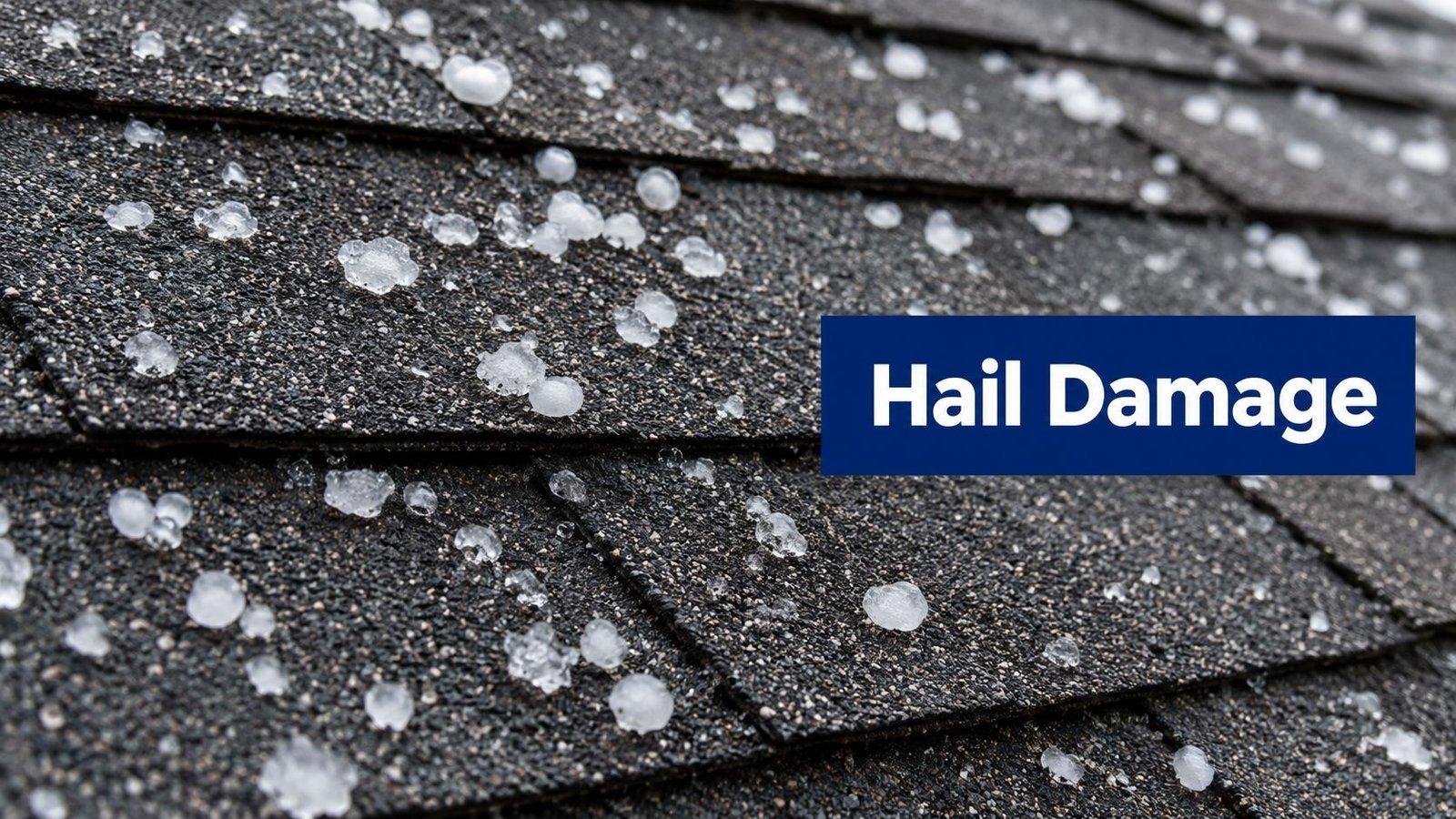
A hailstorm can roll through San Antonio in ten minutes, rattle the windows, dump ice in the yard, and leave you standing outside the next morning wondering if the roof took a hit. The problem is that hail damage asphalt roof shingles usually doesn't announce itself with a giant hole or a missing section. A lot of the damage is quieter, smaller, and worse over time.
That's the part most homeowners miss. Sub-severe hail can still strip granules, bruise the mat, and weaken shingles long before a roof starts leaking, which is exactly why repeated smaller storms deserve attention, not dismissal (Frontiers in Materials, 2025). In South Texas, where heat and storms keep beating on the same roof, that kind of wear adds up fast.
Table of Contents
- The Hidden Threat of Texas Hailstorms
- Spotting Functional Damage From the Ground
- Understanding Hail Size and Damage Thresholds
- Deciding Between Targeted Repair and Full Replacement
- Navigating the Insurance Claim Process
- Protecting Your Home With Local Roofing Experts
The Hidden Threat of Texas Hailstorms
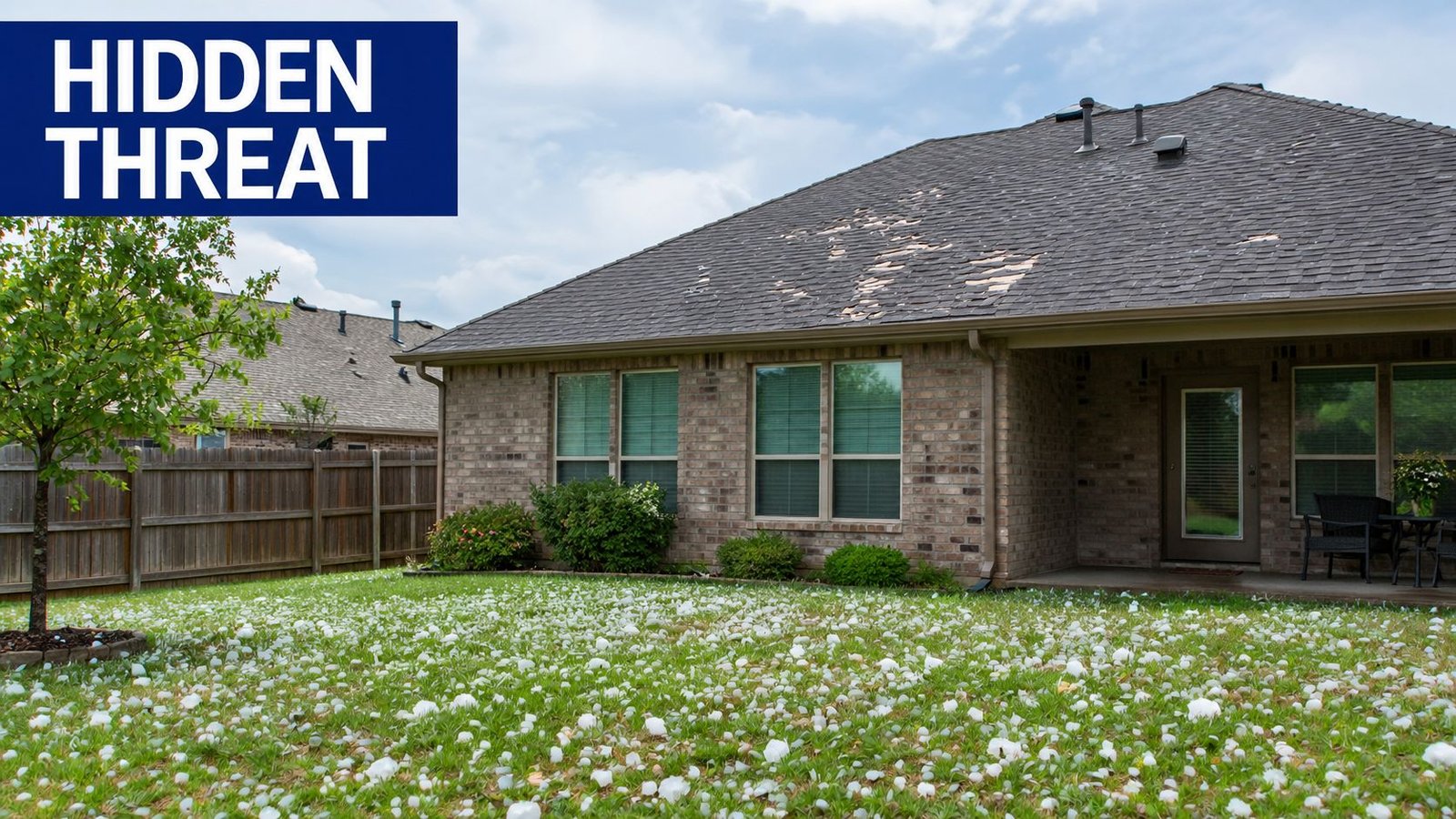
After a hailstorm, a lot of homeowners walk the yard, check the gutters, and scan the roof for broken shingles or obvious leaks. If they do not see a hole or missing shingles, they assume the roof made it through clean.
That assumption costs people money. Smaller hail events can still strip granules, bruise shingles, and wear down the surface little by little, even when the roof looks fine from the street. A 2025 peer-reviewed study in Frontiers in Materials found that hailstones 25.4 mm, or 1 inch, and smaller can still produce a meaningful share of the granule loss caused by 50.8 mm, or 2 inch, hailstones on asphalt shingles, and repeated exposure to smaller hail can make shingles up to 10 times more susceptible to damage (Frontiers in Materials, 2025). That is how a roof gets weakened storm after storm.
Why San Antonio roofs take this hard
San Antonio roofs get hammered by heat and hail. The sun dries and bakes the shingles, then hail knocks loose the granules that protect the asphalt layer underneath. Once that protection is gone, the bitumen takes more UV abuse and breaks down faster. A roof can look serviceable after one storm and still be on borrowed time.
Practical rule: if a roof has already been through several hail seasons, do not judge it by the latest storm alone. Judge it by the wear it has already taken.
That is why a homeowner should read a broader storm damage guide, not just chase hail size. The Phoenix storm damage guide is a useful reference because it treats storm damage as a pattern, not a one-off event.
Spotting Functional Damage From the Ground
Don't climb the roof to “take a quick look.” That's how people end up in the emergency room. Start from the ground, where you can gather enough clues to know whether the roof needs a pro inspection.
The first thing to look for is not the shingles themselves. It's the collateral damage around the house. Dented gutters, dinged downspouts, and small round marks on soft metal usually tell you the storm had enough force to affect the roof system too. If you see that kind of evidence on the ground level, treat the shingles as suspect until proven otherwise.
What counts as functional damage
Functional hail damage isn't just ugly. It means the roof's working layers have been compromised. According to Haag's technical guidance, that means a rupture of the reinforcing mat, a puncture, or granule displacement severe enough to expose the underlying bitumen, which matters because exposed bitumen loses UV protection and mat fracture opens a path for water intrusion (Haag protocol for hail-damaged roofing).
From the ground, look for these clues:
- Dented soft metals: gutters, downspouts, flashing, and A/C fins often show hail before the shingles do.
- Dark circular roof spots: these can be impact bruises where granules have been knocked away.
- Shiny patches on shingles: that can mean the protective granule layer has been stripped.
- Granules in valleys or downspouts: some shedding is normal over time, but fresh piles after a storm deserve a closer look.
If the storm marked up the metal around the house, assume the roof took the same pounding.
What you're trying to separate is cosmetic wear from real roof failure. Loose granules in a gutter don't automatically mean the roof is done. Exposed bitumen, soft bruises, and fractured mats are a different story. If you can see those signs from the street, stop guessing and get the roof professionally checked.
Understanding Hail Size and Damage Thresholds
Hail size matters, but it does not tell the full story. With asphalt shingles, the point where I start taking damage seriously is around quarter-size hail, roughly 1.0 to 1.25 inches across. Impacts smaller than 3/4 inch are very rarely functional damage, so that's usually not where the problem starts (Alpine Intel resource). If the hail was around that middle range, get proof instead of guessing.
Field guidance backs that up. Haag's thresholds land around 1 inch for lightweight or 3-tab asphalt shingles, 1.25 inches for heavyweight or laminated asphalt shingles, and 1.5 inches for wood shakes in good condition (Frenteraclaims field guide). On an asphalt roof, that means the same storm can leave one house with bruised shingles and another with only minor scuffing.
| Hail Size (Diameter) | Common Comparison | Risk to Asphalt Shingles |
|---|---|---|
| Under 3/4 inch | Pea to small marble | Very rarely functional damage |
| Around 1 inch | Quarter size | Damage becomes likely, especially on weaker or older shingles |
| 1 to 1.25 inches | Between quarter and larger coin size | High concern for functional hail damage |
| 2 inches | Large hailstone | Severe damage risk, especially on weathered shingles |
Why repeated small storms still matter
San Antonio roofs take a beating from the little storms too. One small hail event may not ruin shingles outright, but repeated hits chip away at the surface, loosen granules, and shorten the roof's useful life. The Frontiers in Materials study found that shingles exposed to natural weathering plus sub-severe impacts showed average degradation of 47%, with some specimens reaching 67%. That is the quiet failure homeowners miss.
A roof can look serviceable from the curb and still be weakening under the surface. That is why I tell homeowners to pay attention after each storm, not just the biggest one.
Deciding Between Targeted Repair and Full Replacement
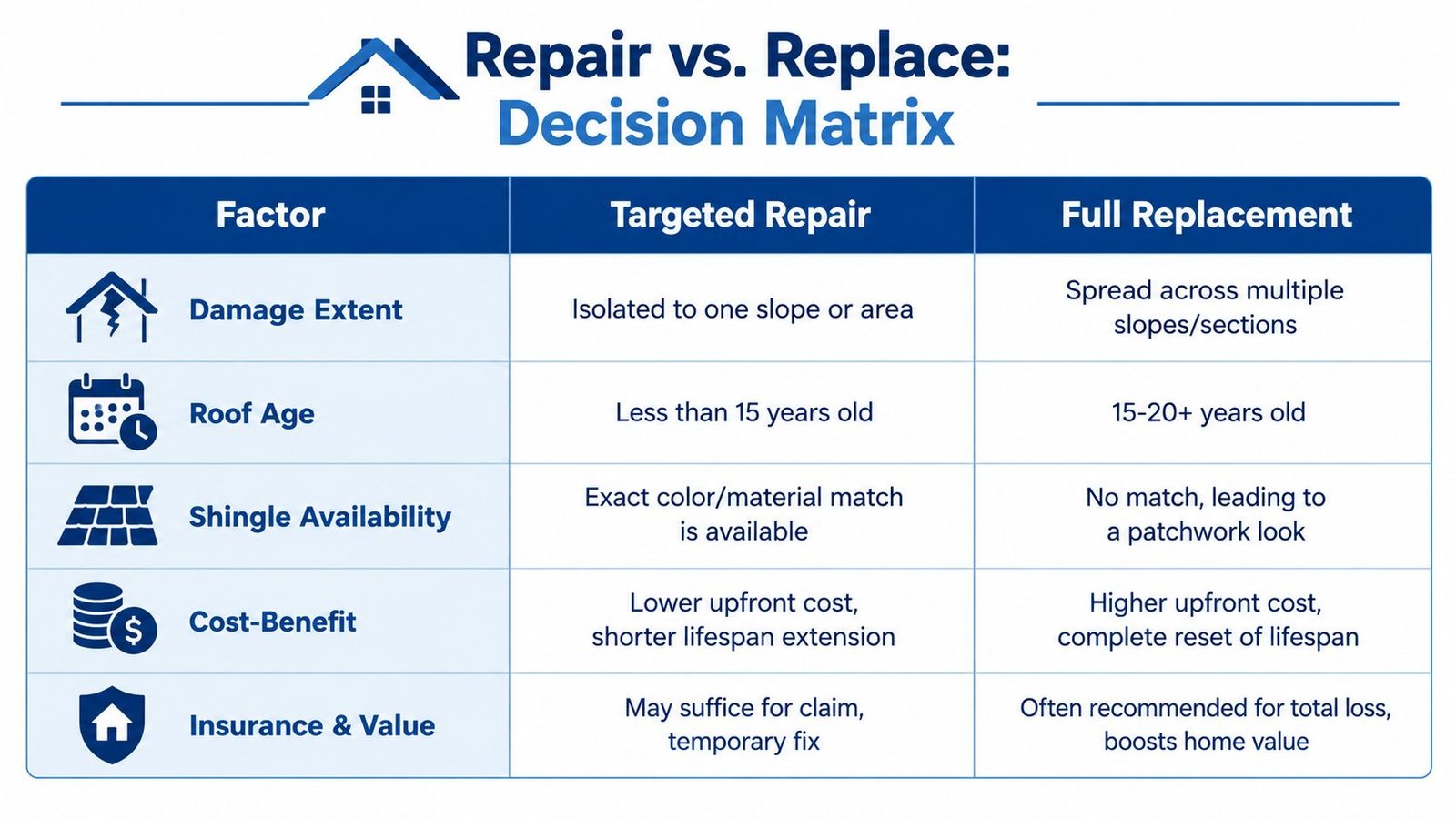
A small hit zone doesn't automatically mean you need a whole new roof. A roof with localized damage, decent age, and matching shingles still available can often be handled with targeted repair. That's the sensible move when the storm affected one slope or a limited area and the rest of the roof is still in good shape.
But once the damage spreads, the math changes. Wide mat fracture, major granule loss, and shingles that no longer protect the bitumen are replacement territory. So is an older roof where the color fade is obvious and a repair patch will look like a bad sticker job. In San Antonio, that patched section can also age unevenly under the heat, which makes a partial fix more likely to fail early.
The real decision points
- Localized repair makes sense when the damage is contained, the roof is newer, and matching shingles are available.
- Replacement makes sense when the damage covers multiple slopes or the roof has enough age that patching will just delay the next problem.
- Age matters because older shingles don't bounce back from hail the way newer ones do.
- Appearance matters because a repair that sticks out can hurt curb appeal and resale value.
A homeowner trying to estimate the scope can read more about hail damage roof repair cost, but the bigger point is this, don't make the decision based on panic or optimism. Make it based on the condition of the shingles, the spread of the hits, and whether the roof is still protecting the home the way it should.
Navigating the Insurance Claim Process
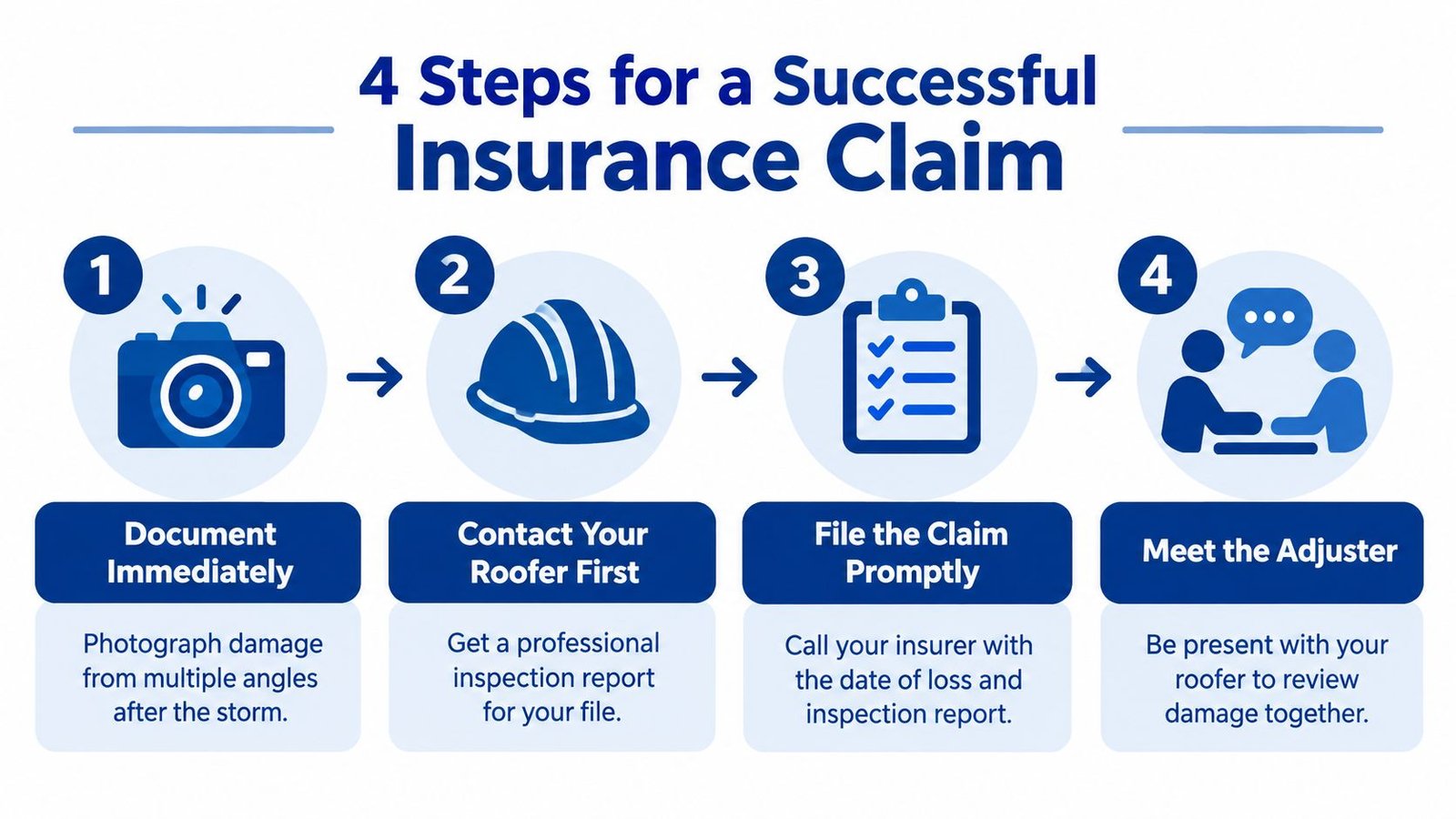
Insurance gets easier when the evidence is clean. Start with photos right after the storm, before anyone drags ladders around or walks on loose granules. Get wide shots of the house, close-ups of gutters and vents, and pictures of any hail still sitting in the yard.
Then bring in a roofer who knows how to document hail properly. A solid inspection report should show the damaged slopes, note the storm direction, and record collateral damage on soft metals and other exterior pieces. That kind of file is harder for an adjuster to brush aside.
Handle the claim like a paper trail, not a phone call
- Document immediately. Take photos from multiple angles right after the storm.
- Call your roofer first. Get an inspection report that identifies functional damage.
- File promptly. Use the date of loss and the inspection file, and keep a copy of the full hail damage roof insurance claim guide.
- Meet the adjuster. Be there with your roofer so the damage gets reviewed in person.
Insurance-industry reporting in 2025 noted 5,373 hail claims in 2024 for hailstones 1 inch or larger, up 17% from 2020, which tells you one thing, insurers are seeing a lot of these files and homeowners need solid documentation to stand out (Insurance Journal, 2025). A weak claim gets minimized. A well-documented claim gets taken seriously.
Don't let the adjuster inspect the roof alone if you can avoid it. The roofer's job is to point out what the storm did, not what the policy might cover.
If the first summary misses obvious damage, push back with specifics, not emotion. Ask what was inspected, what was photographed, and what got excluded. If the carrier's estimate does not match the actual scope, that is when supplement requests matter.
Protecting Your Home With Local Roofing Experts
After a hailstorm, speed matters, but so does who you hire. Storm chasers love to show up fast, knock on doors, and vanish when the paperwork gets messy. That's a bad deal for any homeowner in San Antonio, especially when the roof needs careful inspection, not a temporary patch and a handshake.
A local contractor should be able to explain the work clearly, provide a written estimate, and stay accountable after the job is done. Insurance coverage matters too. For a plain-English look at why contractor insurance isn't optional, the guide on WA state roofer insurance requirements is a useful reminder that roofing work carries real liability and should be backed by real coverage.
What good roof help looks like
You want a company that checks the roof thoroughly, documents the damage, and tells you the truth about repair versus replacement. You also want someone who understands how San Antonio heat makes hail bruises age faster, because a roof that's already compromised doesn't improve on its own.
A straight answer beats a sales pitch every time. If the roof is fine, you need to know that. If it's not, you need a plan before the next storm turns a small problem into a leak over your ceiling.
If you're dealing with hail damage asphalt roof shingles in San Antonio, RRSATX can inspect the roof, document the damage, and tell you whether repair or replacement makes sense. Schedule a free roof inspection with RRSATX and get a clear, local answer before the next storm rolls through.