
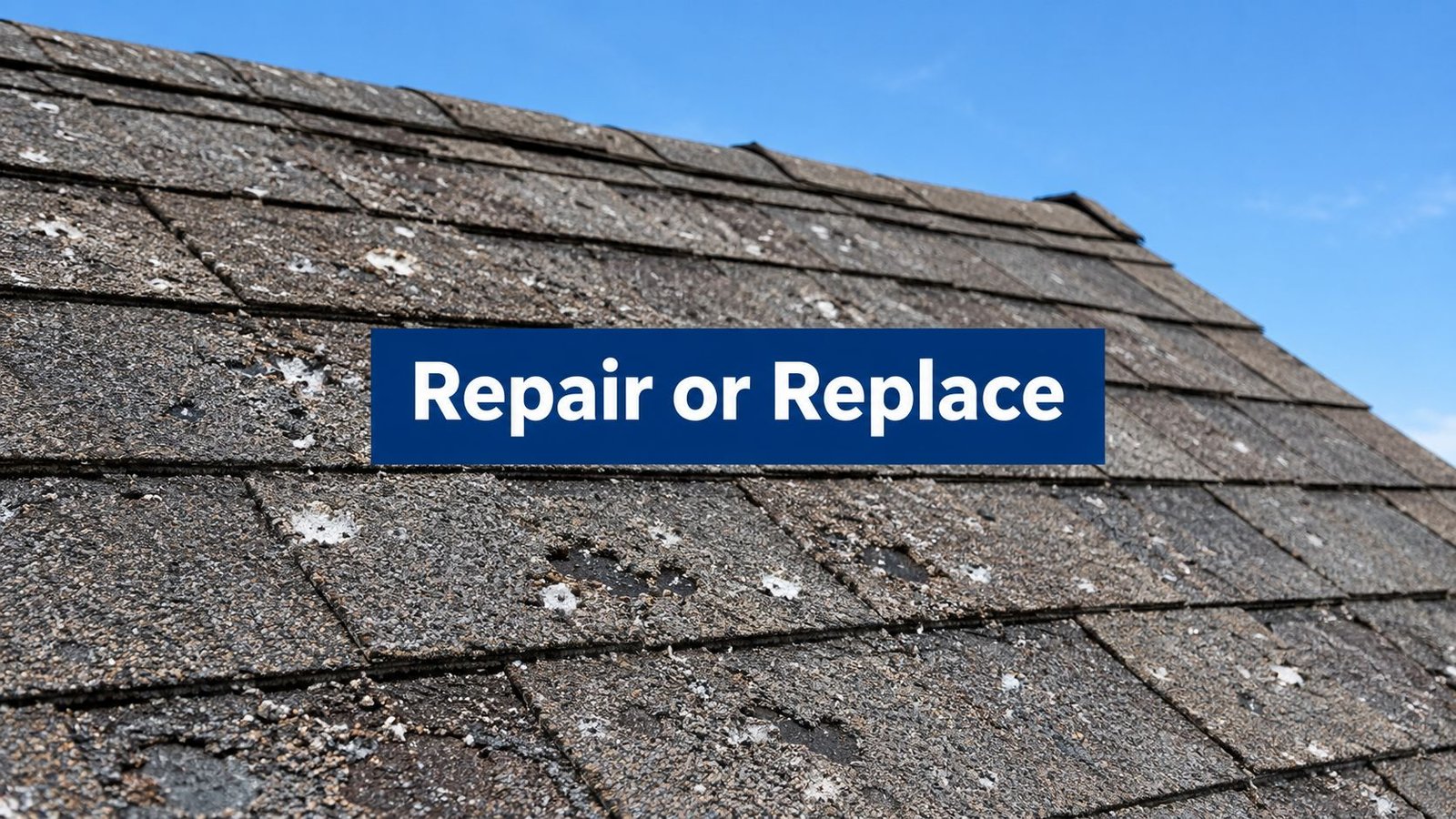
After a hailstorm in San Antonio, the first signs are often small. You find granules in the gutters, a dented vent cap, maybe a few bruises on shingles that you can only see from the driveway. Then a neighbor gets a new roof, and suddenly you're wondering if your own roof is fine, or if it's already on borrowed time.
That question matters more here than in a mild climate. South Texas heat bakes shingles, heavy rain finds weak spots fast, and hail can leave damage that looks minor but acts like a shortcut to leaks later on. If you're trying to figure out hail damage on roof when to replace, the answer is usually not based on one dent or one storm. It comes down to how much of the roof was hit, how hard it was hit, and whether repair still makes sense compared with replacement.
A calm inspection can save a lot of guesswork. You don't need to climb the roof yourself, and you shouldn't. You do need to understand what hail does, how professionals measure it, and why the repair-vs-replace decision is often more about economics and roof condition than hail size alone.
By the end of this guide, you'll know what damage matters, what an inspector is looking for, when patching is still reasonable, and when a full replacement is the smarter move for a San Antonio home.
Table of Contents
- Introduction After the Hailstorm What Homeowners Notice First
- How Hail Damages Your Roof Beyond What You Can See
- How Inspectors Measure Hail Damage and When Counts Matter
- Repair vs Replacement The Economic and Functional Decision
- Insurance Documentation and Texas Claim Timelines to Know
- Roof Age Materials and San Antonio Climate Considerations
- Making Your Final Decision and Next Steps in San Antonio
Introduction After the Hailstorm What Homeowners Notice First
The first clue after a hailstorm is usually not a giant hole in the roof. It's the little stuff. You may notice dark specks in the gutters, chipped paint on vents, or a neighbor with tarps and a new roof by the end of the week. In San Antonio, that can happen after one fast-moving storm, then the weather turns hot again and hides the problem for a while.
What people often miss
A roof can look fine from the ground and still be weakened. Hail damage often starts as surface bruising, granule loss, or small fractures that don't leak right away. The roof still sheds water for a time, so homeowners think the storm “missed” them, when really the impact just hasn't shown up inside yet.
Practical rule: if hail hit other parts of the property, like vents, gutters, or siding, the roof deserves a professional look even if it still looks normal from the street.
That matters because leaks in a hot climate don't stay small for long. Repeated heat and rain cycles can turn a weak spot into a bigger failure. A patch may hold for a while, but if the roof system is broadly impacted, patching can turn into a cycle of repeat repairs.
A good inspection should answer a simple question, not create more confusion. Is the roof showing isolated damage, or is the damage widespread enough that replacement makes more sense? Once you know that, the rest of the decision gets much easier.
How Hail Damages Your Roof Beyond What You Can See
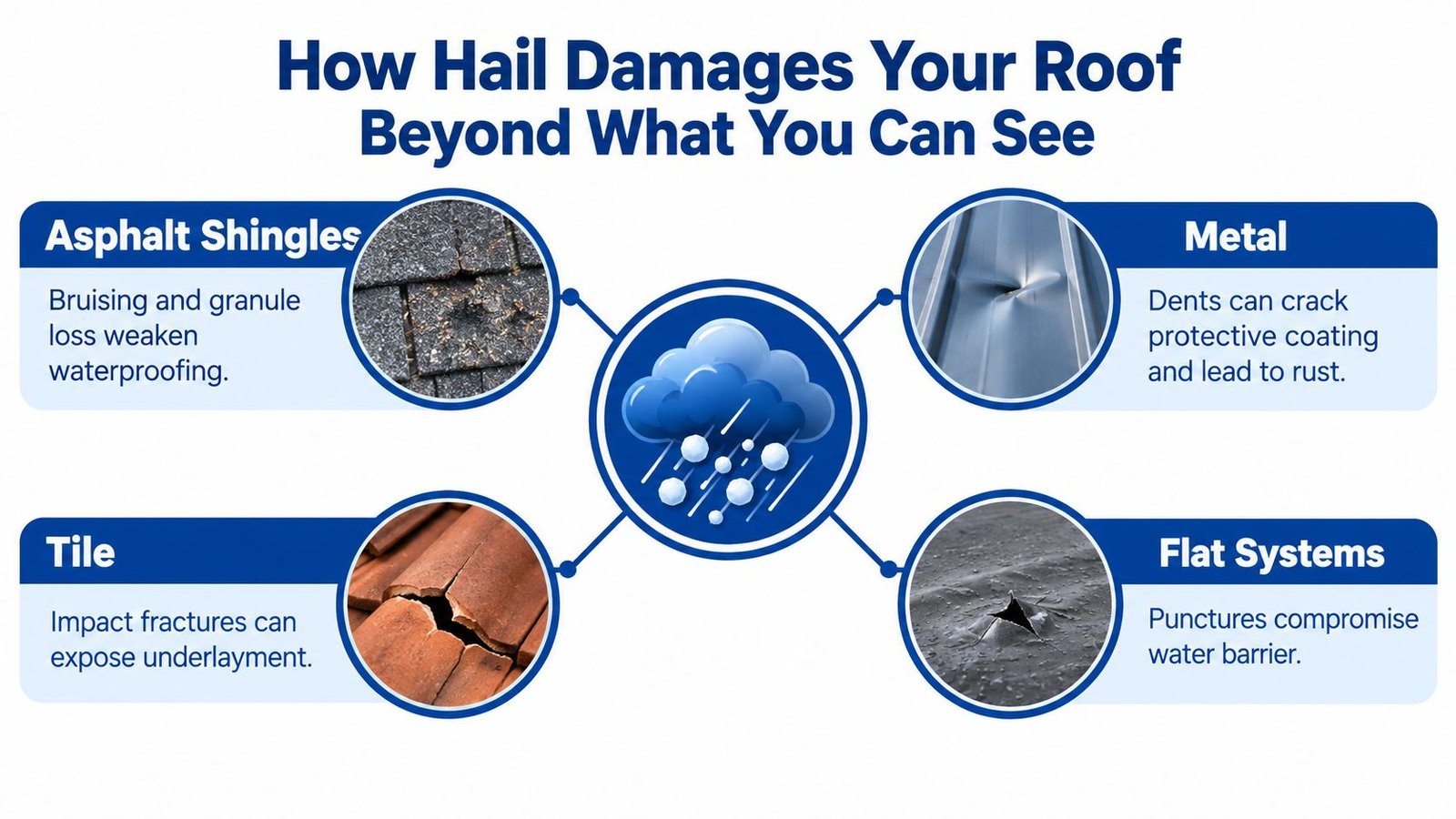
Hail doesn't have to punch a hole through a shingle to cause trouble. It can bruise the layers underneath, knock away protective granules, crack a tile edge, dent metal coating, or puncture a flat-roof membrane. It's like bruising an apple. The skin may still be there, but the fruit underneath is no longer the same.
Different roof systems fail in different ways
On asphalt shingles, hail can knock off granules and bruise the mat below. That matters because granules protect the shingle from sun and weather. Once that layer is stripped, San Antonio heat works on the exposed surface faster than most homeowners expect.
On metal roofing, dents can crack protective coating or open the door to rust over time. On tile, the impact can fracture the surface and expose the underlayment below. On flat systems, hail can puncture the membrane and weaken the water barrier.
The key point is that hail damage is not always a visible hole. It can be a slow failure that starts with a small impact and ends with water finding its way in months later. That's why a roof can seem “okay” right after a storm and still be a strong candidate for repair or replacement after a proper inspection.
Cosmetic marks versus functional damage
Not every dent means the roof is failing. A few marks can be mostly cosmetic, especially on tougher materials. Functional damage is different. That's when the roof can't shed water the way it should, or when the repair would disturb so many surrounding shingles that the fix becomes inefficient.
A roof doesn't have to be falling apart to be compromised. If the protective layers are broken, the roof can age much faster than it should.
That difference is what separates a quick repair from a replacement decision. The next step is learning how inspectors count that damage and why the distribution of hits matters so much.
How Inspectors Measure Hail Damage and When Counts Matter
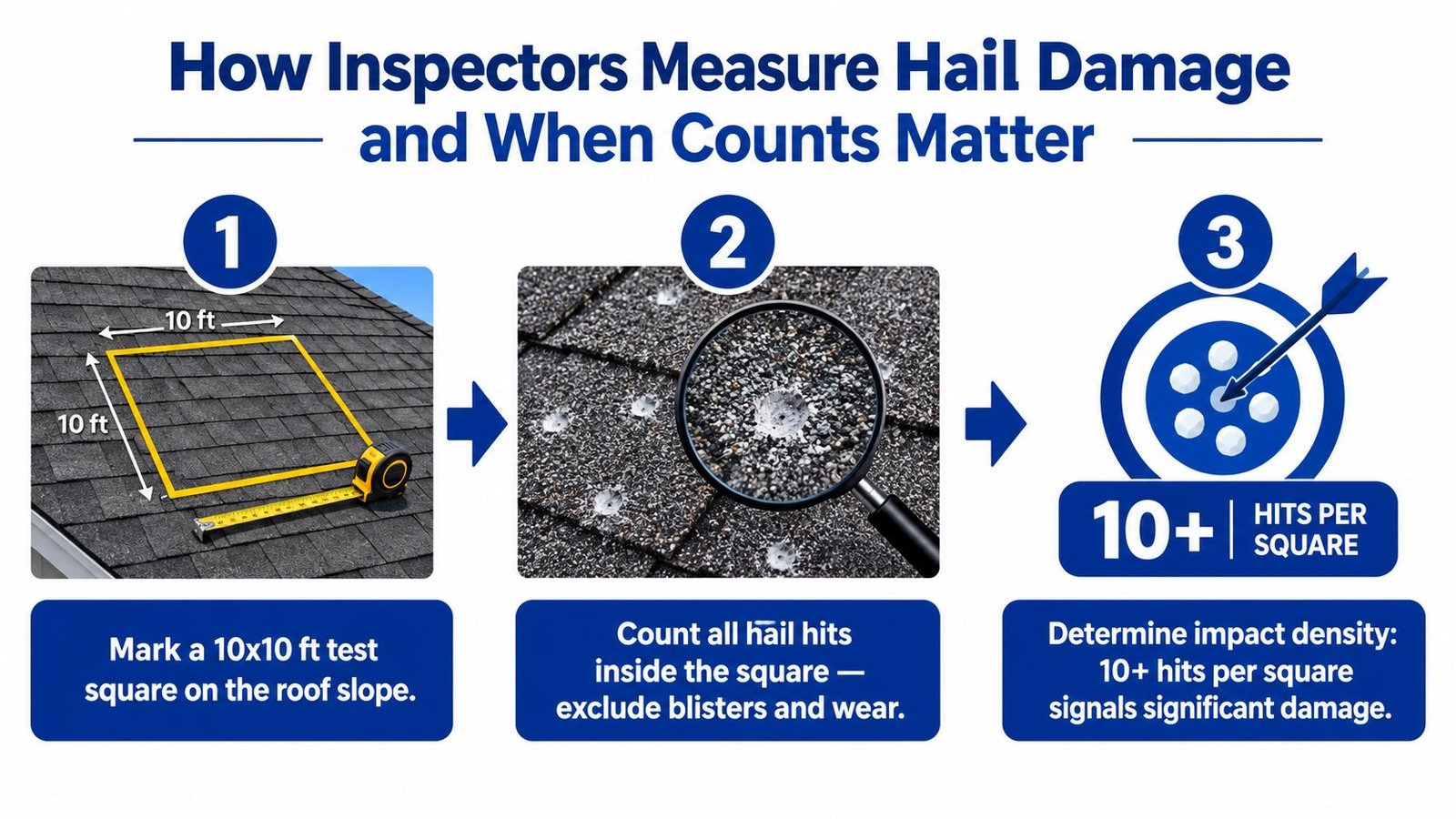
Inspectors don't guess. They work in test areas, compare the damage against wear and blistering, and look at each slope separately. In Texas inspections, a common method is a 10-foot by 10-foot test square, and some guidance uses eight or more qualifying hail hits in that area as a possible replacement threshold, while noting the exact count can vary by insurer and roof condition NACHI hail damage guidance.
Why a single dent doesn't tell the whole story
A few isolated hits usually don't mean replacement. Widespread damage across multiple slopes is a different story. Haag Engineering's protocol says inspectors first tell hail damage apart from non-hail wear, then quantify it by directional slope, and then compare repair cost against the cost to replace the slope or roof Haag Engineering protocol.
That slope-by-slope approach matters because roofs don't fail evenly. One side may take the worst of the storm, while another side has only light marks. If the damage is spread out, the repair gets harder. Crews may have to remove more shingles just to reach the damaged ones, which can make the fix less efficient.
A useful benchmark from forensic guidance says around 10% hail damage can mean more than 40% of total roof shingles need replacement or manipulation, and at 12% hail damage that figure can exceed 50% Nelson Forensics guideline. That's the part homeowners often miss. A roof can look only partly damaged, but the labor needed to repair it can spread much farther.
How to read the report language
If an inspector talks about “impact density,” “functional damage,” or “slope-wide distribution,” they're telling you the damage is not limited to one tiny patch. If they mention that repair would require disturbing a large field of shingles, that usually means the roof is moving toward replacement territory.
Practical rule: the more the damage spreads across slopes, the less a small patch behaves like a real fix.
That is why the count matters, but the count alone still doesn't decide it. The repair bill and the replacement bill have to be compared next.
Repair vs Replacement The Economic and Functional Decision
Question is whether the roof can be fixed in a way that still makes sense. NRCA guidance says to compare the cost of repairing damaged shingles with the cost of replacing the roof slope. If repair costs as much as, or more than, replacement, replacement is the better economic choice NRCA roofing guidelines.
That matters in San Antonio because a patch on a storm-hit roof has to survive more than one season. Heat dries shingles and weakens seal strips. Rain checks every lifted edge. A repair that looks fine at first can start to fail once the roof goes through another hot summer and the next round of hail or wind.
The choice comes down to more than hail size
A larger hailstone does not automatically mean replacement. A smaller storm that hits many slopes can be harder to fix well. The deciding factors are how dense the damage is, how many shingles must be lifted to reach the marked spots, and whether the roof still has enough useful life left to justify repair.
The numbers also help explain the math. Verisk's residential hail-loss data shows a wide gap between average roof replacement cost and average repair cost Verisk hail loss database. That gap is why homeowners should use a clear rule instead of guessing.
| Decision Factor | Repair Makes Sense | Replacement Makes Sense |
|---|---|---|
| Damage extent | A small, isolated area | Multiple slopes or broad impact density |
| Roof condition | Roof still has useful life left | Roof is already old or worn |
| Repair access | Damaged shingles can be fixed without disturbing much else | Repair would require pulling up a large area of shingles |
| Long-term value | One fix solves the problem | Patch after patch would keep adding cost and risk |
| San Antonio weather stress | Roof can handle more heat and rain cycles | Heat and storm exposure make repeat failures more likely |
The 10% and 12% hail benchmarks matter because they show how a roof can look only partly hit while the repair work spreads much farther. Once enough shingles have to be disturbed, the job stops being a small patch and starts looking like a roof-slope problem.
A small, local hit can often be repaired. Spread-out damage across several slopes, an aging roof, or a fix that would leave too much of the system exposed usually points to replacement.
Insurance Documentation and Texas Claim Timelines to Know
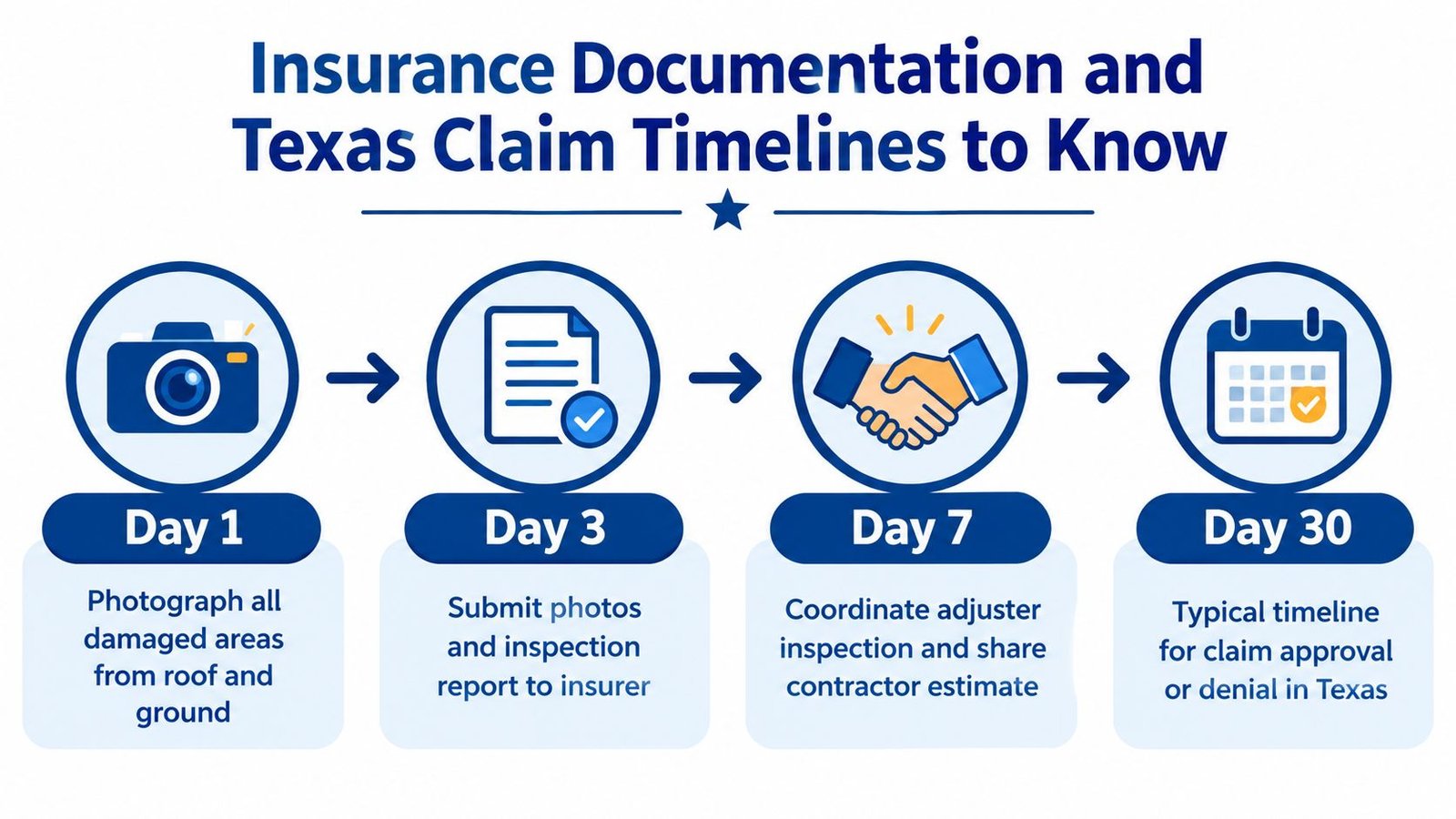
The claim process goes smoother when the damage is documented early and clearly. Take photos from the ground, note the storm date, and save anything that shows impact on the roof or the rest of the property. Roofing damage often isn't roof-only, either. Hail can also affect gutters, siding, and HVAC components, which is why the full claim picture can matter.
What to save and what to send
A good file usually includes photos of roof marks, granules in gutters, dents on metal fixtures, and any interior signs of leaks. It also helps to have a written inspection report that separates hail hits from normal wear. If you work with a contractor, ask for a clear description of which slopes were damaged and why they believe repair or replacement fits the roof condition.
You can also use a helpful guide on the claim process for homeowners, like this overview of tree insurance claim prevention tips, especially if branches or falling debris were part of the same storm event.
Texas prompt-claim rules are important. Under Texas Insurance Code Chapter 542, the insurer must acknowledge the claim and begin investigating within 15 days, decide to accept or reject within 15 business days after receiving all required information, and pay an accepted claim within 5 business days Texas claim handling summary. A published legal summary also says the limitations period for Texas hail or wind claims is two years from the date of loss, which means the storm date starts the clock Texas roof insurance claim law summary.
Why timing matters
The longer you wait, the harder it gets to prove the storm damage came from the hail event and not from normal aging. That's one reason a written inspection matters so much. It gives you a clean record while the storm is still fresh.
For homeowners who want a deeper walkthrough of the claim side, this local guide on a hail damage roof insurance claim is a useful reference.
Practical rule: document first, then decide. A complete file gives you more clarity before the adjuster visit.
Roof Age Materials and San Antonio Climate Considerations
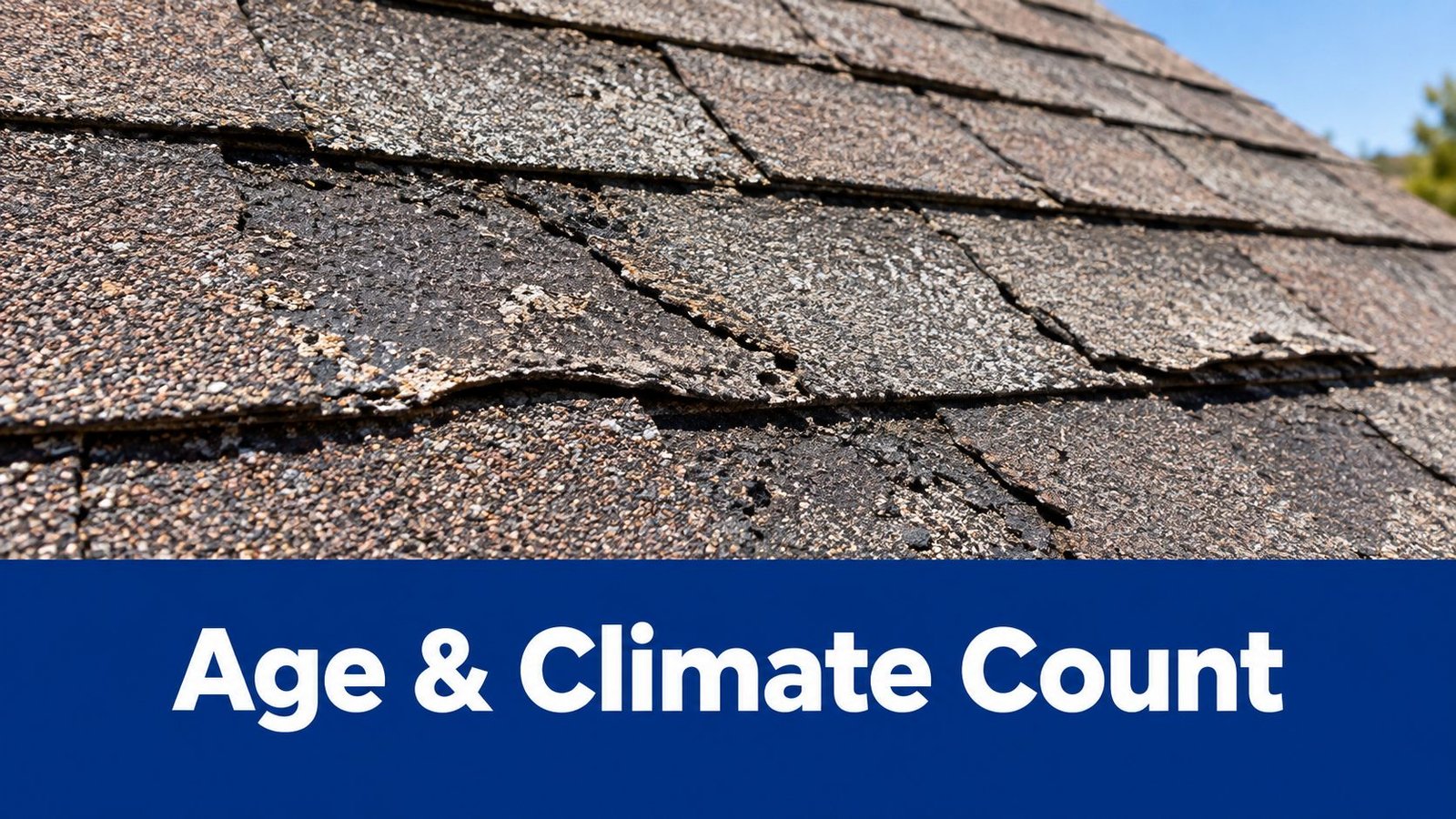
A roof's age changes the decision fast. A newer roof with a few hail marks may still be a repair case. An older roof that has taken repeated hits is different, because the material is already near the end of its useful life and has less ability to recover after another storm.
Why climate pushes roofs harder here
San Antonio heat works on a roof all summer. It dries out asphalt shingles, wears on sealants, and makes brittle materials fail sooner. Add hail on top of that, and the roof has less room left before small damage turns into a larger problem.
Material matters too. Asphalt shingles, metal, tile, and flat systems age in different ways. A roof with solid decking, flashing, and ventilation may handle a targeted repair better than one with broader wear in the whole assembly. If those supporting parts are already weak, replacement can make more sense even when the hail marks look minor.
Repeat exposure matters as well. Verisk reported that severe hail affected 16 states with 20% or more of roofs affected in 2025, up from 12 states in 2024, and Kansas led with 51.8% of roofs impacted and about $2.2 billion in average annual loss, as noted in The Roofing Brief's 2026 hail loss database. That does not mean every San Antonio roof needs replacement after one storm, but it does show how wide hail exposure has become.
For homeowners comparing how shingles age and fail, this local guide on hail damage asphalt roof shingles helps explain why damage is often harder to spot at first glance.
Practical rule: an older roof with damage across several slopes is much more likely to justify replacement than a newer roof with one limited hit area.
The question is how much useful life is left, and how much more storm stress the roof can take before repair stops making sense.
Making Your Final Decision and Next Steps in San Antonio
The decision gets simpler when you use three lenses. First, look at damage extent. Second, look at assembly condition, including shingles, decking, flashing, and ventilation. Third, compare the economics of repair versus replacement. If the damage is local, the roof is younger, and repairs are efficient, patching may be enough. If the hits are spread across slopes, the roof is older, or the repair would disturb too much material, replacement usually makes more sense.
Don't climb up there to check. The roof surface may be slick, brittle, or weaker than it looks from below. A trained inspector can tell the difference between cosmetic marks and damage that shortens roof life.
What a good next step looks like
A proper inspection should give you written findings, photos, and a clear recommendation. That lets you compare options without pressure. It also helps you talk with an insurer or adjuster using facts instead of a guess.
If you're in San Antonio and you want a local roof checked after hail, schedule a professional inspection before the next storm rolls through. A written estimate, on-site oversight, and full insurance coverage can give you peace of mind while you decide whether repair or replacement is the right move.
If you're still unsure whether your roof needs repair or full replacement, RRSATX can help you sort out the damage with a free inspection and a written estimate. Visit RRSATX to get local help from a San Antonio roofing team that understands hail, heat, and storm damage. Call 713-504-2341 or schedule online today so you can make the next move with confidence.