
Most commercial roofs last 20 to 30 years, but San Antonio's harsh climate means many local roofs see significantly less life without extra maintenance. The answer depends on the roof system, installation, drainage, storm exposure, and how quickly small defects are corrected.
A building owner in San Antonio may start with a ceiling stain after a summer storm, then discover that the roof has been aging for years. The membrane may have weakened under intense sun, ponding water may be sitting near a clogged drain, and hail may have left damage that isn't visible from the parking lot. A generic lifespan chart can't tell you whether that roof should be repaired, restored, or replaced.
Table of Contents
- The Reality of Commercial Roof Lifespans in Texas
- Typical Lifespans for Common Roof Systems
- How San Antonio Weather Attacks Your Roof
- Simple Maintenance Habits That Add Years
- When to Repair and When to Replace
- Get a Professional Roof Assessment Today
The Reality of Commercial Roof Lifespans in Texas
A commercial roof in Bexar County can look serviceable from the parking lot while its remaining life is already limited. A property owner searching “how long does a commercial roof last” may see a planning range of 20 to 30 years, but that figure is not a deadline. Roof systems differ widely, and their expected service lives can vary by more than 40 years, according to this commercial roof lifespan reference.
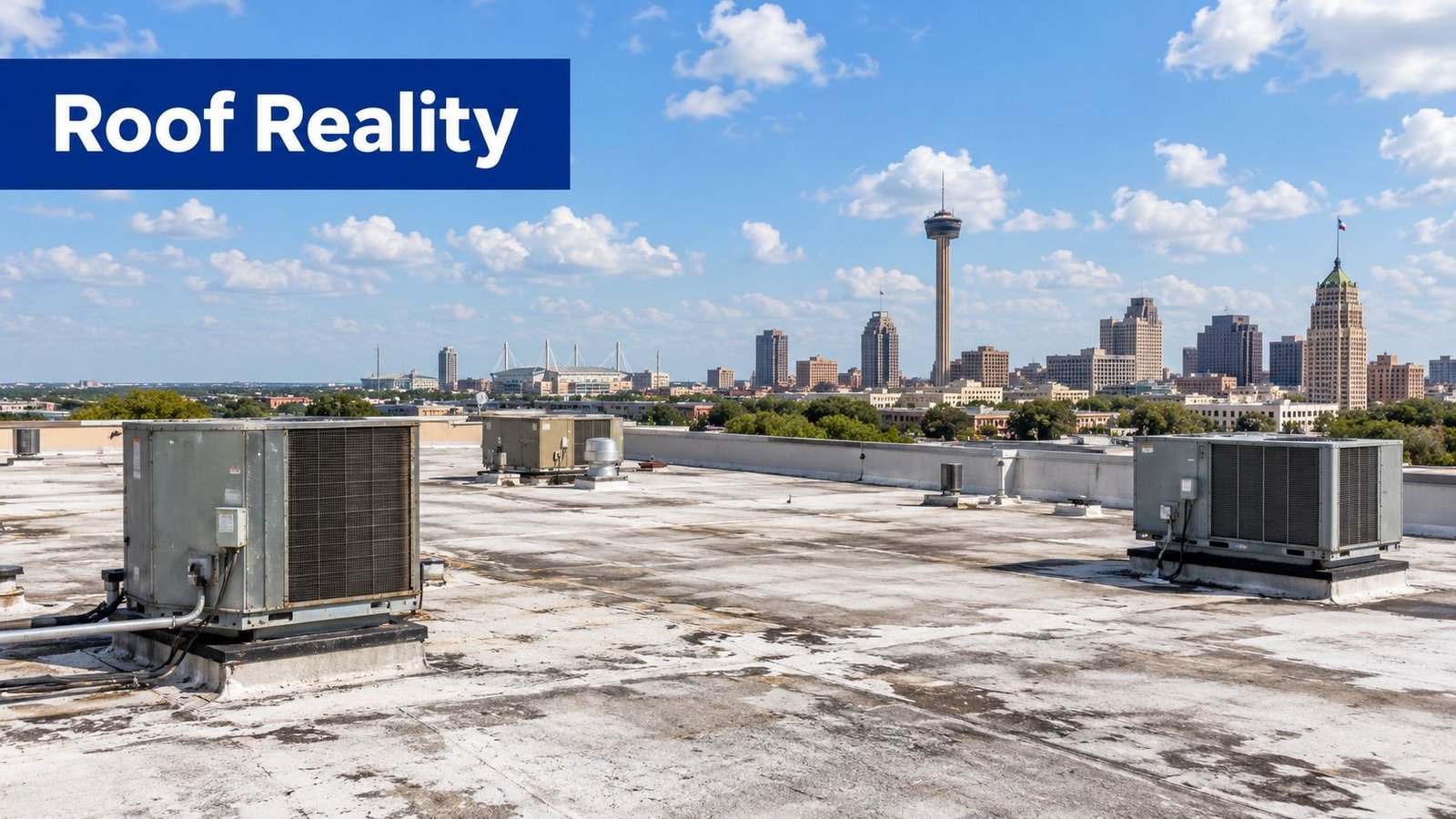
Two buildings with similar footprints can have very different futures. One may have a single-ply membrane over a busy warehouse, where HVAC contractors cross the roof and water collects near a low point. Another may have a carefully detailed metal system, open drainage paths, and a documented maintenance record. Their installation dates may be similar, while their remaining service life is not.
Age is only the starting point
A roof can still keep rain out and make poor financial sense to maintain. Repeated leak calls, wet insulation, failing seams, and deteriorated flashing can make another patch an expensive delay. A roof with sound materials, reliable drainage, and isolated damage may still have useful years available.
San Antonio conditions push these decisions away from national averages. Long periods of intense heat stress membranes, coatings, sealants, and metal components. Sharp temperature changes create movement, while heavy rain tests drainage and severe hail can damage surfaces and details. These stresses do not guarantee early failure, but weak installation and neglected maintenance usually show up sooner here than in a mild climate.
Practical rule: Use a published lifespan as a planning range, not a deadline. Give more weight to inspection records, repair history, drainage, and current roof condition than to age alone.
A facility manager should identify the roof type, review past repairs, and assess remaining service life before setting a replacement schedule. That approach accounts for the difference between a roof approaching the end of its useful life and one that can continue performing with targeted repairs and regular care.
Typical Lifespans for Common Roof Systems
Different systems handle San Antonio conditions in different ways. The ranges below are planning benchmarks, and the cited sources emphasize that climate, workmanship, drainage, and maintenance can move a roof toward either end.
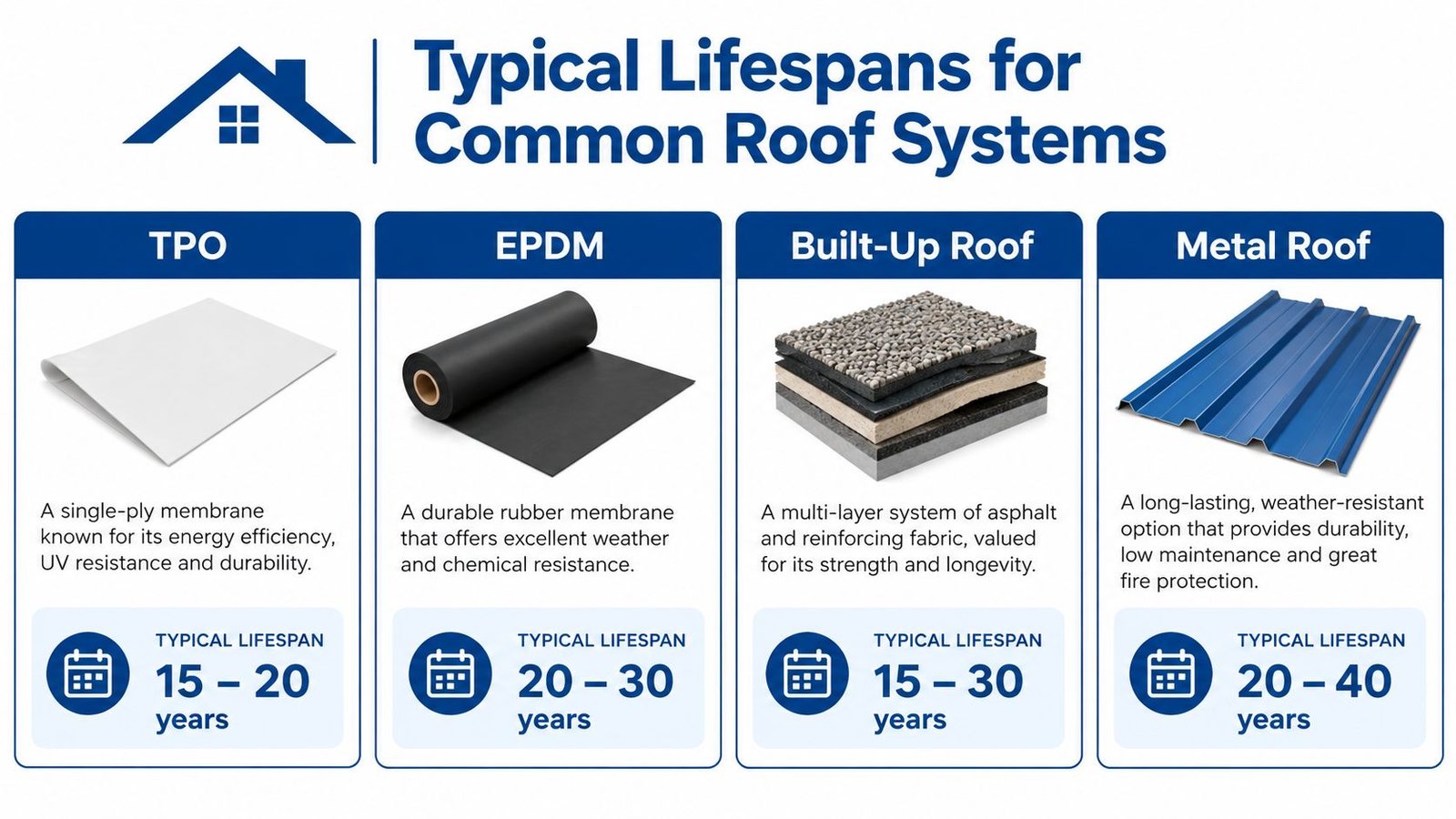
| Roof system | Common service-life range | What matters most in San Antonio |
|---|---|---|
| TPO | 20 to 30 years | Heat exposure, membrane thickness, welded seams, and detailing |
| EPDM | 25 to 35 years | Seam condition, flashing, punctures, and rooftop traffic |
| Built-up roofing | 15 to 30 years | Drainage, layer condition, surfacing, and moisture below the roof |
| Metal | Roughly 40 to 70 years | Coatings, fasteners, corrosion control, penetrations, and maintenance |
These ranges come from commercial roofing lifespan data on common systems. TPO is popular on low-slope buildings because reflective surfaces can help manage heat, but the seams and edge details still need close inspection. Poor welding or repeated thermal cycling can cause seam problems long before the open membrane looks worn.
EPDM has a strong service-life record and can perform well around drainage areas when the system is correctly installed. That doesn't mean ponding water is harmless. Standing water, blocked drains, and stressed flashing can shorten the life of any low-slope roof.
Comparing the long game
Built-up roofing has multiple layers and may remain serviceable for many years when the roof stays dry and well drained. Once moisture enters the assembly or blistering becomes widespread, repairs can become harder to isolate.
Metal generally offers the longest potential life in this comparison, but it isn't maintenance-free. Fasteners loosen, coatings weather, and penetrations around vents or rooftop equipment can become leak points. A metal roof may outlast a membrane system, yet still need prompt repairs after hail or severe weather.
A commercial flat-roof maintenance reference reports that a well-maintained flat roof can reach about 25 years, while a roof without documented inspection and maintenance may fail around 10 years. The lesson is simple. Material selection matters, but the roof's working environment and care program matter just as much.
How San Antonio Weather Attacks Your Roof
San Antonio's weather puts three recurring pressures on commercial roofs: ultraviolet exposure, thermal movement, and storm damage. Each one works differently, and the combination can turn a small weakness into a serious leak.
Ultraviolet radiation gradually breaks down exposed roofing surfaces. Reflective membranes can reduce heat absorption, but they still need sound seams, secure flashing, and proper edge treatment. A roof that looks clean from the ground may have brittle sealants, exposed reinforcement, or deteriorated details around curbs and pipes.
Heat creates movement
A roof expands during intense daytime heat and contracts as temperatures fall. That repeated movement places stress on seams, fasteners, flashing, coatings, and transitions between different materials. The membrane may not fail across the entire field at once. Trouble often starts at a curb, corner, drain, or penetration where several components meet.
Low-slope roofs face another challenge because gravity has less help moving water off the surface. Heavy rain can overwhelm drainage paths, while debris can block drains and scuppers. Water that remains in the same low area adds weight and keeps roofing materials exposed to moisture for longer periods.
Storms expose weak details
Hail can bruise or puncture roofing materials. High winds can lift edges, damage flashings, and move rooftop debris across the membrane. After a storm, a leak may not appear immediately, especially if water has entered insulation or traveled beneath the surface.
Property managers should arrange a professional review after significant hail or wind, rather than waiting for an interior stain. The San Antonio commercial storm damage guide explains why exterior damage and interior symptoms don't always appear at the same time.
Simple Maintenance Habits That Add Years
A maintenance program doesn't need to be complicated, but it does need to be consistent. The most useful habits are the ones that catch water-management problems, seam defects, and damage from rooftop activity before they spread.
Start with drainage
Keep drains, scuppers, gutters, and strainers free of leaves, dirt, and windblown material. Look for recurring ponding after rain, because the same low spot can keep the roof wet and reveal a drainage or slope problem.
Next, inspect the areas people disturb most:
- Rooftop equipment: Confirm that service crews use designated paths and don't drag tools or materials across the membrane.
- Flashing and penetrations: Check curbs, pipes, vents, skylights, and wall transitions for movement, gaps, or failed sealants.
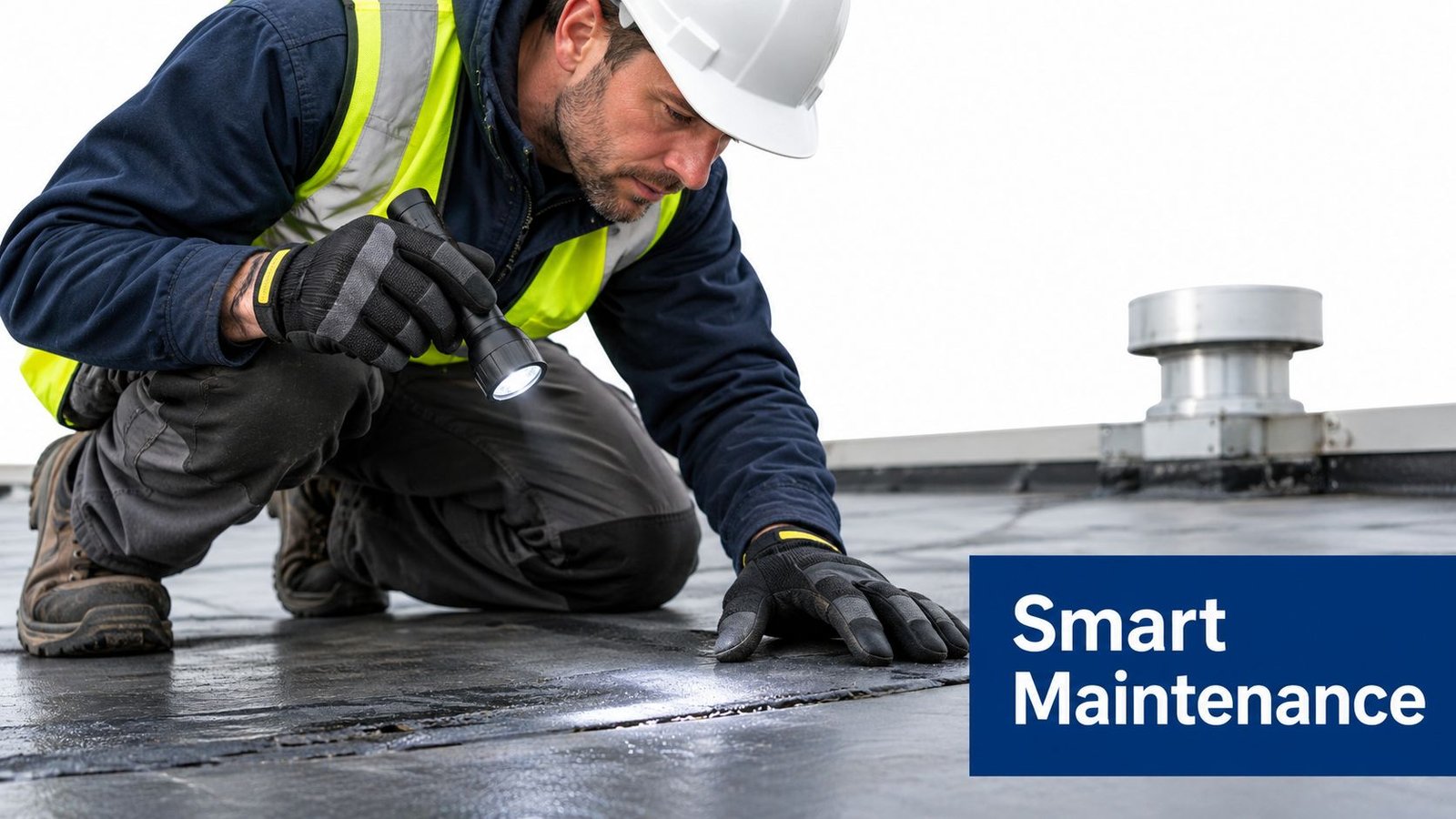
- Seams and laps: Look for lifting, open edges, wrinkles, or unusual discoloration that may indicate moisture.
- Interior areas: Record ceiling stains, damp insulation, peeling paint, or musty odors and match them to exterior conditions.
Small punctures deserve prompt attention. A temporary patch may control an active leak, but a qualified roofer should identify what caused the damage and check whether water traveled beneath the surface.
Use a written inspection log with photographs, dates, weather notes, repair descriptions, and the name of the person who performed the work. This record helps a facility manager spot recurring trouble and gives a contractor useful history during an assessment. For a more detailed checklist, review this commercial roof maintenance checklist for Texas businesses.
A lease may also assign responsibility for inspections, repairs, or access to rooftop equipment. Property owners and managers can use The Law Office of Bryan Fagan tips when reviewing those obligations with a commercial tenant.
An annual professional inspection, plus a review after major weather, gives the building owner a much clearer picture than reacting to leaks alone. It also creates time to plan repairs during less disruptive periods.
Before sending anyone onto a roof, confirm that the person has suitable training and fall protection. Building owners shouldn't climb onto commercial roofs to investigate damage themselves.
When to Repair and When to Replace
Repair is usually appropriate when the damage is isolated and the surrounding roof remains dry, stable, and well attached. A localized puncture, limited flashing failure, or single damaged seam may not justify disturbing the entire system.
Replacement becomes more reasonable when several warning signs appear together. Repeated leaks in different areas suggest that the problem may be systemic rather than local. Widespread blistering, soft or spongy sections, wet insulation, and extensive seam failure point to conditions that surface patching may not solve.
Read the pattern, not one symptom
Ponding water deserves attention even when the roof hasn't leaked inside. It can signal blocked drainage, settlement, damaged insulation, or an assembly that no longer moves water effectively. If the same area fills after every storm, the owner should investigate the cause instead of repeatedly sealing the visible symptom.
A restoration or coating project can be an option when the existing roof is structurally sound, dry, and suitable for the proposed system. One commercial roof restoration perspective says coating systems are increasingly used to extend roof life cycles by 10 to 20 years at a fraction of replacement cost. That approach only works when the underlying roof qualifies. Coating over wet insulation or widespread membrane failure hides the problem rather than correcting it.
Look for the pattern: A roof that needs the same repair after every storm may be telling you that the repair strategy, not just the leak location, needs to change.
Replacement planning also affects tenants, equipment access, inventory, and business hours. Owners who assess the roof before an emergency can compare repair, restoration, and replacement with less pressure. For broader context on the planning and construction side of a commercial project, Trail Star Development commercial construction offers a useful overview.
Get a Professional Roof Assessment Today
You can't determine remaining service life from the roof's age alone. A professional assessment should identify the membrane or panel system, inspect seams and flashings, evaluate drainage, look for storm damage, and note conditions below the surface when accessible.
For a San Antonio property, that review should account for heat exposure, hail history, rooftop traffic, HVAC work, and the building's operating schedule. A written report can separate urgent repairs from longer-term planning and help the owner decide whether to maintain, restore, or replace the system.
RRSATX is a father-son owned San Antonio roofing company serving commercial and residential properties with free inspections, repairs, replacements, storm-damage support, TPO and flat-roof work, written estimates, and $2,000,000 in liability insurance. The company has been family-owned since 2000, and its owner brings more than 40 years of personal roofing experience to local projects.
Don't climb onto the roof or assume an insurance claim will be approved without proper documentation. Let a qualified professional inspect the condition, record the findings, and explain the available next steps.
Call 713-504-2341 or schedule a free roof inspection online through RRSATX to review your commercial roof's condition, storm exposure, and remaining service life. You'll receive practical guidance on repair, maintenance, or replacement for your San Antonio property.