
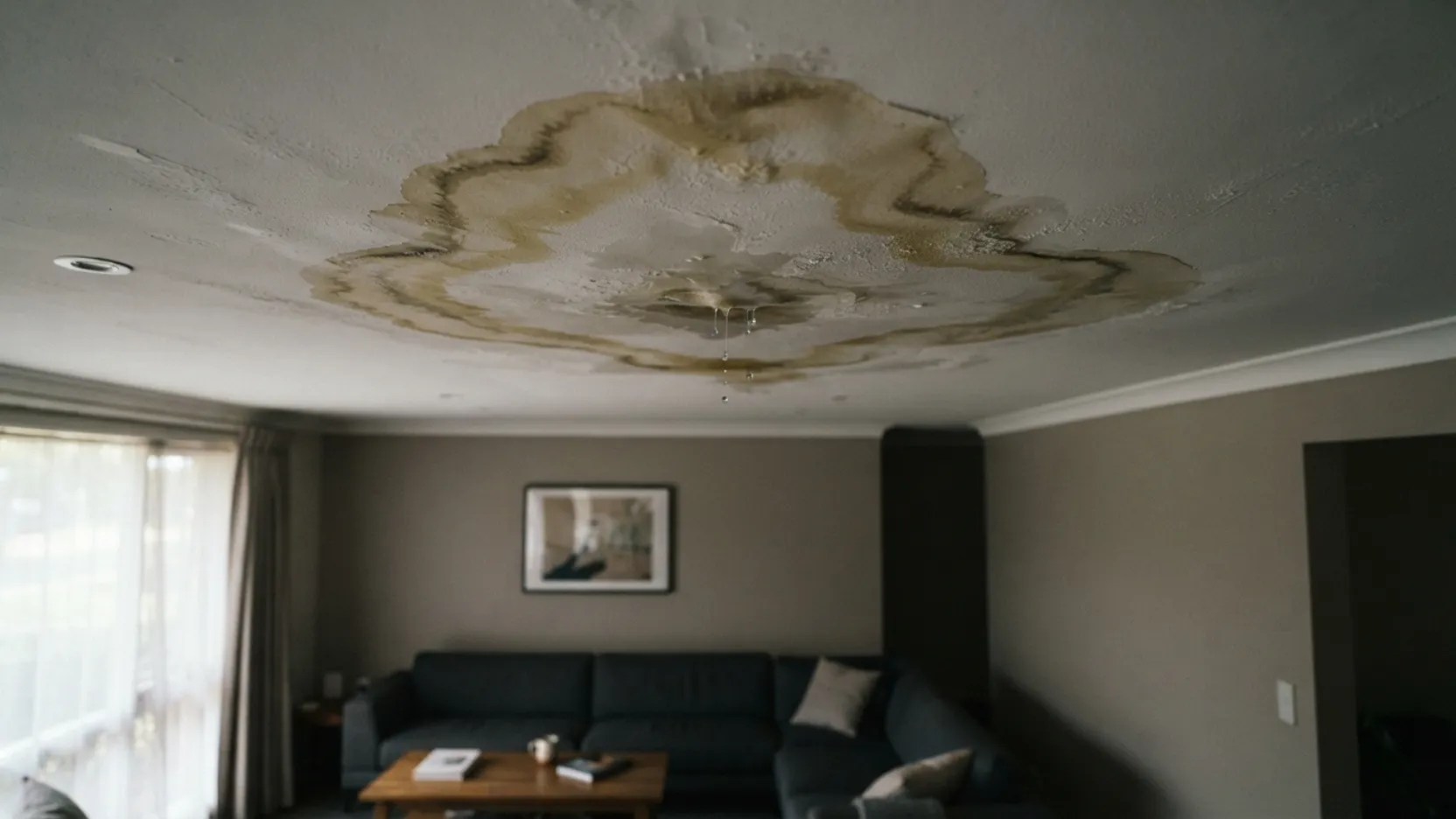
Roof leak repair · San Antonio, Texas
What Should You Do First When Your Roof Is Leaking?
A drip during a storm or a fresh stain on the ceiling calls for a clear sequence: protect your home, document the damage, and let a roofer find the source. Here is the order that keeps a small leak from becoming a big one.
The short answer
If your roof is leaking, act in order: move and cover what you can, place a container under the drip, and stay clear of wet ceilings and light fixtures. Take dated photos, then report the loss to your insurer and keep receipts for any temporary repairs the Texas Department of Insurance says a policy may pay for. [1] Leave finding and fixing the source to a roofer, and never climb on the roof yourself.
First steps when you spot a leak
Your first job is to limit the damage happening right now, safely. Move furniture, electronics, and anything that matters out of the water’s path, and put a bucket or towels under an active drip.
Water and electricity are a dangerous mix. If a ceiling light, fixture, or outlet is near the wet area, do not touch it, and keep the space clear. If water is pooling around anything electrical, switch off power to that part of the home at the panel if you can do so safely, and stay out of the room until it is dry or checked. A bulging, sagging ceiling that is holding water can give way without warning, so clear the room beneath it rather than standing under it.
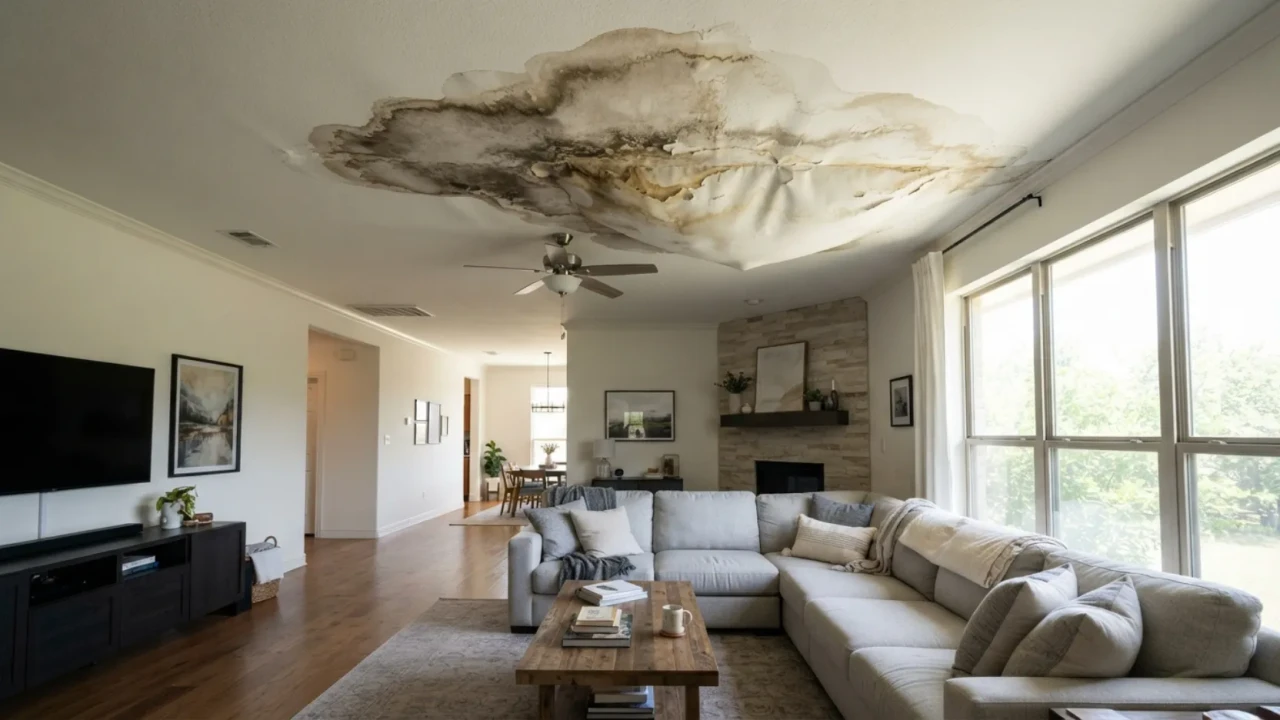
A fast-moving, active leak during a storm is an emergency. If water is coming in and you cannot slow it from inside, that is the point to call for emergency roof repair rather than wait for the weather to pass.
Document the damage before you clean up
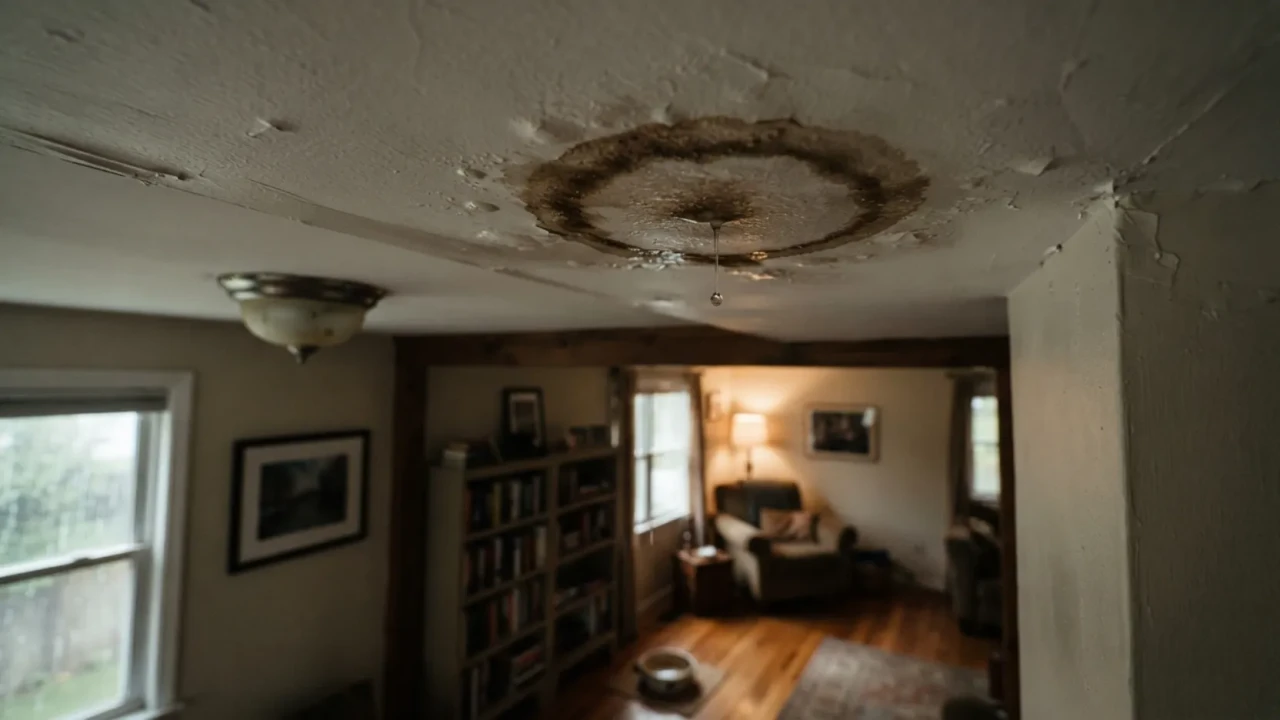
Photograph everything before you move it or dry it out. The Texas Department of Insurance tells homeowners to take pictures and video of the damage after a storm. [1]
Capture the drip, the stain, the wet flooring, and any damaged belongings, and note the date. If the leak followed a storm, write down when it happened. TDI also advises keeping damaged items until your insurance company tells you otherwise, so resist the urge to throw things out right away. [1] Clear, dated records help later, whether or not you end up filing a claim.
What RRSATX recommends
Take photos from a few angles and keep them with any earlier roof records, such as the roof’s age and past repairs. When you request an inspection, you can share those photos so the roofer knows what the leak looked like, even if it is dry by the time anyone arrives.
Temporary measures only, and only if they are safe
A temporary measure buys time; it is not a repair. The Texas Department of Insurance advises covering broken windows and holes to keep rain out, saving all receipts, and notes that a policy may pay for temporary repairs. [1]
Indoors, that means containing the water and protecting what you can reach from the floor. Anything that would put you on the roof, a wet surface, or a ladder in bad weather is not a do-it-yourself task. Wet roofing is slippery and a storm-damaged surface can be unstable, so leave rooftop work, including covering a breach, to a roofer. Keep the receipts for any materials or emergency service, because those records matter if you make a claim. [1]
For ideas on what counts as a safe holding action while you wait for a professional, see our guide to temporary roof leak fixes. Treat anything that stops the water as short term until the source is found and properly repaired.
Reporting a leak to your insurer
If a storm caused the leak, report it to your insurer and let the policy guide what happens next. The insurer and your policy decide what is covered, not the roofer.
The Texas Department of Insurance tells homeowners to be available for the adjuster’s visit and to keep documentation of the damage and expenses. [1] A roofer can give you an estimate and explain the damage, but Texas does not allow a roofer or contractor to act as a public insurance adjuster on a claim where they are also doing the work, and it is illegal in Texas for a contractor to waive, rebate, or absorb your deductible. [2] Be cautious with anyone who promises a particular claim result.
What RRSATX recommends
Keep your photos, estimates, and any insurer correspondence together in one place, and ask your insurer to explain the coverage decision before you treat any estimate as the amount a policy will pay. For the records to gather when a claim is involved, see our guide to the roof replacement insurance claim process.
Finding the source is a job for a roofer
Where water shows up inside is rarely where it entered the roof. Water travels along the underside of the roof and the framing before it drips, so a stain can sit well away from the actual opening.
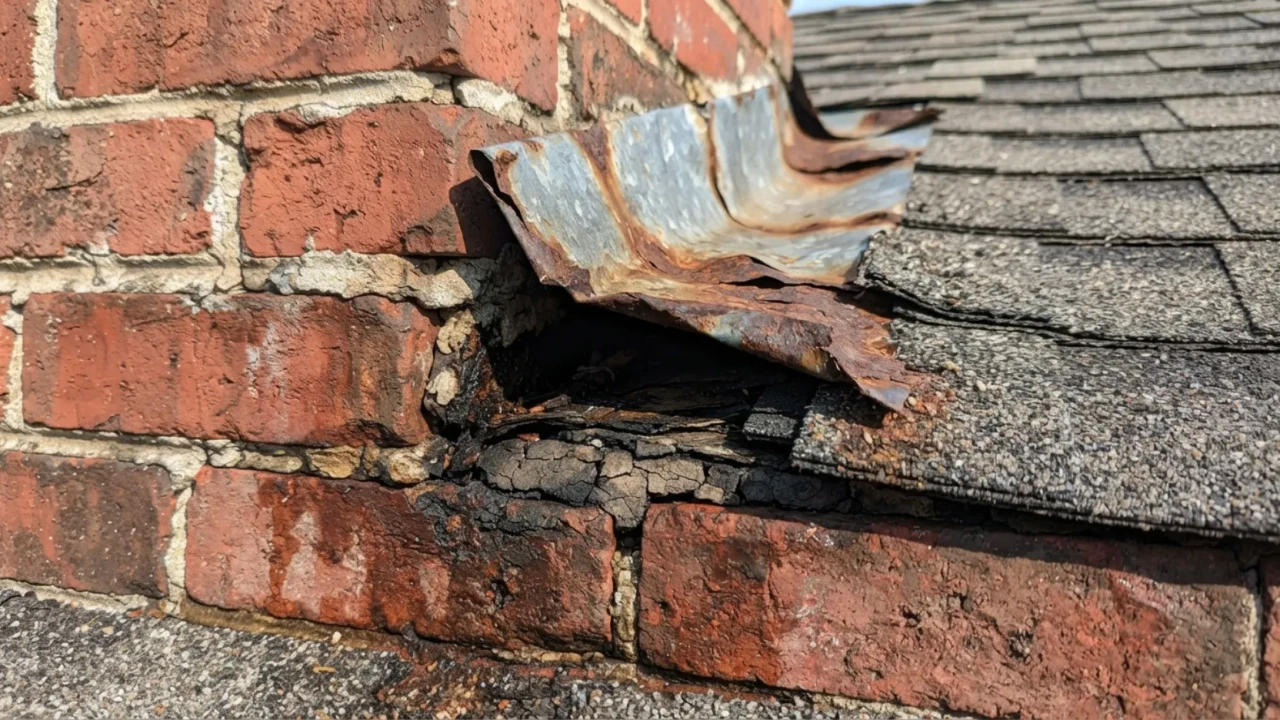
Leaks often start where the roof surface is interrupted rather than in the open field of shingles: around chimneys, pipes, and other things that pass through the roof, at the metal flashing that seals those spots, and where shingles are cracked, curled, or missing. Patching the point where you see water inside usually fails, because the real opening is somewhere else. A roofer traces the path back to the source instead of guessing from the ceiling.
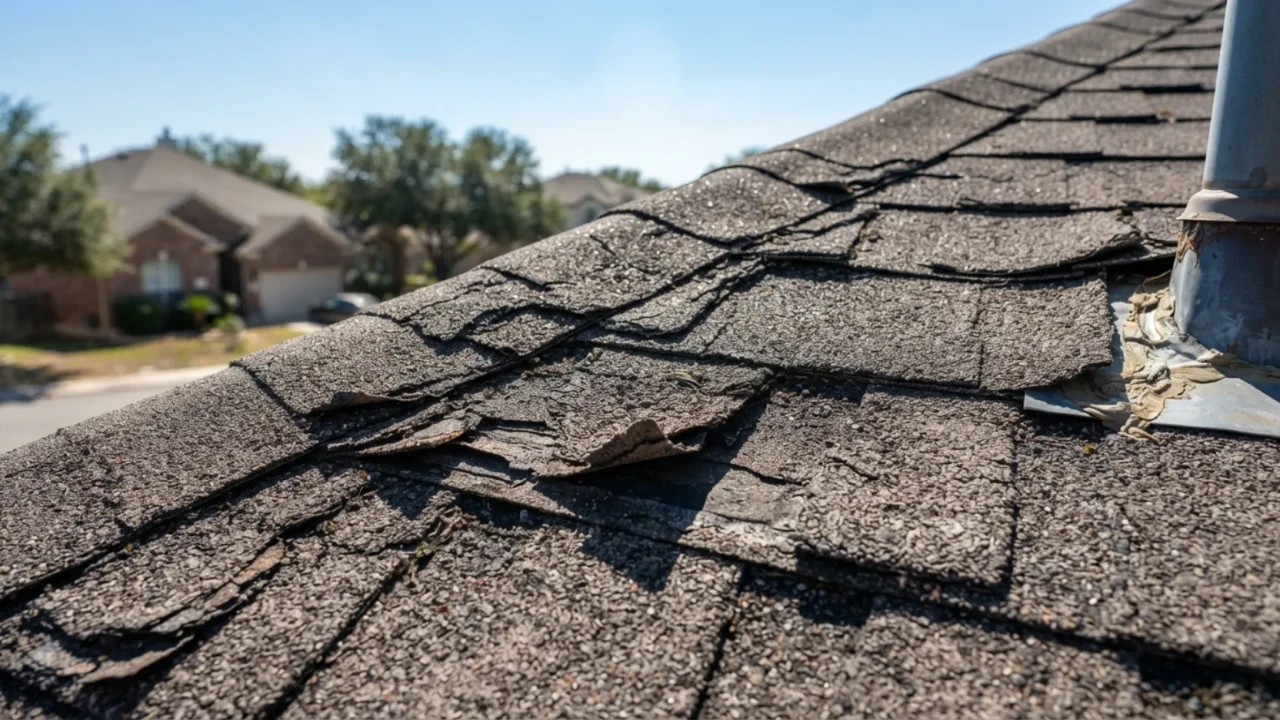
San Antonio’s hot, sunny weather and the swings between seasons are hard on sealants and shingles over time, which is one reason transition points and worn shingles deserve a close look. The flashing where a roof meets a chimney is a frequent trouble spot, because a small gap there sends water straight behind the surface with every rain.
There is also a permit side to any roof work that follows. The City of San Antonio Development Services Department states that a permit is required for repairing or replacing a roof, and a homeowner can obtain it or hire a registered Home Improvement Contractor for non-structural work. [3] Confirm whether your property is inside city limits, since requirements can differ outside them, and keep the permit with your other roof paperwork. If you are weighing how far the work should go, our guide on the signs a roof needs repair can help you frame the questions.
What a leak inspection covers
A proper leak inspection starts on the roof, not from a photo or a phone quote. The roofer walks the surface, checks the flashing and every penetration, and looks over the shingles for openings.
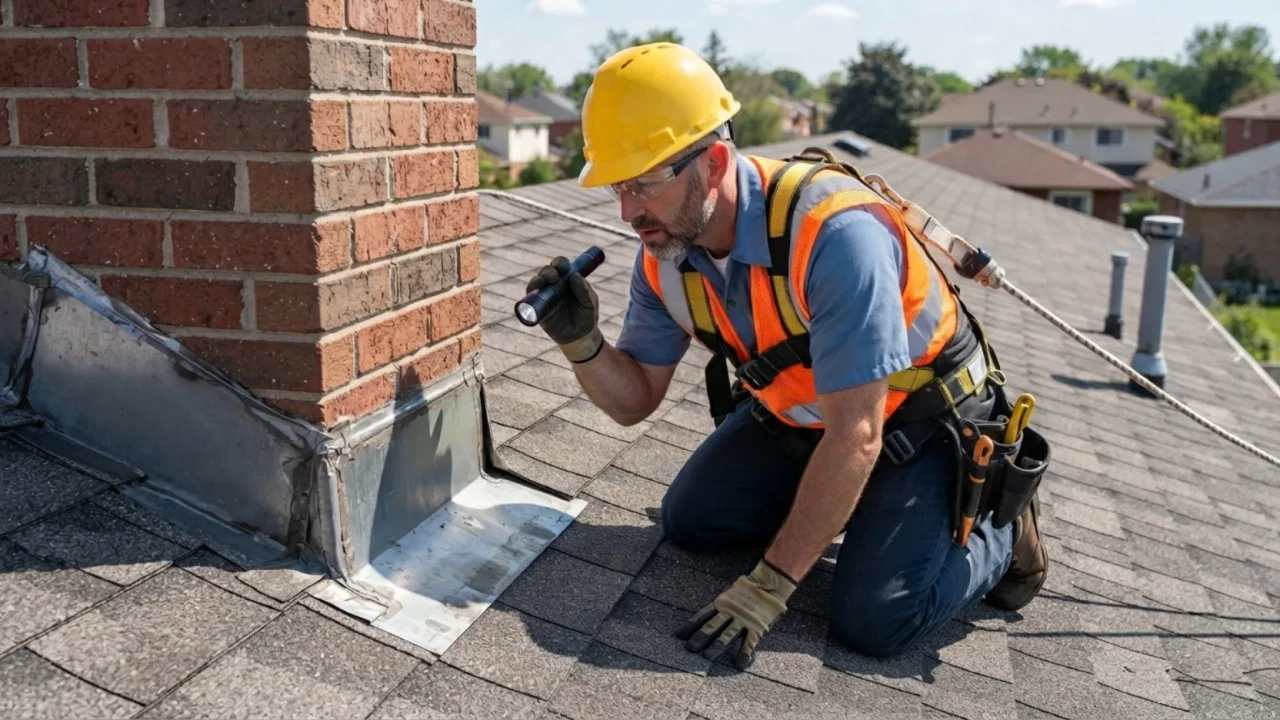
A thorough visit traces the staining pattern from inside back toward the likely entry point, and the roofer should show you photos of what they found and give you a written scope of the repair before any work or deposit. The table below sorts the usual leak signs by how quickly they need attention, so you know what to flag when you call.
| What you found | What it can mean | How soon to act |
|---|---|---|
| Active drip during rain | Open water path through the roof right now | Same day; contain water and call |
| Sagging or bulging ceiling | Water pooled above the ceiling, with a collapse risk | Right away; clear the area and call |
| Dry ceiling or wall stain | Past or slow leak that can return with rain | Soon; photograph and schedule an inspection |
| Cracked, curled, or missing shingles | Roof surface is compromised | Before the next storm; schedule a look |
| Stain or gap near a chimney | Possible flashing failure at a transition | Soon; have the flashing checked |
For the full process and a written estimate, compare the roof leak repair service with a general roof inspection, and bring the photos and notes you gathered.
Next steps: what you can do, and what needs a pro
You can handle the indoor and paperwork side from the ground; leave the roof itself to a roofer.
You can safely:
- Move and cover belongings, and contain an active drip with buckets or towels.
- Stay clear of wet ceilings, fixtures, and anything electrical near the water.
- Take dated photos and video of the damage before you clean up.
- Read your homeowner policy and gather roof records such as age and past repairs.
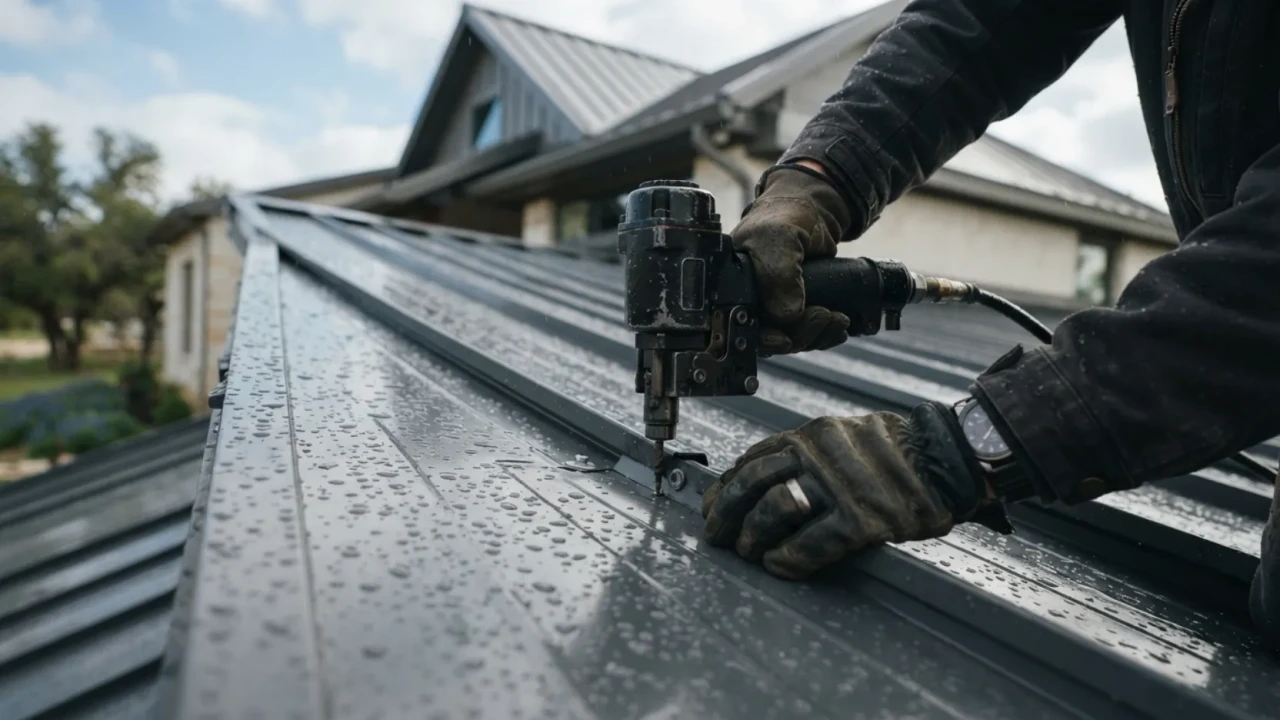
Leave to a roofer: climbing and walking the roof, covering a breach, tracing the leak to its source, and judging the flashing and shingles. Never get on the roof yourself. RRSATX offers a free leak inspection with a written estimate, so you can confirm the source and the fix before any material is ordered.
Local roofing service
About Affordable Roofing Contractors San Antonio
Affordable Roofing Contractors San Antonio, also known as RRSATX, provides roof inspections, roof repair, roof leak repair, roof replacement, and asphalt, metal, and tile roofing in San Antonio. Its roof inspections and leak inspections are free, with no fee and no obligation, and you get a free written estimate before any work starts. A technician walks the roof during the inspection.
- Phone
- (713) 504-2341
- sales@affordableroofingcontractorssanantonio.com
- Address
- 4324 Monterey St, San Antonio, TX 78237
- Contact
- Request a free roof inspection
Roof leaks: questions answered
My ceiling has a stain but it is not raining. Should I worry?
Yes. A dry stain is evidence of past water getting in, not proof the problem is gone. The opening that let water through is likely still there and can leak again with the next rain. Photograph it, note the date, and schedule an inspection rather than waiting through another storm.
Can I just patch the spot where the water drips in?
Usually not. Water travels before it drips, so the point you see inside is rarely the entry point on the roof. Patching the ceiling or the drip spot tends to fail. A roofer traces the leak back to its source and repairs that, which is the part that actually stops the water.
Should I get on the roof to look or cover the leak?
No. Wet or storm-damaged roofing is slippery and can be unstable, and falls are a real risk. Keep your checks to the ground and indoors, and leave rooftop work, including covering a breach, to a roofer with the right equipment.
Does my insurance cover a roof leak?
Your insurer and policy decide that, typically based on whether a sudden covered event caused the damage. Report the loss, keep dated photos and receipts, and be available for the adjuster. The Texas Department of Insurance notes a policy may pay for temporary repairs, so save those receipts. [1]
Can a roofer handle my insurance claim for me?
No. The Texas Department of Insurance says a roofer doing the work cannot act as a public adjuster on that claim, and a contractor cannot waive, rebate, or absorb your deductible. A roofer can provide an estimate and discuss the damage; the insurer and policy decide coverage. [2]
Do I need a permit to repair a roof leak?
The City of San Antonio states a permit is required for repairing or replacing a roof. A homeowner can obtain it or hire a registered Home Improvement Contractor for non-structural work. Confirm whether your property is inside city limits, since rules can differ outside them. [3]
Explore the roofing topic
Keep going on roof leaks
Think your roof is leaking?
Ask RRSATX for a free leak inspection and a written estimate before any work begins.