
[et_pb_section fb_built=”1″ admin_label=”section” _builder_version=”4.16″ global_colors_info=”{}”][et_pb_row admin_label=”row” _builder_version=”4.16″ background_size=”initial” background_position=”top_left” background_repeat=”repeat” global_colors_info=”{}”][et_pb_column type=”4_4″ _builder_version=”4.16″ custom_padding=”|||” global_colors_info=”{}” custom_padding__hover=”|||”][et_pb_code _builder_version=”4.27.8″ _module_preset=”default” hover_enabled=”0″ sticky_enabled=”0″]
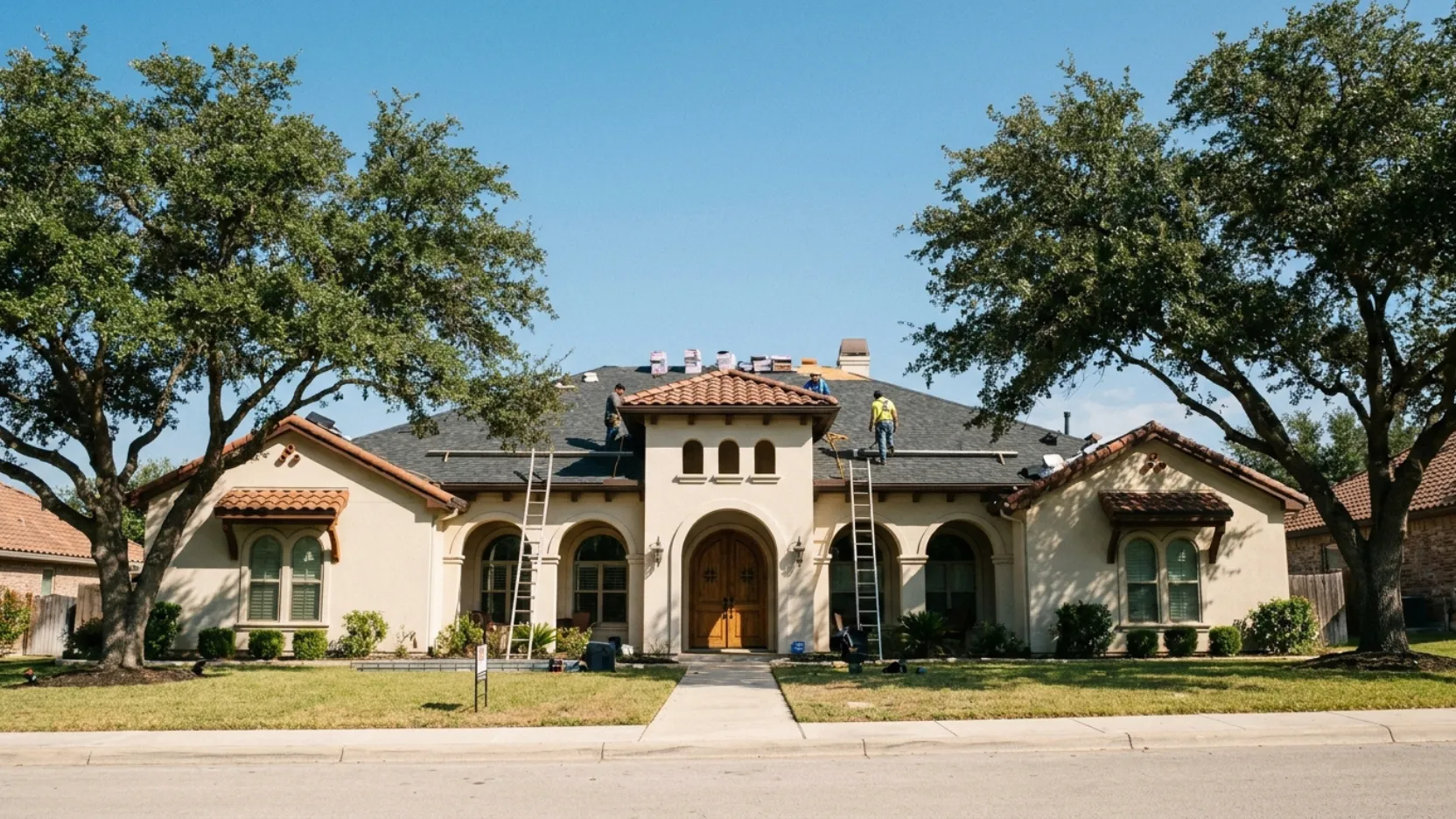
A new roof is one of the largest single investments a San Antonio homeowner will make. This guide covers what a replacement actually costs in 2026, every factor that drives the price up or down, how to evaluate quotes, where to find financing, and how to avoid the mistakes that leave homeowners overpaying or under-roofed.
A new roof in San Antonio is not a small purchase. Depending on the size of your home, the material you choose, and the condition of your existing roof deck, a full replacement can run anywhere from $7,000 to more than $30,000. Most homeowners have no idea what to expect when they start calling contractors and that lack of context makes it easy to overpay, underspecify, or hire the wrong company.
This guide gives you the numbers you need, the questions you should be asking, and a clear framework for building a realistic budget before you request your first quote. We will cover what drives roofing costs in San Antonio specifically, what each material type costs installed, how to evaluate competing bids, and what financing options are available if a cash purchase is not practical right now.
When three roofing contractors give you three wildly different prices, it almost never means one is cheap and two are expensive. It usually means the quotes are scoped differently. One contractor included a full deck inspection and flashing replacement. Another quoted shingles only with no mention of underlayment. A third low-balled the labor and plans to upsell once the old roof is torn off. Knowing what belongs in a complete roofing quote is the only way to compare bids honestly and that knowledge starts with this guide.
Size and Pitch
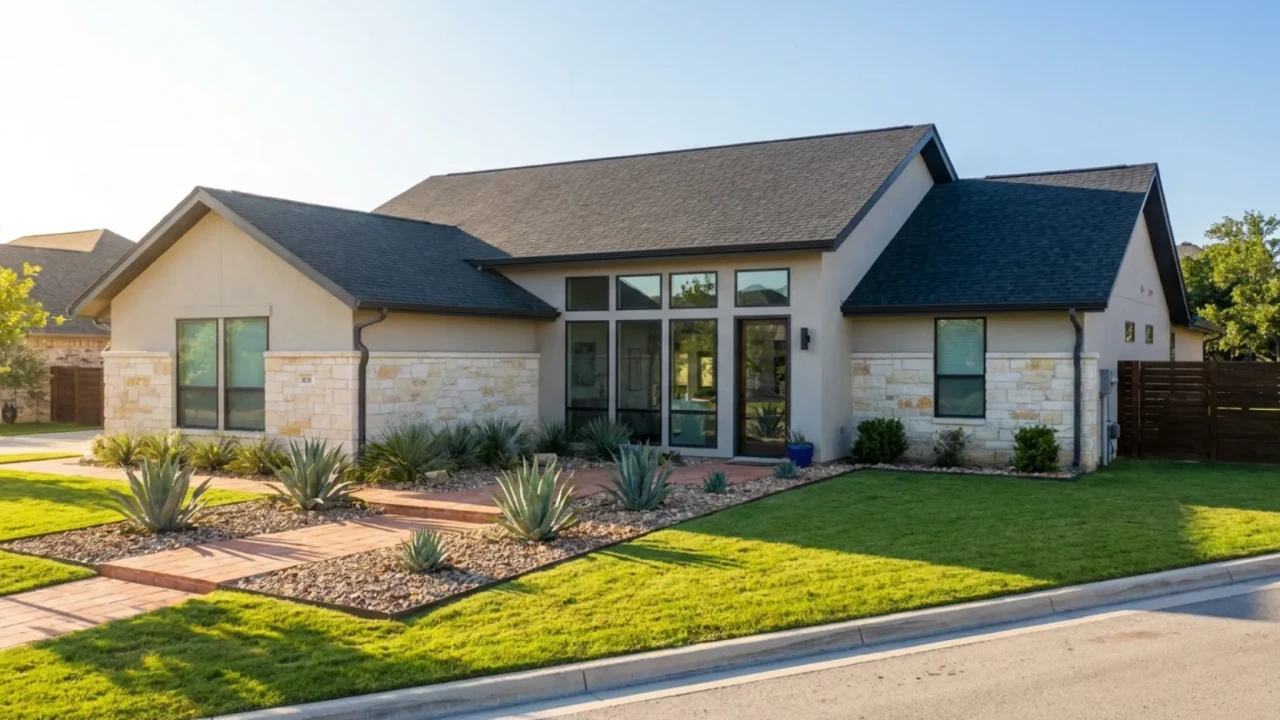
Roofing is priced by the square a roofing square equals 100 square feet of roof surface. A 2,000-square-foot home does not have a 2,000-square-foot roof. It has a roof that is larger than the home’s footprint because roofs slope, and slope adds surface area. A low-pitch roof on a 2,000-square-foot home might have 2,200 to 2,400 square feet of actual roof surface. A steeply pitched roof on the same footprint could have 2,800 to 3,200 square feet or more.
Pitch also affects labor cost independently of surface area. A steeper roof requires more safety equipment, slower movement, and more crew time per square installed. San Antonio contractors typically add a pitch surcharge starting at around a 6:12 pitch, and that surcharge grows as the slope increases. A 9:12 or 12:12 pitch roof can cost 15 to 30 percent more per square in labor alone compared to a flat or low-slope installation.
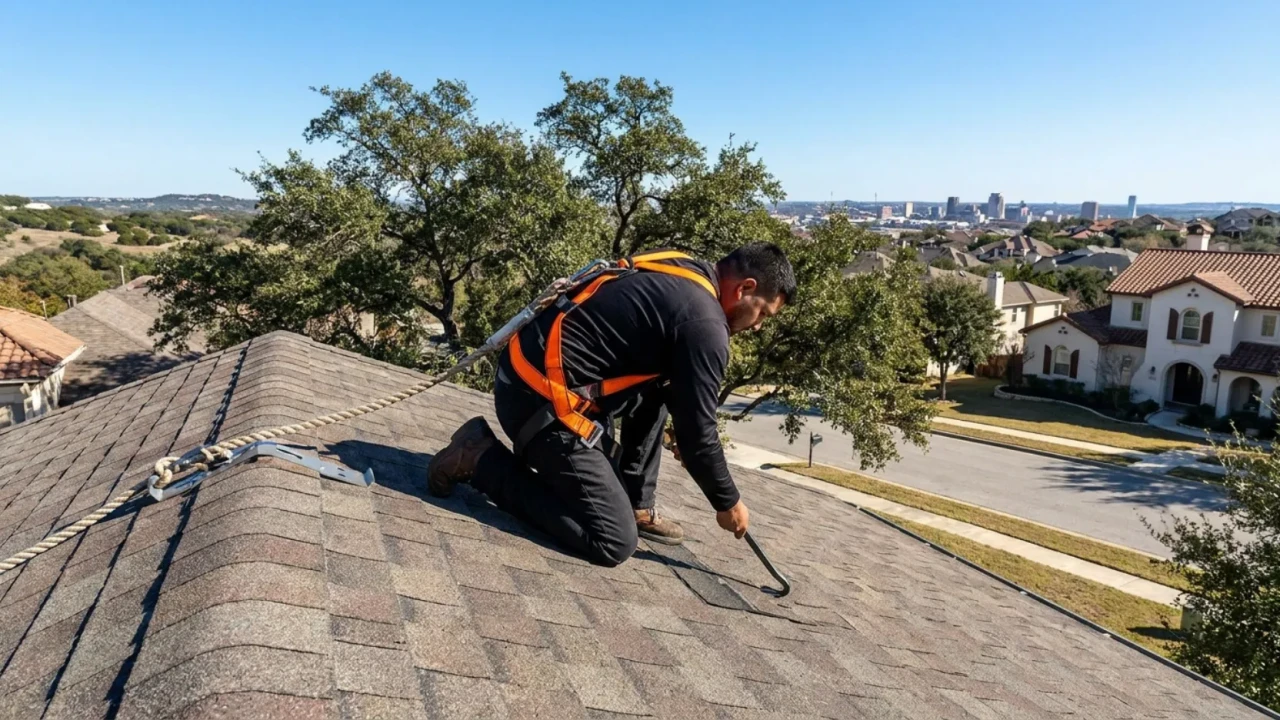
How to estimate your roof size: Take your home’s ground-floor footprint in square feet and multiply by a pitch factor. A 4:12 pitch (moderately sloped) uses a factor of about 1.05 to 1.10. A 6:12 pitch uses about 1.12 to 1.18. A 9:12 pitch uses about 1.25 to 1.35. Multiply your footprint by the relevant factor to get a rough estimate of your actual roof surface area. Divide by 100 to get squares.
Why this matters for your budget: Knowing your approximate square count before calling contractors means you can sanity-check the quantities in each bid. If a contractor’s material estimate seems significantly lower than the others, it may mean they are underestimating the square count which leads to cost overruns after the old roof comes off.
- Approximate ground-floor footprint measured or pulled from property records
- Roof pitch estimated or confirmed many San Antonio contractors will confirm pitch for free during an initial visit
- Number of separate roof sections and valleys counted complexity adds to both material and labor cost
- Number of penetrations noted: chimneys, skylights, plumbing vents, HVAC curbs all require individual flashing work
Material Cost
The roofing material you choose determines not just the upfront cost but also the lifespan, maintenance requirements, and resale value impact of your investment. San Antonio homeowners have more material options than most markets because the Texas climate supports everything from basic three-tab shingles to clay tile and metal roofing. Each has a different installed cost, a different expected lifespan, and a different relationship to San Antonio’s heat, hail, and storm exposure.
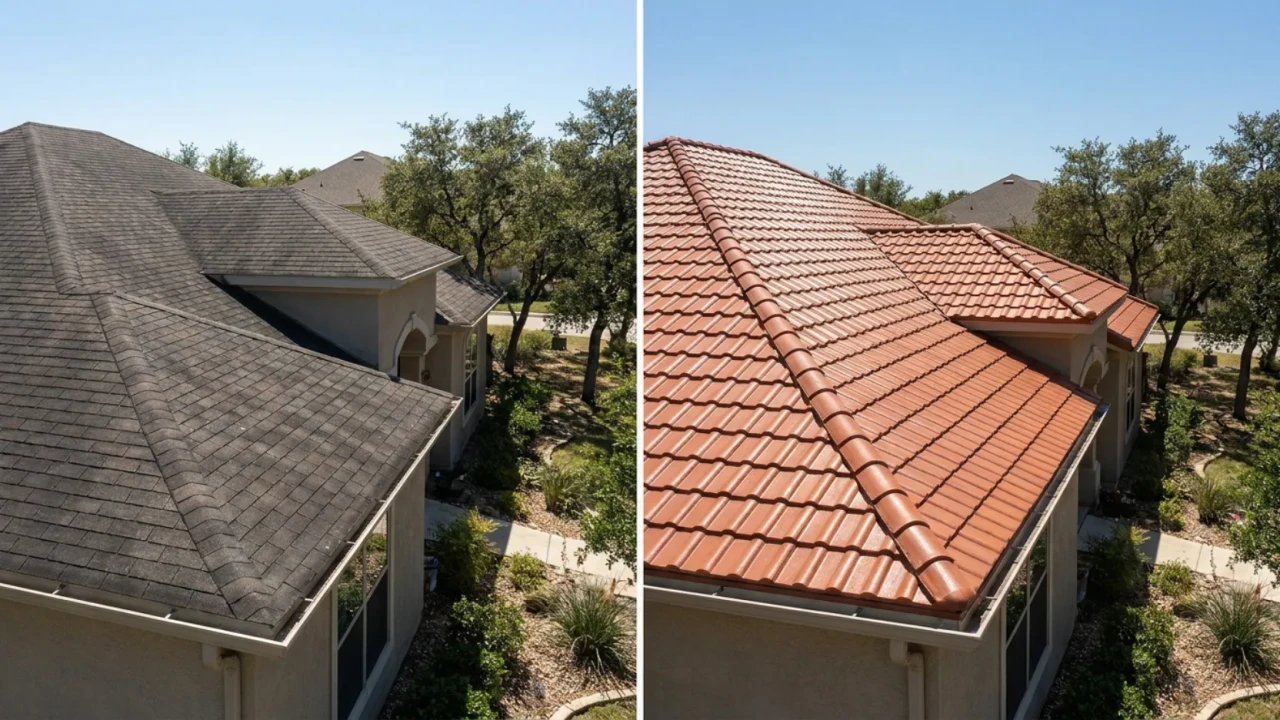
If hail insurance discounts are available in your area, Class 4 impact-resistant shingles deserve serious budget consideration. Many Texas homeowners insurance carriers offer premium discounts of 15 to 28 percent for Class 4 certified roofing products. On a home with an annual premium of $3,500, that discount is worth $525 to $980 per year. Over a 25-year roof lifespan, the cumulative insurance savings can exceed the upfront price premium of upgrading from standard to Class 4 shingles. Ask your insurance agent for a quote with and without the Class 4 discount before you decide on material.
| Material | Installed cost (San Antonio 2026) | Expected lifespan | Hail resistance |
|---|---|---|---|
| 3-tab asphalt shingles | $3.50 to $4.50 per sq ft | 15 to 20 years | Class 3 (some Class 4 available) |
| Architectural / dimensional shingles | $4.00 to $6.00 per sq ft | 20 to 30 years | Class 3 standard; Class 4 available |
| Class 4 impact-resistant shingles | $5.50 to $8.00 per sq ft | 25 to 35 years | Class 4 (maximum rating) |
| Metal (standing seam) | $10.00 to $14.00 per sq ft | 40 to 70 years | Class 4 (maximum rating) |
| Metal (exposed fastener / corrugated) | $7.00 to $11.00 per sq ft | 25 to 40 years | Class 4 |
| Clay tile | $14.00 to $20.00 per sq ft | 50 to 100 years | Class 3 to 4 (varies by product) |
| Concrete tile | $12.00 to $18.00 per sq ft | 40 to 70 years | Class 3 to 4 (varies by product) |
| Synthetic slate / composite | $8.00 to $13.00 per sq ft | 30 to 50 years | Class 4 (most products) |
- HOA or deed restriction requirements reviewed some San Antonio communities specify approved roofing materials and colors
- Insurance carrier contacted about Class 4 discounts before final material decision is made
- Structural load capacity confirmed for tile or composite materials on older San Antonio homes
- Material availability verified supply chain delays on certain metal profiles and tile products can extend project timelines
- Manufacturer warranty tier confirmed for chosen product and installer certification requirements reviewed
Hidden Costs
The quote you receive before the job starts is based on what the contractor can see. Once the old roofing material is removed, the actual condition of the roof deck becomes visible for the first time. In San Antonio, where roofs endure intense UV exposure, summer heat spikes, and periodic hail events, it is common to find deteriorated decking, rotted fascia boards, failed underlayment, or improperly installed flashing beneath the existing surface.
A responsible contractor will include an allowance for deck repair in the original quote, or will explicitly discuss how discovered damage will be priced. An irresponsible contractor will give you the lowest possible upfront number and then present you with a long list of additional charges once the old roof is gone and you have no ability to get competing bids for the additional work.
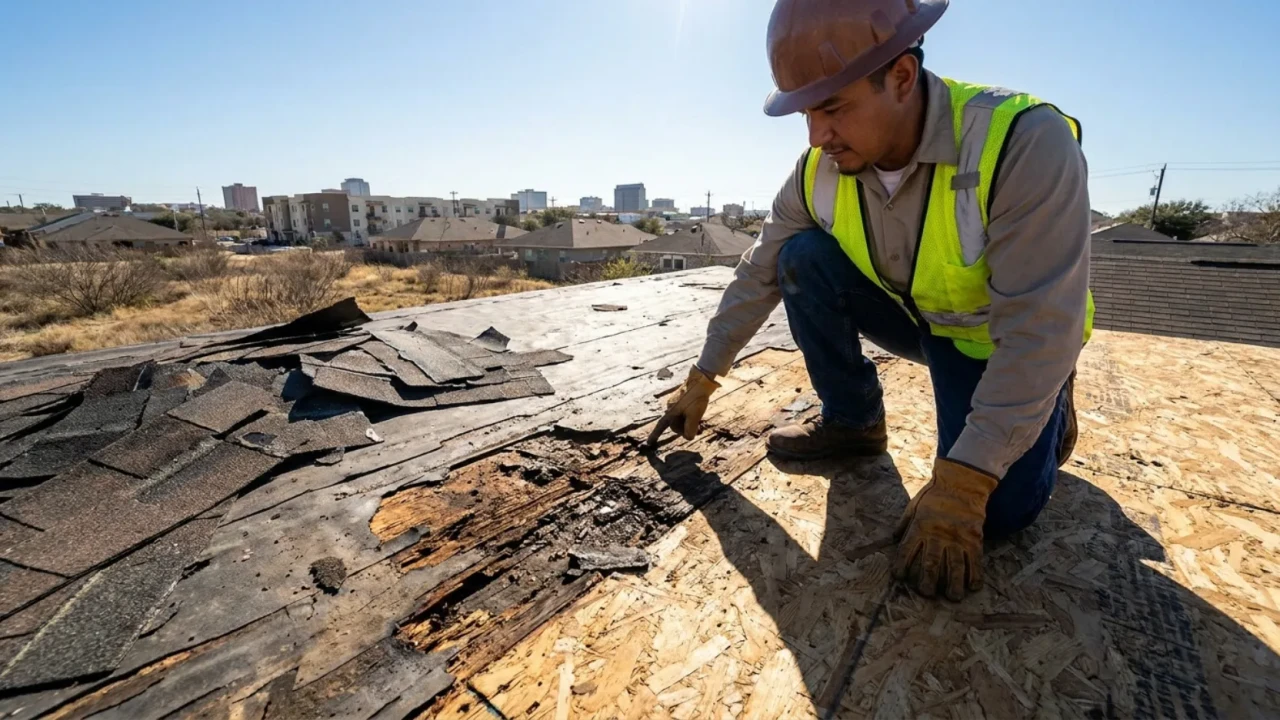
- Contract includes a per-sheet deck repair rate locked in before project start not to be negotiated after tearoff
- All flashing replacement included in the bid scope not listed as an optional add-on
- Tearoff layer count confirmed: single or double layer affects disposal and labor cost significantly
- Drip edge replacement included this is code-required in Texas and should appear in every complete bid
- Dumpster or debris removal method confirmed and included in the quote not billed separately
- Ventilation assessment included: ridge vent, soffit vent, or power vent upgrades priced as part of the project
Getting Quotes
Collecting multiple quotes is standard advice. But collecting three quotes that you cannot meaningfully compare is nearly as useless as getting one. The goal is not just to find the lowest number it is to find the contractor who is quoting the most complete scope at a fair price per unit of work. A quote that is 20 percent lower than the others is not a deal if it excludes underlayment, omits flashing replacement, and uses a no-name shingle with no manufacturer warranty.
When quotes are significantly different: A gap of more than 15 to 20 percent between bids almost always traces back to a specification difference, not a pure labor rate difference. Call the low-bid contractor and ask them to confirm in writing that their quote includes the same product specifications as the higher bids. You may find they are using a lower warranty tier shingle, skipping ice and water shield, or omitting flashing replacement. That is not a deal that is a different project.
The red flags that belong in no quote: Unusually low prices on a door-to-door quote immediately after a hail storm, a request for more than 25 to 30 percent deposit upfront, no physical business address, an unwillingness to provide a license number or certificate of insurance, and any pressure to sign the same day the estimate is given. Legitimate San Antonio roofing contractors do not need to pressure-sell. Their work sells itself.
Ask each contractor the same four questions and compare the answers, not just the totals. First: What shingle product are you quoting and what is the warranty tier? Second: Is flashing replacement included at every penetration? Third: What is your per-sheet rate for deck repair if damage is found? Fourth: What does your workmanship warranty cover and for how long? A contractor who cannot answer those four questions clearly and in writing is a contractor whose quote total means very little regardless of where it falls in the range.
- Three written quotes collected before any contract is signed
- Each quote specifies the shingle brand, product line, and warranty tier by name
- Underlayment type specified in each quote synthetic underlayment outlasts felt in San Antonio heat
- Flashing replacement confirmed as included, not optional, in the quote scope
- Deck repair rate per sheet identified in each quote for apples-to-apples comparison
- Contractor license, insurance certificate, and Better Business Bureau rating verified independently
Insurance
San Antonio sits in one of the most active severe weather corridors in the United States. Significant hail events are not unusual they are an expected part of the Texas weather calendar. When a qualifying hail or wind event causes damage to your roof, your homeowners insurance policy should pay for the replacement cost minus your deductible. For many San Antonio homeowners, this is what makes a new roof financially feasible.
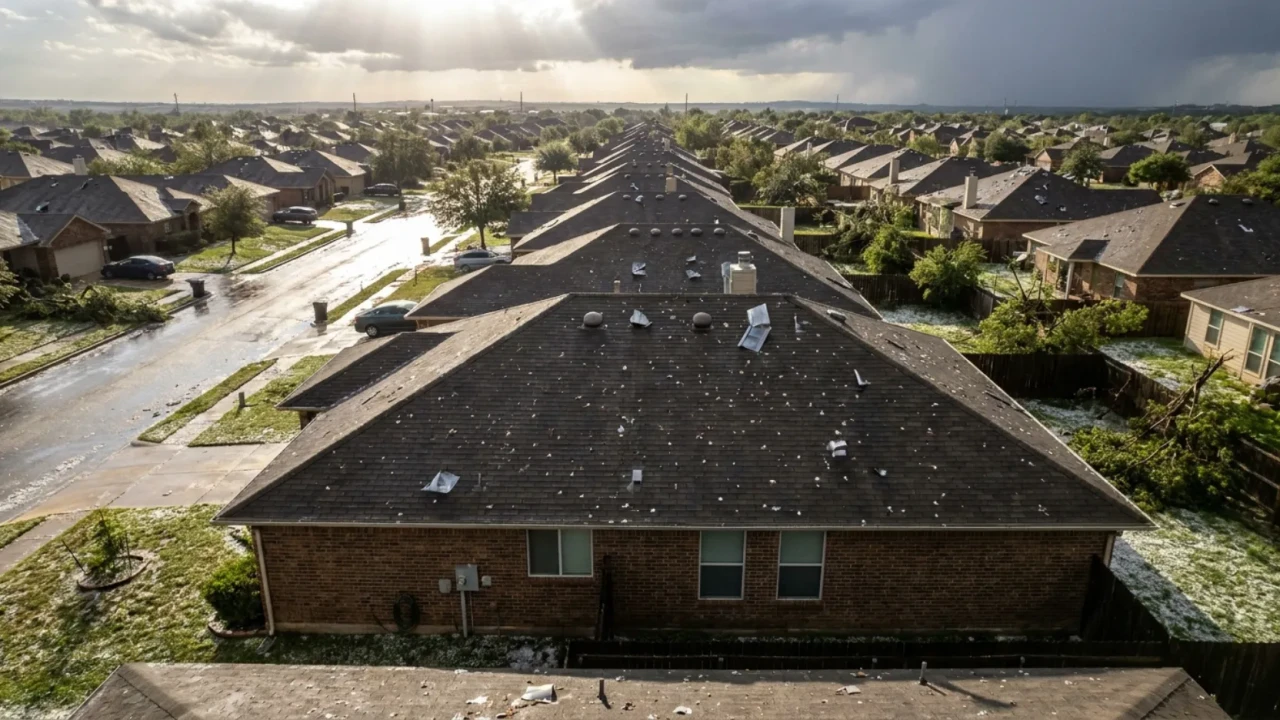
How to protect yourself during the claims process: After a storm, call a licensed San Antonio roofing contractor for an independent inspection before the insurance adjuster visits. Document the date of the storm, the hail size reported in local weather records, and any interior damage with dated photographs. Get your own contractor’s repair or replacement estimate. If the adjuster’s scope is significantly lower than your contractor’s estimate, you can dispute the adjustment, request a re-inspection, or hire a public adjuster to negotiate on your behalf.
- Storm date and reported hail size documented from local weather sources immediately after the event
- Independent contractor inspection completed before the insurance adjuster’s visit
- Interior damage photographed with dates before any cleanup or patching
- Insurance policy type confirmed: Replacement Cost Value or Actual Cash Value
- Deductible amount confirmed before starting the claim process
- No assignment of benefits or direction to pay agreements signed without consulting your insurance carrier first
- Claim filed within the Texas one-year window from the storm date not from when the leak appears
Financing
A new roof is not optional the way a kitchen upgrade is optional. When the roof needs replacing, it needs replacing and for many San Antonio homeowners, a $10,000 to $20,000 unplanned expense is not something that can be absorbed from savings without a financing option. The good news is that residential roofing financing has expanded significantly, and several options are available to qualified homeowners that make the math workable without taking on high-interest debt.

Never let a financing offer push you toward a contractor you would not otherwise hire. Some San Antonio homeowners accept a roofing contractor’s in-house financing because it feels convenient and then discover that the interest rate, contract terms, or contractor quality were not what they expected. Shop your financing separately from your contractor search. Get your best financing terms locked in first, then select your contractor based on credentials, scope, and price. The two decisions should be made independently.
- Total project cost confirmed in writing before applying for financing avoid financing an incomplete scope
- Promotional zero-interest end date noted and a payment plan set up to clear the balance before that date
- Deferred interest terms reviewed: confirm whether interest is waived or deferred if the promotional period ends with a balance
- HELOC or home equity option compared against contractor financing equity-based rates are typically lower for longer repayment terms
- No financing agreement signed at the same time as the roofing contract review each document separately
These ranges are based on real San Antonio market pricing in 2026. They include tearoff of a single existing layer, new underlayment, new flashing, drip edge, ridge cap, and standard labor. They do not include deck repair, which is priced separately based on actual damage found. Your specific quote will vary based on pitch, complexity, access, and contractor.
| Home size (sq ft) | Architectural shingles | Class 4 impact shingles | Standing seam metal | Clay / concrete tile |
|---|---|---|---|---|
| 1,200 to 1,500 sq ft | $5,500 to $8,500 | $7,500 to $11,000 | $13,000 to $20,000 | $18,000 to $28,000 |
| 1,500 to 2,000 sq ft | $7,000 to $11,000 | $9,500 to $14,500 | $17,000 to $27,000 | $23,000 to $36,000 |
| 2,000 to 2,500 sq ft | $9,000 to $14,000 | $12,500 to $18,500 | $22,000 to $34,000 | $29,000 to $46,000 |
| 2,500 to 3,000 sq ft | $11,000 to $17,000 | $15,000 to $22,500 | $27,000 to $41,000 | $36,000 to $56,000 |
| 3,000 to 4,000 sq ft | $14,000 to $22,000 | $19,000 to $29,000 | $34,000 to $54,000 | $45,000 to $72,000 |
| 4,000+ sq ft | $19,000 to $30,000+ | $26,000 to $40,000+ | $46,000 to $72,000+ | $60,000 to $95,000+ |
Note: ranges reflect a standard complexity roof in San Antonio market conditions. Steep pitch, complex roof geometry, high-story homes, and extensive deck damage will push costs toward or beyond the top of these ranges. Always get three written quotes before budgeting a specific number.
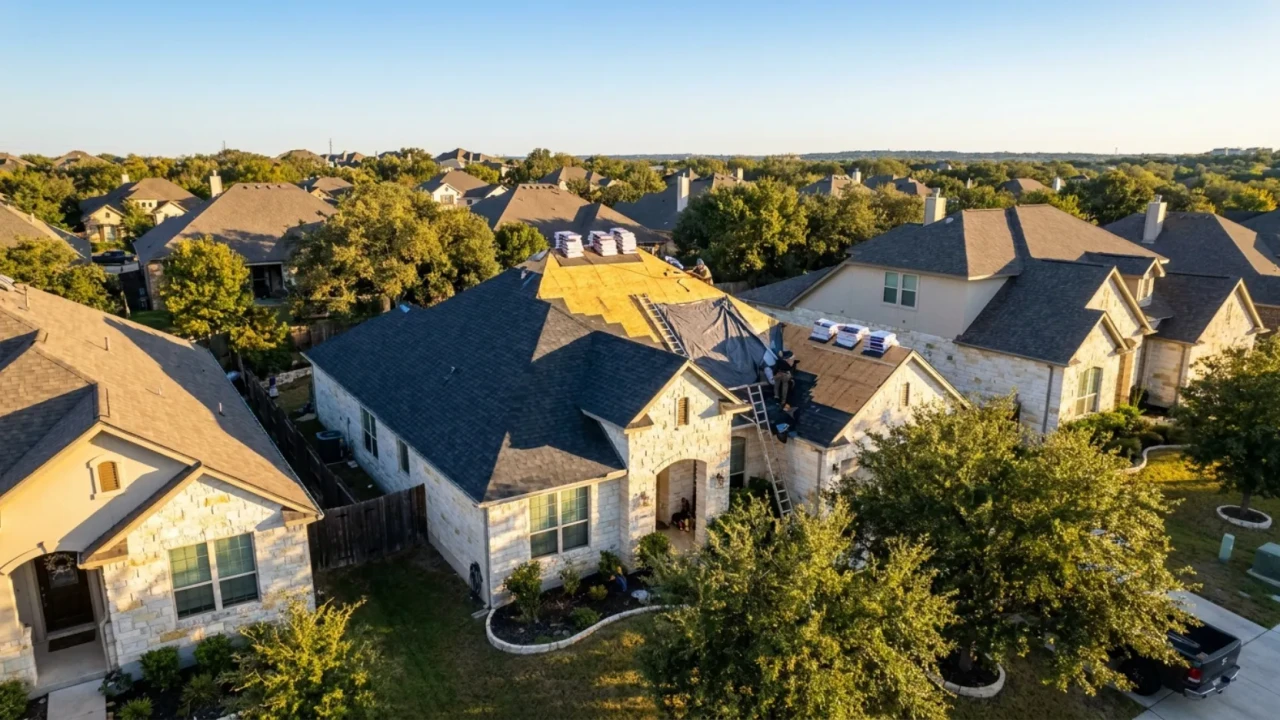
- Approximate roof size estimated using home footprint and pitch factor
- Roofing material decided or narrowed to two options before the first contractor visit
- HOA requirements, permit requirements, and deed restrictions reviewed
- Insurance policy reviewed: RCV vs. ACV, deductible amount, and storm claim history
- Insurance carrier contacted about Class 4 discount if impact-resistant material is being considered
- Budget range established based on home size and material shortlist using the table above
- Financing options researched independently so you know your options before any contractor pitch
- Three written quotes collected with full scope specified in each one
- Each quote verified to include: tearoff, underlayment, flashing, drip edge, ridge cap, and starter strip
- Deck repair rate per sheet confirmed in each quote before tearoff begins
- Contractor license numbers, certificates of insurance, and BBB rating verified independently
- Manufacturer certification status confirmed if enhanced warranty coverage is desired
- Workmanship warranty terms compared across all bids
- Contract scope matches the quote exactly no items removed or substituted without written explanation
- Start and estimated completion dates included in the contract
- Payment schedule reviewed: deposit should not exceed 25 to 30 percent of total project cost
- Change order process defined: any deck repair charges or additional items require written approval before work proceeds
- Permit responsibility confirmed: contractor should pull all required San Antonio / Bexar County permits
- Cleanup and disposal terms confirmed in writing no leftover materials or debris on the property
How much does a new roof cost in San Antonio in 2026?
What is the best roofing material for San Antonio’s climate?
Can I put a new roof over the existing shingles to save money?
How long does a roof replacement take in San Antonio?
Does replacing my roof increase my home’s value in San Antonio?
What time of year is the best time to replace a roof in San Antonio?
Get a free roof replacement estimate in San Antonio
Tell us about your home and we will give you a complete written quote with every line item specified no surprises after tearoff, no pressure to sign on the spot.
[/et_pb_code][/et_pb_column][/et_pb_row][/et_pb_section]