
[et_pb_section fb_built=”1″ admin_label=”section” _builder_version=”4.16″ global_colors_info=”{}”][et_pb_row admin_label=”row” _builder_version=”4.16″ background_size=”initial” background_position=”top_left” background_repeat=”repeat” global_colors_info=”{}”][et_pb_column type=”4_4″ _builder_version=”4.16″ custom_padding=”|||” global_colors_info=”{}” custom_padding__hover=”|||”][et_pb_code _builder_version=”4.27.7″ _module_preset=”default” hover_enabled=”0″ sticky_enabled=”0″]
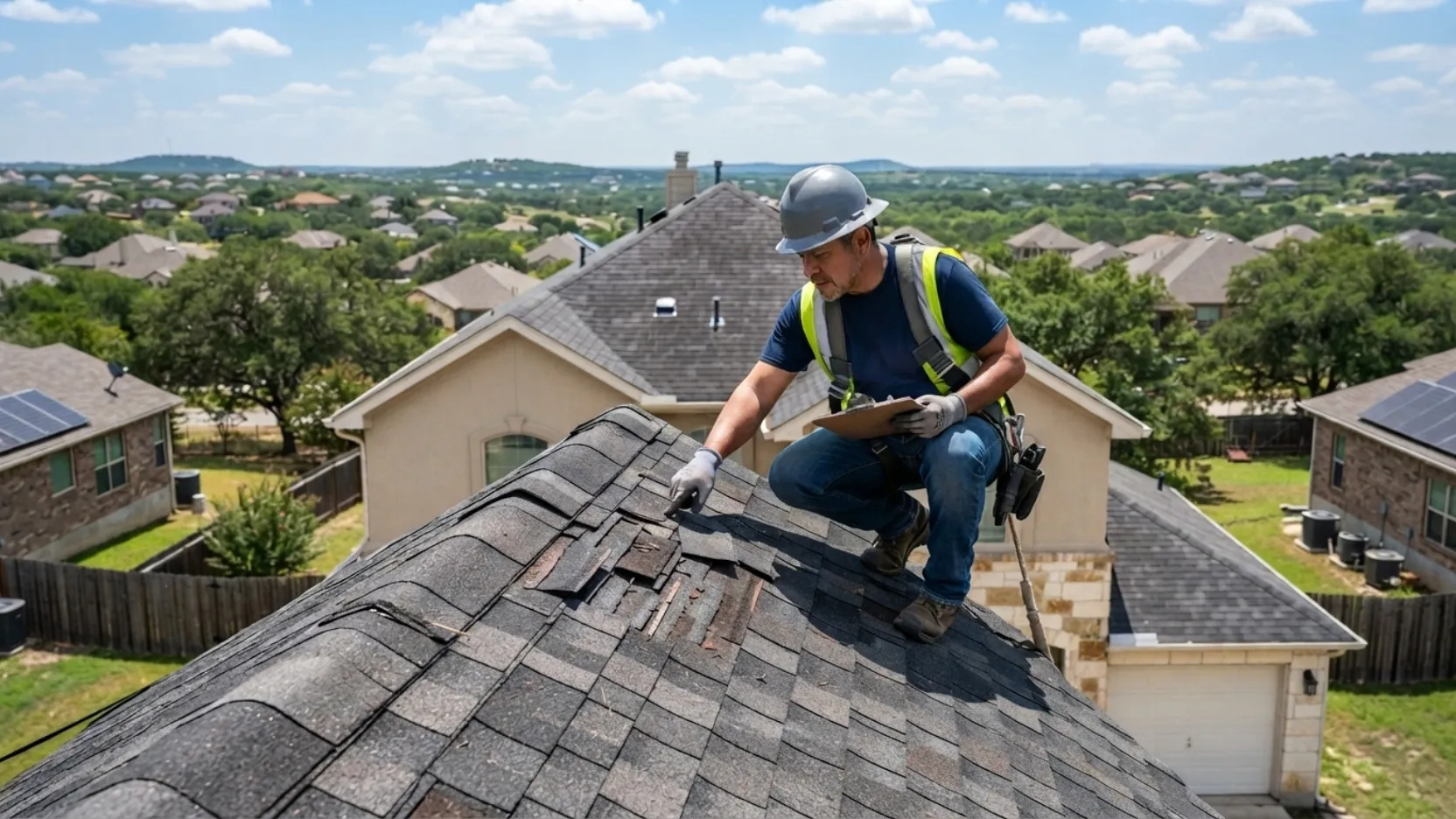
Roof repair costs in San Antonio range from a few hundred dollars for a minor fix to several thousand for extensive storm damage. This guide breaks down every cost factor, repair type, and money-saving tip so you know exactly what to expect before you call a contractor.
The first question every San Antonio homeowner asks when they spot a water stain on the ceiling or a missing shingle on the slope is simple: how much is this going to cost? The honest answer depends on factors that vary from roof to roof the type of damage, the roofing material, the pitch of your roof, how easy it is to access, and how quickly you act. A repair you address in March costs less than the same repair you ignored until July.
This guide covers every major roof repair type common in San Antonio, what each one costs in real 2026 market rates, the factors that push costs up or down, and the practical tips that help homeowners get fair quotes and avoid being overcharged. Whether you have asphalt shingles, metal panels, clay tile, or a flat membrane roof, the cost framework is the same even if the specific numbers differ.
A $300 repair left unaddressed for one rainy season can become a $3,000 job. Water that enters through a single failed shingle or a cracked flashing joint travels along the decking, soaks the insulation, and can rot the sheathing and rafters beneath. The material damage that follows a small leak is almost always more expensive than the original repair. San Antonio homeowners who inspect their roofs twice a year and call a contractor at the first sign of trouble spend far less on roof maintenance over time than those who wait until the stain spreads across the ceiling.
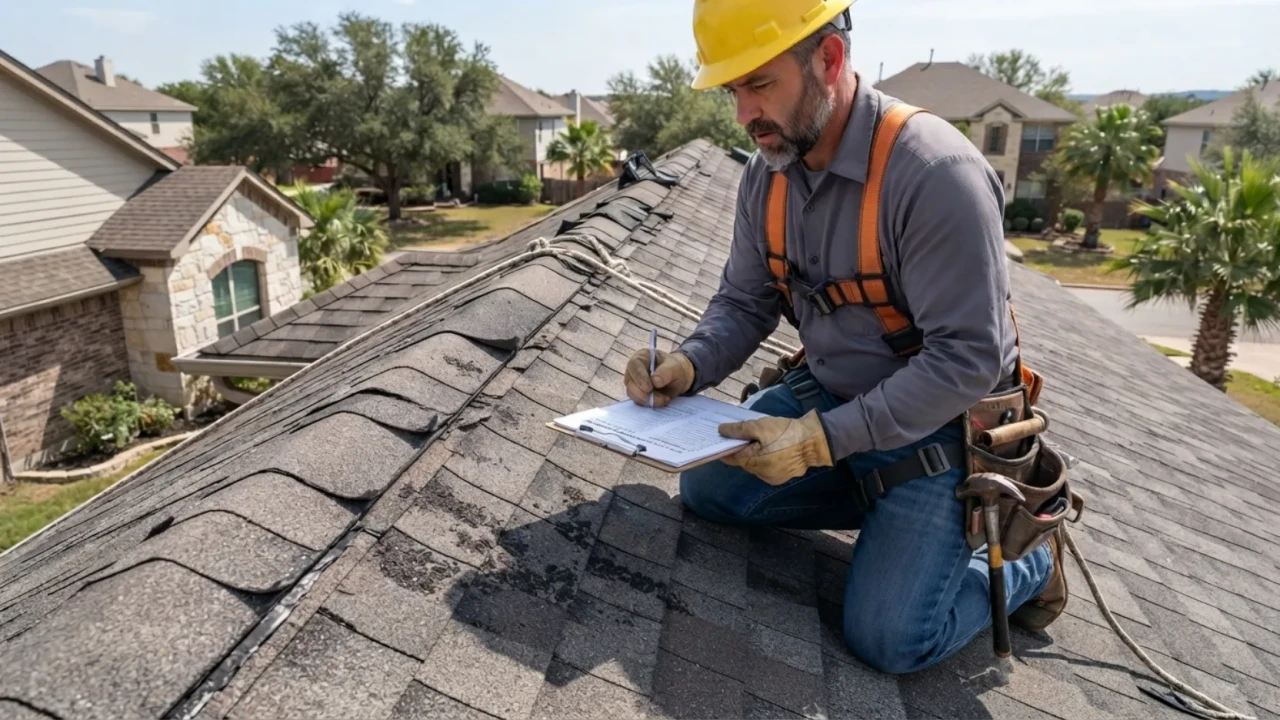
Before looking at specific repair costs, it helps to understand the six factors that push your repair estimate up or down. A contractor who cannot explain how each of these applies to your specific job is not giving you an honest quote.
Damage Type
The single biggest cost driver in any roof repair is what needs to be fixed and how much of the roof is affected. A single missing shingle costs very little to replace. A section of decking rotted out by two years of slow water intrusion through that same spot costs significantly more. The damage type determines the labor, the materials, and how many trades may be involved.
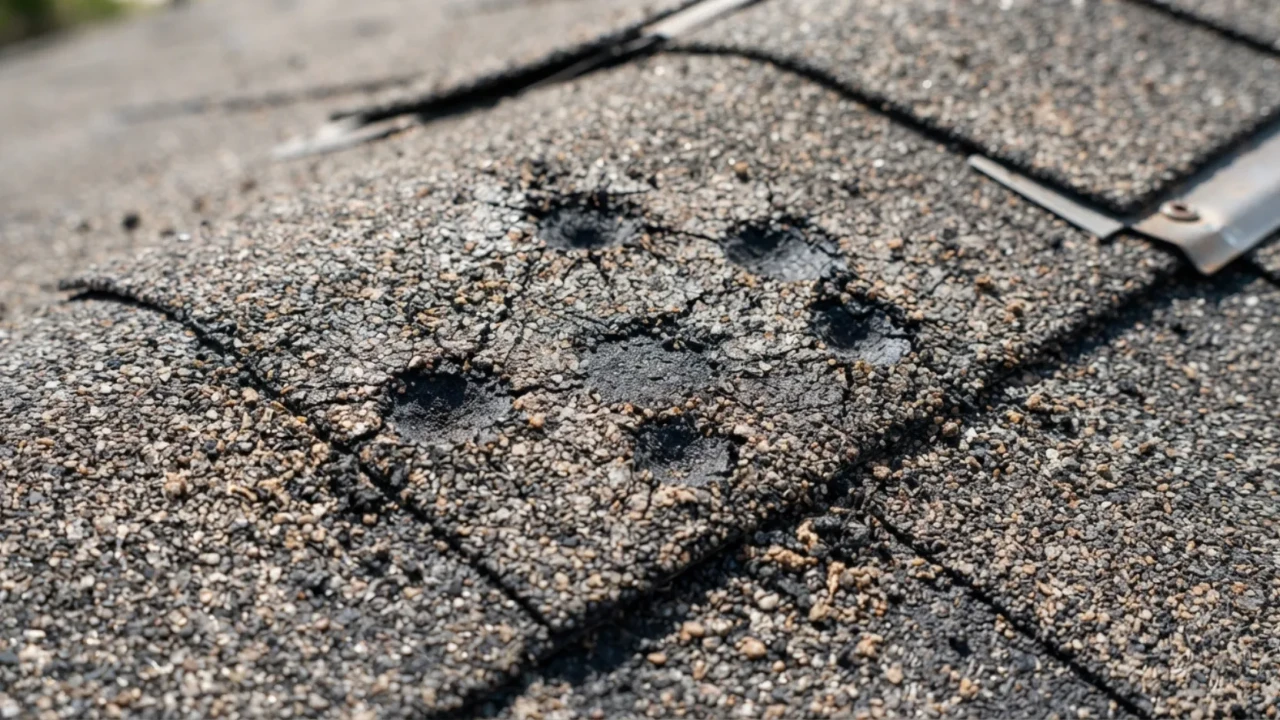
Surface damage only: Missing, cracked, or curled shingles with no underlying water penetration are the least expensive repairs. Labor is straightforward and materials are inexpensive.
Penetrating damage with water intrusion: When water has entered through the surface and reached the decking or insulation, the repair scope expands. The contractor must remove damaged material, dry or replace the sheathing, address any mold, and re-cover the area.
Structural damage: Storm damage, fallen trees, or years of deferred maintenance that has compromised rafters or sheathing requires structural repairs in addition to the roofing work. This is the most expensive repair category.
- Contractor has walked the roof surface and inspected from the attic before quoting
- Decking condition assessed soft or springy areas indicate moisture damage beneath the surface
- Insulation condition checked in the affected area of the attic
- Mold or mildew smell noted and documented triggers a separate remediation scope if present
- Quote clearly separates surface repair from any decking or structural repair costs
Material Type
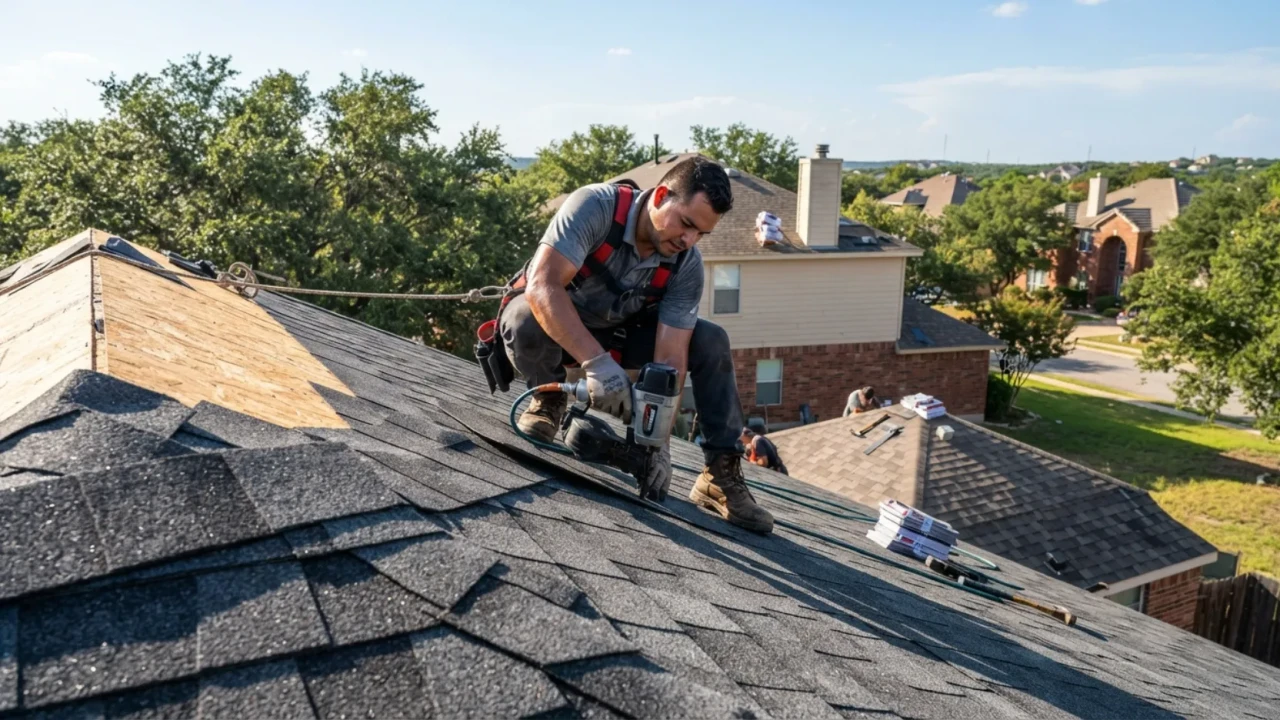
The material your roof is made of is the second biggest cost variable after the damage type. Labor rates differ because the skills required differ. Material costs differ because some roofing products are significantly more expensive per square than others. Matching materials is also a real cost factor replacing a section of a discontinued tile or an older shingle profile can cost more than the repair itself because sourcing matching material takes time and specialty suppliers.
- Contractor has confirmed the material brand, line, and color of your existing roofing before quoting replacement sections
- For tile roofs: matching strategy is discussed and documented new tile, salvage, or blend approach
- For metal roofs: panel profile is identified and supplier sourced before the job is scheduled
- Material markup is shown separately from labor in the quote so you can verify reasonableness
- Warranty on replacement materials confirmed manufacturer warranty separate from workmanship warranty
Pitch and Access
Roof pitch is measured as the rise over run how many inches the roof rises for every 12 horizontal inches. A low-slope roof of 3:12 or 4:12 is easy to walk and quick to work on. A steep roof of 8:12 or 10:12 requires specialized harness systems, additional scaffolding or staging, and significantly more time for every task. The labor cost difference between a low and steep roof for the same repair can run 25% to 50% higher.
Access is a separate variable. A repair on a two-story home with a complex roofline takes longer to set up safely than the identical repair on a single-story ranch-style home. Narrow side yards that prevent ladder placement, landscaping that blocks staging areas, and second-story heights all add to the labor component of your estimate.
When you get quotes for a steep-pitch repair, ask each contractor to break out the pitch and access surcharge separately. Some contractors fold these into the base rate and others list them explicitly. Either approach is fine the number just needs to be there so you can compare apples to apples across multiple quotes. A contractor who does not acknowledge pitch in the quote at all may be leaving something out, or may be planning to cut corners on safety to keep the number low.
- Roof pitch identified and noted in the written quote
- Safety equipment requirements confirmed: harness, toe boards, staging as appropriate
- Access obstructions noted: landscaping, fencing, HVAC units near the repair area
- Labor premium for pitch or access shown or explained in the estimate
- Contractor carries workers’ compensation coverage in case of an on-roof incident
Timing and Season
When you need the repair done affects what it costs. Same-day emergency response, weekend calls, and after-hours service all carry premium labor rates. After a major hail storm in San Antonio, contractor availability drops and demand spikes prices for emergency tarp installation and rapid repair response increase as a result, particularly in the first 30 days after the event. This is a normal market response and not a sign of price gouging.
If your roof has a minor leak that can be temporarily managed with a bucket and a tarp, scheduling a non-emergency repair in the coming week or two will cost less than calling for a same-day fix. If your roof is actively leaking into a living area or water is pooling near an electrical panel, that is an emergency and the premium is justified.
Contractor Selection
The lowest quote is not always the right quote. Contractors who come in significantly below the market average for a repair are often cutting costs somewhere unlicensed work, no workers’ compensation coverage, substandard materials, or a plan to come back for additional charges once the job is underway. San Antonio homeowners who hire unlicensed roofers to save a few hundred dollars frequently end up spending more to have the work redone by a legitimate contractor within a year or two.

A reputable San Antonio roofing contractor will carry at minimum $1 million in general liability coverage and workers’ compensation insurance for their crew. Ask for the certificate of insurance before work begins not just a verbal assurance. If a worker falls on your roof without workers’ compensation coverage, your homeowners insurance may be on the hook for the medical bills.
Three quotes is the standard San Antonio homeowners should follow for any repair over $500. Not because every contractor is dishonest, but because the range of prices on the same job can be wide. Three quotes give you a realistic sense of the market rate, help you spot an outlier on the low or high end, and give you negotiating context if you want to work with a specific contractor who came in slightly above the others. For repairs under $500, one or two quotes is reasonable the time cost of getting three quotes may not be worth the potential savings on a small job.
- License number provided and verified with the Texas Department of Licensing and Regulation (TDLR)
- Certificate of insurance received showing general liability and workers’ compensation
- Physical business address confirmed not a PO box or out-of-state registration
- Written quote received with itemized scope, materials list, and workmanship warranty terms
- No deposit over 30% requested before material delivery full upfront payment is a red flag
- Minimum two recent San Antonio references provided on request
Insurance and Claims
Texas homeowners insurance typically covers roof damage caused by sudden events: hailstorms, wind, falling trees, and lightning. It does not cover damage from normal wear, age, or deferred maintenance. If your roof was damaged in a storm, the cost of the repair or replacement minus your deductible is what you will actually pay out of pocket. For many San Antonio homeowners, the out-of-pocket cost on a legitimate storm claim is only the deductible.
- Storm event date documented and noted needed for the claim filing
- Damage photographed before any temporary repairs or tarp installation
- Policy reviewed for wind and hail deductible type: flat dollar or percentage of dwelling value
- Policy type confirmed: Actual Cash Value or Replacement Cost Value
- Claim filed within the policy’s time window commonly one year in Texas
- Independent contractor estimate obtained before adjuster visit if possible
- Public adjuster consulted if the insurance settlement seems significantly low
The following costs reflect current San Antonio market rates for licensed, insured roofing contractors. All figures assume standard access on a single-story residential home with a moderate pitch. Steep-pitch, multi-story, or emergency repairs will run higher than these baseline ranges.
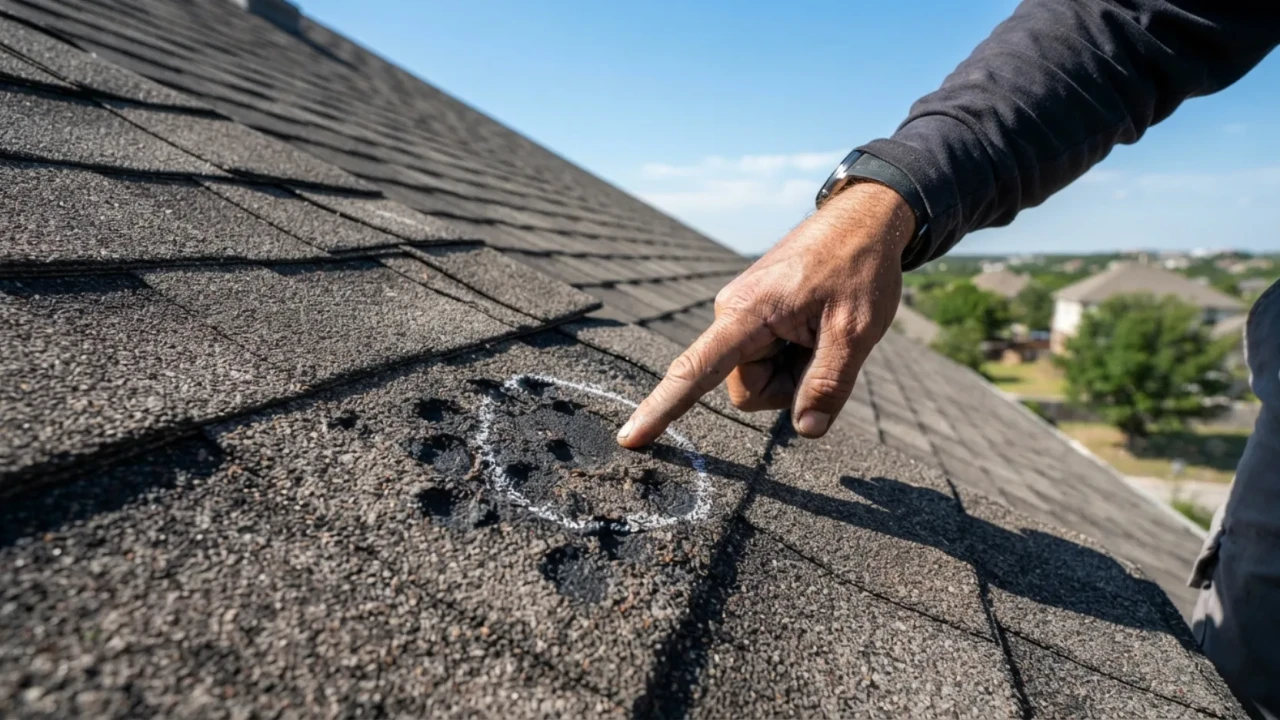
| Repair type | Typical cost (San Antonio 2026) | Most common cause | Urgency level |
|---|---|---|---|
| Replace missing or damaged shingles (up to 10 shingles) | $150 to $400 | Wind, hail, age, foot traffic | High exposed decking accelerates damage |
| Flashing repair or replacement (chimney, vent, skylight) | $300 to $800 | Corrosion, installation error, wind lift | High active leak source in most cases |
| Valley repair (open or closed valley) | $400 to $900 | Debris accumulation, corrosion, age | High high-volume water path |
| Flat roof membrane patch (TPO, modified bitumen) | $350 to $900 | Seam failure, puncture, lap separation | High flat roofs pond water quickly |
| Clay or concrete tile repair (5 to 15 tiles) | $400 to $1,200 | Hail impact, foot traffic cracks, age | Medium to high depending on underlayment |
| Decking repair (per sheet of sheathing) | $250 to $600 per sheet | Water intrusion, age, rot | High required before re-roofing section |
| Ridge cap replacement (per linear foot) | $3 to $8 per linear foot | Wind damage, age, failing nails | Medium exposed ridge accelerates water entry |
| Pipe boot / vent collar replacement | $150 to $400 per unit | UV degradation, cracking, age | High one of the most common San Antonio leak points |
| Gutter repair or re-attachment | $150 to $500 per section | Wind, bracket failure, ice loading | Medium affects water management off the roof |
| Emergency tarp installation | $200 to $600 | Storm, active leak, fallen debris | Immediate first response to prevent interior damage |
| Full roof repair with partial replacement (over 50% of surface) | $2,500 to $8,000+ | Widespread storm damage, deferred maintenance | High evaluate repair vs replacement at this scale |
There is a right way and a wrong way to save money on a roof repair. Hiring an unlicensed contractor, skipping the inspection, or deferring a small repair are all the wrong ways they create larger problems and larger bills down the road. These are the legitimate strategies that actually work.
Prevention
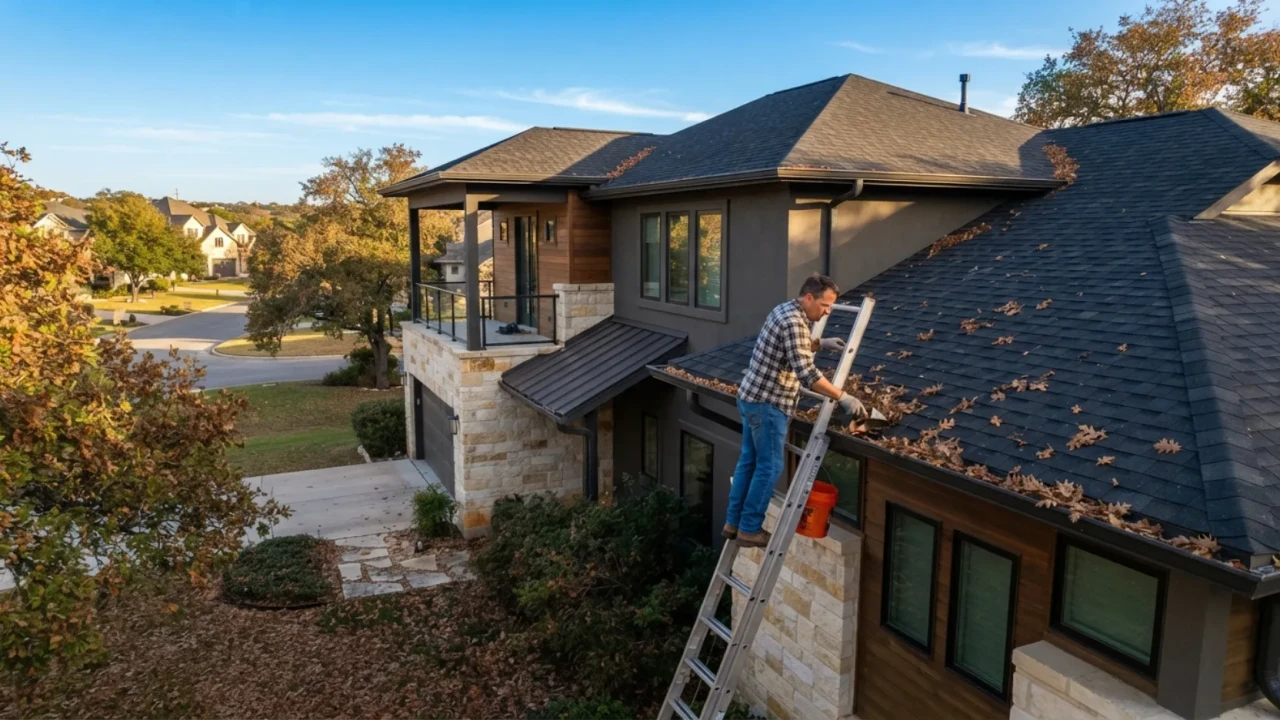
The single biggest driver of high roof repair bills is delayed response. A cracked pipe boot that costs $200 to fix today becomes a $200 pipe boot plus $800 in decking repair plus $600 in insulation replacement if it is left leaking for one rainy season. Twice-yearly inspections in spring and fall, plus a check after any storm with hail over 1 inch or winds over 60 mph, catches most of the small problems before they compound.
You do not need to get on the roof yourself. A ground-level walk-around with binoculars covers the basics: missing or lifted shingles, raised ridge caps, bent or dented gutters, and debris accumulation in valleys. Schedule a professional roof inspection from a licensed San Antonio roofer every two to three years for a thorough above-surface assessment. Most reputable contractors in San Antonio offer free inspections with no commitment required.
Cost Strategy
Every time a roofing crew shows up to your property, there is a mobilization cost built into the estimate travel time, setup, safety equipment deployment, and job site preparation. On a small repair, that mobilization cost can represent a significant percentage of the total bill. If your inspection reveals two or three separate small issues, address them all in one visit rather than calling the contractor back separately for each one.
Common bundling opportunities on San Antonio homes: replace pipe boots and ridge cap at the same time, repair a valley and reseal the flashings in the same visit, or schedule a fastener pass on a metal roof the same day you have a leak source repaired. Ask your contractor to assess the full roof while they are there not just the specific area you called about.
Quote Strategy
Getting three quotes for any repair over $500 is the standard recommendation from consumer protection advisors and most state contractor boards, including the Texas Department of Licensing and Regulation. Three quotes tell you the market rate, expose outliers on both ends, and give you leverage if you have a preferred contractor who came in slightly high.
Comparing quotes correctly matters as much as getting them. Make sure each quote covers the same scope: the same repair area, the same materials, and the same warranty terms. A quote that looks $400 cheaper may be missing the decking repair, the flashing replacement, or the clean-up cost. Ask each contractor to walk you through their quote line by line before you make a decision.
Insurance Strategy
Many San Antonio homeowners do not look at their homeowners insurance policy until after damage occurs. At that point, surprises about the deductible type, coverage limits, or exclusions are costly. Spend 30 minutes reviewing your policy before storm season specifically the sections on wind and hail deductibles, roof coverage limitations, and the ACV vs RCV distinction.
In Texas, some policies have moved to ACV-only coverage for roofs over a certain age. If your policy pays Actual Cash Value rather than Replacement Cost Value on a 15-year-old shingle roof, the depreciation deduction may leave you significantly short of the full repair or replacement cost. Knowing this before the storm means you can explore a rider or policy upgrade while there is no active claim pending insurers typically will not let you upgrade coverage after damage has occurred.
- Damage documented with your own photos before any contractor visits
- Storm event date noted if damage is weather-related needed for the insurance claim
- Insurance policy reviewed: deductible type, ACV vs RCV, and filing window confirmed
- Claim filed or in process if storm damage qualifies before scheduling permanent repair
- At least three contractors contacted for quotes on any job over $500
- License number verified with the Texas Department of Licensing and Regulation
- Certificate of insurance received showing general liability and workers’ compensation
- Quote is itemized: repair scope, materials, labor, warranty not a single total number
- Materials specified by type, grade, and manufacturer not just “shingles” or “flashing”
- Decking and underlayment condition addressed in the scope if the roof is being opened
- Workmanship warranty term stated: one year minimum, two to five years preferred
- Payment terms confirmed: no more than 30% deposit before material delivery
- Pre-repair photos taken by you before work begins
- Replacement materials confirmed on site to match the profile and color of your existing roof
- Completed repair inspected before final payment is released
- Job site cleared of all debris: old shingles, nails, fasteners, and packaging
- Written warranty document received with contractor name, address, and coverage terms
- Next inspection date noted: San Antonio roofs should be professionally assessed every two to three years
How much does a roof repair cost in San Antonio?
Is it worth repairing a roof or should I just replace it?
Can I negotiate a lower price on a roof repair in San Antonio?
How long does a roof repair take in San Antonio?
Does homeowners insurance cover roof repairs in Texas?
What is the most common roof repair in San Antonio?
Get a free roof repair estimate in San Antonio
Tell us about your leak, storm damage, or missing shingles and we will inspect the roof for free, document everything we find, and give you a clear written repair estimate with no obligation.
[/et_pb_code][/et_pb_column][/et_pb_row][/et_pb_section]