
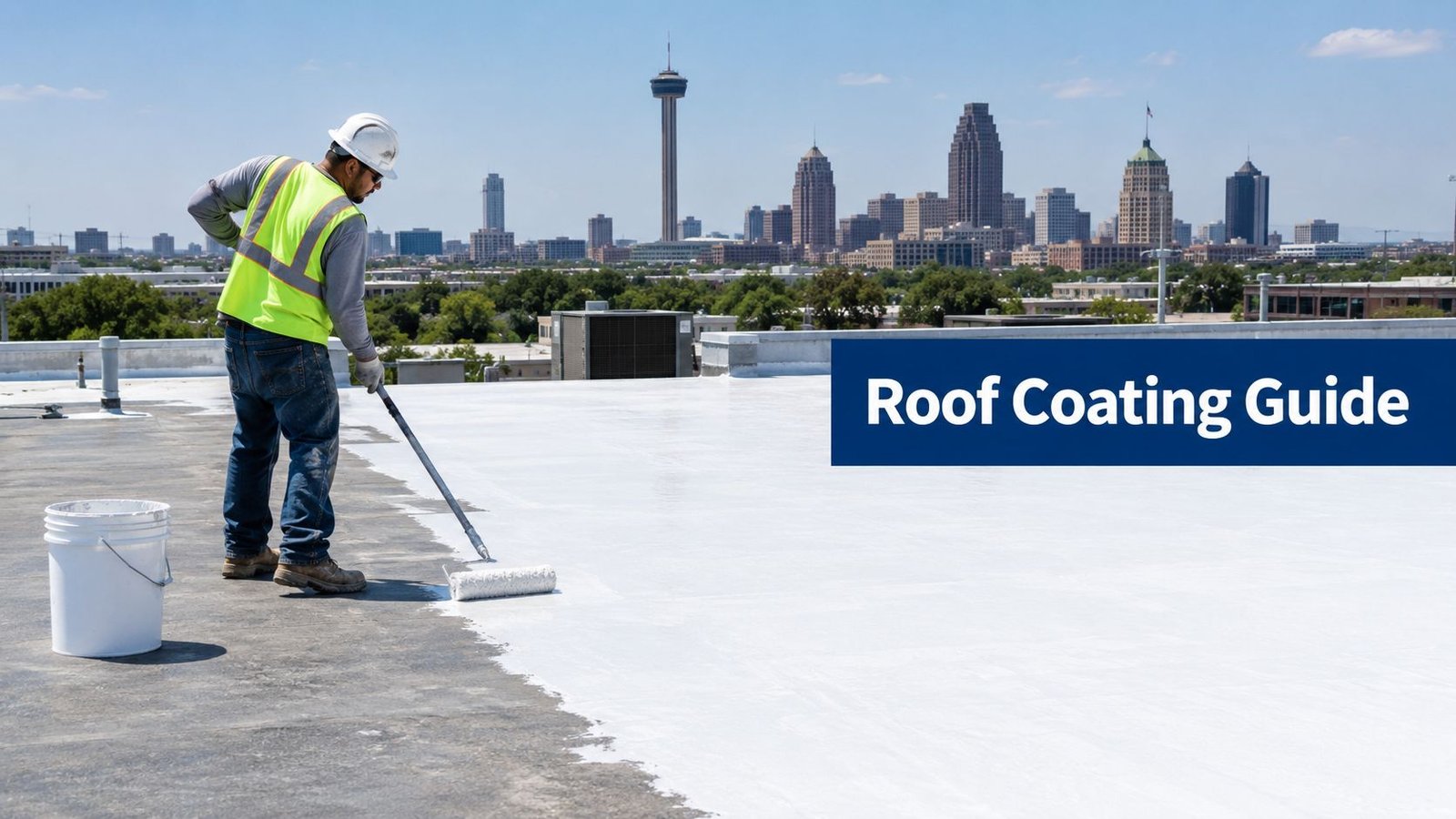
You’re standing on the ground looking up at a flat roof that’s taken one more brutal San Antonio summer. The surface looks tired, the seams are starting to show their age, and you’re trying to decide whether to patch, coat, or tear the whole thing off before the next storm hits. That’s the commercial roof coatings decision, not a marketing slogan. It’s about whether the roof still has enough life left in it to justify restoration, or whether you’re just delaying a bigger problem.
For the right building, commercial roof coatings are a smart move. They can restore surface protection, help manage heat, and buy time without the noise, mess, and disruption of a full replacement. For the wrong roof, they’re a false economy, especially when moisture, structural damage, or widespread failure are already baked in.
Table of Contents
- Aging Flat Roofs and the Coating Option
- Acrylic Silicone and Polyurethane Compared
- How Reflectivity and Emissivity Work
- What a Proper Coating Installation Looks Like
- Coating Restoration Versus Full Replacement
- When a Coating Saves Money and When It Does Not
- Maintenance Between Professional Inspections
- Your Next Step with RRSATX
Aging Flat Roofs and the Coating Option
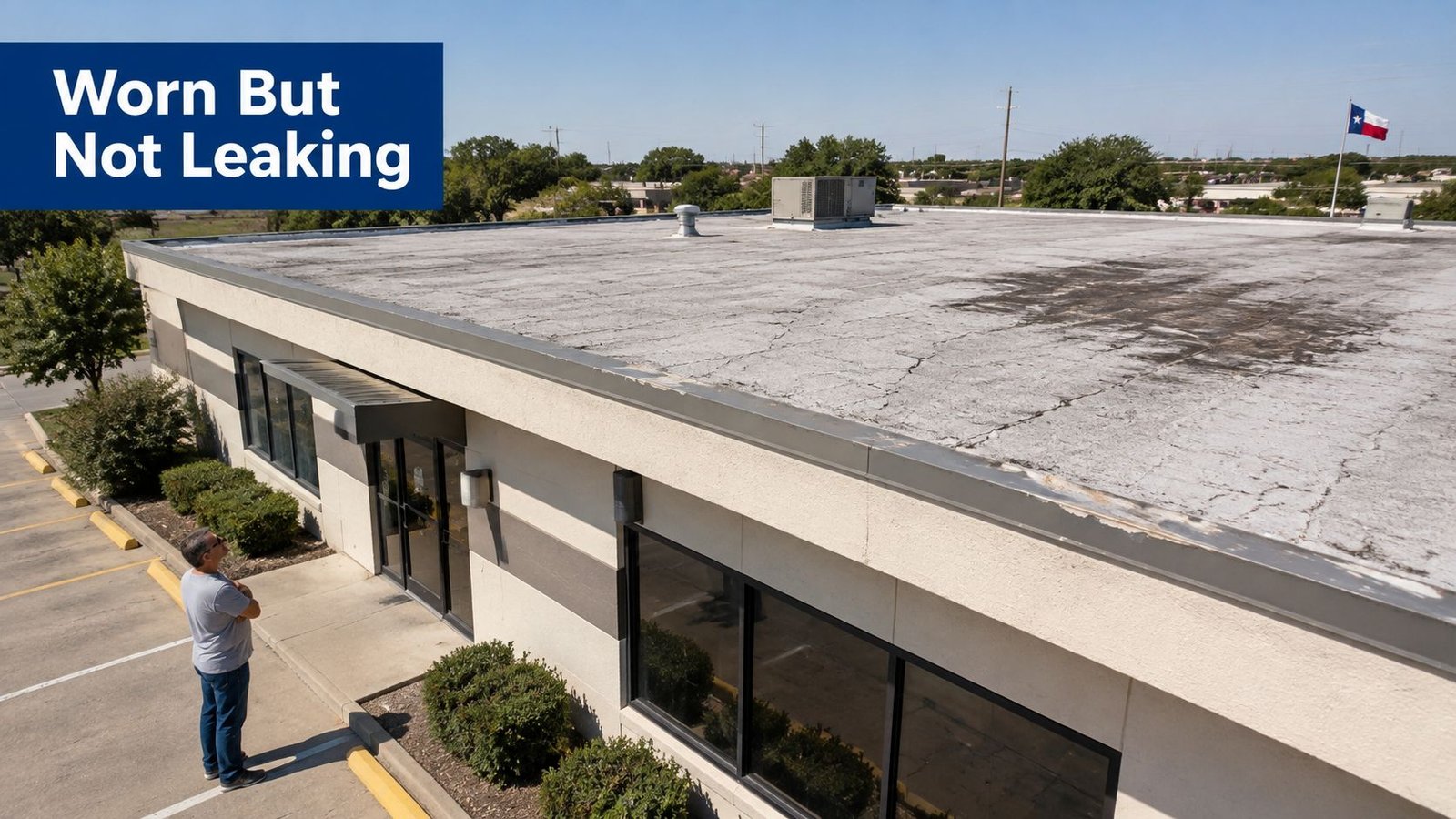
A property owner called me after a long stretch of Texas heat and said the roof looked “faded, but not dead.” That’s usually where the conversation starts. The membrane is worn, the seams need attention, and the building isn’t leaking everywhere yet, but nobody trusts it either.
A coating belongs in that middle ground. It’s a fluid-applied barrier placed over an existing roof system after the repairs, cleaning, and prep are done. On the right roof, it can seal small gaps, add a new weather-resistant layer, and keep the building dry without ripping off the whole assembly.
Practical rule: if the roof deck is sound and the leaks are localized, a coating can be a maintenance decision. If the roof is saturated or failing in multiple places, it’s not.
That matters in San Antonio because our roofs take punishment from both ends, hard sun and sudden rain. Adhesion, ponding tolerance, and prep aren’t side details here, they’re the whole game. A coating also keeps usable interior space intact, cuts down tear-off debris, and reduces disruption for tenants or staff.
If you’re trying to understand how heat load affects a commercial building in a hot climate, the commercial heating and cooling Phoenix guide from Sapper HVAC is a useful outside reference point for the bigger building-performance picture. commercial heating and cooling Phoenix
The key is simple. A coating is a restoration strategy, not a magic fix. If the roof still has structure, drainage, and serviceable details, it deserves a coating conversation before anyone starts pricing a full replacement.
Acrylic Silicone and Polyurethane Compared
Choosing among commercial roof coatings is a lot like picking protective paint for a building, except the chemistry matters. The roof moves, the weather punishes it, and the installer’s prep work decides whether the film bonds or peels. In South Texas, that means you don’t pick by color alone.
Acrylic Works Best When Drainage Is Good
Acrylic coatings are water-based, easy to work with, and a common choice when cost control matters. They’re a solid fit for roofs that drain properly and don’t sit under standing water for long. A representative commercial acrylic elastomeric product also shows how low-emission these systems can be, with VOC content under 10 g/L in the technical data from Rust-Oleum.
Silicone Handles Ponding Better
Silicone is the chemistry I look at first when a roof has persistent ponding. It handles moisture and UV exposure well, which is why it keeps showing up on low-slope roofs that don’t drain perfectly. The trade-off is surface prep and recoat planning, because dirt pickup and adhesion need real attention.
Polyurethane Brings Toughness
Polyurethane is the rugged choice. It’s built for abrasion, impact, and foot traffic, which makes sense on roofs with maintenance crews, equipment access, or higher wear. It often shows up in two layers, an aromatic base for durability and an aliphatic topcoat for UV stability.
| Commercial Roof Coating Comparison | Best Fit | Key Strength | Important Trade-Off |
|---|---|---|---|
| Acrylic | Well-drained roofs with budget pressure | Reflective, easy to apply | Less friendly to standing water |
| Silicone | Low-slope roofs with ponding | Strong moisture and UV resistance | Dirt pickup and prep sensitivity |
| Polyurethane | High-traffic or exposed areas | Abrasion and impact resistance | Usually more system-dependent |
If you’re comparing elastomeric options across roof types, the coating solutions from South Mountain page is a handy way to see how that category gets discussed in practice.
No chemistry wins every time. The right answer depends on drainage, roof movement, existing substrate, and how much wear the roof sees.
How Reflectivity and Emissivity Work
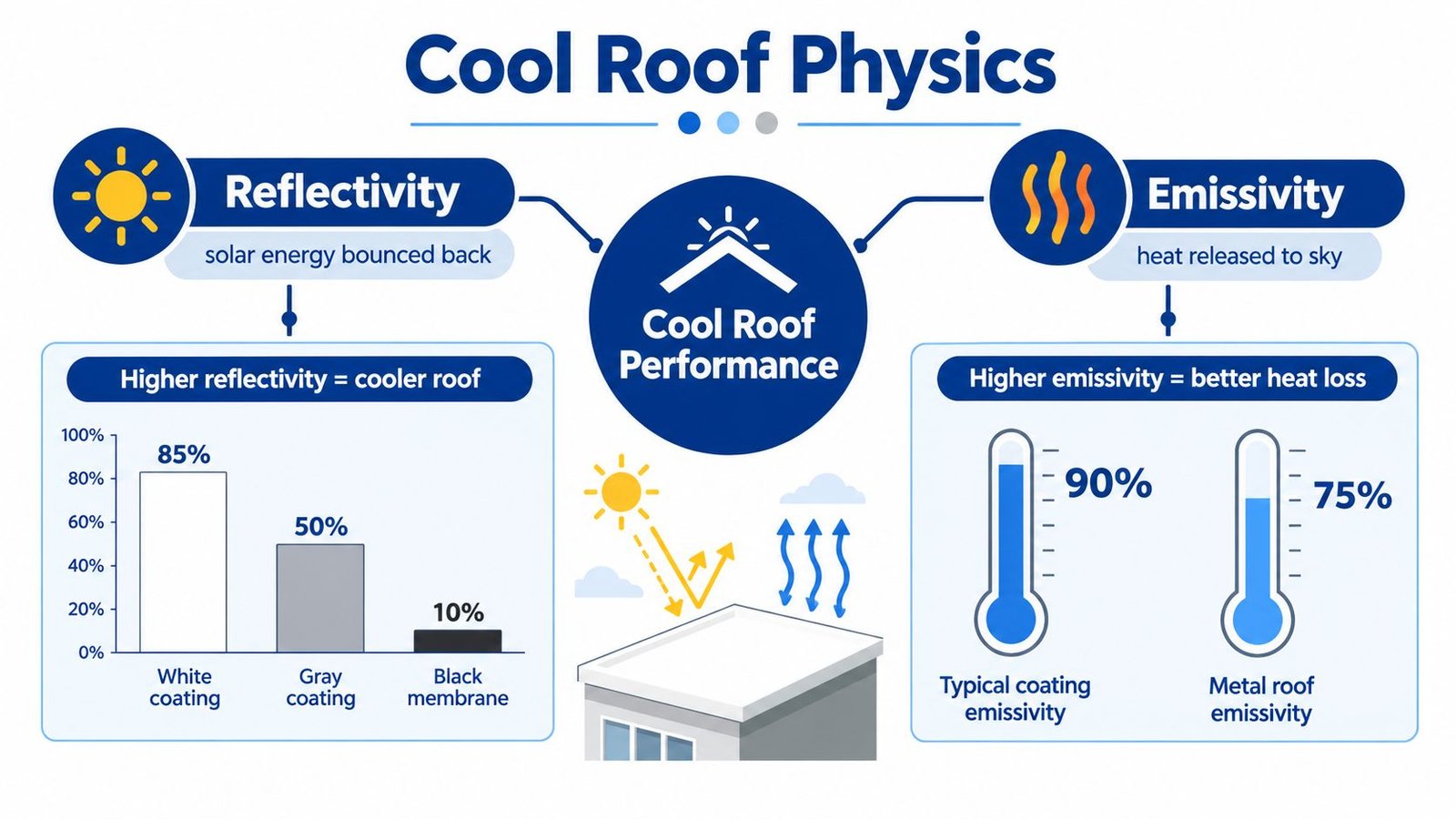
A cool roof is not cool because it is white. It works because it reflects solar energy and releases heat efficiently. Those are two different properties, solar reflectance and thermal emittance, and both matter when you are choosing a coating for a commercial building.
The U.S. Department of Energy says cool-roof performance depends on those two properties, and in warm or hot climates, replacing a conventional roof with a cool roof can reduce annual air-conditioning energy use for a single-story building by up to 15% DOE. DOE also says a white roof on a commercial building can produce annual energy savings worth up to $0.20 per square foot. In San Antonio, that is real money, but only if the roof and the building are a fit for the system.
Numbers Matter More Than Marketing
ENERGY STAR roof products for low-slope applications require an initial solar reflectance of at least 0.65 and a three-year aged reflectance of at least 0.50, with testing commonly verified through CRRC protocols Roof Coating Authority. ASTM C1483/C1483M also sets a clear floor for radiation-control coatings, with 0.8 solar reflectance and 0.8 emittance ASTM.
Ask for Tested Values, Not Labels
The testing methods behind those claims matter too. ASTM and ENERGY STAR materials point to ASTM E903, ASTM C1549, and ASTM C1371 as measurement methods for reflectance and emissivity ENERGY STAR. That is the proof you want from a manufacturer, not a brochure that says “cool” and stops there.
A coating that starts bright but ages poorly can stop delivering the benefit you thought you bought.
San Antonio sun is hard on roofs, and dirt, weathering, and biological growth change how a roof performs over time. The aged numbers matter just as much as the initial ones.
What a Proper Coating Installation Looks Like
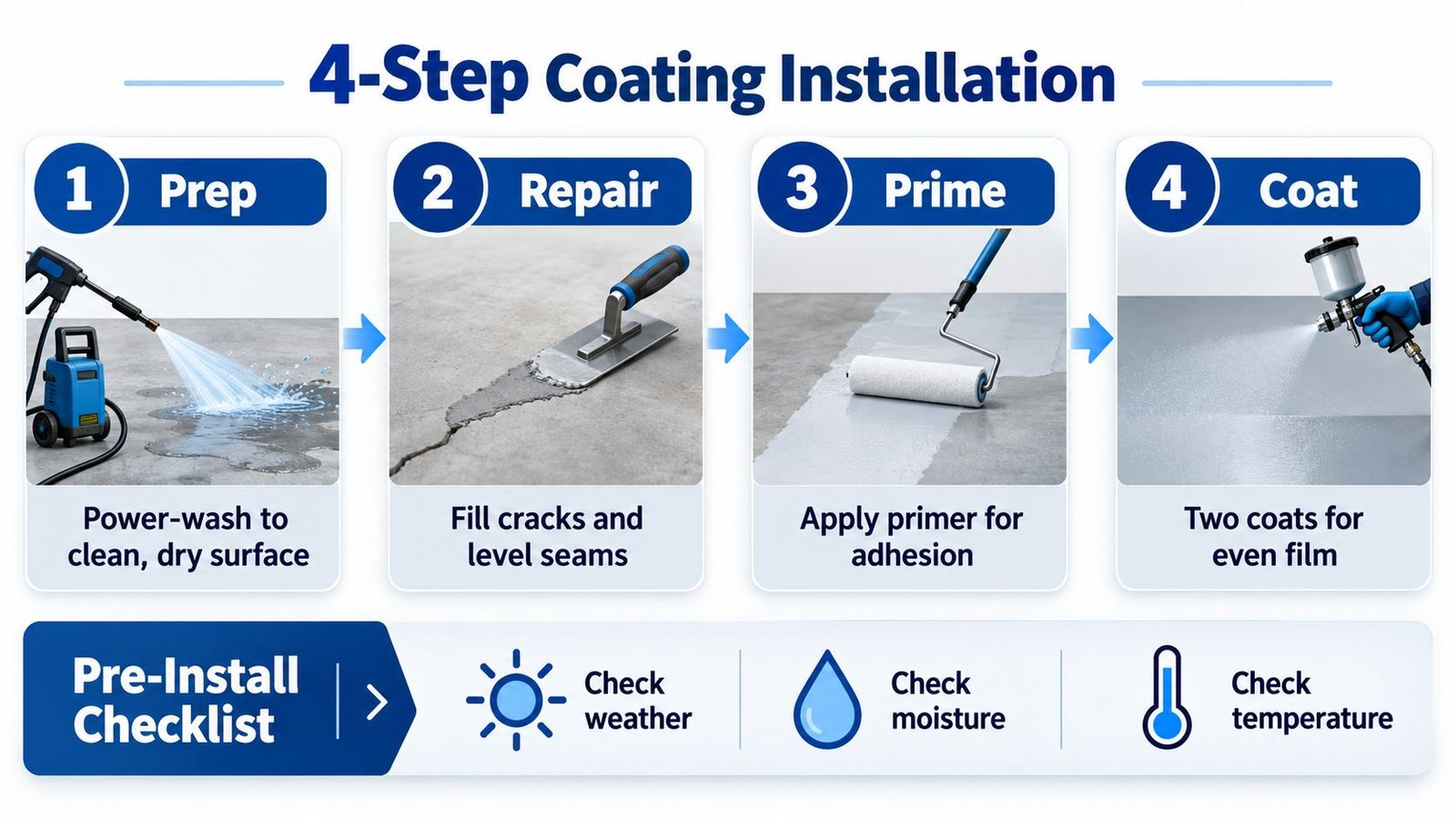
The coating itself is only part of the job. The work happens before the sprayer ever comes out, because a bad substrate ruins good product fast. If the contractor skips prep, you’re buying a future failure.
Start With Prep and Repairs
The roof should be cleaned to a dry surface, then repaired where seams are open, blisters are present, or flashing has lifted. That’s not optional. A coating bonds to what’s there, so if the surface is dirty or unstable, the new film becomes part of the problem instead of the fix.
Primer, Build, and Cure
Different substrates need different primers. Rusted metal doesn’t get the same treatment as aged TPO, and a one-primer-fits-all approach is sloppy work. The film build also matters, because technical data sheets usually specify application by average dry-film thickness, not by vague coverage talk.
Contractor rule: a single thick pour is a red flag. Good work is built in controlled passes.
A final moisture scan before sign-off is smart in South Texas humidity, especially after recent rain. Recoat windows matter too, because the layers need to bond properly before the weather gets a vote.
The video below shows the installation sequence in a simple way if you want a visual reference.
A proper installation is methodical. Clean it, repair it, prime it, coat it, then verify it. Anything less is just putting a lid on a problem.
Coating Restoration Versus Full Replacement
Owners need to stop thinking in slogans and start thinking in lifecycle terms. Restoration and replacement solve different problems, and the roof tells you which one you’re really buying.
| Coating Restoration vs. Full Roof Replacement | Coating Restoration | Full Replacement |
|---|---|---|
| Disruption | Lower noise, less tear-off, less tenant impact | More disruption, more staging, more cleanup |
| Scope | Over existing roof after repairs | Full removal and new assembly |
| Use Case | Roof still sound, details still salvageable | Roof too far gone or too wet |
| Climate Fit | Reflective surface lowers rooftop heat | Factory-controlled new membrane surface |
A good restoration candidate is usually a roof that’s still dry enough to trust, with repairable seams and flashing. A replacement is the better move when the roof has crossed the line into broad failure, because no coating can rebuild a system that’s already broken down.
The installation trade-off matters too. Restoration keeps the building in service and avoids the full tear-off mess. Replacement delivers a new system, fresh warranty structure, and a clean slate, but it also means more labor, dumpsters, and code-related overhead.
That’s why a contractor should walk you through condition first, then scope. If you’re vetting restoration contractors, the restoration contractor vetting with HomeProBadge resource is a decent external reference for how owners can think about the decision.
If the roof still has life in it, restoration is often the smarter capital move. If it doesn’t, coating it just delays the inevitable.
When a Coating Saves Money and When It Does Not
A coating saves money when the roof still gives you something worth restoring. Dry membrane, workable seams, serviceable flashing, and ponding that clears in a reasonable time put you in the right lane. In South Texas heat, that can mean keeping a roof in service without taking on the cost and disruption of a full tear-off.
The Green Light
- Dry membrane: the roof is not hiding widespread saturation under the surface.
- Mechanically attached system: the assembly still has stable attachment and can accept restoration work.
- Limited active leaks: repairs are focused, not scattered across the whole building.
- Manageable drainage: standing water is not lingering across the roof.
The Red Flags
- Wet insulation across wide areas: moisture has moved past patch-and-coat territory.
- Incompatible recoats: the roof already has layers that do not work together.
- Structural movement or deep cracking: the deck is shifting beyond simple repair.
- Persistent pooling and unresolved leaks: the roof is telling you it is done.
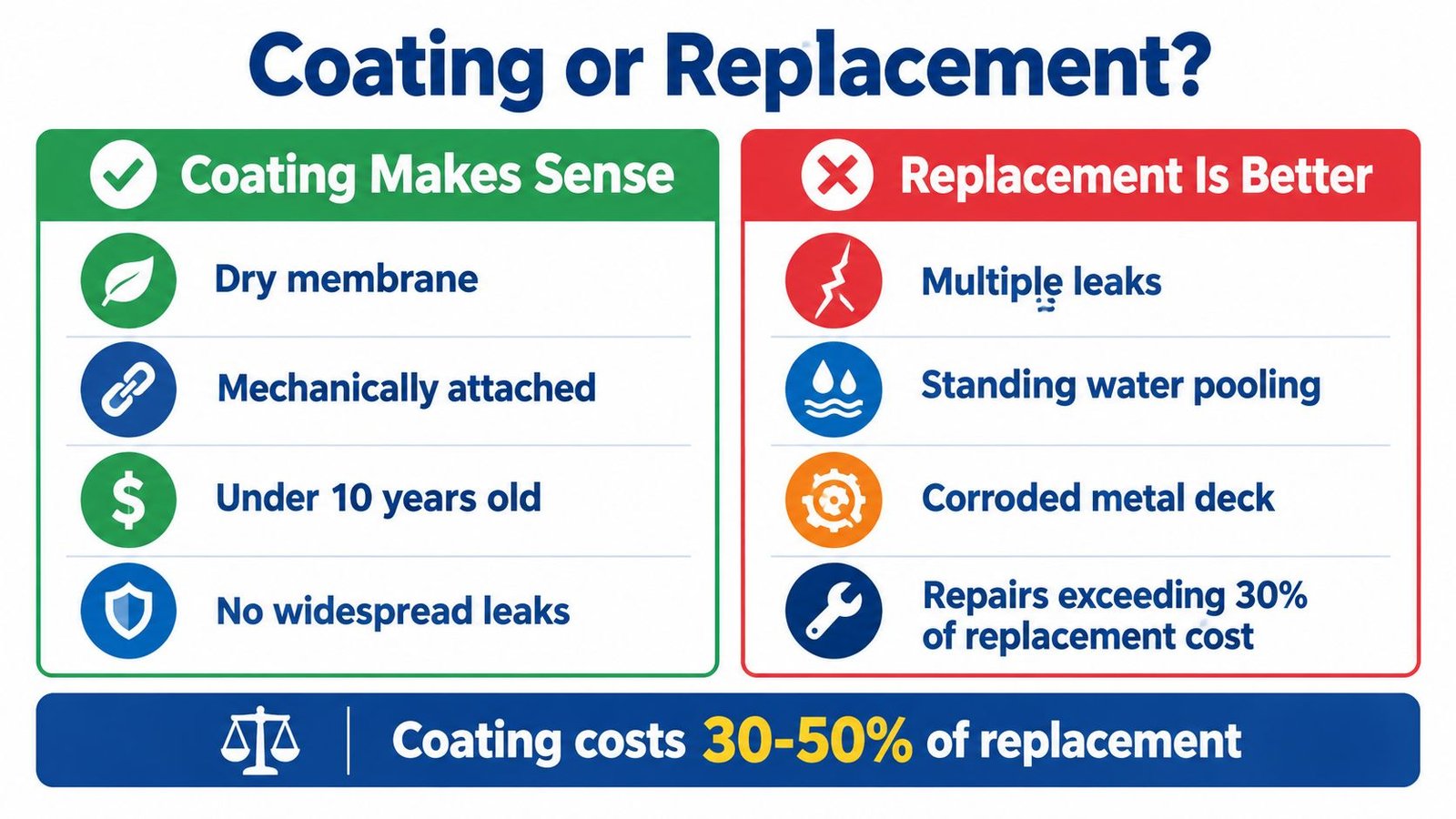
For a deeper breakdown of the trade-offs, see our guide on the pros and cons of roof coatings. The GAF coating-vs-replacement guide reaches the same conclusion, coatings suit structurally sound roofs, while replacements are the better call when the system is too wet or too compromised to restore. GAF
A coating saves money on the right roof and wastes money on the wrong one. Get the roof condition in writing before anyone talks you into a shortcut.
Maintenance Between Professional Inspections
South Texas weather makes roofs work for a living, so you can’t just coat one and forget it. The building team needs a simple rhythm between contractor visits, and that rhythm should track the seasons and the storm cycles that hit San Antonio.
A Practical Walk Pattern
- After spring hail: check for punctures, bruising, and new flashing damage.
- Before peak summer heat: look for blisters, seam movement, and coating wear.
- Before fall debris builds up: clear drains, scuppers, and rooftop trash.
- After the first cold snap: look for new splits, fastener issues, and movement at transitions.
Don’t send someone up there who isn’t trained for roof safety. If the surface is wet, steep, or uncertain, stay on the ground and call a pro.
Watch for blistered or flaking coating, exposed seams, ponding water that lasts too long, fastener back-outs on metal, clogged drains, and any ceiling staining inside the building. Those are early warnings, not cosmetic quirks.
For a detailed operational list, the commercial roof maintenance checklist for Texas businesses is worth keeping handy.
Cleaning should stay gentle. Use a low-pressure rinse, soft brushes, and manufacturer-approved cleaners only. Keep people off areas that aren’t meant for traffic, and route foot access to designated walk pads so the coating doesn’t get damaged by routine maintenance work.
A coating lasts longer when the roof is treated like a system, not a surface.
Your Next Step with RRSATX
The right next step is boring, and that’s a good thing. Confirm the roof condition, identify the membrane, choose the chemistry that matches the substrate, and compare restoration with replacement using actual findings. If the roof is a candidate, then the scope writes itself.
RRSATX can come out for a free on-site inspection, document the roof with photos and moisture readings, and give you a written report before any work starts. You should also expect a line-item proposal that separates prep, primer, base coat, and top coat so you can see exactly what’s being done.
If you’re in San Antonio or a nearby community, schedule the inspection early, especially after hail or a long heat cycle. The best time to decide on a coating is before small damage turns into wet insulation and interior leaks.
A healthy 20,000 square foot TPO restoration usually starts with inspection, localized repairs, surface prep, primer where needed, then controlled coating passes with a final review. It should feel organized, documented, and calm, not rushed or improvised.
If your roof in San Antonio is tired but still structurally sound, RRSATX can inspect it, document it, and tell you straight whether commercial roof coatings make sense or replacement is the better call. Visit RRSATX to schedule a free inspection and get a written plan you can use.