
[et_pb_section fb_built=”1″ admin_label=”section” _builder_version=”4.16″ global_colors_info=”{}”][et_pb_row admin_label=”row” _builder_version=”4.16″ background_size=”initial” background_position=”top_left” background_repeat=”repeat” global_colors_info=”{}”][et_pb_column type=”4_4″ _builder_version=”4.16″ custom_padding=”|||” global_colors_info=”{}” custom_padding__hover=”|||”][et_pb_code _builder_version=”4.27.7″ _module_preset=”default” hover_enabled=”0″ sticky_enabled=”0″]
A complete 2026 cost breakdown for single-car, two-car, and oversized garage metal roof installations in San Antonio. Covers material types, panel styles, labor, what drives the price up, and how to get an honest quote.
Installing a metal roof on a garage is one of the smartest roofing investments a San Antonio property owner can make. Garages take a beating from Texas weather: intense UV exposure, hailstorms that rip apart asphalt shingles in minutes, and high summer temperatures that accelerate the deterioration of cheaper roofing materials. A metal roof handles all of it without requiring the frequent repairs or early replacement that come with asphalt.
The question most homeowners ask first is the right one: what is this going to cost? The honest answer is that it depends on several factors, including the size of your garage, the type of metal panel you choose, whether the existing roof is being torn off or roofed over, and current San Antonio labor rates. This guide breaks down every variable so you can budget with confidence and know what to expect when you start getting quotes.
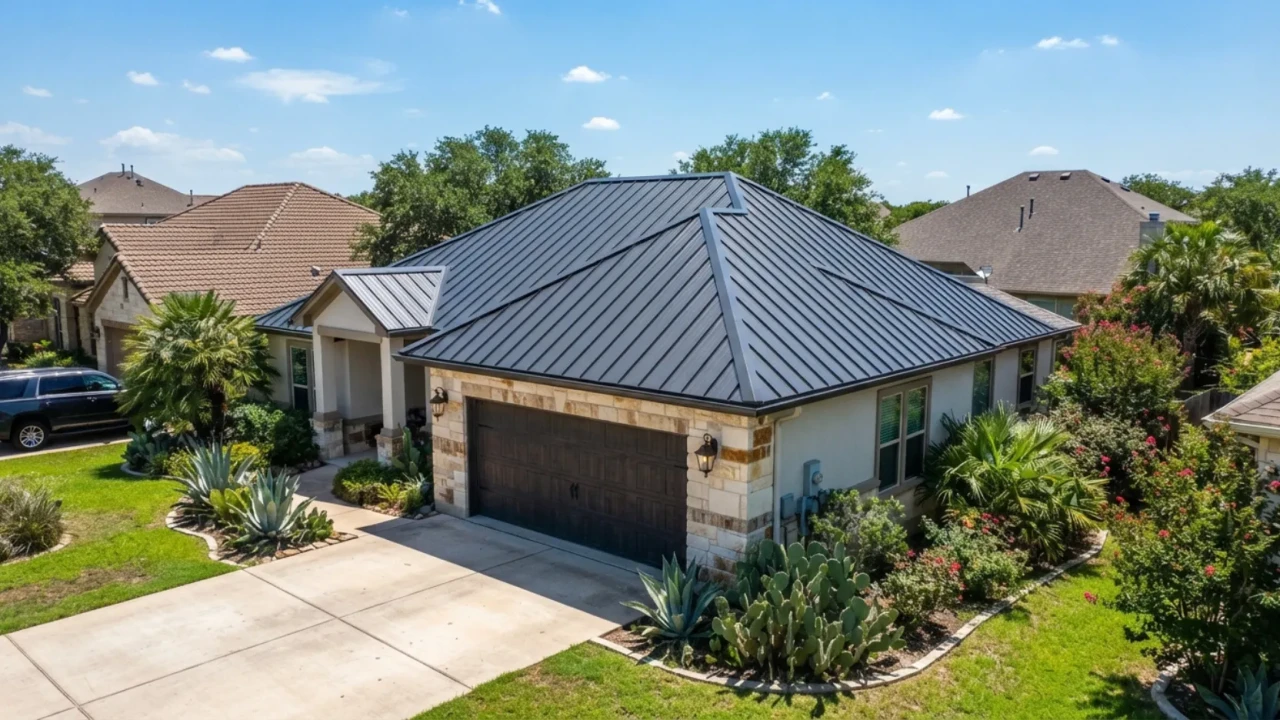
Garage roofs are smaller jobs than residential roofs, and most contractors price small jobs at a higher per-square-foot rate to cover mobilization, setup, and minimum project costs. A 400-square-foot garage roof will almost always cost more per square foot than a 2,000-square-foot house roof using the same material. Factor this into your comparison when looking at national cost averages, which are usually based on larger residential projects.
Size and Scope
The size of your garage roof is the starting point for any cost estimate. Contractors price metal roofing jobs by the square (one square equals 100 square feet of roof area), and the number of squares determines how much material is ordered and how many hours of labor are needed. Garage roofs are smaller than residential roofs, which means the per-square-foot rate is often slightly higher due to minimum project costs, but the total bill is significantly lower.
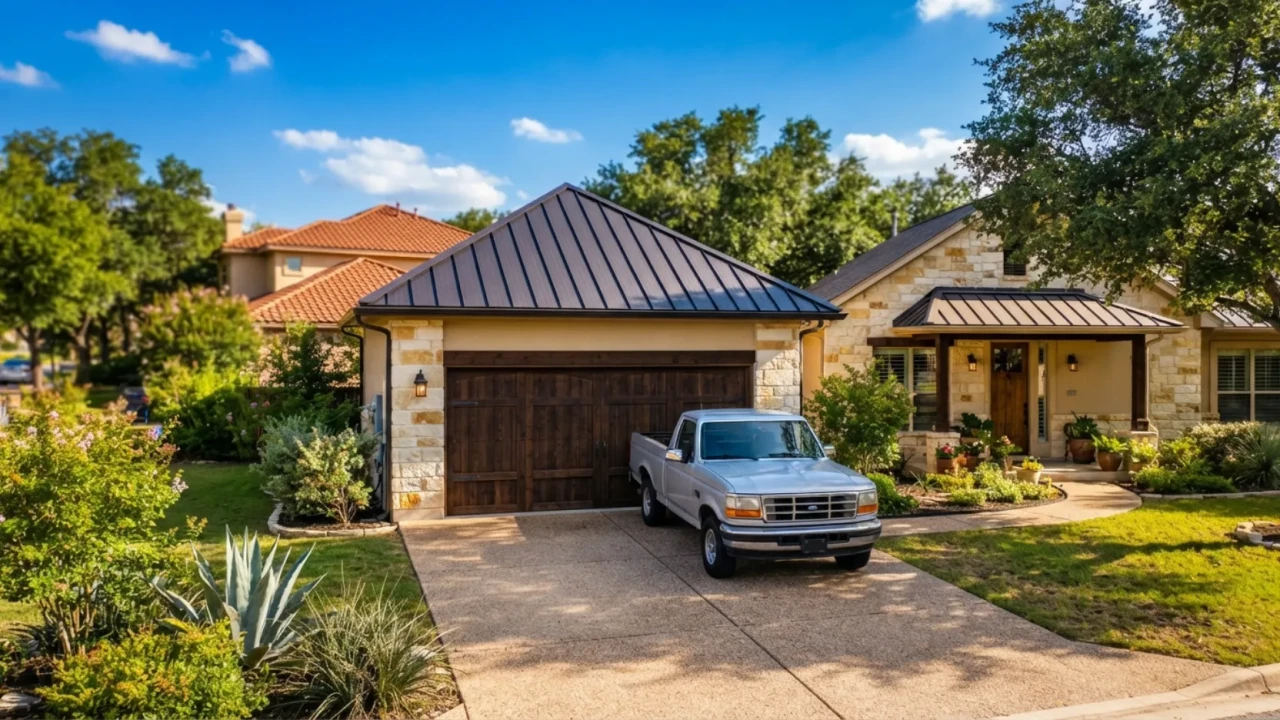
Single-car garage (240 to 320 sq ft of roof area): A standard one-car garage with a simple gable roof typically runs 240 to 320 square feet of actual roof surface after accounting for pitch. At San Antonio labor and material rates, expect to pay $1,500 to $3,200 for corrugated or ribbed steel panels installed, or $2,200 to $4,500 for standing seam panels on a garage this size.
Two-car garage (480 to 720 sq ft of roof area): The most common garage size in San Antonio neighborhoods. A standard two-car garage with a gable roof runs 480 to 720 square feet of roof surface. Budget $2,800 to $5,500 for corrugated steel or $4,000 to $8,000 for standing seam, depending on pitch and panel gauge.
- Measure the footprint of your garage (length x width) to give contractors a starting point
- Note your roof style: simple gable, hip roof, or shed roof each price differently
- Estimate the roof pitch if you know it: low (3:12 or less), moderate (4:12 to 6:12), or steep (above 7:12)
- Identify any penetrations: skylights, vents, or HVAC equipment that require custom flashing
- Confirm whether any portion of the roof overhangs a wall that requires special treatment at the eave
Material Choice
Not all metal roofing panels are priced the same, and the type of panel you choose has a bigger impact on your garage roof cost than almost any other single variable. The three most common options for garage metal roofing in San Antonio are corrugated steel panels, ribbed or PBR panels, and standing seam panels. Each one hits a different price point and comes with different trade-offs on appearance, durability, and maintenance requirements over time.
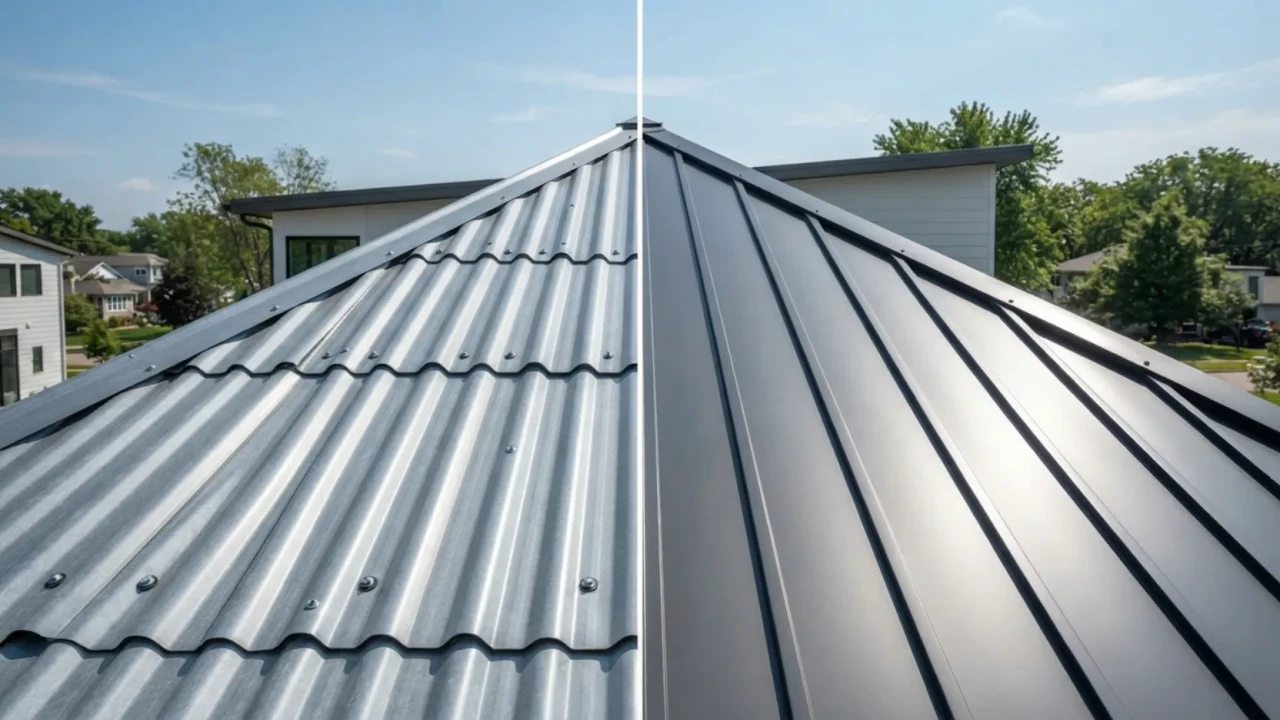
Corrugated and ribbed steel panels (exposed fastener): These are the go-to choice for garages, workshops, and agricultural buildings in San Antonio. The wavy or ribbed profile adds structural strength, and the panels install quickly with exposed screws through the face of the panel. Material cost runs $2 to $5 per square foot for the panels alone; installed cost with labor in San Antonio runs $5 to $12 per square foot. The exposed fasteners are the one maintenance point on these panels: the EPDM rubber washers under each screw will eventually degrade and require inspection every 10 to 15 years.
Standing seam panels (concealed fastener): Standing seam panels interlock at the raised seam and are fastened to the roof deck through a hidden clip system, with no exposed fasteners anywhere on the panel face. This makes them significantly more weather-resistant and virtually maintenance-free once installed. The trade-off is cost: installed standing seam on a garage in San Antonio runs $9 to $16 per square foot. For a two-car garage, that is roughly $4,000 to $8,000 versus $2,800 to $5,500 for exposed-fastener panels.
For most garage applications in San Antonio, 26-gauge ribbed or PBR panels hit the best combination of price, durability, and appearance. The thicker gauge compared to 29-gauge corrugated gives you better resistance to hail denting and wind uplift, and the cost difference between 29-gauge and 26-gauge is usually only $1 to $2 per square foot installed. On a two-car garage that difference amounts to $500 to $1,000 total, which is worth paying for a roof you expect to last 40 or more years in the San Antonio climate.
| Panel type | Installed cost (per sq ft) | Fastener system | Best for |
|---|---|---|---|
| 29-gauge corrugated steel | $5 to $8 | Exposed screws | Budget garages, agricultural buildings, low-traffic areas |
| 26-gauge ribbed / PBR panels | $7 to $12 | Exposed screws | Most residential garages and workshops in San Antonio |
| 24-gauge standing seam | $9 to $16 | Concealed clips | Higher-end garages, garage apartments, attached garages matching the home |
| Stone-coated steel shingles | $10 to $18 | Concealed nails | Garages where appearance must match an asphalt-shingle home |
| Aluminum panels (corrugated) | $7 to $15 | Exposed screws | Coastal areas, near pools, or where salt exposure is a concern |
- Confirm the gauge: 26-gauge is the minimum recommended for a residential garage in San Antonio’s hail corridor
- Verify the Galvalume or paint coating warranty before signing a contract
- Ask whether the contractor is ordering direct from a manufacturer or through a distributor, which affects lead time and panel availability
- Confirm the panel color includes a reflective finish to reduce heat absorption in the Texas summer
- If matching an existing structure, request a physical sample of the panel color before installation begins
Labor and Prep
On any metal roof installation, the material cost is only half the story. Labor is the other half, and on smaller jobs like garages it often represents the larger share of the total bill. San Antonio roofing labor rates for metal panel installation run $3 to $8 per square foot depending on the panel type, roof complexity, and the size of the job. Standing seam panels require more time per square than exposed-fastener panels, which is why the labor rate is higher even when the material cost difference narrows.
The other cost variable that catches homeowners off guard is tear-off. If your garage currently has an existing asphalt shingle roof, that material has to be removed and disposed of before metal panels can be installed. Tear-off on a single-car garage roof typically adds $300 to $700 to the project total. A two-car garage adds $500 to $1,200. Some contractors offer to install metal roofing directly over existing shingles if there is only one layer and the decking is sound, which can save that tear-off cost, but you should confirm this option is appropriate for your specific roof before agreeing to it.
- Confirm whether tear-off is included in the quote or billed separately before signing
- Ask if underlayment is included: synthetic high-temp underlayment is the correct product for metal panels in San Antonio
- Verify the installer has specific metal panel installation experience, not just general roofing
- Confirm the decking condition: if the OSB or plywood sheathing is soft, damaged, or has existing rot, decking repairs will add $1 to $3 per square foot to the project
- Ask for a timeline: a standard two-car garage exposed-fastener roof should be completable in one to two full days
Cost Factors
A base quote for panels and labor is where the estimate starts, not where it ends. There are several additional line items that commonly appear on garage metal roof contracts in San Antonio, and knowing about them before you sign helps you compare quotes on equal footing. Some of these are unavoidable, like permits. Others depend on the condition of your existing structure.
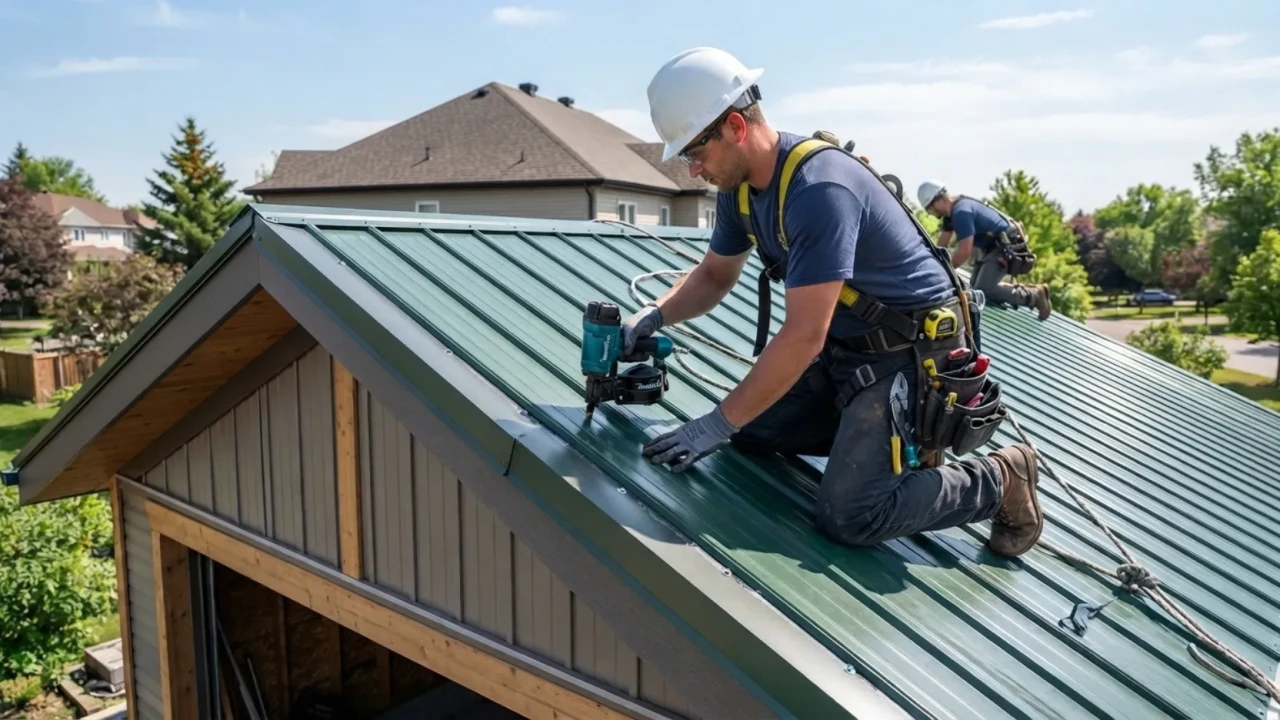
Permits: In San Antonio and most of Bexar County, a roofing permit is required for a full roof replacement, including on detached garages. The permit itself typically costs $100 to $300. A contractor who offers to skip the permit to save money is putting you at risk: an unpermitted roof can complicate insurance claims and home sales down the road.
Decking repairs: When the old roofing comes off, the contractor will inspect the decking underneath. Any soft spots, rot, or water-damaged sheathing needs to be replaced before new panels go on. This is one of the line items that is impossible to price exactly until the roof is open. A responsible contractor will note this possibility in the contract and give you a per-sheet or per-square-foot rate for any repairs needed.
Flashing and trim: Every edge of a metal panel roof needs a properly installed trim piece to keep water out: drip edge at the eaves, rake trim at the gables, and flashing wherever the roof meets a wall. These items are sometimes included in a base quote and sometimes billed separately. Read the scope of work carefully before signing.
When getting multiple quotes for your San Antonio garage metal roof, ask each contractor to break the estimate into three categories: materials, labor, and additional items (permits, flashing, underlayment, potential decking repair). This makes quote comparison much more accurate than comparing lump-sum totals. A quote that looks $400 cheaper than the competition may not include the permit, the underlayment, or the drip edge, which will all appear as change orders once the job starts.
- Building permit: confirm whether the contractor pulls it or whether you are responsible
- Decking repair rate: get a per-sheet price in writing before work begins, not a surprise invoice at the end
- Drip edge and rake trim: confirm these are included in the base quote
- Gutter handling: confirm whether gutters need to come down and whether re-hanging is included
- Ridge cap material: confirm it matches the panel profile and is included in the materials quote
- Disposal: confirm dumpster or haul-off for old roofing material is part of the project scope
Quote Guide
Getting an accurate quote for a garage metal roof in San Antonio comes down to three things: requiring a physical site visit before the estimate, asking for a written scope of work that specifies materials by type and gauge, and comparing at least three quotes side by side. Homeowners who skip any one of these steps consistently end up paying more than expected or dealing with a roof that was not installed to the standard they thought they were paying for.
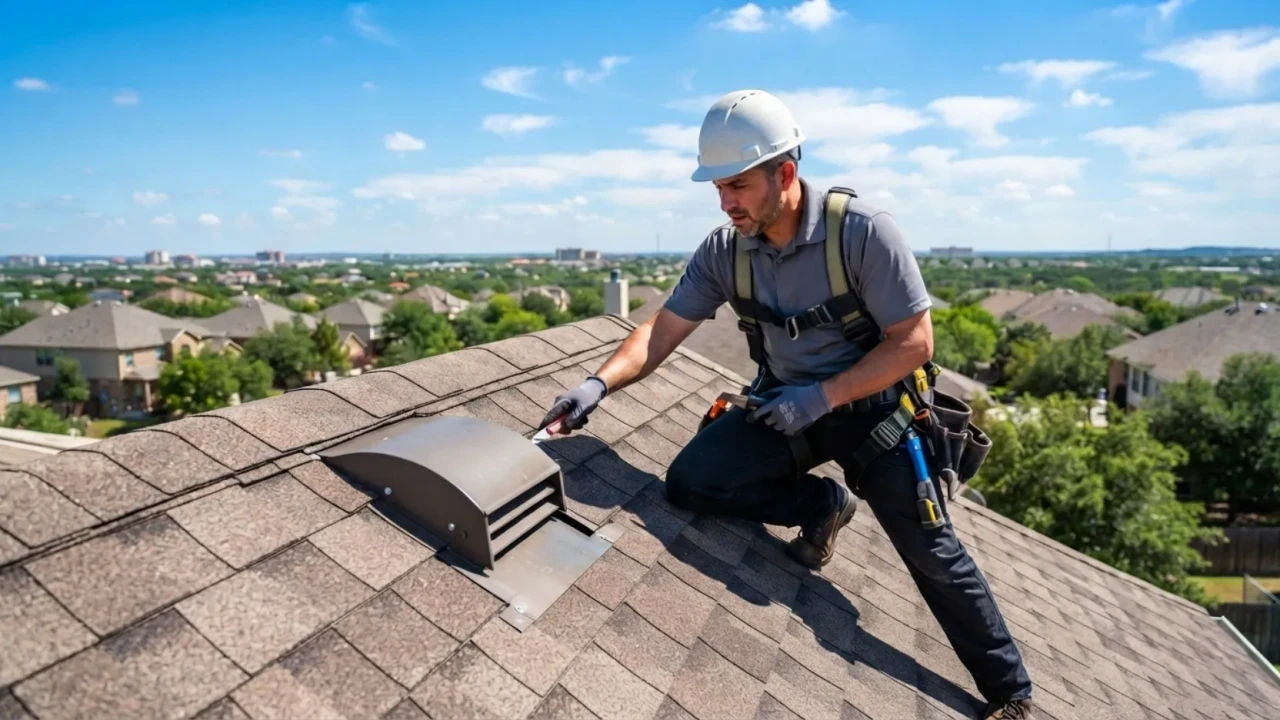
Require a site visit: Every quote that involves a contractor physically measuring the roof and inspecting the decking condition will be more accurate than one given over the phone based on the footprint of the garage. Garage roofs often have small complexities that are not obvious from the ground: a slight hip at one end, a vent pipe that requires custom flashing, or a section of damaged decking that needs to be priced into the estimate.
Specify the material in writing: A quote for “metal roofing” is not complete. The written scope should state the panel profile (corrugated, ribbed, or standing seam), the gauge (26 or 24 for a garage in San Antonio’s hail zone), the brand or supplier, and the color. Without these details, a contractor can substitute cheaper material after the contract is signed and the quote comparison is meaningless.
- Contractor visited the site and measured the roof before providing the estimate
- Quote specifies panel type, gauge, brand or supplier, and color
- Underlayment type and manufacturer specified in the written scope
- Tear-off cost broken out as a separate line item if applicable
- Permit listed as a separate cost item with the contractor responsible for pulling it
- Workmanship warranty specified: minimum two years, five years or more is better
- Texas roofing license number and certificate of insurance provided before any deposit is paid
The ranges below reflect current San Antonio market pricing as of 2026. Every project varies based on roof pitch, existing condition, access, and material availability. Use these figures for initial budgeting, then confirm actual numbers with a written quote from a licensed contractor who has inspected the roof.
| Project type | Typical total cost (San Antonio) | Panel type assumed | What is included |
|---|---|---|---|
| Single-car garage, budget install | $1,500 to $3,200 | 29 to 26-gauge corrugated or ribbed steel | Panels, ridge cap, drip edge, rake trim, underlayment, labor |
| Single-car garage, mid-range | $2,500 to $4,500 | 26-gauge ribbed PBR panels | Panels, all trim and flashing, synthetic underlayment, labor, permit |
| Two-car garage, corrugated steel | $2,800 to $5,500 | 26-gauge corrugated or PBR | Panels, ridge cap, all trim, underlayment, labor |
| Two-car garage, standing seam | $4,000 to $9,000 | 24-gauge standing seam steel | Panels, concealed clip system, all trim and flashing, labor, permit |
| Three-car or oversized garage | $5,500 to $14,000+ | 26 to 24-gauge, varies | Full installation, all trim, underlayment, labor; scope varies significantly |
| Tear-off of existing asphalt shingles | $300 to $1,200 add-on | N/A | Removal of old material, disposal, decking inspection |
| Decking repair (per sheet of OSB) | $60 to $120 per sheet | N/A | Replacement of damaged or soft decking sections found during tear-off |
| Building permit | $100 to $300 | N/A | Required for roof replacement in most San Antonio jurisdictions |
- At least three written quotes received from contractors who visited the site and measured the roof
- Panel type, gauge, brand, and color specified in writing in every quote for an apples-to-apples comparison
- Texas roofing license number confirmed for each contractor you are considering
- Certificate of general liability insurance received and verified, minimum $1 million coverage
- Tear-off, underlayment, permit, and trim costs broken out as separate line items in the contract
- Workmanship warranty period stated in the contract: two years minimum, five years preferred
- Panels arriving on site match the gauge and brand specified in the contract; inspect the delivery
- Synthetic underlayment installed before any panels go down
- Drip edge and rake trim installed at all edges before panel installation begins
- Fasteners driven at correct torque: rubber washers fully compressed but not over-driven
- Decking damage discovered during tear-off documented and approved before repair begins
- All flashing installed with appropriate sealant at every penetration and wall intersection
- Completed roof inspected and any issues noted before final payment is released
- All job site debris removed, including metal scraps, old fasteners, and cut panel ends
- Permit final inspection completed and signed off if required by local jurisdiction
- Warranty documentation received with contractor contact information and coverage terms
- Panel color and gauge noted in your home improvement records for future reference
How much does it cost to install a metal roof on a two-car garage in San Antonio?
Is it worth putting a metal roof on a garage?
Can metal roofing be installed over existing shingles on a garage?
What is the best metal roofing for a garage in San Antonio?
How long does it take to install a metal roof on a garage in San Antonio?
Do I need a permit to install a metal roof on my garage in San Antonio?
Get a free metal roof estimate for your San Antonio garage
Tell us your garage size, your current roofing material, and what you are looking for. We will measure it, give you a clear written estimate, and answer every question before any work begins.
[/et_pb_code][/et_pb_column][/et_pb_row][/et_pb_section]