
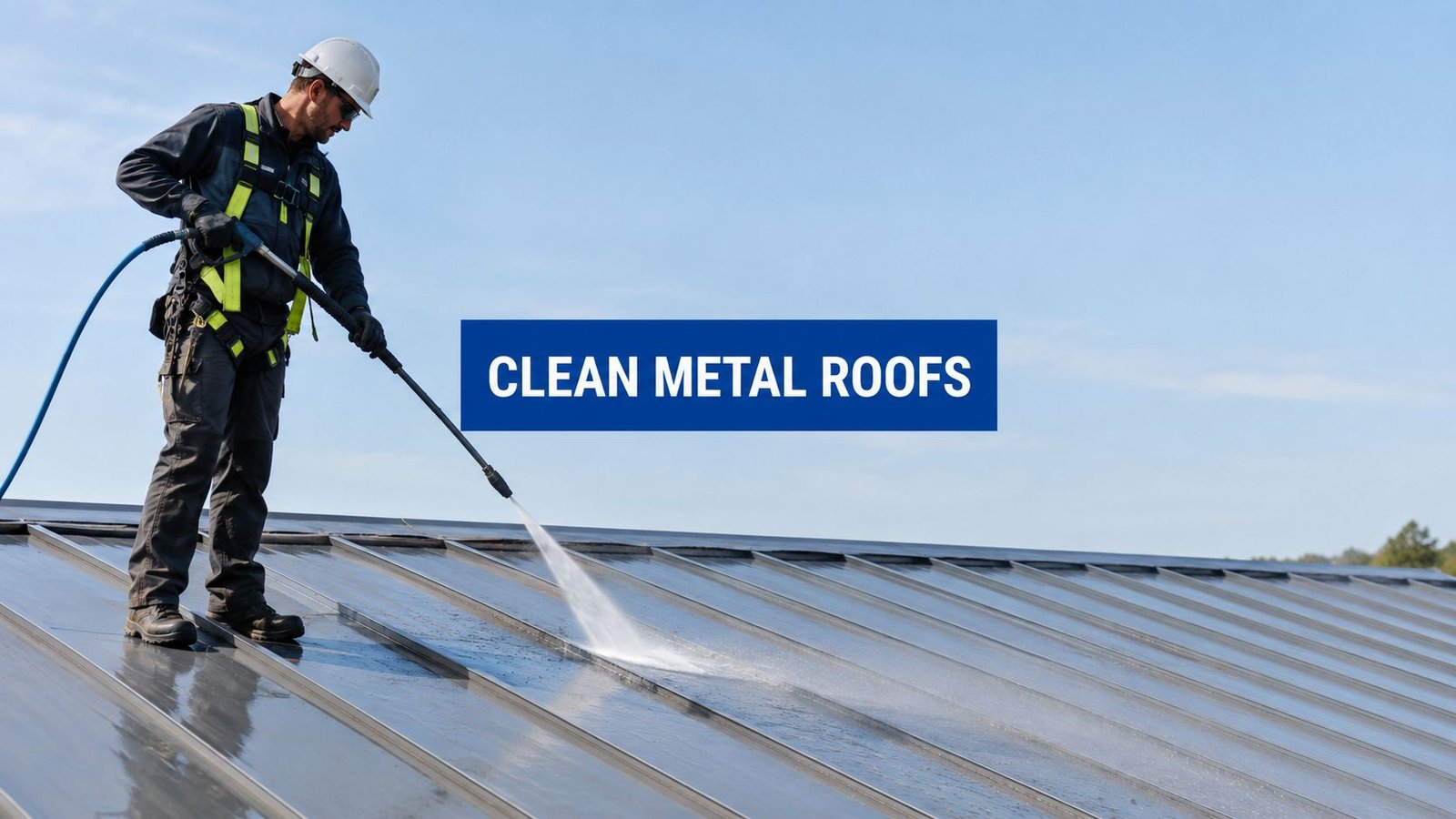
A San Antonio metal roof takes a daily beating from intense Texas sun, dust, pollen, heavy rain, and occasional hailstorms. By the time dark streaks, bird droppings, or oak debris become obvious from the driveway, many homeowners reach for a pressure washer. That's where a simple cleaning job can turn into coating damage, leaking seams, or a warranty problem.
Learning how to clean metal roofs safely means treating the finish as part of the roofing system, not as a surface that can handle unlimited force. The right approach uses approved cleaners, soft tools, controlled water, and a careful inspection before anyone climbs a ladder.
Table of Contents
- Why Metal Roofs Need a Gentler Cleaning Approach
- Inspecting Your Roof Before You Touch It
- The Safe Cleaning Process From Start to Finish
- Choosing Between Soft Washing and Low Pressure Rinsing
- When to Call a Professional Instead of DIY
- How Often to Clean and What Protects Your Warranty
- Key Takeaways and When to Schedule an Inspection
Why Metal Roofs Need a Gentler Cleaning Approach
A San Antonio homeowner once watched a well-meaning pressure washer clean standing-seam panels in less than an hour. The roof looked brighter at first, but the water had stripped sections of the painted finish and pushed moisture toward seams and fasteners. What started as an appearance issue became a coating and corrosion concern.
Painted steel and aluminum panels rely on a factory-applied finish. Copper develops a natural patina instead of a painted coating, but it still deserves controlled cleaning. Harsh chemicals can weaken finishes such as Kynar, while scratches expose metal to oxidation and rust, especially in the humid conditions that follow South Texas rain.
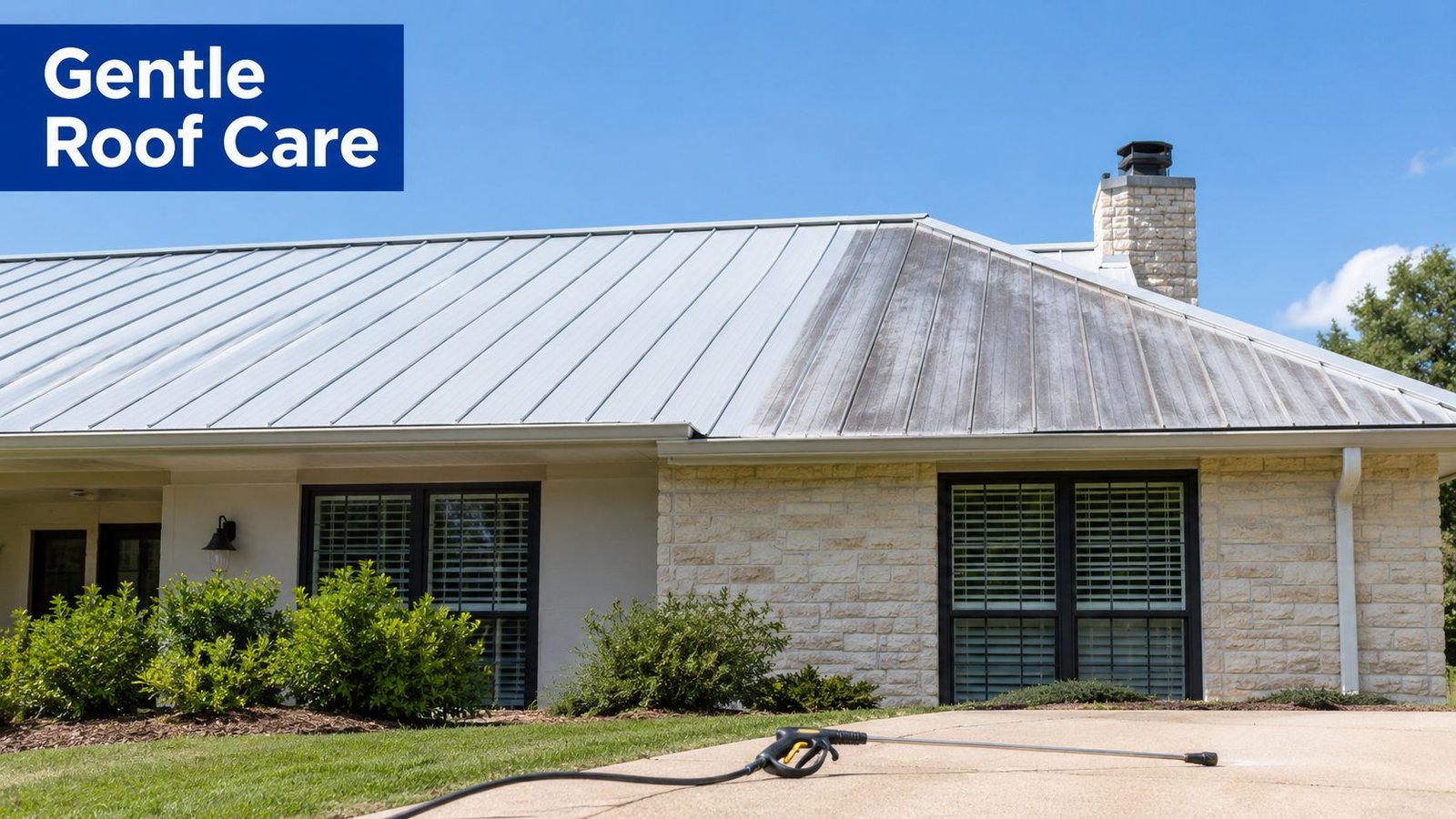
Warranty-first rule: A clean roof isn't a successful job if the cleaning method damages the finish that protects the panels.
Manufacturer care documents commonly restrict abrasive tools, unapproved solvents, steel wool, and aggressive washing methods. Sheffield Metals' cleaning guidance recommends removing loose debris first, using mild detergent, allowing a short dwell period, and rinsing thoroughly while avoiding wire brushes and abrasives.
The practical lesson is straightforward. Gentle cleaning takes more control, but it protects the coating, reduces the chance of streaks and corrosion, and gives you better documentation if a finish issue later requires warranty review.
Inspecting Your Roof Before You Touch It
Start from the ground. Walk around the house and use binoculars if necessary. Look for loose or backed-out fasteners, lifted seams, popped screws near vents and chimneys, visible rust spots, fading, chalking, or streaks that suggest the coating is breaking down.
Check the roof edges next. Gutter separation along the eaves can let rinse water move where it shouldn't, while debris collected in valleys can hide standing water or damaged panels. Look closely at flashing and sealant around chimneys, skylights, plumbing penetrations, and wall transitions. Cracked or separated sealant should be addressed before washing.
An attic check can reveal problems that aren't visible from outside. Look for damp insulation, daylight around penetrations, stained roof decking, or recent evidence of leaks. A useful overview of the areas a professional evaluates appears in this roof inspection guide.
Read the care instructions first
Find the panel manufacturer, product name, and finish information if they're available. The maintenance document should identify approved cleaners, prohibited chemicals, rinsing requirements, and any pressure or tool restrictions. Keep that information with your maintenance records.
Before using water, also check for overhead power lines, brittle plumbing boots, skylights, and the roof pitch. Standing-seam panels can become slick with only a thin film of water, and a wet ladder setup creates a serious fall hazard.
Stop before cleaning if you find loose panels, active leaks, lifted seams, widespread rust, failed flashing, or damaged fasteners. Cleaning won't correct a structural or water-shedding problem.
Homeowners shouldn't climb a roof unless they have the training, equipment, and conditions needed to do so safely. If the inspection reveals damage, schedule repair first. Washing over a defect can spread water into the assembly and make the original issue harder to diagnose.
The Safe Cleaning Process From Start to Finish
Work from the ridge toward the eaves so runoff moves in one direction. Begin by removing loose leaves, twigs, pollen, and dust with a soft-bristle push broom or a leaf blower on a low setting. Keep the tool from scraping seams, trim, or fasteners.
Use a cleaner approved for the specific panel finish. For routine painted metal roofs, a commonly repeated baseline is 1/4 cup of mild detergent per gallon of water, followed by a 5 to 10 minute dwell time, as described in metal roof cleaning guidance. Apply the solution with a pump sprayer or soft applicator, and never let it dry on the surface.
A wide-angle garden-hose nozzle is usually the safer rinse choice for light soil. Hold the nozzle several feet away and rinse downward, not upward into laps, seams, flashings, or fasteners. The objective is to carry loosened residue away without forcing water beneath the panels.
Treat stains without grinding at them
Mildew, pollen film, and bird deposits may need a second application. Use a soft microfiber mitt, sponge, or very soft-bristled brush with light pressure. Don't use a scrub pad, wire brush, steel wool, or abrasive powder.
Low-slope roofs may need a slightly stronger detergent mixture for heavy deposits. One technical guide discusses approximately 1/3 cup of detergent per gallon of water for that condition, while still emphasizing low-pressure application, ridge-to-eave work, and immediate rinsing. Review these metal roof cleaning tips before choosing products for a stubborn surface.
Finish at the gutters. Flush gutters and downspouts so detergent, organic debris, and loosened grime don't sit against the drip edge overnight. Avoid cleaning in direct midday heat, because rapid drying can leave streaks and concentrated residue on the finish.
Choosing Between Soft Washing and Low Pressure Rinsing
Soft washing and low-pressure rinsing both reduce the damage risk associated with consumer pressure washers, but they solve different cleaning problems.
Soft washing applies a cleaning solution at low pressure, allowing the chemistry to loosen algae, mildew film, and bonded organic residue. Roof-cleaning guidance defines soft washing as generally below 500 PSI at the nozzle and notes that sodium hypochlorite is often paired with surfactants in concentrations around 1% to 6% for this type of work. Those chemicals require careful handling, plant protection, controlled runoff, and confirmation that the panel manufacturer permits them.
Low-pressure rinsing uses plain water and a wide fan to remove loose dust, pollen, and light surface film. It's a good choice when the roof needs a seasonal rinse rather than stain treatment. It won't dissolve established organic growth as effectively as an approved cleaning solution, but it reduces chemical exposure and is easier to control.
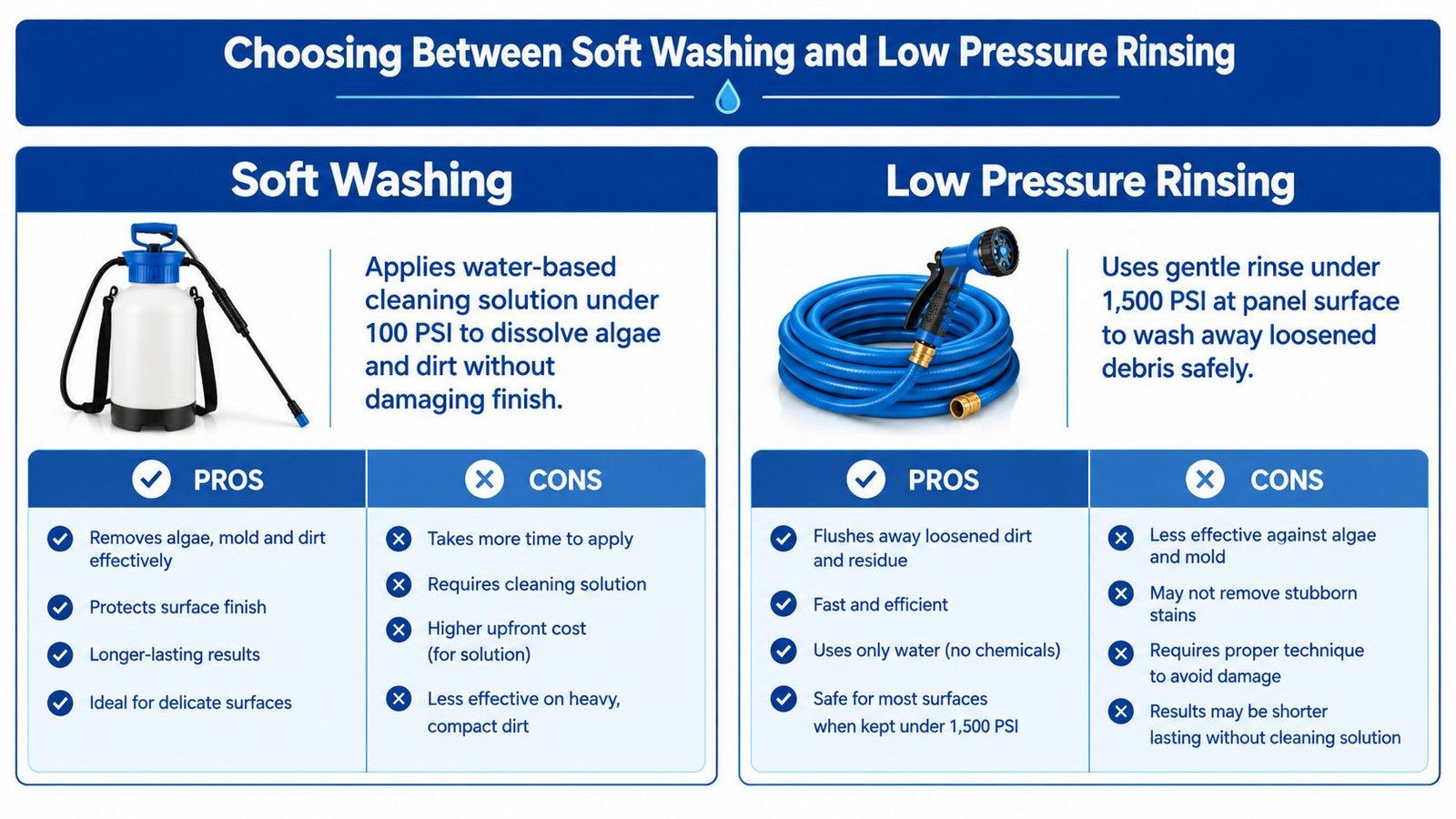
Match the method to the stain
A pressure washer may exceed 1,500 PSI and can damage painted finishes when the nozzle is too close or the spray is aimed beneath seams. By contrast, a neutral industry guide recommends avoiding pressure above 500 PSI for metal roof cleaning and warns against bleach, abrasive cleaners, and wire brushes. Read the Pine Country Window Cleaning roof care resource for another practical explanation of low-impact roof cleaning.
Use plain-water rinsing for loose material. Consider soft washing only when staining remains after gentle rinsing, and only with a product approved for the panel finish. A New Zealand metal roofing code permits low-pressure water blasting up to 20 MPa, while other trade guidance recommends much lower contractor washing ranges, including 1,200 to 1,900 PSI, a 25 to 40 degree nozzle, and a wand held 3 to 4 feet from the surface. Because these recommendations vary, the manufacturer's instructions and the condition of the coating should control the decision.
When to Call a Professional Instead of DIY
Most metal roof cleanings aren't good DIY projects. Two-story homes, steep pitches, skylights, standing seams, and damp panels create fall hazards that don't disappear because the cleaning solution is mild.
A trained crew can bring calibrated soft-wash equipment, fall-arrest gear, soft-soled footwear, and detergents selected for the panel finish. They can also identify loose fasteners, failed sealant, rust at cut edges, and damaged flashing before water hides those conditions.
DIY may make sense in limited conditions
A homeowner might reasonably handle ground-level gutter cleaning or a light rinse on a low-slope porch when the work can be completed without roof access. A single-story ranch roof may also be manageable for someone with proper fall protection, stable access, and genuine experience working on roof surfaces.
Even then, don't rely on a box-store pump sprayer and guess at the chemical mix. Confirm the finish, test a hidden area if the manufacturer permits testing, protect landscaping, and keep all runoff away from walls, windows, electrical equipment, and neighboring property.
A roof can look clean and still be damaged. Pressure marks, stripped paint, corrosion at fasteners, and water forced under seams may not appear until later.
Call a professional when staining is widespread, the coating is chalking, rust is visible, the roof is slippery, or the manufacturer's instructions are unclear. A warranty review may ask what product, pressure, tool, and technique were used. If the cleaning method conflicts with the written care requirements, the manufacturer may decline a finish-related claim.
How Often to Clean and What Protects Your Warranty
San Antonio roofs collect a mix of cedar pollen, live oak tassels, dust, bird residue, and rain-borne grime. Summer ultraviolet exposure can also make an aging finish more vulnerable to chalking and fading. Cleaning should respond to the roof's surroundings, not follow a rigid calendar that ignores visible buildup.
A practical maintenance rhythm is a light rinse about every six months and a deeper soft wash about once a year, especially where spring rain leaves tannin staining or mildew film. These intervals are maintenance recommendations, not a substitute for the panel manufacturer's instructions.
Keep a simple maintenance record
The record should identify the date, weather conditions, product name, dilution, application method, rinse method, and any areas that weren't cleaned. Take photos before and after the work. Keep invoices, product labels, manufacturer documents, and notes about repairs in one folder.
| Task | Recommended Frequency | Why It Matters for Warranty |
|---|---|---|
| Remove leaves and loose organic debris | About every six months, or sooner when buildup is visible | Reduces trapped moisture and documents routine care |
| Rinse light dust and pollen | Seasonally, based on site conditions | Limits residue without unnecessary chemical use |
| Address mildew or tannin staining | About once a year when present | Prevents aggressive scrubbing later and records approved treatment |
| Inspect fasteners, seams, and flashing | During each maintenance visit | Separates cleaning concerns from repair conditions |
| Save photos, product details, and notes | Every time work is performed | Creates useful evidence if a finish claim is reviewed |
Avoid bleach, muriatic acid, steel wool, wire brushes, abrasive cleaners, and unapproved solvents. Guidance for coated systems consistently emphasizes mild detergent, soft tools, top-down rinsing, and immediate removal of residue. For broader facility upkeep ideas, these practical roof care tips can help property owners organize maintenance records.
For a San Antonio-specific maintenance discussion, review how often metal roofs need maintenance. Warranty terms vary by product, so the written manufacturer requirements always take priority over general advice.
Key Takeaways and When to Schedule an Inspection
Safe cleaning comes down to protecting the finish before chasing appearance. Keep water moving downward, use gentle tools, and stop whenever the roof condition raises a structural or fall concern.
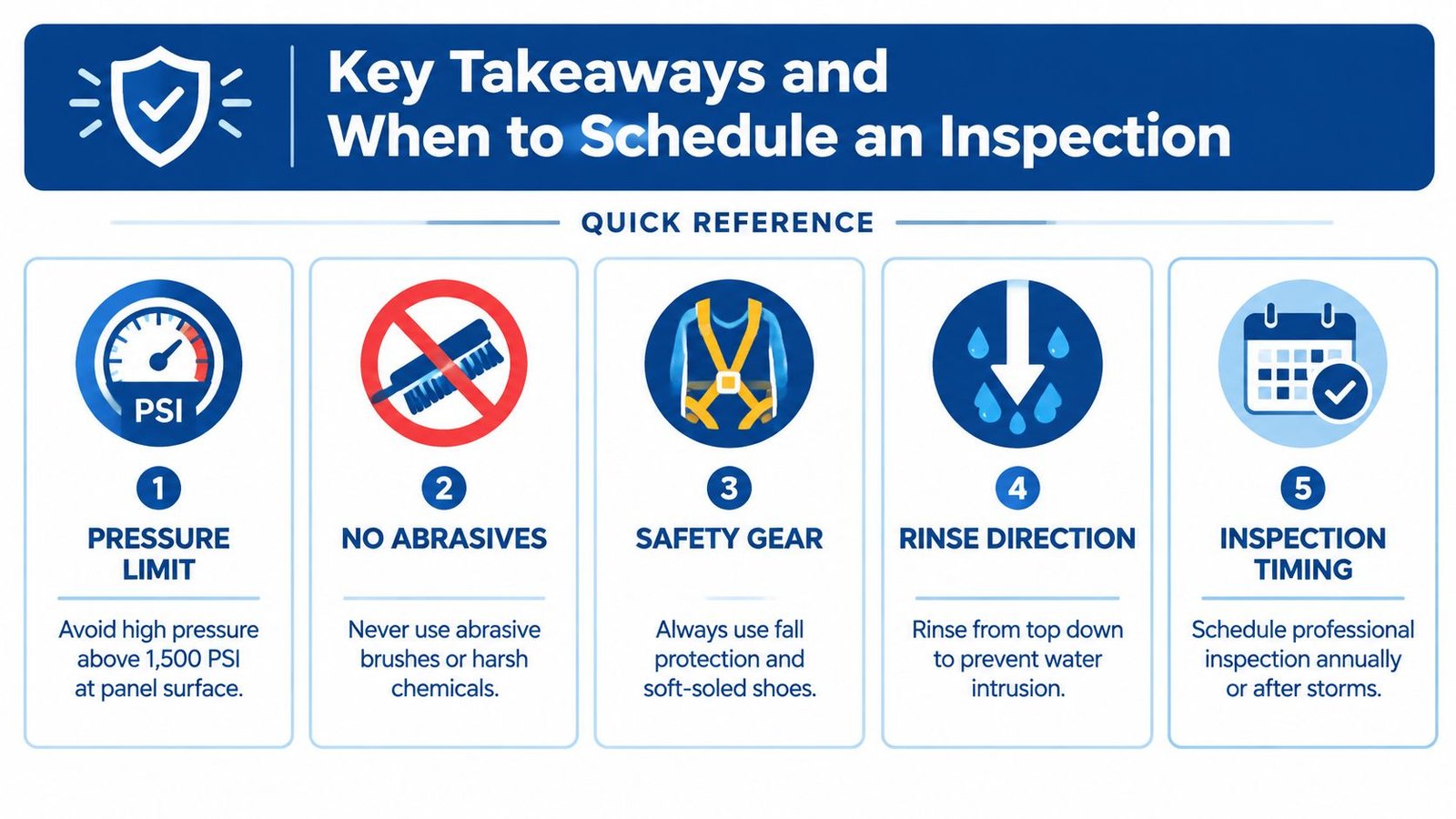
Five rules worth keeping nearby
- Control pressure: Avoid high pressure above 1,500 PSI at the panel surface, and follow the lower limits stated by the panel manufacturer.
- Skip abrasives: Never use abrasive brushes, steel wool, muriatic acid, or unapproved harsh chemicals.
- Protect yourself: Use proper fall protection and soft-soled shoes, and don't climb a wet or unstable roof.
- Rinse top down: Keep runoff moving from ridge to eave so it doesn't enter seams, laps, or fasteners.
- Document the work: Photograph the roof before and after cleaning, and record every product and method used.
Schedule an inspection if you see chalking, fading, oxidation streaks, rust, loose fasteners, or post-storm debris. An inspection also makes sense before a property sale, refinance appraisal, or whenever you want preventive care. Some homeowners choose a review every 18 to 24 months, particularly when the roof is difficult to access or exposed to heavy tree debris.
A professional evaluation can determine whether the coating still has useful life, whether the roof only needs cleaning, or whether repairs and recoating deserve attention. Don't assume an insurance claim will be approved, because coverage depends on the policy, documented damage, and the carrier's review.
RRSATX provides free roof inspections, metal roof cleaning guidance, repairs, replacements, and storm-damage evaluations for San Antonio homeowners and property owners. Visit RRSATX to request an on-site evaluation, or call 713-504-2341 before a cleaning mistake turns into coating or leak damage.