
Metal roofing · San Antonio, Texas
What Are the Pros and Cons of Metal Roofing?
A plain-language look at what metal roofing does well, where it falls short, and what to confirm in writing before you choose it.
The short answer
Metal roofing’s main pros are long life, low upkeep, fire resistance, and reflective finishes that cut heat gain; its main cons are a higher upfront price and the need for careful installation. A federal building guide says metal roofing tends to cost more than asphalt shingles but can last up to 50 years or more. [1] Whether those pros outweigh the cons depends on your budget, how long you plan to stay, and the specific panel, gauge, and installer.
What are the real advantages of a metal roof?
The strongest advantages are durability, low maintenance, fire resistance, and the option of a reflective finish.
The Building America Solution Center, a U.S. Department of Energy resource run by Pacific Northwest National Laboratory, says metal roofs are durable, low maintenance, and can be repainted, and that a metal roof can last up to 50 years or more. [1] The same guide says the common metals are steel, aluminum, and copper, and that they are either naturally corrosion-resistant or made corrosion-resistant to code-referenced standards. [1]
Heat. Metal panels are available with reflective coatings to reduce heat gain during the cooling season. [1] The EPA explains that a cool roof with high solar reflectance stays cooler and can reduce the energy a building uses for cooling. [3] In a hot climate like South Texas, the color and coating you choose matter as much as the metal itself.
Fire. Metal roofs are generally considered a fire-resistant roof covering, but the guide notes they usually need a noncombustible deck or fire-resistant underlayment for the whole assembly to qualify as Class A. [1]
Hail. Manufacturers rate products for impact resistance, and heavier-gauge metal resists hail damage better than lighter-gauge metal. [1] In Texas, a roof covering rated Class 4 for impact receives the highest premium credit, though each insurance company sets its own discount. [4]
Recycling. The Metal Roofing Alliance, a metal roofing trade group, says metal roofs can be recycled at the end of their life and can often be installed over an existing roof. [2] Treat trade-group claims as the industry’s view and check what the specific product documents say.

What RRSATX recommends
Ask for the panel type, metal, gauge, coating, and impact rating in writing, and compare those details, not just the word metal. Our guide to which metal roofing benefits hold up checks each claim in more detail.
What are the drawbacks of metal roofing?
The biggest drawbacks are the upfront price, the need for skilled installation, and cosmetic dents on thinner panels.
Upfront cost. Metal roofing tends to cost more than asphalt shingles. [1] This guide does not list prices, because they change with the panel, the roof, and the market; ask for written estimates that name the exact system. For a cost framework, see whether a metal roof is cheaper than shingles over time.
Installation. Wind can lift metal panels when clips or fasteners are placed wrong; the federal guide shows panels lifted because clips were set too far from the eave, and it calls for installation to the manufacturer’s instructions and the building code. [1] That makes the installer’s experience with the specific system a real part of the decision.
Dents. Large hail or falling branches can dent metal, and lighter gauges dent more easily than heavier ones. [1] A dent may be cosmetic rather than a leak, but it can affect appearance and, depending on your policy, how a claim is handled.
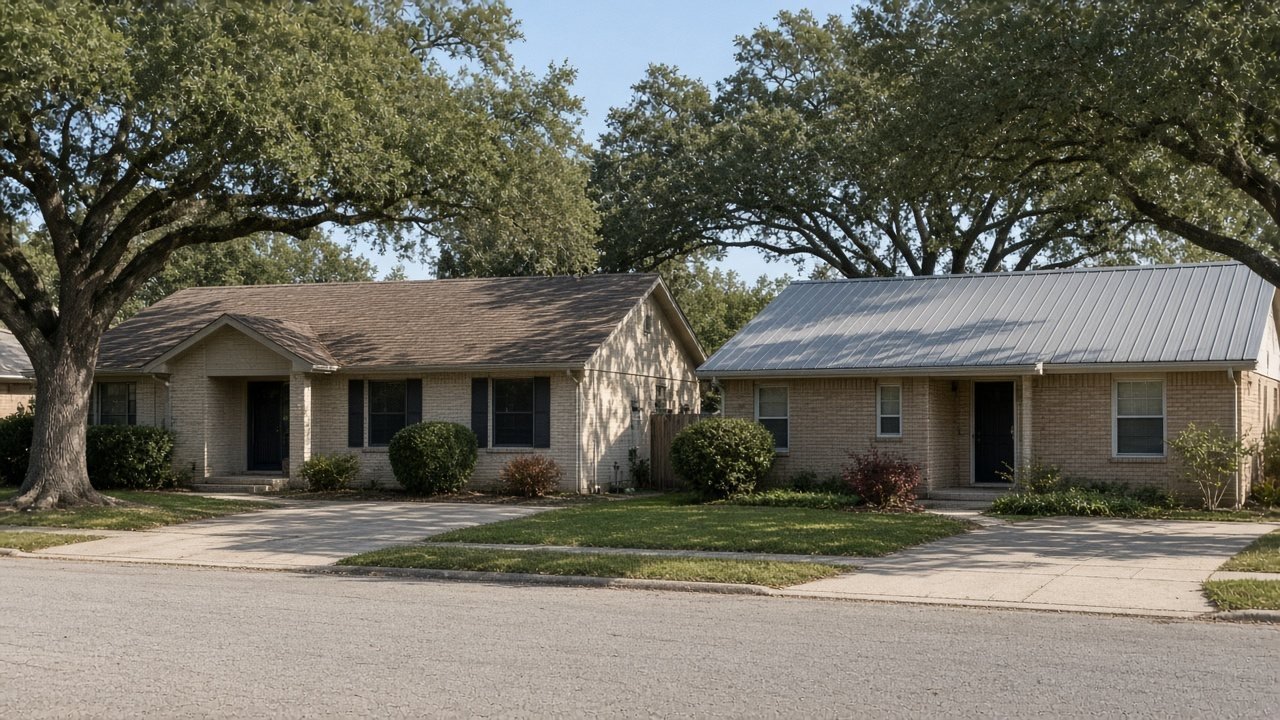
Noise. Many homeowners worry about rain noise. The Metal Roofing Alliance says there is little difference between metal and other materials when it comes to noise from rain or hail. [2] How a roof sounds also depends on the deck and underlayment under it, so ask what will go under the panels.
How do the pros and cons compare side by side?
Each advantage comes with a condition you should confirm in writing.
| Topic | Advantage | Limit | What to ask |
|---|---|---|---|
| Lifespan | Can last up to 50 years or more [1] | Depends on metal, coating, and installation | Which metal, coating, and manufacturer documents apply? |
| Heat | Reflective coatings reduce heat gain [1] | Dark or uncoated finishes reflect less | What is the coating’s solar reflectance? |
| Fire | Generally fire-resistant [1] | Class A usually depends on the deck or underlayment | What fire class does the full assembly carry? |
| Hail | Heavier gauges resist damage better [1] | Thin panels can dent | What gauge and impact rating are quoted? |
| Cost | Fewer replacements if it lasts | Costs more upfront than shingles [1] | Is the estimate for standing seam or exposed fasteners? |
| Noise | Trade group says little difference [2] | Depends on deck and underlayment | What goes under the panels? |
For a wider comparison of the two most common choices, read whether metal roofing is better than shingles.
Who is metal roofing a good fit for?
Metal tends to fit owners who plan to stay a long time and can cover a higher upfront price.
- You plan to stay in the home long enough to benefit from a longer service life.
- You want a reflective finish to reduce heat gain on a sunny roof.
- Your roof slope and framing suit the panel system you are considering.
- You can compare written estimates for the same panel, gauge, and coating.
Metal may be a weaker fit if you expect to sell soon, need the lowest upfront price, or cannot find an installer who can show experience with the system you want. Asphalt shingles remain a common alternative; see asphalt roofing options.
What RRSATX recommends
If you are leaning toward metal, compare at least two systems, such as standing seam and an exposed-fastener panel, in writing before you decide. Our metal roofing page lists the types RRSATX installs.
What about permits and insurance?
Any roof replacement in San Antonio needs a permit, and your insurer sets any discount.
The City of San Antonio says a permit is required for repairing or replacing a roof, and that a homeowner can obtain it or hire a registered Home Improvement Contractor. [5] If you are considering a Class 4 metal roof partly for insurance, ask your insurer about its discount before you sign, because each company sets its own amount. [4]
Next steps: what you can do, and what needs a pro
Do the research and paperwork yourself; leave roof access to a roofer.
You can safely:
- Decide how long you plan to stay in the home.
- Ask your insurer about any impact-rated roof discount.
- Collect written estimates that name the panel, metal, gauge, and coating.
- Confirm who will pull the city permit.
Leave to a roofer: walking the roof, checking the deck and slope, and measuring for panels. RRSATX offers a free roof inspection with a photo report and a written estimate.
Local roofing service
About Affordable Roofing Contractors San Antonio
Affordable Roofing Contractors San Antonio, also known as RRSATX, is a father-and-son roofing business owned by Ted. Ted has 40 years of hands-on roofing experience. The company carries $2 million in liability insurance coverage. It offers free roof inspections and leak inspections, with no fee and no obligation, provides a photo report after the inspection, and gives a free written estimate before any work starts. If storm damage is involved, RRSATX can help as your roofer, not your adjuster: it can document damage and prepare an estimate, but it cannot act as a public insurance adjuster or negotiate a claim for you. [6] RRSATX provides a written workmanship warranty; this guide does not state its terms.
- Phone
- (713) 504-2341
- sales@affordableroofingcontractorssanantonio.com
- Address
- 4324 Monterey St, San Antonio, TX 78237
- Contact
- Request a free roof inspection
Metal roofing pros and cons: questions answered
How long does a metal roof last?
A federal building guide says a metal roof can last up to 50 years or more; the actual life depends on the metal, coating, and installation. [1]
Is a metal roof louder in the rain?
The Metal Roofing Alliance says there is little difference between metal and other materials for rain or hail noise. [2] The deck and underlayment also matter.
Does metal roofing dent from hail?
It can. Heavier-gauge metal resists hail damage better than lighter gauges, and products carry impact ratings. [1]
Does a metal roof lower insurance?
It may. In Texas, a Class 4 impact-rated roof covering receives the highest premium credit, but each insurer sets its own discount. [4]
Can a metal roof go over shingles?
The Metal Roofing Alliance says metal roofs can often be installed over an existing roof. [2] Code and deck condition decide whether that is allowed on your house, so have the roof inspected first.
Request a free roof inspection
Call or use the contact form. You get a photo report and a written estimate before any work starts.