
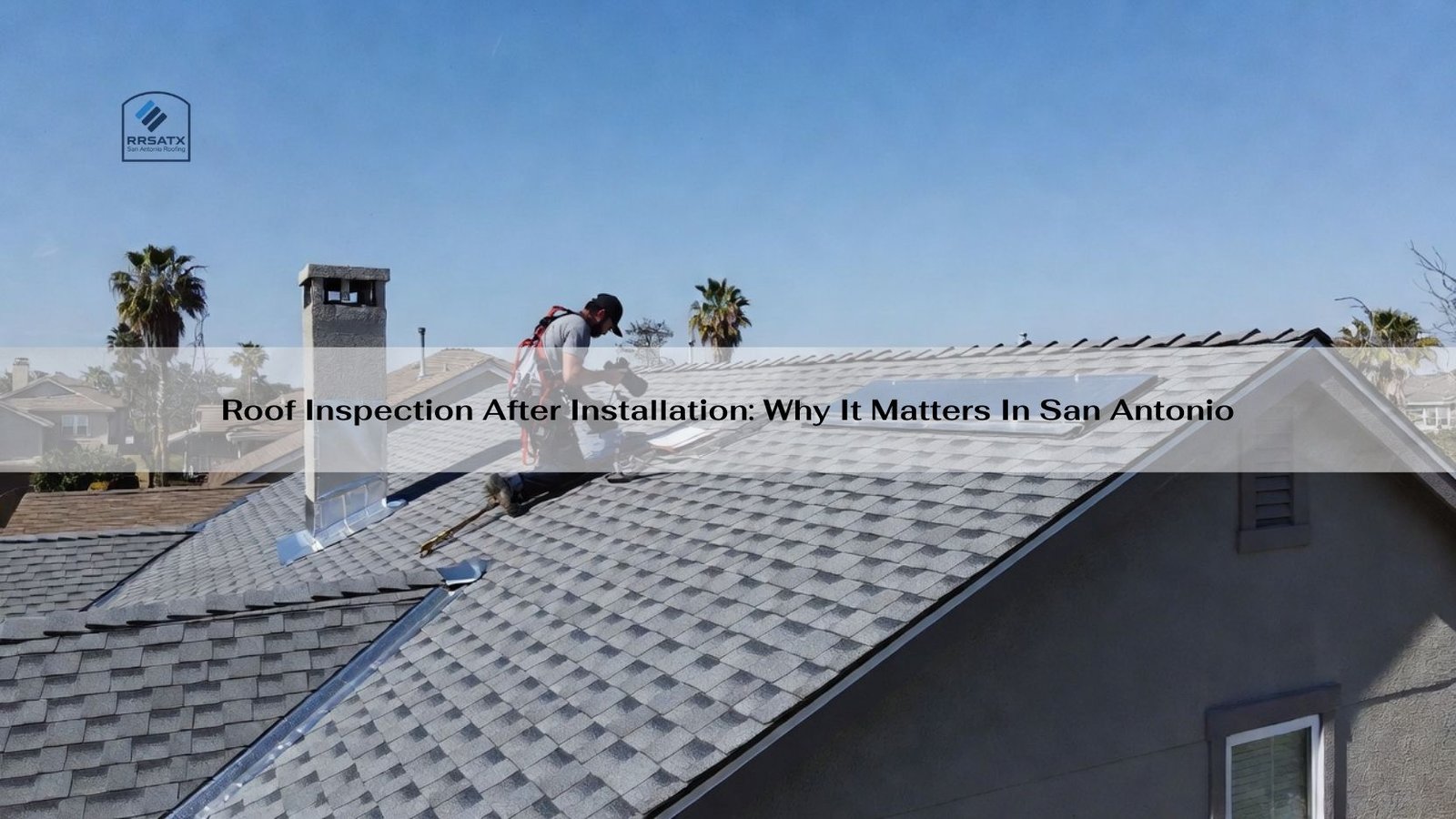
After years of inspecting newly installed residential and commercial roofs across San Antonio, I’ve seen one consistent issue: many problems show up immediately after installation, not years later. A post-installation inspection protects your investment and ensures the work meets manufacturer and building standards.
A roof inspection after installation verifies proper workmanship, confirms materials were installed correctly, protects your warranty, and identifies early issues before they turn into costly repairs.
If you just replaced your roof, here is what you need to know.
Do You Really Need A Roof Inspection After Installation?
Yes. A post-installation inspection is strongly recommended even if the project looks complete.
Even experienced crews can miss:
- Improperly sealed shingles
- Exposed fasteners
- Poor flashing installation
- Ventilation gaps
- Nail pops
- Debris in gutters
In San Antonio’s high-heat climate, small installation mistakes can become major failures within one summer.
Key takeaway: A second review ensures the roof performs as designed.
What Does A Roof Inspection After Installation Include?
A proper inspection evaluates both visible workmanship and structural components.
Exterior Inspection Checklist
- Shingle alignment and sealing
- Flashing around chimneys and vents
- Ridge cap installation
- Drip edge placement
- Proper nail pattern
- Clean debris removal
Interior Inspection Checklist
- Attic ventilation
- Insulation condition
- Signs of moisture intrusion
- Light penetration through decking
Inspectors should also take photo documentation for records and warranty support.
Who Should Perform The Post-Installation Inspection?
Ideally, a third-party or senior supervisor should review the completed project.
Options include:
- Company quality-control supervisor
- Independent roofing inspector
- Insurance adjuster (for claim-based jobs)
- Municipal building inspector (if permit required)
In areas like Monterey St or Nakoma Dr, city permits may require final approval depending on project scope.
Independent inspections provide added peace of mind for high-value homes or commercial buildings.
How Soon Should You Schedule A Roof Inspection After Installation?
Schedule the inspection immediately after completion before final payment if possible.
The best time is:
- Within 1–7 days of installation
- Before heavy rainfall
- Before manufacturer warranty registration
Early inspections make corrections easier while crews and materials are still on-site.
Can A Roof Fail Even If It’s Brand New?
Yes, poor installation is one of the leading causes of premature roof failure.
Common early failures include:
- Shingles blowing off in moderate wind
- Flashing leaks during first storm
- Improper ventilation causing attic heat buildup
- Misaligned underlayment
In San Antonio’s climate, attic temperatures can exceed 140°F in summer. Poor ventilation accelerates shingle deterioration.
Key takeaway: Installation quality matters more than material brand.
Does A Post-Installation Inspection Protect Your Warranty?
Yes. Many manufacturer warranties require proper installation verification.
There are two main warranties:
1. Workmanship Warranty
Covers installation errors
Provided by contractor
2. Manufacturer Warranty
Covers material defects
Requires proper installation standards
Improper nailing patterns, incorrect underlayment, or missing components can void coverage.
Keep:
- Inspection reports
- Photos
- Permit approvals
- Written warranty documentation
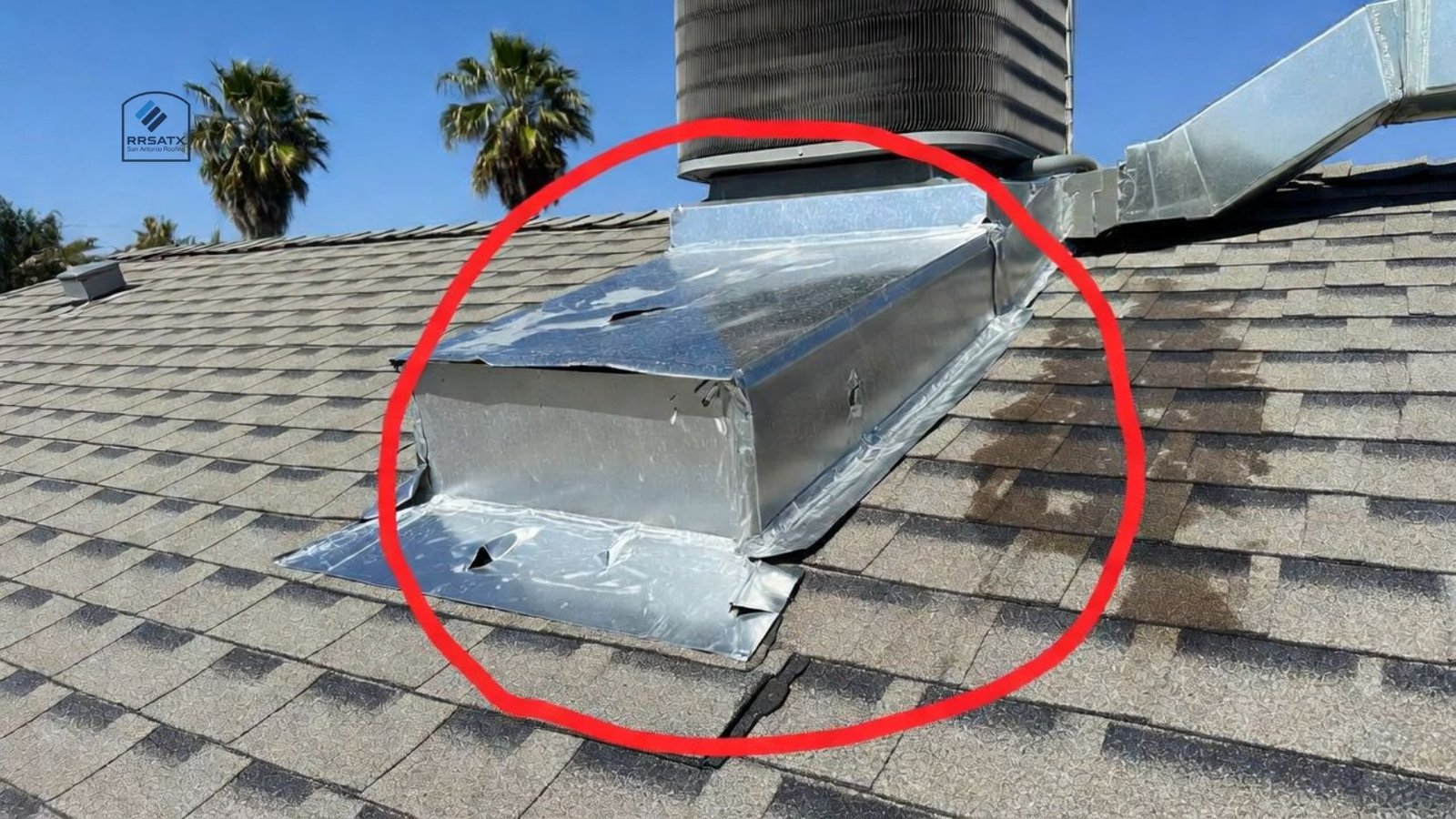
What Problems Are Most Common After Roof Installation In San Antonio?
Based on local inspections, the most frequent issues include:
- Incorrect flashing around HVAC penetrations
- Inadequate attic ventilation
- Overdriven or underdriven nails
- Ridge cap misalignment
- Failure to replace damaged decking
High winds and heat in Bexar County amplify these small errors quickly.
How Much Does A Roof Inspection After Installation Cost?
Most post-installation inspections range from $150 to $400 depending on roof size and complexity.
For insurance-related or commercial inspections, costs may be higher.
Considering a roof replacement in San Antonio can cost $6,000–$15,000+, inspection is a small protective investment.
Is A Roof Inspection Required When Selling A Home?
While not always required, it is strongly recommended during real estate transactions.
Buyers often request:
- Roof age verification
- Warranty transfer documentation
- Condition reports
- Storm damage history
A documented inspection can prevent delayed closings or price renegotiations.
FAQs
Can I Inspect My Own New Roof?
You can visually check from the ground, but a professional inspection identifies technical installation errors.
What Happens If Issues Are Found After Installation?
Reputable contractors should correct installation errors under workmanship warranty.
Does Insurance Require A Post-Installation Inspection?
Not always, but it helps protect claim documentation and prove proper repairs were completed.