

[et_pb_section fb_built=”1″ admin_label=”section” _builder_version=”4.16″ global_colors_info=”{}”][et_pb_row admin_label=”row” _builder_version=”4.16″ background_size=”initial” background_position=”top_left” background_repeat=”repeat” global_colors_info=”{}”][et_pb_column type=”4_4″ _builder_version=”4.16″ custom_padding=”|||” global_colors_info=”{}” custom_padding__hover=”|||”][et_pb_code _builder_version=”4.27.7″ _module_preset=”default” hover_enabled=”0″ sticky_enabled=”0″]
A well-maintained roof in San Antonio is not just about avoiding leaks. It is about protecting your home against 100-degree summers, sudden hailstorms, and the slow damage that builds up when small problems go unnoticed. This complete guide covers every maintenance task, the right schedule for Texas conditions, what to watch for after storms, and how to know when a repair has become a replacement situation.
Most San Antonio homeowners think about their roof twice: when they move in and when something goes wrong. The problem with that approach is that San Antonio is one of the hardest places in the country on residential roofing. Summer temperatures push attic spaces past 160 degrees Fahrenheit, which accelerates shingle granule loss and dries out sealant joints. Hailstorms arrive with little warning and can shred an aging roof in minutes. Flash flooding backs up gutters and forces water under eaves. And the transition from scorching summer heat to sudden cold fronts in winter puts thermal stress on every fastener, panel, and flashing on the roof.
A properly maintained roof weathers all of that and lasts 25 to 50 or more years depending on the material. A neglected roof in San Antonio routinely fails in 12 to 15 years. This guide walks you through every component of a solid roof maintenance program: what to inspect, when to inspect it, what to do after a storm, what maintenance tasks you can handle yourself, and when it is time to call a licensed San Antonio roofing contractor.
Every major roofing failure we see in San Antonio started as a small problem. A cracked piece of flashing around a chimney. A handful of missing granules after a hailstorm. A gutter clogged with live oak leaves that backed water up under the fascia board for six months. None of those problems is expensive to fix at the small stage. All of them become expensive when they are discovered after water has been working inside the roof deck. The entire purpose of a roof maintenance program is to find things at the small stage.
Inspection Schedule
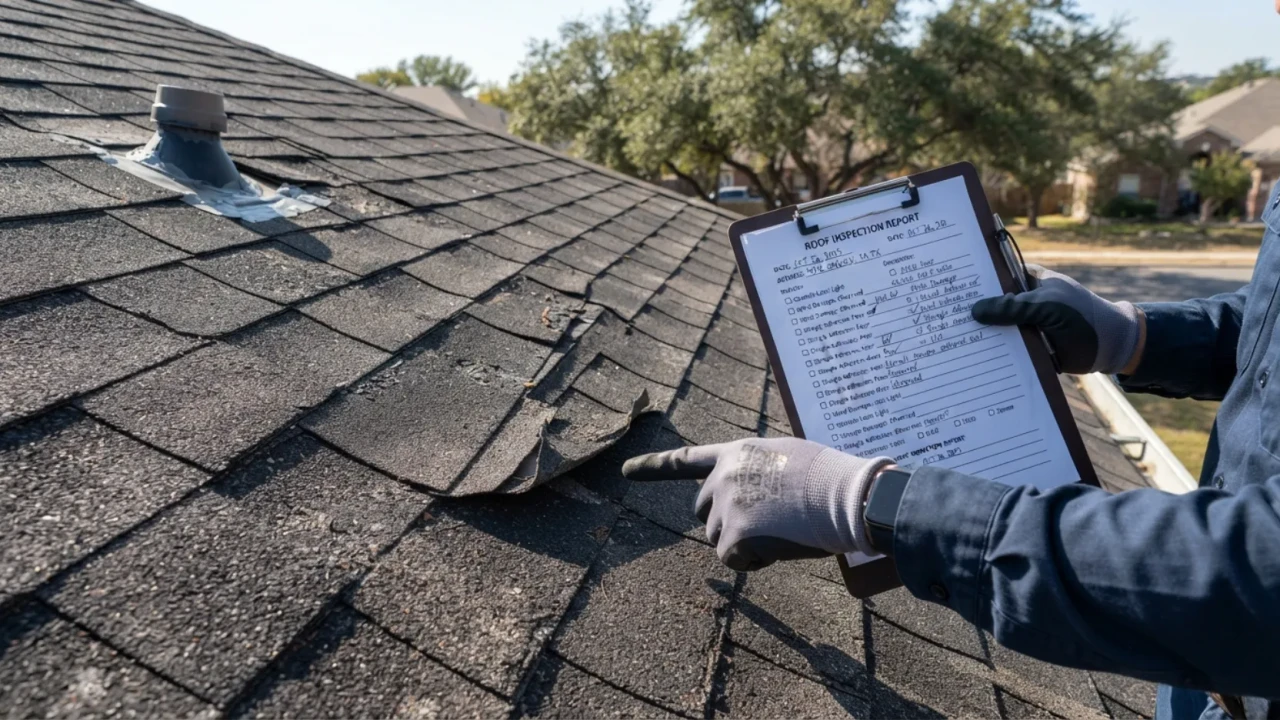
The national rule of thumb for roof inspections is once a year. In San Antonio, that is not enough. The combination of hail season from March through June, heavy rainfall in spring and fall, and extreme summer UV exposure means two scheduled inspections per year plus an unscheduled walkthrough after any significant storm event. The spring inspection catches winter wind damage and prepares you for hail season. The fall inspection catches summer UV damage and prepares your roof for the cooler, wetter months that follow.

Spring inspection (February to April): Focus on shingle condition after winter cold and wind, flashing at all penetrations, gutter condition, and any damage from winter storms or ice events. This is your last clear window before hail season peaks.
Fall inspection (September to November): Focus on granule loss after summer UV exposure, sealant and caulk condition around flashings, gutter cleaning before live oak drop season, and any damage from summer thunderstorms that may not have caused an immediate visible leak.
Post-storm inspection: After any hail event with golf-ball-sized hail or larger, or after winds above 60 miles per hour, schedule a professional inspection within 30 days. Many insurance policies have claim windows that expire if you wait too long.
- Spring inspection scheduled between February and April, before peak hail season begins
- Fall inspection scheduled between September and November, after the summer heat season
- Post-storm inspection arranged within 30 days of any significant hail or wind event
- Binoculars used for safe ground-level inspection of ridge, valleys, and flashings
- Professional roof assessment completed every 5 years with a written report and photo documentation
- All inspection findings documented with photos and dates for insurance purposes
Gutters and Drainage
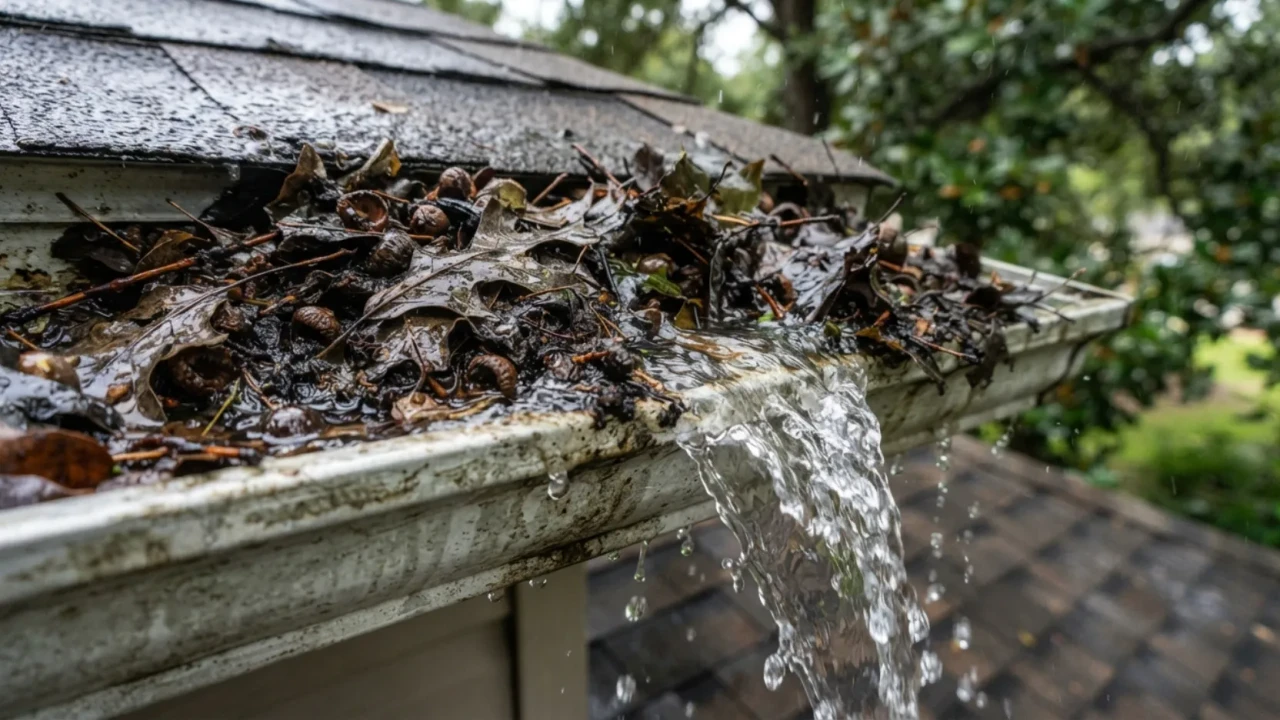
San Antonio is thick with live oak trees, and live oaks drop leaves, pollen, and small debris virtually year-round. That debris fills gutters faster than almost any other tree species. A clogged gutter does not just look bad it creates a dam that forces water back under your fascia board, into your soffit, and eventually into your roof deck. It also creates a habitat for moss and algae growth at the eave line, and in cooler months it can trap enough water to freeze and force shingles upward.
In San Antonio, gutters need cleaning at minimum twice a year: once in late spring after the oak pollen season and once in late fall after the main leaf drop. Homes with heavy tree coverage may need quarterly cleaning. Downspout extensions should direct water at least four feet away from the foundation.
Gutter guards are popular but not a maintenance replacement in San Antonio. Most gutter guard products reduce debris entry but do not eliminate it. Live oak pollen and small particles get through almost every product on the market. Gutter guards reduce cleaning frequency from twice a year to once a year in most San Antonio homes, but the gutters still need to be inspected and cleaned annually. The payback on gutter guards is real in heavy tree coverage situations, but they are not a set-it-and-forget-it solution.
- Gutters cleaned at least twice per year: late spring after oak pollen and late fall after leaf drop
- Downspouts flushed clear at each cleaning debris packs at the first bend and blocks drainage
- Gutters checked for sag and confirmed to slope at least 1/4 inch per 10 feet toward the downspout
- Downspout extensions verified to discharge water at least 4 feet from the foundation
- Fascia board inspected for water staining or soft spots behind gutter hangers
- Gutter seams and end caps checked for separation the most common source of gutter leaks
Flashing and Sealants
If you could only maintain one part of your San Antonio roof, it should be the flashings and sealant joints. Flashing is the thin metal that seals the transitions between your roofing material and any vertical surface or penetration: chimneys, vent pipes, skylights, dormers, HVAC curbs, and the valleys where two roof planes meet. Sealant is the caulk and butyl tape that fills the gaps where flashing meets the roofing material and where roofing components overlap.
San Antonio’s temperature swings are brutal on both. Metal flashings expand and contract with temperature changes, working the sealant joints open over time. UV exposure breaks down every type of sealant including polyurethane, silicone, and butyl products. A flashing joint that was perfectly sealed at installation can be visibly cracked and open to water after five or six San Antonio summers.
During your twice-yearly inspection, look at every penetration on the roof from the ground using binoculars. What you are looking for: lifted or separated metal flashing, visible cracks in sealant, rust staining around metal flashing, and any point where water could sit against a transition. On the inside, check the attic ceiling directly below each penetration for water staining or mineral deposits left by dried moisture. Those marks reveal old leaks that may still be active in certain weather conditions.
- All vent pipe boots inspected for cracking or separation at the collar replace proactively at 12 to 15 years
- Chimney step flashing and counterflashing checked for separation and rust from ground level
- Skylight sealant inspected on all four sides top edge is most vulnerable to UV failure
- Valley flashing cleared of debris and checked for corrosion or lifted edges
- Drip edge verified to be tight against fascia along all eave and rake edges
- Attic inspected below each penetration for water stain rings or mineral deposits
Surface Condition
Asphalt shingles are the most common roofing material in San Antonio residential construction. They hold up well to Texas conditions when properly installed and maintained, but they do not last forever without attention. The first signs of aging granule loss, minor curling at the edges, and isolated cracking are manageable maintenance issues. The late-stage signs bald patches, widespread lifting, and visible bare mat are replacement indicators.
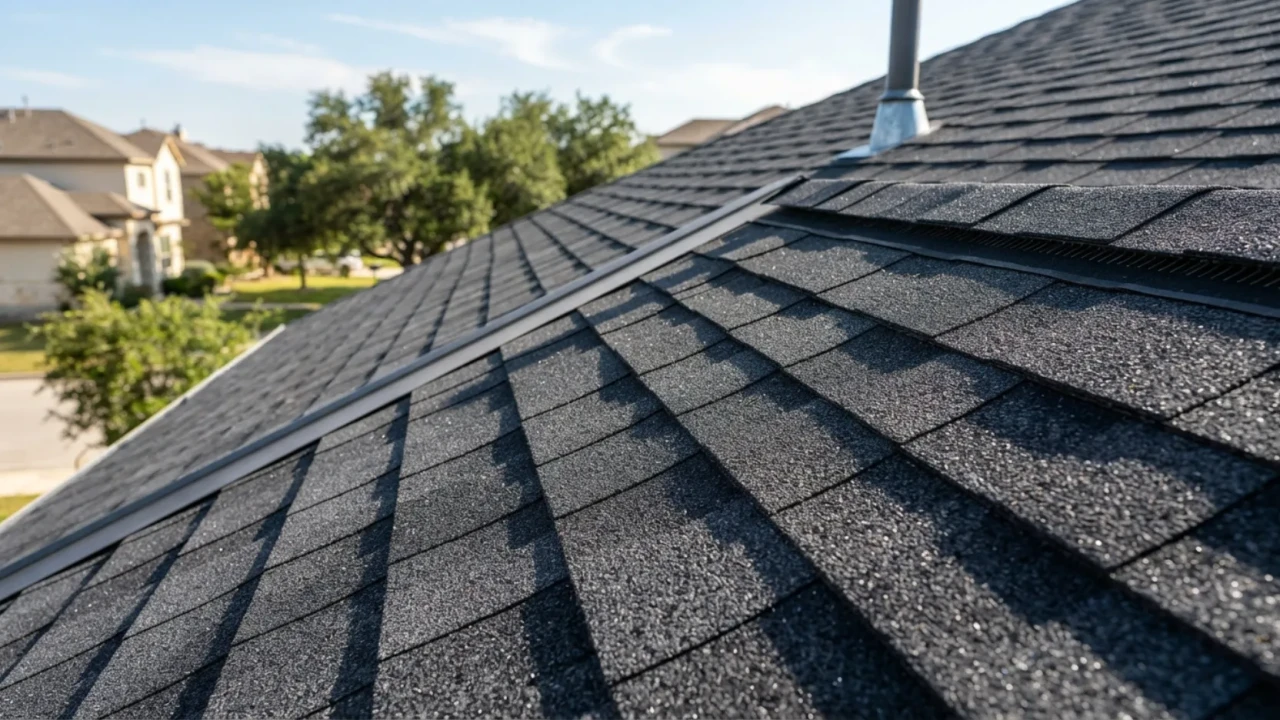
Granule loss: Asphalt shingles are coated in mineral granules that protect the asphalt from UV degradation. Check your gutters and downspout splash areas after rain. A small amount of granule shedding is normal on new shingles and on older shingles during normal wear. Heavy granule loss in the gutters, or visible bare patches on the shingle surface visible from the ground, means the UV protection has failed in those areas. Those sections are now aging significantly faster than the rest of the roof.
Curling and cupping: Shingles that curl upward at the edges (curling) or cup inward across the face (cupping) are responding to moisture imbalance or age-related brittleness. Isolated curling can sometimes be re-secured. Widespread curling across a roof plane is a strong indicator that replacement is coming within the next few years.
| Shingle condition | What it means | Recommended action | Urgency |
|---|---|---|---|
| Minor granule loss in gutters | Normal wear on an aging shingle | Monitor at each inspection no repair needed yet | Low |
| Heavy granule loss, bare patches visible | UV protection has failed in those areas | Professional assessment partial or full replacement discussion | Medium to high |
| One or two cracked or missing shingles | Localized damage from impact or wind | Replace individual shingles a straightforward repair | High open to water |
| Curling at shingle edges, isolated | Age-related or moisture imbalance | Reseal with roofing cement if shingle is still flexible | Medium |
| Widespread curling or cupping | End of service life approaching | Plan for replacement within 1 to 3 years | Medium schedule now |
| Missing shingles after a wind event | Wind nailing failure or age brittleness | Replace immediately exposed deck is vulnerable to next rain | Immediate |
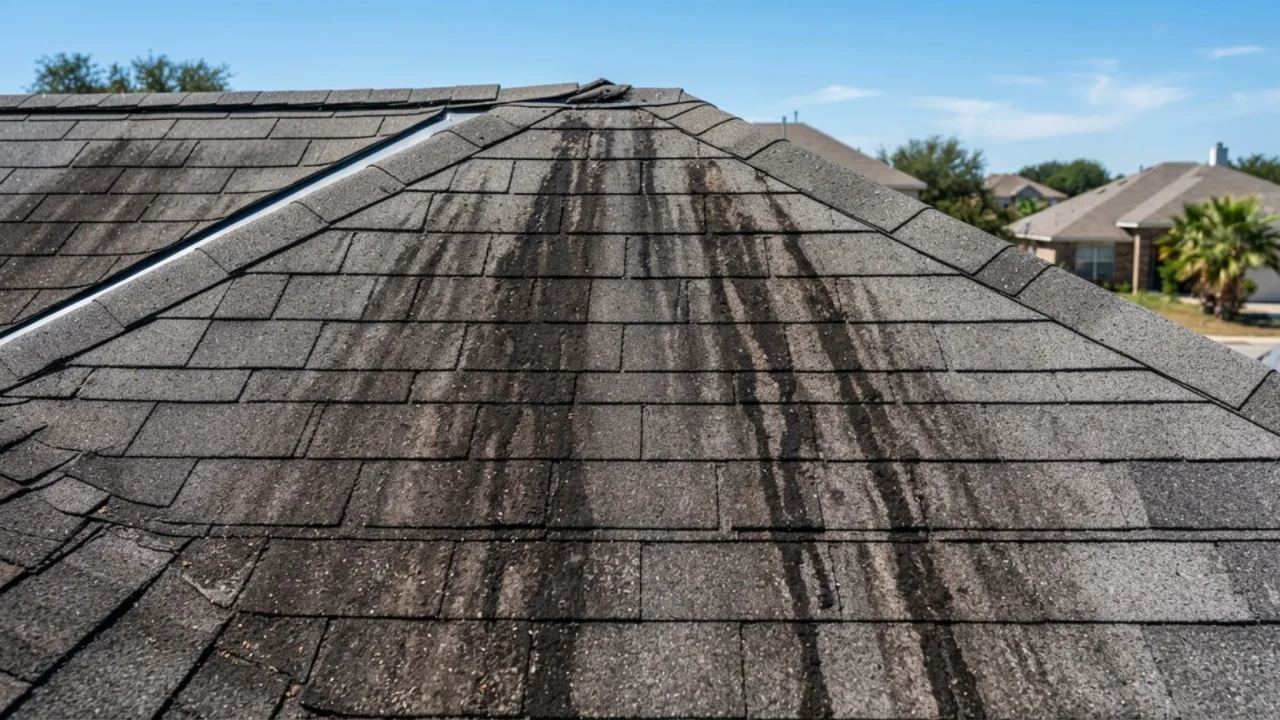
Dark streaks on your shingles are algae, not dirt, and they are treatable without replacing the roof. Gloeocapsa magma is an algae species common in humid Texas conditions. It feeds on the limestone filler in asphalt shingles and causes the black or dark gray staining you see running down many San Antonio roofs. It is ugly and it does accelerate shingle degradation over time, but it is treated with a diluted bleach and water solution applied from the ground with a garden sprayer. Never pressure wash asphalt shingles the force strips granules and voids most shingle warranties. Copper or zinc strips installed at the ridge line are a long-term algae prevention strategy worth considering during any re-roofing project.
- Gutters inspected for granule accumulation at each cleaning heavy accumulation signals accelerated wear
- Shingle surface scanned from the ground for bald patches, dark algae streaking, or visible mat
- Missing or visibly cracked shingles identified and repaired before the next rain event
- Curling or cupping shingles assessed isolated cases resealed, widespread cases escalated to contractor
- Algae staining treated with diluted bleach solution never pressure washed
- Ridge cap shingles checked for lifting or cracking these are the highest-wind-stress point on the roof
Storm Response
San Antonio’s storm season runs roughly March through October, with the peak hail and severe thunderstorm window from March through June. The response to a significant storm event is a process, and timing matters. Insurance policies have claim windows. Exposed roof decking deteriorates quickly in the Texas heat. And legitimate roofing contractors book up fast after a major storm event in Bexar County.
The goal of your first 72-hour response is not to fix everything it is to document the damage thoroughly, prevent any additional damage from entering the home, and start the insurance process if the storm qualifies for a claim.
- Ground-level exterior walkthrough completed and documented with dated photos within 24 hours of the storm
- Insurance company notified of the storm event within 48 hours note the date, time, and name of the representative
- Licensed San Antonio roofing contractor contacted for an independent assessment within 48 to 72 hours
- Emergency tarping arranged if any roof sections are open or actively leaking
- Any unsolicited door-to-door contractor proposals reviewed carefully get multiple bids before signing
- All repair and replacement work confirmed to be within the insurance claim window before scheduling

Ventilation and Attic
This is the part of roof maintenance that most San Antonio homeowners never think about until their shingles age out ten years too early. Attic ventilation is not just an energy efficiency issue it is a roofing material lifespan issue. When your attic reaches 160 degrees Fahrenheit on a July afternoon in San Antonio (and it will), that heat is cooking your shingles from the underside while the sun cooks them from the outside. Proper ventilation keeps that temperature closer to 120 degrees and extends the functional life of your roofing material significantly.
The standard for residential attic ventilation is one square foot of net free ventilation area for every 300 square feet of attic floor space, split evenly between intake at the soffits and exhaust at the ridge. Many older San Antonio homes were built without adequate soffit venting, which creates a one-way heat trap. Adding or improving soffit vents is one of the highest-return maintenance investments a San Antonio homeowner can make.
Beyond ventilation, the attic is your early warning system for roof problems. Every inspection should include a few minutes in the attic on a sunny day. Look upward: you should see no daylight through the decking or around penetrations. Look at the underside of the decking for water stains, mold, or soft spots in the plywood. Look at the insulation for wet or compressed areas, which indicate recurring moisture intrusion. Any of those signs warrant a professional roof inspection within the next 30 days.
Adding a radiant barrier to your San Antonio attic is one of the most cost-effective investments you can make in a hot climate. A radiant barrier is a foil-faced material stapled to the underside of the roof rafters. It reflects up to 97 percent of the radiant heat coming through the roof deck before it can heat the attic air. In San Antonio’s climate, homeowners typically recover the installation cost through lower cooling bills within three to five years. It also directly reduces the thermal stress on roofing materials and sealant joints, extending the service life of the roof above it.
- Attic inspected twice yearly for daylight through decking, water stains, and soft spots in plywood
- Soffit vents confirmed to be open and unblocked by insulation the most common ventilation failure in older San Antonio homes
- Ridge vent confirmed to be clear of debris and wasp nests insects block ridge vents seasonally
- Insulation checked for wet or compressed areas that indicate recurring moisture intrusion
- Attic ventilation rate assessed: 1 square foot of net free area per 300 square feet of attic floor
- Radiant barrier condition checked if installed foil should be unobstructed and not contact insulation
These ranges reflect real San Antonio market rates for professional roof maintenance services in 2026. Costs vary based on roof size, pitch, and the extent of work required. Routine maintenance costs are the best investment you can make to avoid the far larger expense of emergency repairs or premature replacement.
| Maintenance task | Typical cost (San Antonio 2026) | Recommended frequency | DIY friendly? |
|---|---|---|---|
| Professional roof inspection | $150 to $350 | Twice per year | Ground-level only hire a pro for on-roof |
| Gutter cleaning | $75 to $200 | Twice per year minimum | Yes single-story homes |
| Vent pipe boot replacement | $75 to $200 per boot | At 12 to 15 years or when cracked | Hire a pro roof access required |
| Flashing sealant reapplication | $150 to $400 | Every 5 to 7 years | Hire a pro flashing details are critical |
| Algae treatment (bleach wash) | $150 to $400 | As needed when staining appears | Yes from the ground with a sprayer |
| Individual shingle replacement | $150 to $400 per section | As needed after damage | Hire a pro matching and nailing pattern matter |
| Gutter repair or re-sloping | $200 to $500 | As needed when sag or separation appears | Basic repairs yes re-sloping is for a pro |
| Ridge cap re-sealing | $200 to $500 | Every 8 to 10 years | Hire a pro highest-risk location on the roof |
| Attic radiant barrier installation | $800 to $2,000 | One-time improvement | Hire a pro requires attic access and stapling |
| Emergency tarping after storm | $200 to $600 | After any major storm event | Hire a pro safety and proper installation critical |
- Ground-level visual inspection of all roof surfaces, ridges, and valleys with binoculars
- All flashings checked: chimney, vent boots, skylight, drip edge, valley
- Gutters cleaned and flushed after oak pollen season downspouts confirmed clear
- Shingle surface checked for granule loss, curling, cracking, or missing tabs
- Attic inspected: no daylight, no water stains, insulation dry and uncompressed
- Soffit and ridge vents confirmed open and unobstructed
- Post-summer shingle condition assessment: UV degradation, granule loss after heat season
- Sealant and caulk condition at all flashings and penetrations inspected for cracking
- Gutters cleaned before peak live oak drop season end caps and seams checked
- Ridge cap shingles checked for wind lift or cracking from summer heat cycling
- Downspout extensions confirmed in place for fall and winter rainfall season
- Attic ventilation rate confirmed adequate ahead of cooler, wetter months
- Ground-level exterior documented with dated photos within 24 hours
- Gutters and downspouts checked for damage and debris from the storm
- Dented or damaged flashings and drip edge identified from ground level
- Insurance company notified if hail was 1 inch or larger in diameter
- Licensed San Antonio roofing contractor contacted for professional on-roof assessment
- Emergency tarping arranged if any sections are open or actively leaking
- Full professional roof assessment with written report and photo documentation
- Attic ventilation rate confirmed and soffit vent coverage assessed
- Vent pipe boot condition assessed replacement recommended at 12 to 15 years regardless of visible condition
- Sealant at all flashings refreshed even if not visibly cracked proactive replacement beats reactive repair
- Remaining shingle service life assessed and replacement planning begun if under 5 years remain
How often should a roof be inspected in San Antonio?
What does roof maintenance cost per year in San Antonio?
Can I do my own roof inspection in San Antonio?
How do I know if my San Antonio roof needs to be replaced instead of repaired?
Does homeowners insurance cover roof maintenance in San Antonio?
How long do roofs last in San Antonio with proper maintenance?
Schedule a free roof maintenance inspection in San Antonio
Not sure what condition your roof is in? We will walk every inch of it, document what we find, and give you a clear maintenance plan at no cost. No pressure, no obligation.
[/et_pb_code][/et_pb_column][/et_pb_row][/et_pb_section]