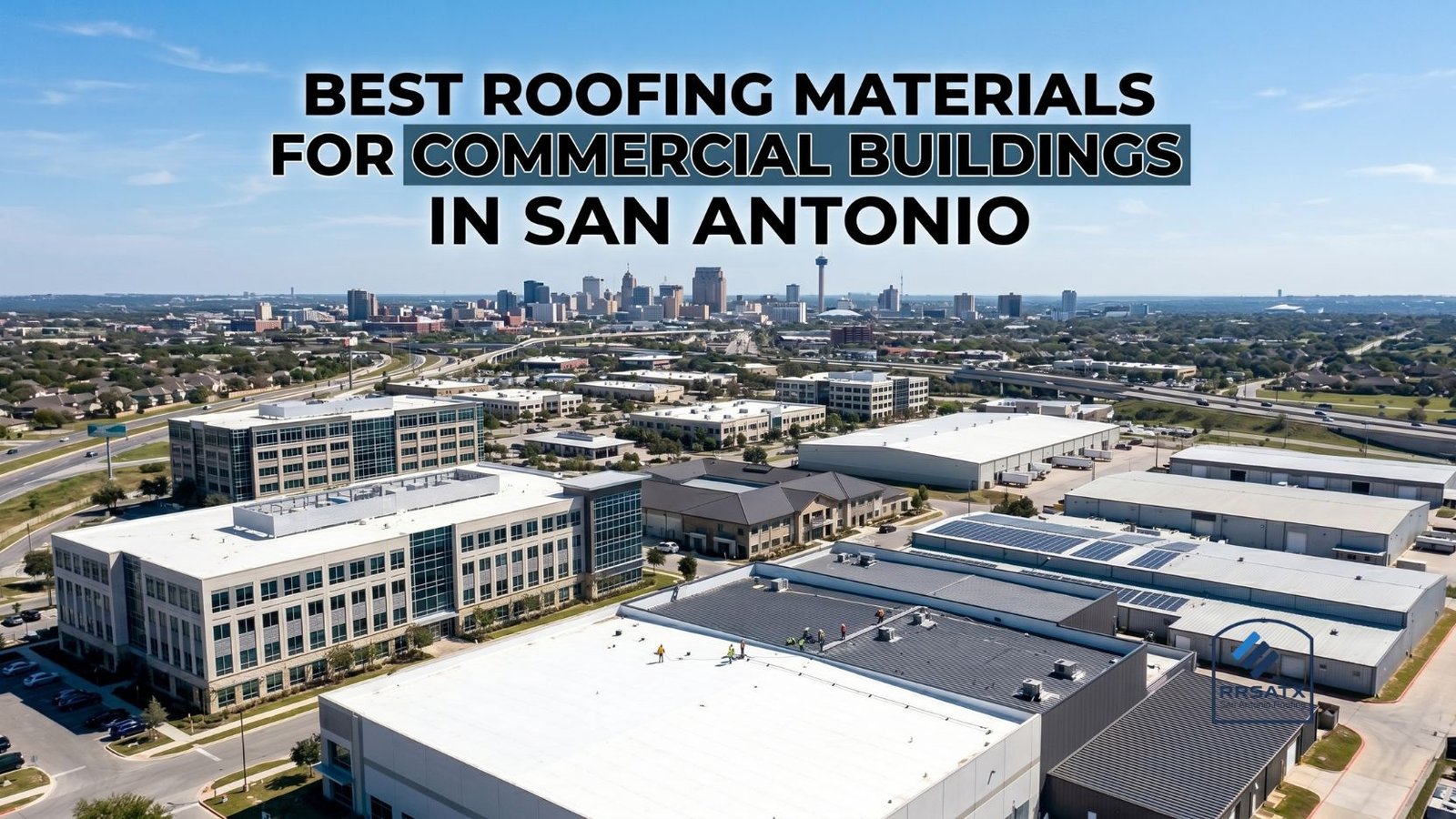
The best roofing materials for commercial buildings San Antonio are TPO membrane, modified bitumen, and metal roofing, each offering strong performance against South Texas heat, hail, and UV exposure. Choosing the wrong material can cost building owners tens of thousands in premature repairs, which is why this decision deserves careful, expert guidance.
At RRSATX: San Antonio Roofing Company, we work directly with commercial property owners across San Antonio to assess roofing systems that hold up in this specific climate not just on paper, but through years of real-world installation and inspection experience.
What Makes Commercial Roofing Different In San Antonio?
San Antonio’s climate puts commercial roofs under serious stress. Summer temperatures regularly exceed 100°F, UV radiation accelerates membrane degradation, and hailstorms between March and June can cause significant impact damage to low-slope systems.
Commercial buildings also differ from residential structures in key ways:
- Larger surface areas require materials with fewer seams and better waterproofing
- Flat or low-slope roofs are most common, requiring specific membrane systems
- HVAC units, skylights, and penetrations increase leak risk
- Building codes in Bexar County have specific fire and wind resistance requirements
Understanding these conditions is the first step to making the right material choice.
Which Commercial Roofing Materials Work Best In San Antonio?
TPO Membrane Roofing
TPO (Thermoplastic Polyolefin) is the most widely recommended material for flat commercial roofs in San Antonio. Its white reflective surface reduces cooling costs, a significant advantage when summer heat drives energy bills up across the city.
Key benefits:
- Highly resistant to UV radiation and heat
- Heat-welded seams create a watertight barrier
- Cost-effective upfront and over its 20–30 year lifespan
- Energy Star rated in most configurations
Best for: Office buildings, retail centers, warehouses, and multi-unit properties with flat roofs.
Modified Bitumen Roofing
Modified bitumen is a reliable, proven system for low-slope commercial roofs that need durability and ease of repair. It consists of asphalt layers reinforced with polyester or fiberglass matting.
Key benefits:
- Performs well in both high heat and sudden temperature changes
- Repairs are straightforward and cost-efficient
- Multi-layer installation adds redundancy against leaks
- Works well on roofs with heavy foot traffic or mechanical equipment
Best for: Older commercial buildings being re-roofed, properties with frequent rooftop maintenance access.
Metal Roofing For Commercial Buildings
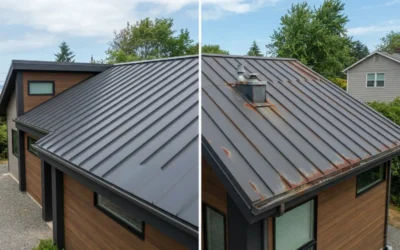
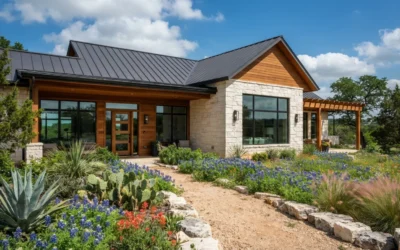
Standing seam metal roofing is the longest-lasting option available for commercial properties in San Antonio, with lifespans exceeding 40 years when properly installed.
Key benefits:
- Exceptional wind resistance critical during San Antonio storm season
- Highly resistant to hail impact
- Minimal maintenance requirements over decades
- Excellent ROI for property owners planning long-term ownership
Best for: Industrial buildings, churches, retail properties, and commercial structures with sloped rooflines.
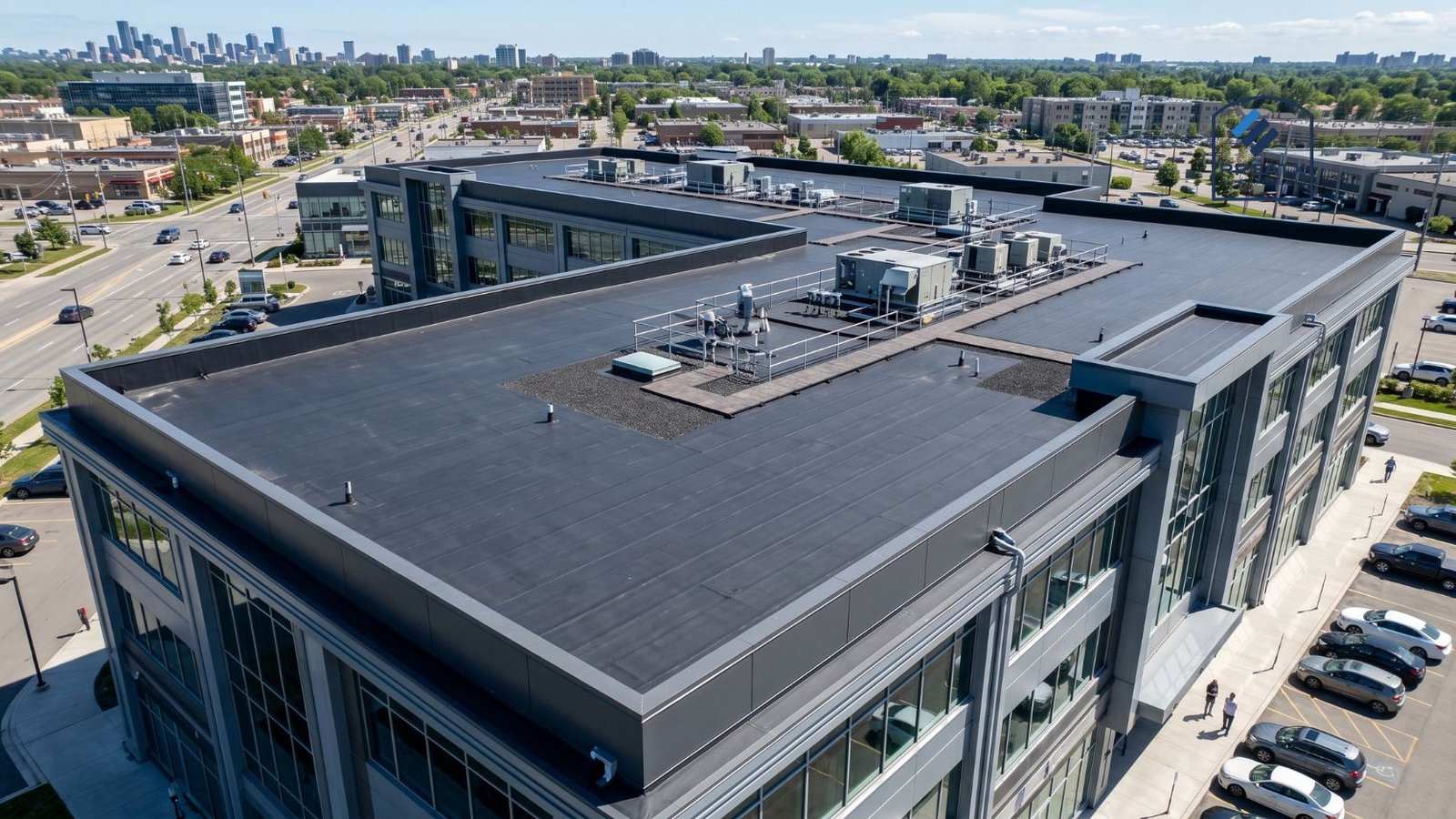
EPDM Roofing (Rubber Membrane)
EPDM is a durable synthetic rubber membrane commonly used on flat roofs. It performs well in temperature extremes but absorbs heat more than TPO, making it less ideal for buildings without strong insulation.
- Cost-effective for budget-conscious property owners
- Long lifespan of 20–25 years with proper maintenance
- Widely available and easy to repair
Best for: Smaller commercial buildings where budget is a primary concern.
How Do I Choose The Right Material For My Building?
The right material depends on your roof slope, budget, building use, and long-term ownership plans. Here is a quick comparison:
| Material | Best For | Lifespan | Cost Range |
| TPO Membrane | Flat roofs, energy efficiency | 20–30 years | Moderate |
| Modified Bitumen | Flat/low-slope, high traffic | 15–25 years | Low–Moderate |
| Metal Roofing | Sloped roofs, long-term ROI | 40+ years | Higher upfront |
| EPDM | Budget flat roof applications | 20–25 years | Low |
A professional roof inspection from a qualified San Antonio roofing contractor will identify which system fits your specific structure, drainage needs, and load requirements.
What About Storm Damage And Insurance Claims?
San Antonio experiences significant hail activity, and many commercial roofs suffer damage that is not immediately visible. If your building has taken hail or wind damage, a documented inspection report is essential before filing an insurance claim.
RRSATX: San Antonio Roofing Company provides detailed commercial roof inspections that support insurance documentation helping property owners recover the full value of covered damage without leaving money on the table.
FAQs
How Long Does A Commercial Roof Last In San Antonio?
Most commercial roofing systems last between 15 and 40 years depending on material, installation quality, and maintenance. TPO and metal systems installed correctly in San Antonio typically perform at the upper end of their rated lifespan.
Is TPO Or EPDM Better For San Antonio’s Heat?
TPO is generally the better choice in San Antonio because its white reflective surface deflects heat rather than absorbing it, reducing cooling costs and extending membrane life.
How Do I Know If My Commercial Roof Needs Replacement Or Repair?
Signs include visible membrane cracking, pooling water after rain, interior ceiling stains, rising energy bills, or a roof age of 20 or more years. A professional inspection will determine whether repair or full replacement is the more cost-effective path.
RRSATX: San Antonio Roofing Company serves commercial and residential property owners across San Antonio from two locations: 4324 Monterey St, San Antonio, TX 78237, and 318 E Nakoma Dr #210, San Antonio, TX 78216. Contact us for a commercial roof inspection and honest, no-pressure recommendation.