
[et_pb_section fb_built=”1″ admin_label=”section” _builder_version=”4.16″ global_colors_info=”{}”][et_pb_row admin_label=”row” _builder_version=”4.16″ background_size=”initial” background_position=”top_left” background_repeat=”repeat” global_colors_info=”{}”][et_pb_column type=”4_4″ _builder_version=”4.16″ custom_padding=”|||” global_colors_info=”{}” custom_padding__hover=”|||”][et_pb_code _builder_version=”4.27.6″ _module_preset=”default” hover_enabled=”0″ sticky_enabled=”0″]
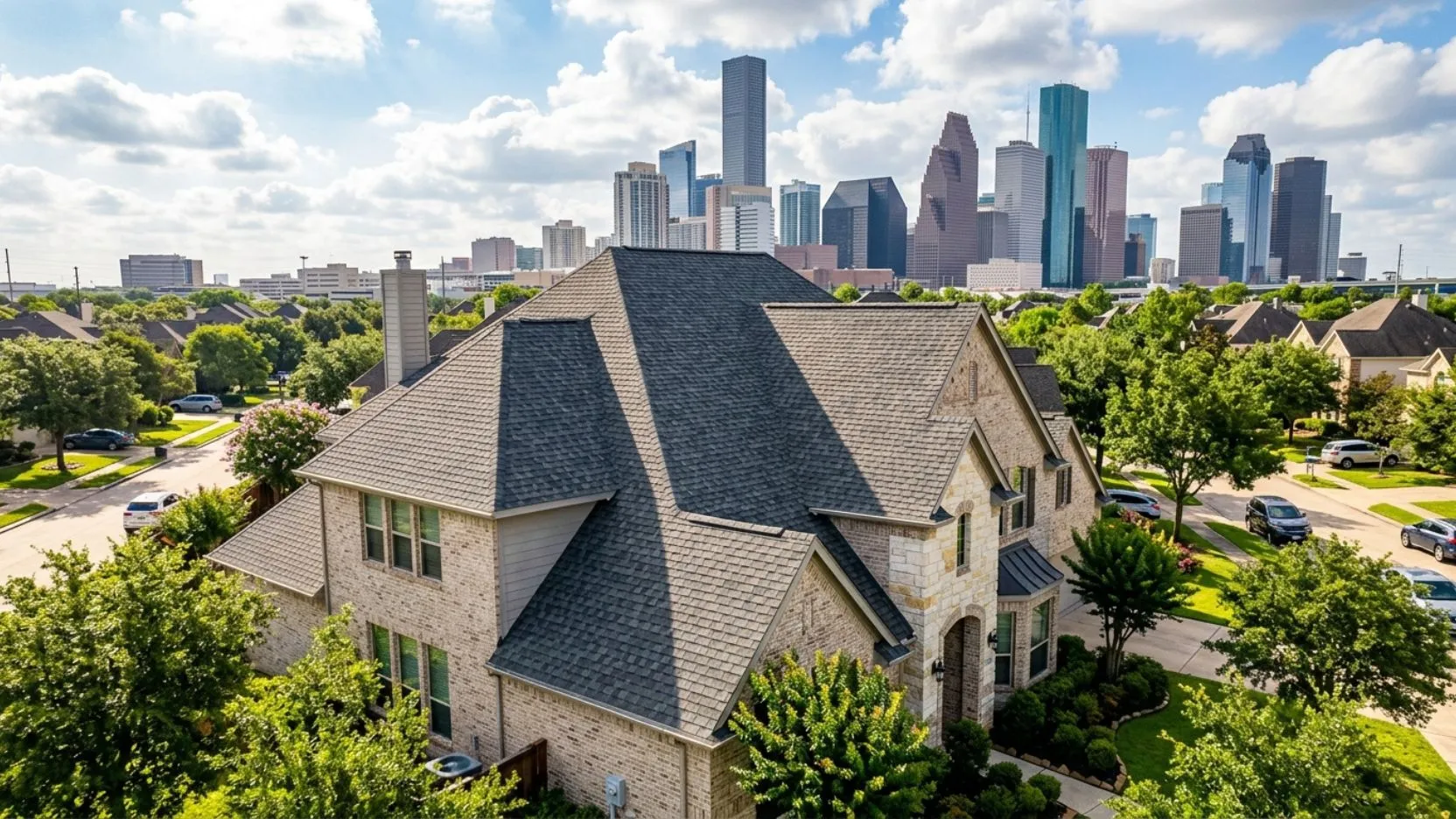
From asphalt shingles to standing seam metal, this guide covers what Houston homeowners actually pay in 2026, what drives the price up or down, and how to make sure you are comparing quotes the right way.
If you are a Houston homeowner trying to figure out what a new roof is going to cost, the honest answer is: it depends on more variables than most contractors will admit upfront. The material you choose, the size and pitch of your roof, and Houston-specific requirements around windstorm certification and permits can push the final number well above or below whatever figure you saw in a quick online search.
What we can give you here is a realistic, Houston-specific breakdown of what homeowners are actually paying in 2026 by material type, what the biggest price drivers are, and what a complete quote should include before you sign anything. Houston’s Gulf Coast climate puts unique demands on roofing systems, and pricing here reflects that.
Two quotes for $11,000 and $14,000 on the same Houston home can represent completely different projects. The lower quote may exclude decking inspection and replacement, flashing work, proper ventilation upgrades, and permit fees. In Houston’s high-moisture environment, skipping any one of those line items is how a new roof starts failing within five years. Always ask every contractor to itemize tear-off, decking, underlayment, flashing, ventilation, disposal, permits, and warranty. If a contractor will not break it out, that is your answer.
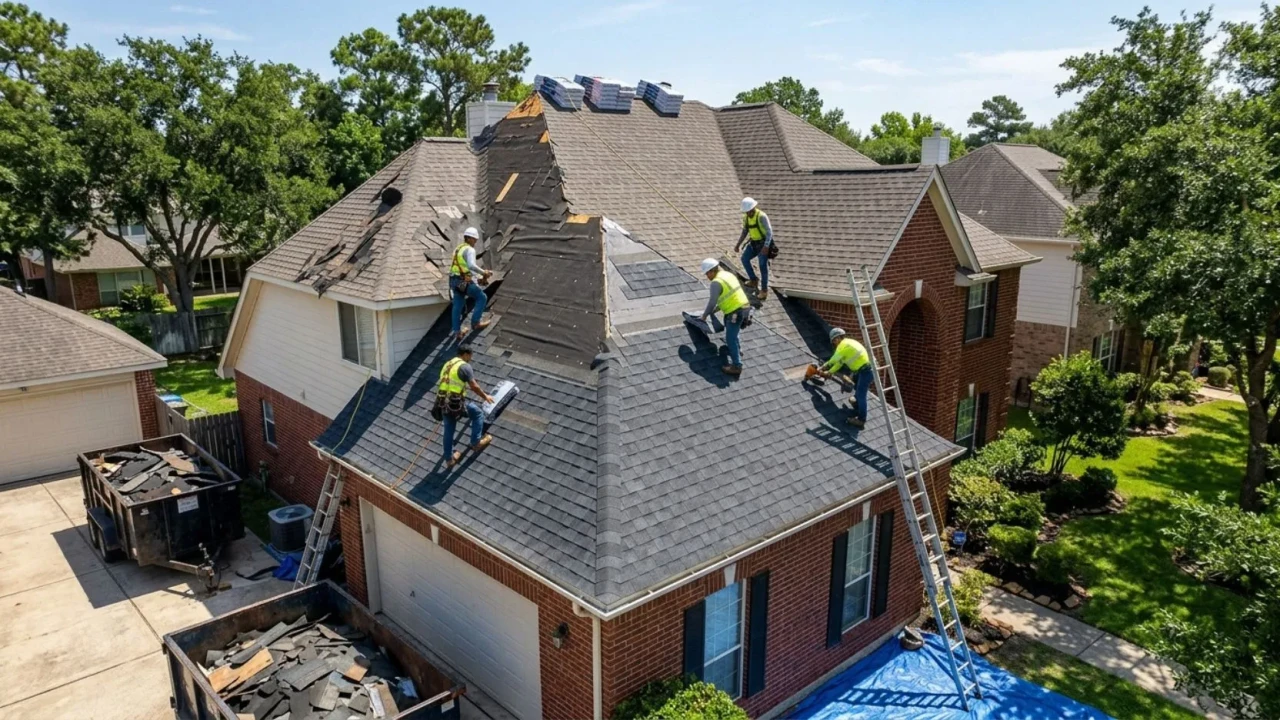
Material choice is the single biggest variable you can control when budgeting for a new roof. Installed prices across Houston’s residential market range from around $3.50 per square foot for basic asphalt to over $18.00 per square foot for premium clay tile. The four categories below cover what the Houston market is actually pricing in 2026, not national averages.
Most Popular
Asphalt shingles remain the dominant choice for Houston homeowners because they hit the right balance of upfront cost, storm performance, and availability. Not all asphalt shingles are the same, however. In a city with Houston’s wind and hail exposure, the grade you choose matters as much as the price per square.

3-Tab shingles: The most budget-friendly option but increasingly avoided by experienced Houston contractors. Rated for only 60 to 70 mph winds, which falls well below Houston’s code requirements. A 3-tab roof in Houston’s climate typically lasts 12 to 15 years before showing significant wear.
Architectural shingles: The current Houston standard. Thicker, rated for 110 to 130 mph winds, and significantly better at handling hail. Most manufacturers offer 25 to 30-year warranties on architectural shingles installed to their specifications.
- Full tear-off and disposal of existing shingles, with a per-square-foot cost listed separately
- Decking inspection, with a per-sheet cost for any plywood that needs replacement (expect $45 to $75 per sheet)
- Synthetic underlayment, not the older felt paper, for better moisture resistance in Houston’s climate
- Drip edge installation at all roof edges and proper starter strip at eaves and rakes
- Flashing replacement or resealing at all penetrations: chimney, vents, skylights, and valleys
- Ventilation assessment and ridge vent installation or replacement as needed
- Harris County permit fee (approximately $200) included in the project scope
- Workmanship warranty separate from the shingle manufacturer’s product warranty
Premium
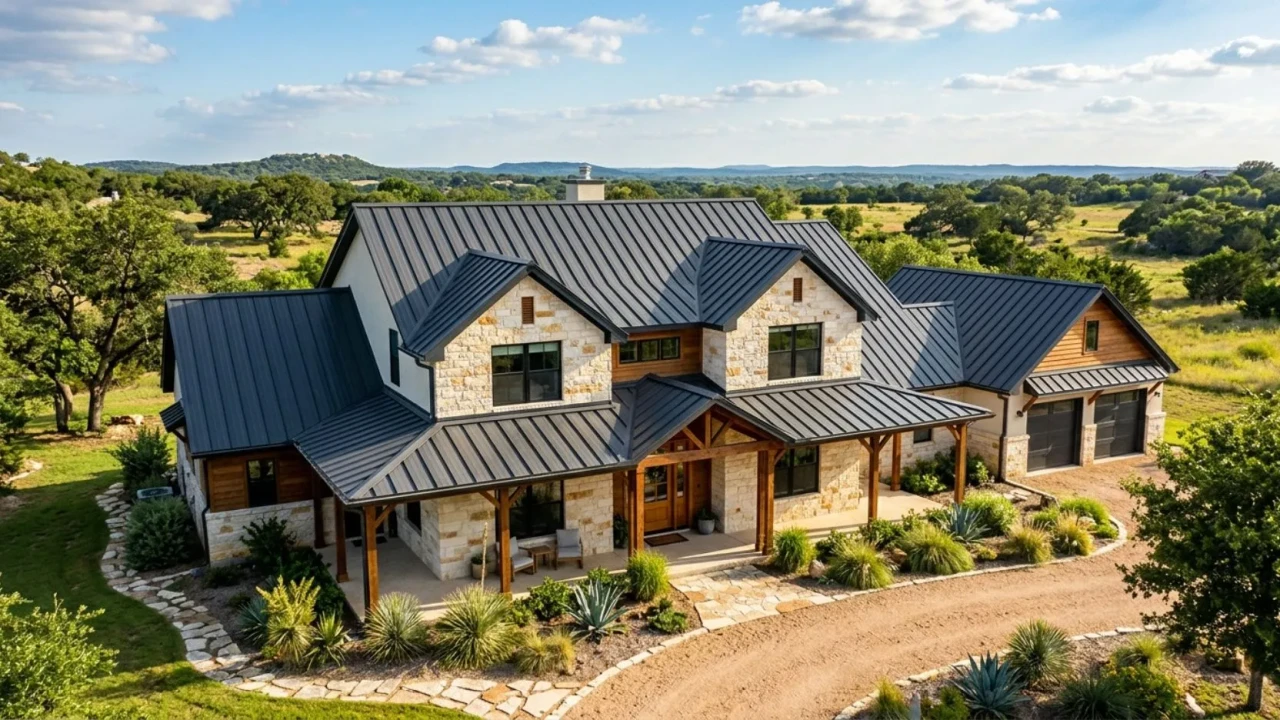
Metal roofing has become a serious option for Houston homeowners willing to invest more upfront in exchange for a roof that can outlast two or three asphalt shingle lifespans. The key distinction in Houston is between standing seam metal and exposed-fastener metal panels, because the two perform very differently in Houston’s humidity and rain volume.
Standing seam metal, where the fasteners are hidden inside the panel seams, is the correct choice for Houston’s climate. Exposed-fastener metal panels save money upfront, but the fastener seals degrade significantly in Houston’s conditions within 10 to 15 years, creating a recurring leak problem. The calculus is straightforward: if you plan to stay in your home for more than 15 years, standing seam metal routinely justifies its premium.
Metal roofs reflect solar radiation and can reduce cooling costs by 15% to 25% in Houston summers. The Department of Energy’s Cool Roof guidelines confirm the performance benefit for Gulf Coast climates. When calculating the true cost of a metal roof versus asphalt shingles, subtract the expected energy savings over the metal roof’s lifespan. In a city where air conditioning runs nine months of the year, this calculation often closes more of the cost gap than homeowners expect.
- Contractor specifies standing seam, not exposed-fastener, for Houston’s high-humidity and high-rainfall conditions
- Panel gauge confirmed: 24 or 26 gauge steel for residential applications in a Gulf Coast wind zone
- Wind rating verified: most quality metal systems are rated for 140+ mph, well above Houston’s 110 mph code minimum
- Underlayment specified: metal roofs require a suitable thermal break underlayment to reduce noise and condensation
- Transferable warranty confirmed if you plan to sell the home a major resale value advantage of quality metal systems
- Federal energy efficiency tax credit eligibility confirmed for qualifying cool-roof metal products
Premium
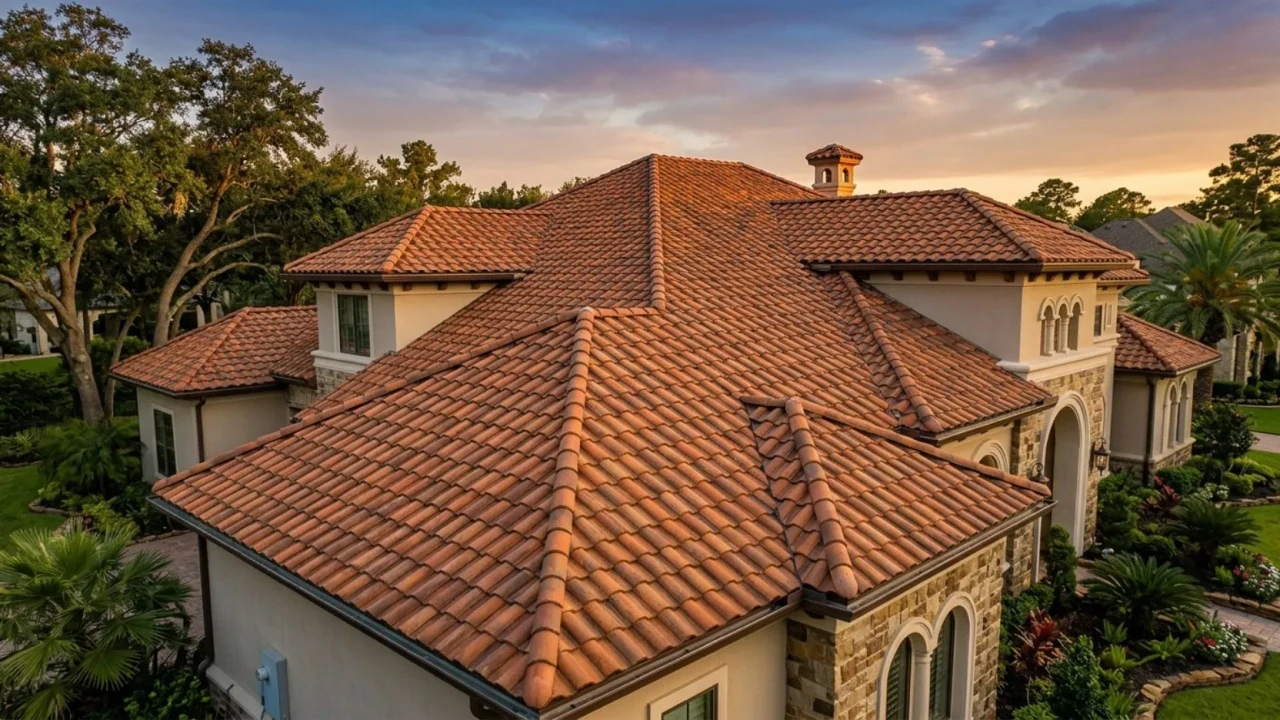
Tile roofing is among the most durable materials available to Houston homeowners, with clay and concrete tiles routinely lasting 50 years or more in the Texas climate. The material is fire-resistant, handles UV exposure exceptionally well, and adds significant curb appeal to Mediterranean and Spanish-style architecture. The trade-offs are cost, weight, and structural requirements that not every Houston home is built to handle without reinforcement.
Before committing to tile, your roofing contractor should assess whether your current framing can support the added load. Standard asphalt shingle roofs carry roughly 2 to 4 pounds per square foot. Clay tile can reach 9 to 12 pounds per square foot. Structural reinforcement, when required, adds $1,500 to $4,000 to the project total but is not optional if the framing cannot handle the load.
- Structural load assessment completed before project begins, with written confirmation that framing is adequate
- Concrete vs. clay tile confirmed based on your home’s load capacity and your budget
- High-quality underlayment specified: tile roofs require a premium underlayment that can last the full life of the tile above it
- Flashing details reviewed: tile roofs require custom flashing work at all penetrations and transitions, which increases labor time
- HOA approval secured if your neighborhood has restrictions on roofing material or color
Cost Drivers
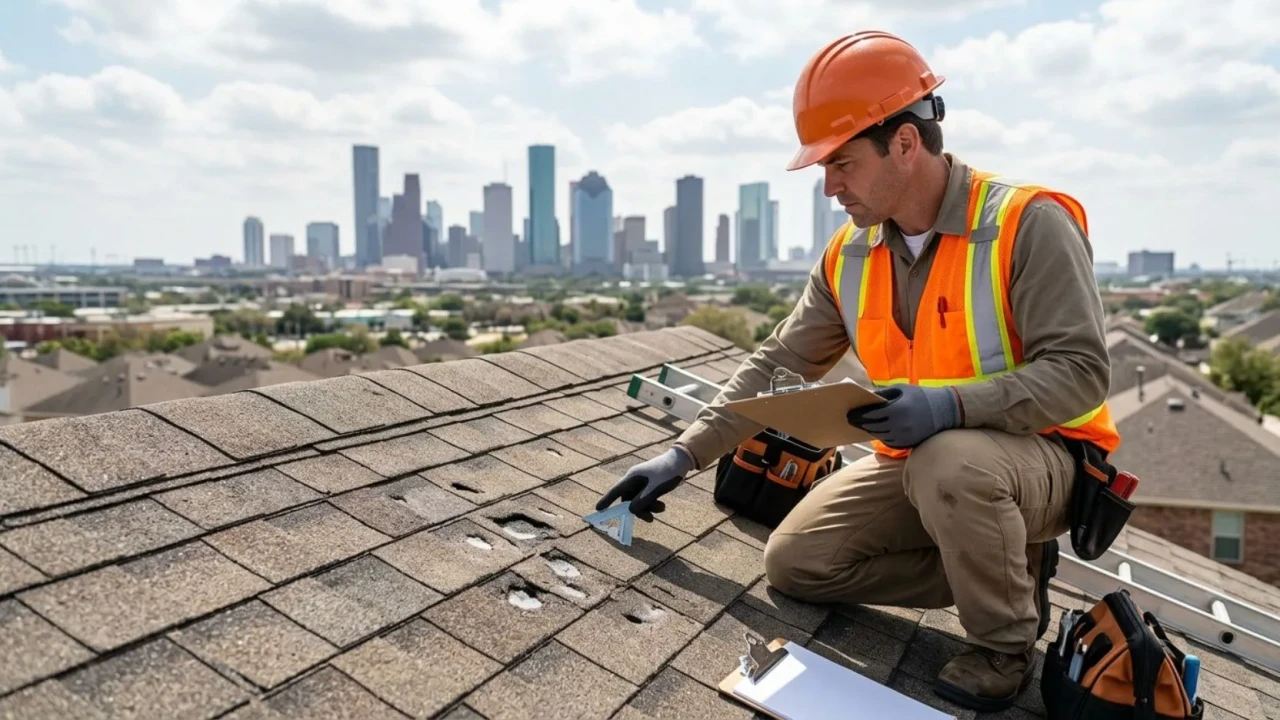
Houston pricing is driven by a combination of variables that most national roofing cost calculators do not account for. Understanding these factors before you start collecting quotes gives you an immediate advantage in evaluating what you are actually being offered.
| Cost Factor | Typical Impact on Price | Houston-Specific Notes |
|---|---|---|
| Roof Size and Pitch | $1,000–$3,000 increase for steep or complex roofs | Your roof surface area is typically 10–15% larger than your home’s living area due to pitch and overhangs |
| Decking Condition | $45–$75 per sheet for plywood replacement | Houston’s high rainfall and humidity make decking rot more common than in drier Texas cities. Budget for at least a partial decking replacement on older roofs |
| Tear-Off and Disposal | $1–$2 per sq ft, or $1,000–$3,200 total | Roofs with two layers of existing material cost significantly more to tear off. Texas code prohibits more than two total layers on most residential roofs |
| Labor Rates | $2.50–$6.00 per sq ft in the Houston metro | Labor accounts for 50–60% of total project cost in Houston. Post-storm labor demand can push rates 15–25% higher immediately after major hail events |
| Permits and Inspections | Approximately $200 for Harris County permit | Houston requires a residential roofing permit for any full replacement. Windstorm inspections (WPI-8 certificate) are required for homes in designated catastrophe areas and add $200–$500 |
| Ventilation System | $400–$1,200 for new or upgraded ventilation | Houston’s extreme attic heat buildup makes proper ventilation critical to shingle lifespan. Poor ventilation voids most shingle manufacturer warranties |
| Flashing and Accessories | $500–$2,000 depending on roof complexity | Drip edge, flashing at all penetrations, and starter strips must be included in a complete Houston replacement. Budget bids frequently exclude these |
Scheduling your Houston roof replacement during late fall or winter can reduce both your wait time and your cost. Spring and early summer are peak demand periods in Houston because they follow the hail season. Contractors book 2 to 4 weeks out during peak season, and some increase pricing to reflect demand. A November or December replacement in Houston rarely faces meaningful weather delays and is more likely to get you a faster start date and more competitive pricing from a contractor who wants to keep their crew busy through the slower season.
- Quote does not separate tear-off, decking, underlayment, flashing, and ventilation as individual line items
- No mention of decking inspection or a per-sheet replacement rate for damaged plywood
- Permit fees are not included or are listed as the homeowner’s responsibility to obtain
- Contractor cannot provide a copy of their current general liability insurance certificate
- No written workmanship warranty separate from the shingle manufacturer’s product warranty
- Price is contingent on signing the same day or a significant discount expires within 24 hours
Insurance
Houston sits in one of the most active hail corridors in the United States, and the city’s Gulf Coast location means hurricane-force wind events are a regular part of the risk landscape. As a result, a significant number of Houston roof replacements are driven by insurance claims rather than pure age-related replacement. Knowing how this process works before your next storm event can save you thousands of dollars.
Texas homeowners insurance typically covers sudden event damage from hail, wind, and falling trees. It does not cover damage caused by normal wear, age, or deferred maintenance. After a qualifying storm, you have the right to file a claim and get an independent professional estimate separate from whatever the insurance adjuster produces.
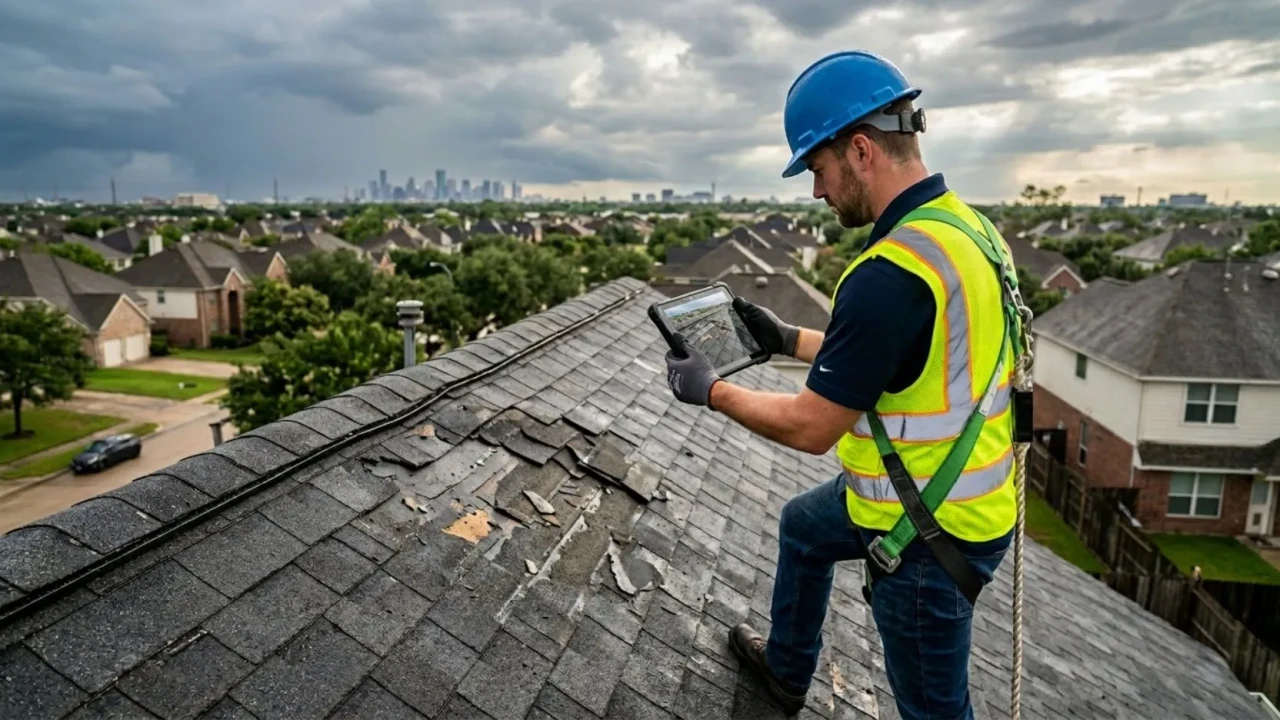
After a major hail event in Houston, insurance adjusters are backlogged for weeks. Do not wait for your adjuster before calling a licensed roofing contractor. A reputable Houston contractor will photograph and document the damage, give you an independent written estimate, and walk the roof with your adjuster if needed. You are entitled to dispute a low adjuster scope and request a re-inspection or hire a public adjuster to negotiate on your behalf. The most expensive storm event for Houston homeowners is the one they file too late or accept an underpaid settlement on.
- Note the storm date and document weather conditions: use NOAA storm records or local news reports to confirm the hail event
- Call a licensed roofing contractor for a professional damage inspection and written estimate before the adjuster visit
- Photograph all visible damage from the ground: dented gutters, cracked ridge caps, missing shingles
- Do not allow contractors to waive your deductible: this is insurance fraud in Texas and voids your warranty
- Request an itemized insurance settlement that matches the full scope of the replacement, not just materials
- Ask your insurance agent about Class 4 impact-resistant shingle discounts before finalizing your material choice
- Keep all documentation, photos, contractor estimates, and the adjuster’s report in a single file for future reference
The table below consolidates all material types and cost ranges for a standard Houston home with approximately 2,000 square feet of roofing surface. These figures reflect full tear-off and replacement including labor, permits, and standard flashing work. They do not include structural reinforcement or decking replacement beyond what is typical.
| Roofing Material | Cost Per Sq Ft (Installed) | Total Cost (2,000 Sq Ft) | Lifespan in Houston | Best For |
|---|---|---|---|---|
| 3-Tab Asphalt Shingles | $3.50–$5.00 | $6,000–$9,000 | 12–15 years | Budget-constrained projects; short-term ownership |
| Architectural Asphalt Shingles | $4.20–$6.50 | $8,500–$14,000 | 18–25 years | Most Houston homeowners; best value balance |
| Class 4 Impact-Resistant Shingles | $7.00–$9.00 | $13,000–$18,000 | 20–30 years | Hail-prone areas; insurance discount eligibility |
| Exposed-Fastener Metal (R-Panel) | $9.00–$12.00 | $16,000–$22,000 | 25–35 years | Commercial buildings; budget metal option |
| Standing Seam Metal | $12.00–$16.00 | $22,000–$32,000 | 40–70 years | Long-term homeowners; coastal and storm-aware areas |
| Concrete Tile | $10.00–$14.00 | $18,000–$28,000 | 40+ years | Mediterranean-style homes; Sugar Land, Katy |
| Clay Tile | $14.00–$20.00+ | $28,000–$40,000+ | 50+ years | Luxury homes; Memorial, River Oaks, The Woodlands |
- Know your roof’s approximate square footage: measure your home’s footprint and add 10–15% for pitch and overhangs
- Check your home’s age and when the last roof was installed this determines whether you are likely dealing with one or two existing layers
- Pull your homeowners insurance policy and check for storm event coverage, deductible amount, and any Class 4 shingle discount provisions
- Confirm whether your neighborhood HOA has restrictions on roofing material, color, or required approvals before installation
- Get at least three written quotes from licensed, insured Houston roofing contractors before making any decision
- Every quote must itemize tear-off, decking inspection, underlayment, flashing, ventilation, disposal, and permit as separate line items
- Confirm the shingle grade and wind rating: architectural shingles must be rated for at least 110 mph to meet Houston code
- Verify that the contractor will pull the Harris County permit on your behalf and include the fee in the project cost
- Confirm that a WPI-8 windstorm compliance certificate will be issued if your property is in a designated catastrophe area
- Ask for the contractor’s certificate of general liability insurance naming you as an additional insured
- Confirm the workmanship warranty period and what it covers: installation defects should be covered separately from the shingle product warranty
- Walk the completed roof with the contractor or have photos provided showing ridge cap, flashing, and ventilation installation
- Confirm all debris, nails, and packaging have been removed from your yard, gutters, and driveway
- Register your shingle product warranty with the manufacturer directly using the documentation your contractor provides
- File any storm damage insurance claim within your policy window if this was an insurance-driven replacement
- Schedule a routine professional inspection every two to three years to catch minor issues before they become major ones in Houston’s demanding climate
What is the average cost to replace a roof in Houston in 2026?
Why is Houston roof replacement more expensive than other Texas cities?
How long does a roof last in Houston?
Does homeowners insurance cover roof replacement in Houston?
What is the best roofing material for Houston?
How do I know if I am getting a fair price on a Houston roof replacement?
Get a free roof inspection and estimate
Whether you are replacing an aging roof, dealing with storm damage, or just want to know where you stand, we will inspect your roof for free and give you a clear written estimate at no cost or obligation.
[/et_pb_code][/et_pb_column][/et_pb_row][/et_pb_section]