
[et_pb_section fb_built=”1″ admin_label=”section” _builder_version=”4.16″ global_colors_info=”{}”][et_pb_row admin_label=”row” _builder_version=”4.16″ background_size=”initial” background_position=”top_left” background_repeat=”repeat” global_colors_info=”{}”][et_pb_column type=”4_4″ _builder_version=”4.16″ custom_padding=”|||” global_colors_info=”{}” custom_padding__hover=”|||”][et_pb_code _builder_version=”4.27.6″ _module_preset=”default” hover_enabled=”0″ global_colors_info=”{}” sticky_enabled=”0″]
Getting a straight answer on roof replacement cost should not require five contractor visits and a week of waiting. This guide breaks down exactly what a new roof costs in San Antonio in 2026, by material, by roof size, and by the labor and tear off factors that move the price up or down.
If you are getting quotes for a new roof in San Antonio, you have probably already noticed something frustrating: the numbers do not agree with each other. One contractor quotes $7,000. Another quotes $16,000 for what sounds like the same job. The gap usually comes down to material choice, the condition of your existing roof deck, and whether the quote includes a full tear off or just an overlay.
This guide walks through real San Antonio pricing for every common roofing material, what drives cost up or down on any given job, and how to compare quotes so you know whether a number is fair or inflated. All figures reflect 2026 local market rates for materials, permits, and labor in Bexar County.
Roofers price in squares, not square feet. One roofing square equals 100 square feet of roof surface. A 2,000 square foot home does not have a 2,000 square foot roof. Once you factor in pitch, overhangs, and roof shape, that same home typically has a roof in the range of 22 to 28 squares. Always ask a contractor how many squares your roof measures before comparing quotes. Two quotes that look far apart often turn out to be pricing different total roof areas.
Most Popular
Asphalt shingles cover the large majority of San Antonio homes, and for good reason. They are the most affordable roofing material to install, they come in dozens of colors and styles, and most roofing crews can install them quickly. The tradeoff is a shorter lifespan than metal or tile, especially under intense Texas sun.
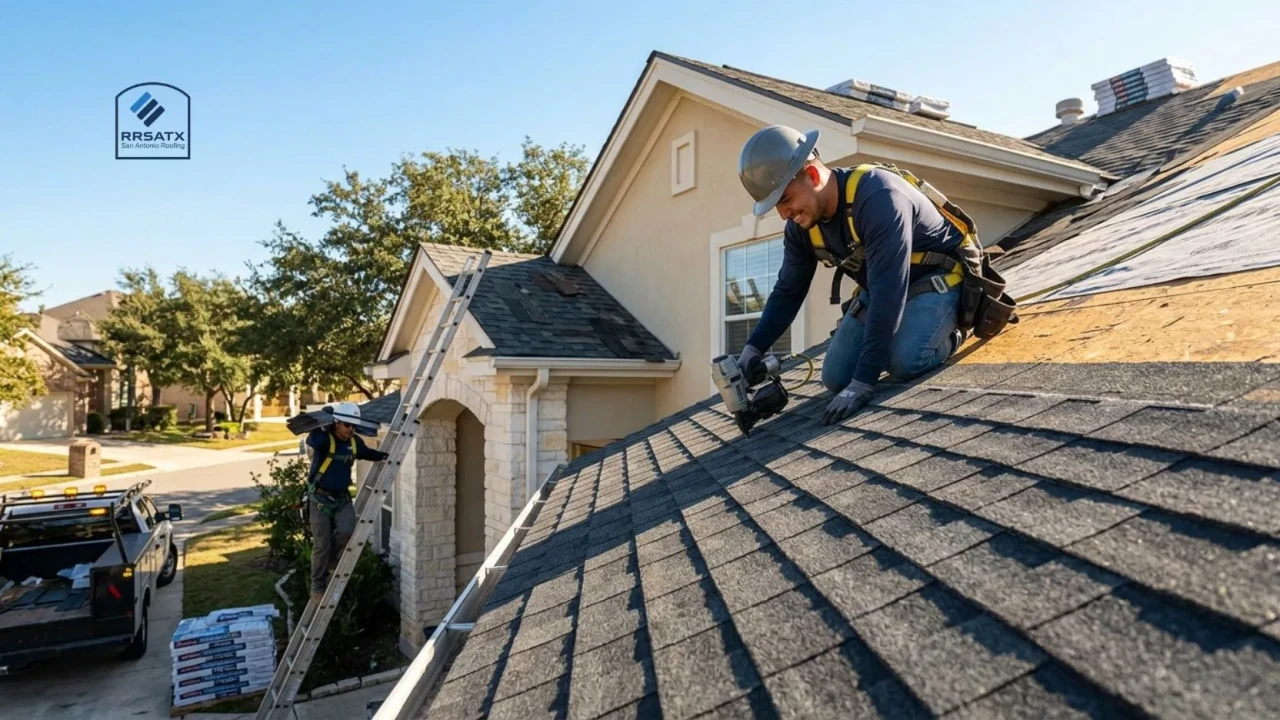
3-tab shingles: The most basic and least expensive asphalt option. Flat appearance, 15 to 20 year lifespan, and increasingly hard to find as manufacturers shift production toward architectural shingles.
Architectural shingles: The standard choice for most San Antonio replacements today. Dimensional appearance, better wind resistance, and a 25 to 30 year lifespan that holds up well to Texas heat.
- Quote specifies the exact shingle line and manufacturer, not just “architectural shingles”
- Underlayment type included: synthetic felt is now standard over older asphalt felt
- Ice and water shield specified for valleys and eaves, even though San Antonio rarely sees ice
- Manufacturer warranty length confirmed in writing, typically 25 to 50 years depending on the product
- Workmanship warranty separate from the material warranty, with a clear coverage period
Metal
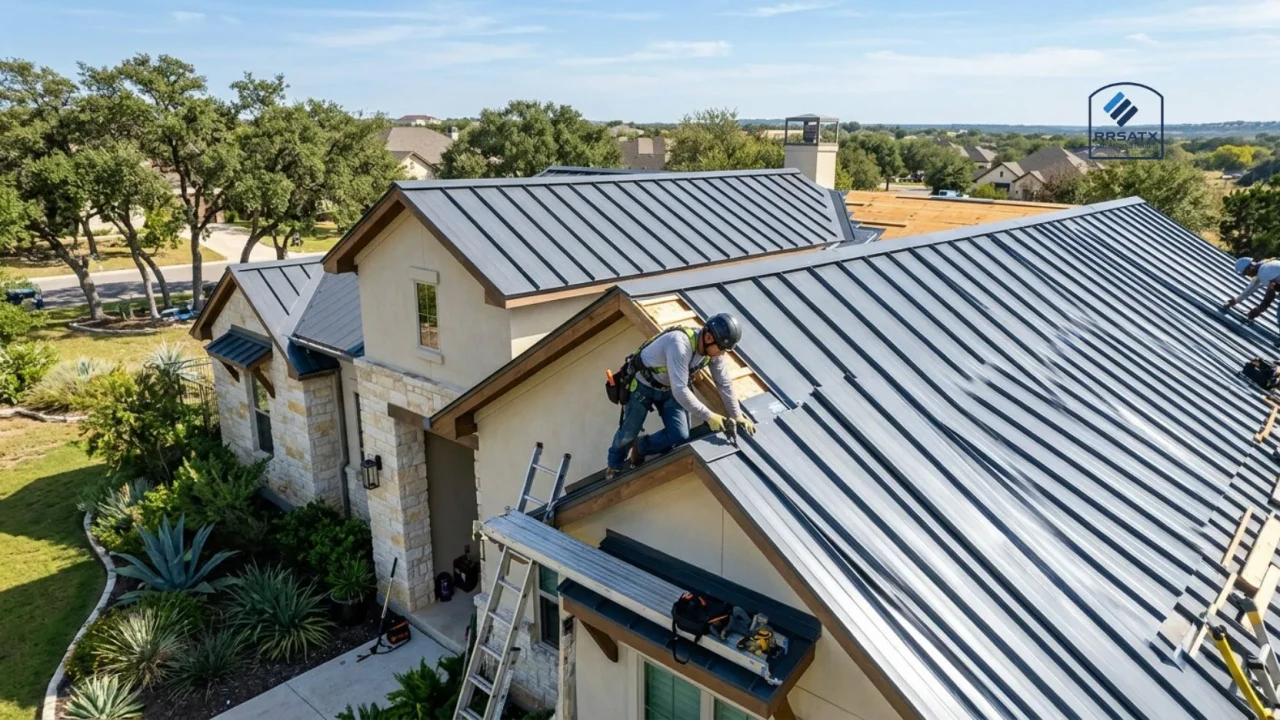
Metal roofing costs more upfront than asphalt, but it also lasts two to three times as long. For San Antonio homeowners planning to stay in their home long term, metal often works out cheaper on a per-year basis even though the initial check is bigger. The price also varies significantly by panel type.
Run the cost-per-year math before deciding between asphalt and metal. An architectural shingle roof at $14,000 with a 28 year lifespan runs about $500 per year. A standing seam metal roof at $26,000 with a 50 year lifespan runs about $520 per year. The two options land close to even on an annualized basis, which means the decision often comes down to how long you plan to stay in the home and whether you want to avoid a second replacement during your ownership.
- Panel type and gauge specified clearly, not just “metal roof”
- Fastening method confirmed: exposed-fastener versus concealed standing seam
- Underlayment rated for high heat, since metal roofs run hotter than shingles under San Antonio sun
- Finish and coating warranty separate from the structural panel warranty
- Color and profile availability confirmed before ordering, since lead times can run longer than shingles
Premium
Clay and concrete tile show up often on San Antonio homes built in Spanish and Mediterranean styles. Tile is the most expensive common roofing material, but it can last 50 years or more and handles Texas heat exceptionally well. The biggest cost factor most homeowners overlook is structural support, since tile is significantly heavier than shingles or metal.
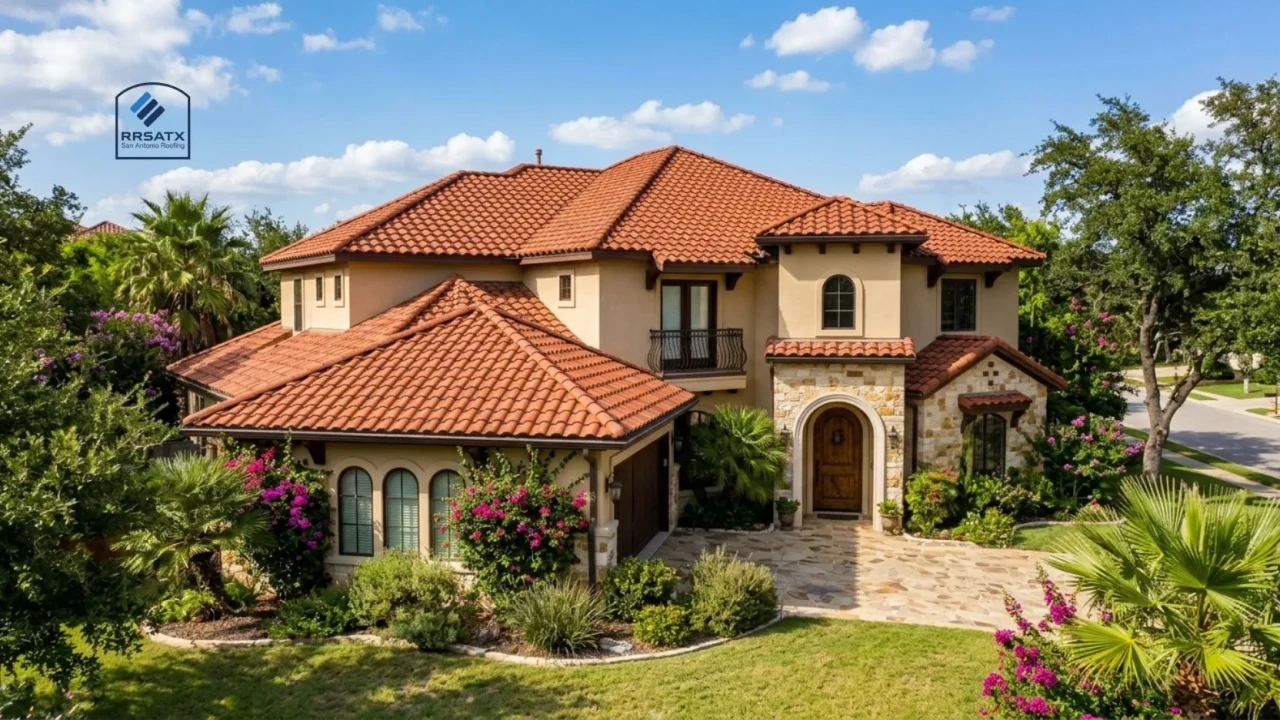
Concrete tile: The more affordable tile option, available in flat, S-curve, and barrel profiles. Heavy but slightly less costly to install than clay.
Clay tile: The traditional South Texas look with excellent durability and color retention. Costs more than concrete tile and may require additional structural verification on older homes.
- Structural load assessment completed before quoting, especially on homes not originally built for tile
- Underlayment rated for the full expected lifespan of the tile, not a standard shingle underlayment
- Battens and fastening method specified for the tile profile chosen
- Breakage allowance included in the quote, since some tile breakage during install and future walking on the roof is normal
- Tile sourcing confirmed for future repairs, since matching discontinued tile profiles can be difficult years later
Flat Roof
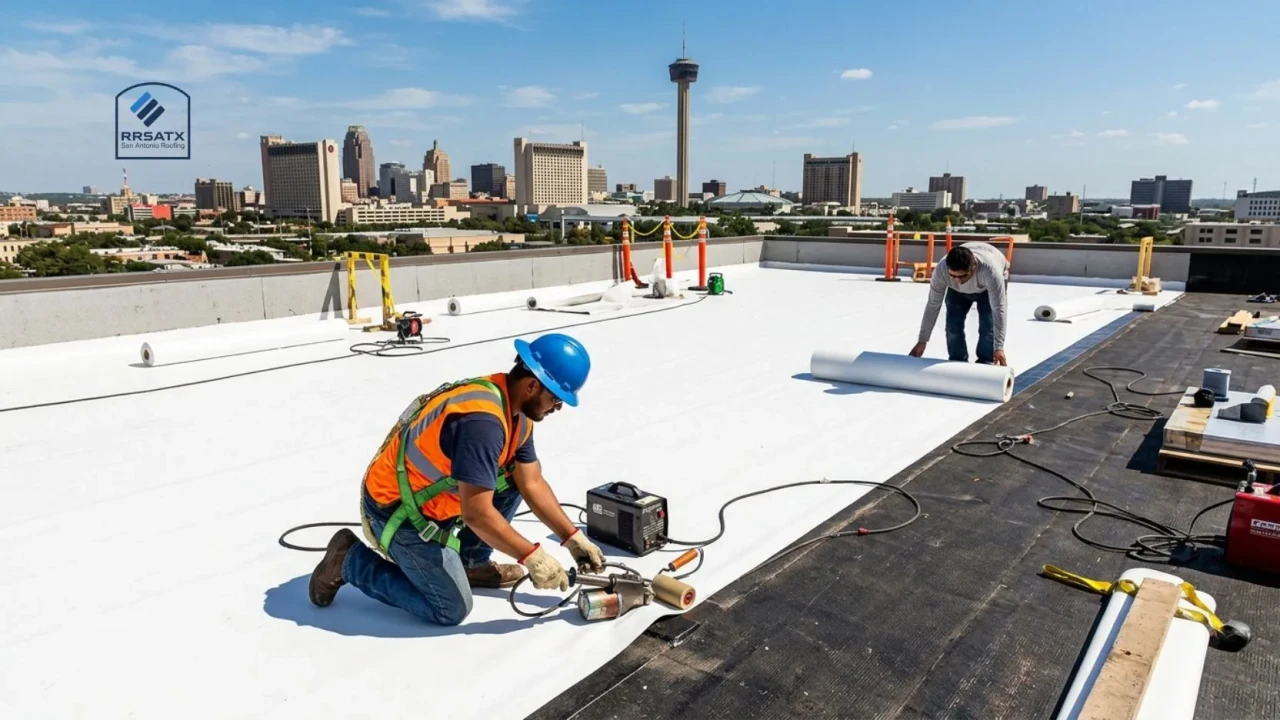
Flat and low-slope sections are common on San Antonio additions, garages, porches, and most commercial buildings. These roofs use membrane systems rather than shingles, since standard shingles are not rated for slopes below a certain pitch. Pricing structures and material lifespans differ significantly from steep-slope roofing.
- Membrane thickness specified, typically measured in mils
- Drainage plan confirmed, since standing water is the leading cause of flat roof failure
- Seam welding method specified for TPO, since seam quality determines long-term watertightness
- Insulation board (if included) confirmed for R-value and thickness
Cost Factors
Material choice is the biggest lever on price, but it is not the only one. Two homes with the same square footage and the same shingle can still land $3,000 apart in price once these factors are accounted for.
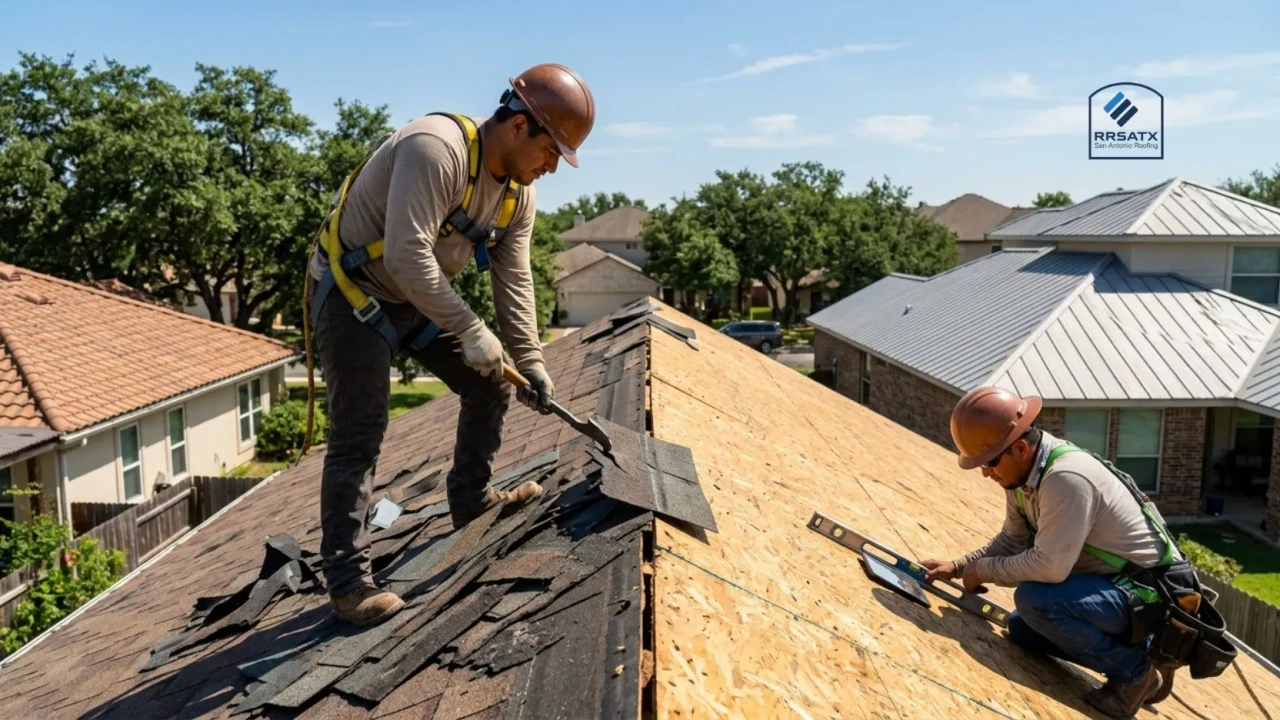
A full tear off, complex roof pitch, multiple layers of old material, and decking repair found once the old roof comes off are the most common reasons a final invoice lands higher than the initial estimate. Permits add a smaller but predictable cost on top of the job.
| Cost factor | Impact on price | Why it matters |
|---|---|---|
| Tear off vs. overlay | Adds $1 to $3 per square foot | Full tear off removes the old roof down to the deck. Overlay (where permitted) skips this step but is not recommended on most San Antonio roofs. |
| Roof pitch and complexity | Adds 10 to 30 percent | Steep pitches require additional safety equipment and slow down installation. Complex roofs with many valleys and dormers add labor time. |
| Number of layers to remove | Adds $50 to $100 per square per layer | Some older San Antonio homes have two or more layers of shingles. Each additional layer adds disposal and labor cost. |
| Decking repair or replacement | Adds $50 to $90 per sheet | Rotted or water-damaged decking found during tear off must be replaced before new roofing can go down. This is the most common quote increase during the job. |
| Permit and code requirements | Adds $100 to $500 | San Antonio and surrounding municipalities require permits for full roof replacements. Some require updated ventilation or decking to meet current code. |
These figures assume a 2,000 square foot home with a moderate roof pitch and one layer of existing material to remove. Actual cost depends on your specific roof size, pitch, and condition. Always confirm pricing with an on-site measurement.
| Material | Cost per square foot | Typical total cost | Expected lifespan |
|---|---|---|---|
| 3-tab asphalt shingles | $4.25 to $6.50 | $8,500 to $13,000 | 15 to 20 years |
| Architectural asphalt shingles | $5.50 to $8.50 | $11,000 to $17,000 | 25 to 30 years |
| Class 4 impact-resistant shingles | $7 to $10 | $14,000 to $20,000 | 30 years, often with insurance discount |
| Exposed-fastener metal panels | $8 to $11 | $16,000 to $22,000 | 40 to 60 years |
| Standing seam metal | $10 to $16 | $20,000 to $32,000 | 50 to 70 years |
| Stone-coated steel | $9 to $14 | $18,000 to $28,000 | 40 to 60 years |
| Concrete tile | $10 to $18 | $20,000 to $36,000 | 40 to 50 years |
| Clay tile | $15 to $25 | $30,000 to $50,000 | 50 years or more |
| TPO flat roof membrane | $5 to $8 | Varies by section size | 20 to 30 years |
- Know your roof size in squares, not just square feet, so quotes can be compared apples to apples
- Decide whether you are open to a material change or staying with what you currently have
- Check with your insurance carrier about any discount available for impact-resistant materials
- Get at least three quotes from licensed, insured San Antonio roofing contractors
- Exact material brand and product line, not a generic description
- Full tear off confirmed, including the number of existing layers being removed
- Decking repair contingency rate per sheet, in case rot is discovered during tear off
- Underlayment type and ice and water shield placement
- Permit responsibility clearly assigned to the contractor
- Manufacturer warranty length and workmanship warranty length, listed separately
- Certificate of insurance with at least $1 million in general liability coverage
- Payment schedule reviewed, with no more than a standard deposit due upfront
- Start and estimated completion date confirmed in writing
- Cleanup and disposal of old roofing material included in the price
- Final walkthrough and sign-off step included before final payment is due
How much does a new roof cost in San Antonio on average?
What is the cheapest roofing material in San Antonio?
Is it cheaper to repair or replace a roof in San Antonio?
Does homeowners insurance cover the cost of a new roof in San Antonio?
How long does it take to install a new roof in San Antonio?
Why do roofing quotes vary so much for the same job?
Get a free, itemized roof replacement quote in San Antonio
Tell us about your roof and the material you are considering. We will measure your roof, walk you through real pricing, and give you a written quote with no pressure and no hidden decking surprises.
[/et_pb_code][/et_pb_column][/et_pb_row][/et_pb_section]