
On a San Antonio summer afternoon, you can feel the heat coming off the roof before you've even reached the front door. The air conditioner runs hard, the attic holds onto the day's heat, and a dark roof keeps absorbing sunlight long after lunch. That's why many homeowners are asking whether a white roof house color can make their homes more comfortable and less demanding on the cooling system.
The short answer is yes, a reflective roof can help. The honest answer is that pure white isn't automatically the right choice for every house. Roof pitch, material, insulation, maintenance, curb appeal, and exposure to South Texas storms all matter. Here's how I'd evaluate the decision for a San Antonio home.
Table of Contents
- Beating the South Texas Heat With a Lighter Roof
- How Reflective Roofs Actually Lower Cooling Costs
- Choosing the Right Material for a White Roof House Color
- The Hidden Tradeoffs of Maintaining a Bright Roof
- Deciding if a Cool Roof Fits Your San Antonio Home
- Protecting Your Investment Through Storms and Hail
- Your Next Steps for a Cooler and Safer Home
Beating the South Texas Heat With a Lighter Roof
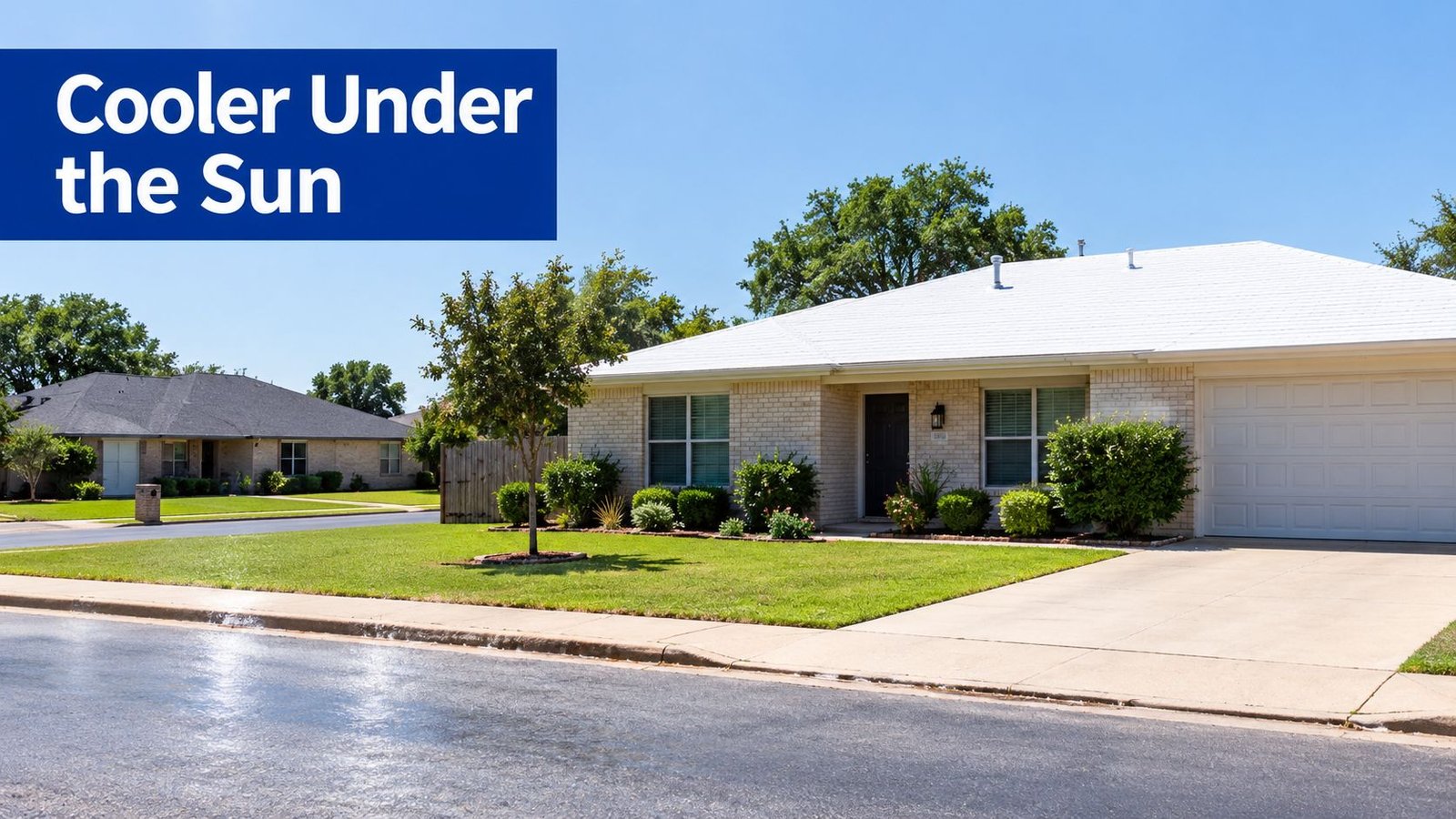
Step outside in July and the roof is taking the full hit from the sun. A dark surface absorbs that energy, heats the roof assembly, and passes more heat toward the attic or upper rooms. A light roof takes a different approach. It reflects more of the sunlight before that energy becomes heat.
That difference matters most on homes with broad sun exposure, low-slope sections, older insulation, or attic spaces that already run hot. It can also matter above garages, patios, and other areas where the roof sits over a space that isn't cooled as consistently as the main living area.
What homeowners notice first
A lighter roof won't solve every comfort problem. It won't correct poor attic ventilation, damaged decking, missing insulation, or an aging air conditioner. But when the roof is otherwise sound, reducing solar heat at the surface can take pressure off the building during the hottest part of the day.
NASA reports that black roofs can run up to 30°C hotter than green or white roofs, and a New York City program found that white synthetic roof surfaces and paints reduced peak rooftop temperatures by 24°C compared with typical black rooftops. Those findings are summarized in NASA's report on reflective roofs in cities.
San Antonio homeowners also need to think beyond temperature. Extreme heat is followed by heavy rain, wind, and hail. A roof color that helps with summer heat still needs a sound underlayment, proper flashing, secure metal details, and a material approved for the roof design.
Practical rule: Choose the roof system first, then choose the lightest finish that fits the roof, the house, and your tolerance for upkeep.
The strongest use case for white is usually a flat or low-slope roof where the surface isn't a dominant architectural feature. On a steeply pitched home in Alamo Heights or an older neighborhood near Downtown San Antonio, a softer light color may look more natural than a stark, bright-white roof.
How Reflective Roofs Actually Lower Cooling Costs
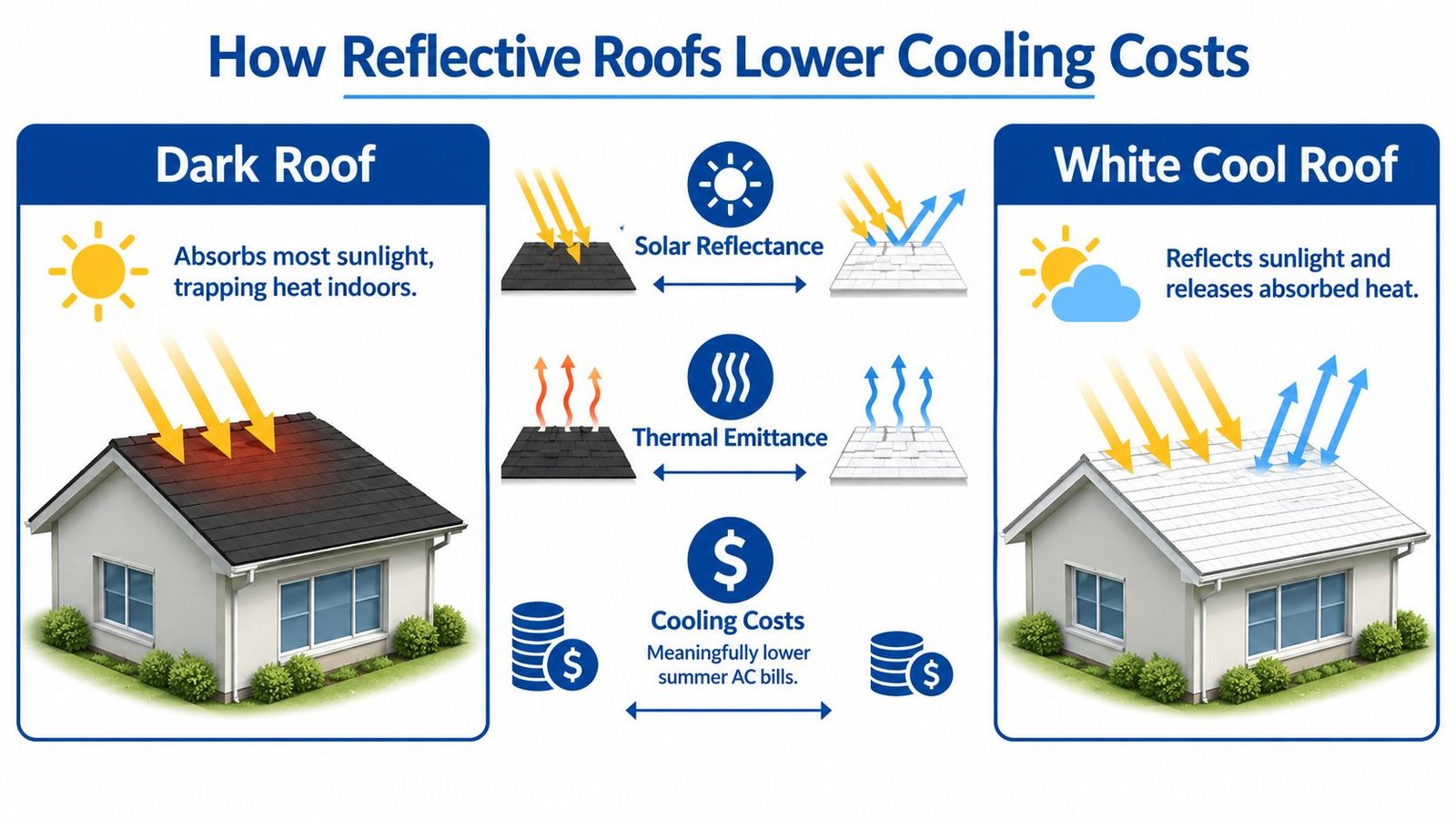
On a clear San Antonio afternoon, the roof takes the first hit from the sun. A reflective roof sends more of that energy away before it can heat the roof assembly, attic, and rooms below.
Two properties control that performance. Solar reflectance measures how much sunlight the surface reflects. Thermal emittance measures how efficiently the roof releases heat it has absorbed. A roof with both high reflectance and high emittance stays cooler than a dark surface that absorbs sunlight and holds the heat.
The effect is similar to wearing a white shirt instead of a black one on a sunny day. The lighter fabric reflects more light, while a darker fabric absorbs more of it. Roof performance also depends on the material, surface condition, insulation below, and the building's ability to release heat.
The U.S. Department of Energy reports that white or light-colored roofs typically reflect 55% to 90% of incoming sunlight, while dark roof materials usually reflect only 5% to 20%. Its cool-roof guidance explains why that range matters. Less absorbed sunlight means less heat moving through the roof into the attic or upper floor.
The difference can be substantial. A traditional black shingle has an average albedo of 0.05, while a white roof coating averages 0.75. The white coating can reflect roughly 15 times as much incoming sunlight as the dark roof, according to Yale Environment 360's explanation of white roofs and urban heat.
Where the savings show up
Roof color affects heat entering the building, not just the temperature of shingles or membrane. The DOE says increasing roof reflectance from 0.1 to 0.2 up to 0.6 can reduce annual cooling energy use by 10% to 20% on the floor directly beneath the roof. That finding applies most clearly when strong sun reaches the roof and the space below is conditioned.
In a San Antonio summer, the benefit usually shows during peak afternoon demand. A cooler roof reduces conductive heat flow into the attic or plenum, so the air conditioner may cycle with less strain. The result varies with insulation, shade, ventilation, HVAC condition, roof pitch, and how much conditioned space sits directly below the roof.
A bright finish also creates an upkeep decision. Dust, pollen, and weathering reduce reflectance, so judge a product by its tested performance and expected aged performance, not by the word “white” on a sample card. On a highly visible steep roof, keeping that finish clean may matter as much aesthetically as it does thermally.
A white roof lowers heat gain, but it does not correct an under-insulated attic or moisture-damaged decking. Inspect the full assembly before treating roof color as the solution.
Choosing the Right Material for a White Roof House Color
Roof material matters as much as roof color in San Antonio. A white TPO membrane on a flat roof serves a different purpose from white asphalt shingles on a steep residential roof. Roof pitch, visibility from the street, drainage, attachment method, weight, and manufacturer requirements all affect whether a bright finish is a smart choice.
Use this comparison as a practical starting point:
| Material Type | White Finish Viability | Best Application |
|---|---|---|
| Asphalt shingles | Light or cool-colored options are common, while pure white can look visually bold | Steep residential roofs where texture and neighborhood appearance matter |
| Metal panels | White and light finishes can reflect substantial sunlight when the coating and panel details are sound | Modern homes, additions, agricultural structures, and selected residential designs |
| Tile | Light tile can suit Southwestern architecture, but weight, roof shape, and installation details remain important | Homes where tile already fits the structure and exterior style |
| TPO membrane | White is a common, practical finish with strong heat-reflection potential | Flat and low-slope residential or commercial roofs with compatible assemblies |
White does not guarantee equal performance across products. Coating quality, surface texture, aging, dirt, seams, fasteners, and installation workmanship all affect how well the roof reflects heat. A bright sample in a showroom tells you less than the product's tested solar reflectance and thermal emittance.
Steep roofs versus low-slope roofs
Pure white is easiest to justify on a broad, sun-exposed roof that has limited impact on the home's front elevation. White TPO often fits that description. On a flat or low-slope roof, the membrane creates a continuous surface, and the roof usually contributes less to the home's street-facing character.
Steep asphalt roofs require more judgment. A bright roof can dominate the exterior, especially beside pale brick, stone, or light siding. For many San Antonio homes, a softer gray, tan, or other cool-colored roof creates a better balance while still reflecting more sunlight than a very dark material.
Roof pitch also affects maintenance access and visual wear. A steep, prominent roof makes streaks, dust, and mismatched repairs easier to see. A low-slope roof may be less noticeable from the street, but it demands careful drainage design and compatible flashing details.
Coordinate the roof with the walls, trim, shutters, and entry door. During a full exterior refresh, Texas curb appeal door ideas can help you balance a light roof with warm brick or darker accents.
Confirm the product, not just the color
Ask for tested solar reflectance and thermal emittance before approving a material. ENERGY STAR requirements generally use a low-slope solar reflectance threshold of 0.65 when new and 0.50 after three years of weathering, while steep-slope products use a 0.25 threshold, according to the ENERGY STAR roof program requirements.
For a closer comparison of systems, coatings, and heat-conscious options, review this guide to energy-efficient roofing materials. Choose the complete assembly that drains properly, handles South Texas weather, suits the roof pitch, and can be serviced later. The brightest color is not automatically the best roof.
The Hidden Tradeoffs of Maintaining a Bright Roof
A white roof needs maintenance. That isn't a deal breaker, but homeowners should understand it before making the switch.
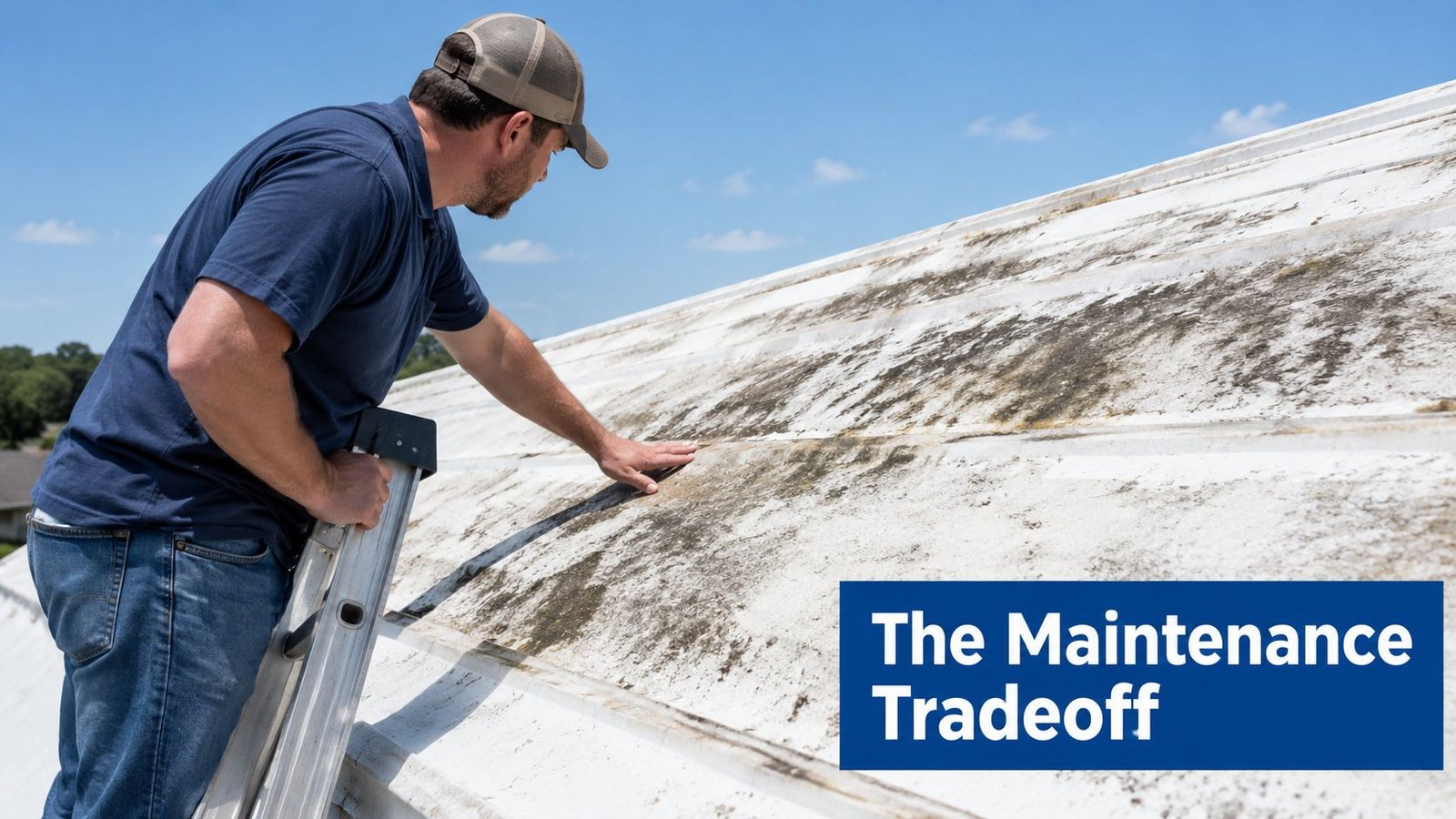
Dust from construction, pollen, airborne grime, and storm debris stand out quickly against a bright surface. A roof can still function while looking dirty, but accumulated debris can reduce the surface's reflective performance. The U.S. Department of Energy specifically notes that reflectance changes with cleanliness and aging, so the roof should be evaluated by its expected aged performance rather than its appearance on installation day.
The appearance changes over time
White shows dirt more easily than gray, brown, or blended shingles. That's especially noticeable on a visible pitched roof where the roof occupies a large part of the home's street-facing appearance. Guidance on exterior house and roof color combinations makes the same practical point. White can narrow exterior color choices, while white TPO tends to work more naturally on flatter, less visible roofs.
That means curb appeal isn't a minor detail. If you plan to sell, live under neighborhood design rules, or care about the look of a traditional San Antonio home, pure white may feel too stark. A light gray, warm off-white, or other cool-color product can be a better compromise.
Plan for safe inspection and cleaning
Don't climb onto the roof to scrub it or check for storm damage. Roofing surfaces can be steep, brittle, slick, or weakened around vents and penetrations. A professional can inspect the finish, flashing, fasteners, drainage paths, and roof condition without turning a maintenance question into a fall hazard.
A practical upkeep plan includes:
- Inspect after major storms: Look for loose panels, displaced tiles, punctures, damaged flashing, and blocked drainage.
- Watch shaded areas: North-facing slopes and areas beneath trees may collect grime and organic debris more quickly.
- Use the correct cleaning method: Aggressive pressure washing can damage coatings, granules, membranes, or sealants.
- Review the warranty: Some manufacturers set requirements for approved cleaners, repairs, and maintenance.
The right question isn't “Will white stay perfectly white?” It won't. Ask whether you're willing to keep the surface reasonably clean and whether the roof's design makes visible staining acceptable.
Deciding if a Cool Roof Fits Your San Antonio Home
A white or cool-colored roof makes the most sense when it solves a real heat problem without creating a bigger appearance or maintenance problem. Start with the roof you have, not the color you like in a catalog.
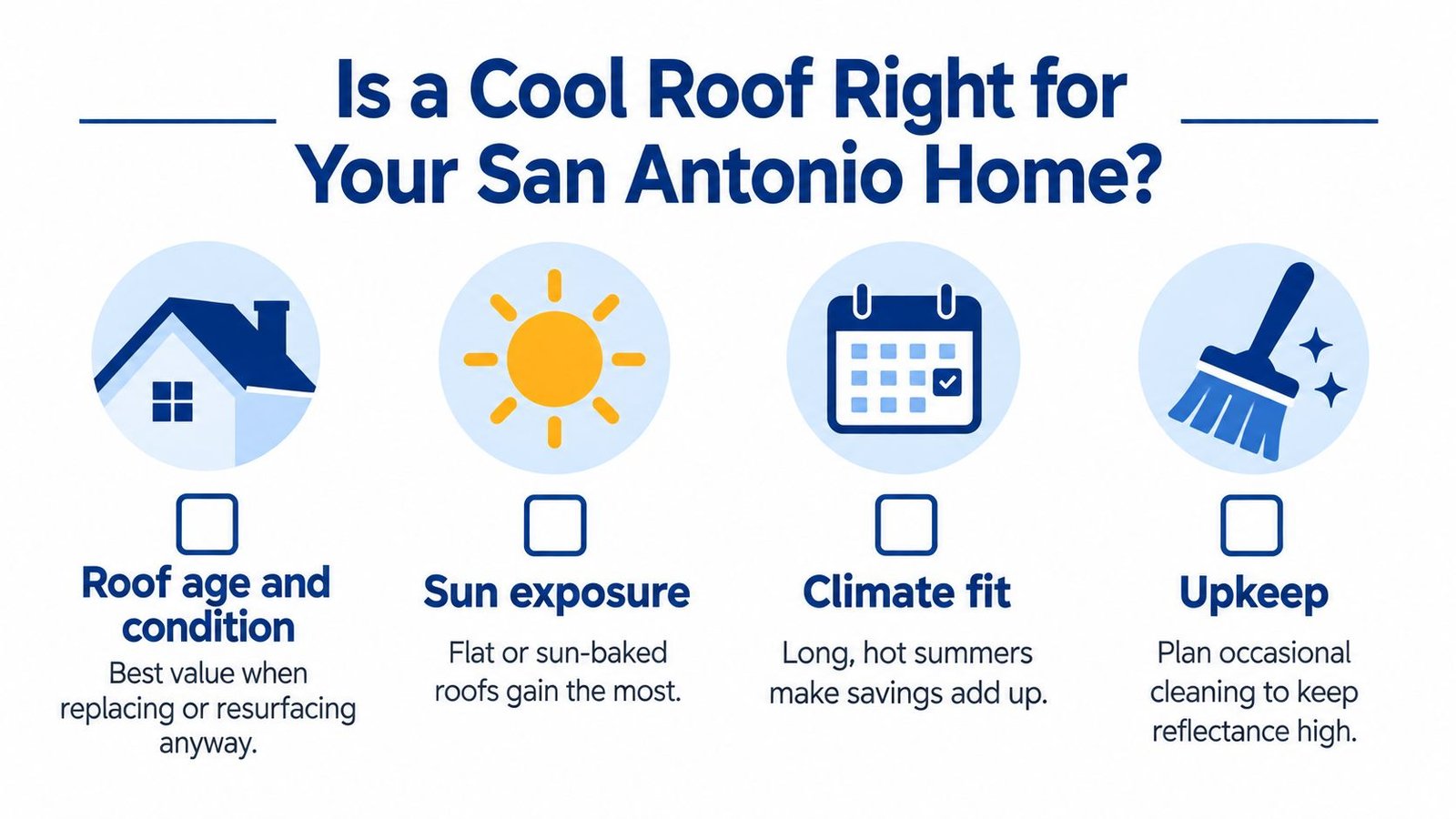
Four questions to answer first
What kind of roof are you replacing? A flat or low-slope roof with strong sun exposure is a natural candidate for a reflective membrane. A steep roof may need a lighter blended finish rather than pure white.
What space sits below it? A conditioned upper floor, finished attic, or sun-heated room can benefit more directly from reduced roof heat than a well-ventilated, unconditioned area. Garages and patios still benefit from comfort improvements, but the energy effect won't be identical to a cooled living space.
How is the insulation performing? A reflective roof can reduce the heat entering the building, but insulation controls how quickly that heat moves indoors. If the attic insulation is thin, displaced, or damp, correcting that issue may be just as important as changing roof color.
Can you live with the upkeep? If a bright roof will bother you once dust and storm debris appear, choose a practical light color that you'll maintain rather than a pure white finish you'll resent.
Use the local climate to your advantage
ENERGY STAR says a clean white roof reflecting 80% of sunlight can stay about 50°F cooler on a typical summer afternoon than a gray roof reflecting 20%, with the strongest fit in hot, sunny climates. That comparison is especially relevant in San Antonio, where long periods of intense sun make roof exposure a daily concern. See ENERGY STAR's cool-roof explanation for the underlying comparison.
The best timing is usually during a planned replacement or resurfacing project. Replacing a sound roof solely for color may not be the smartest move. But if the roof is already aging, leaking, or damaged by hail, you have a natural opportunity to select a more reflective assembly.
My recommendation is straightforward. Choose bright white for a flat or low-slope roof when heat reduction is the priority. For a prominent pitched roof, choose a tested light or cool color that fits the home and doesn't make maintenance or resale harder.
Protecting Your Investment Through Storms and Hail
Roof color doesn't protect a home from hail. Material selection, installation quality, flashing, ventilation, and prompt repairs do more to determine whether the roof handles a South Texas storm.
After hail passes through San Antonio, don't assume the roof is fine because you can't see damage from the ground. Hail can affect shingles, metal edges, soft metals, vents, gutters, and flashing. It can also leave marks that become harder to identify after rain, foot traffic, or cleanup.
Document damage before filing
Neutral storm-damage guidance recommends photographing hail impacts on shingles and soft metals before filing a claim. The photos and storm date help the insurer open the claim and assign a claim number and adjuster, as explained in this storm-damage assessment guide.
Take ground-level photos first. If you have existing property photos from before the storm, keep them available for comparison. Don't climb onto the roof, move loose materials, or attempt a repair before a qualified inspection unless immediate action is needed to stop active water intrusion.
Storm advice: Photograph what you can safely reach, then call a professional to inspect the roof surface and the details that ground-level photos can't show.
A thorough inspection should look beyond obvious punctures. It should check flashing, pipe boots, ridge components, valleys, gutters, underlayment exposure, and signs of water entry. Written findings and clear supporting photos help you understand the scope of work, whether you file an insurance claim or pay for repairs directly.
Choose the roof for the whole weather pattern
A reflective roof can reduce heat gain, but San Antonio roofs also need to handle driving rain, wind, hail, and repeated expansion and contraction. A light coating on a failing roof won't correct bad drainage or damaged decking. A new membrane won't perform well if the seams, edges, and penetrations are poorly installed.
Insurance carriers make their own claim decisions. No contractor should promise approval. Your responsibility is to document the condition, report the loss through the proper channel, and have the roof evaluated by an insured local professional who can explain what needs repair.
Your Next Steps for a Cooler and Safer Home
The right white roof house color depends on more than a paint chip. Start with the roof's slope and material. Then consider sun exposure, insulation, the space below the roof, visible dirt, neighborhood style, and your willingness to schedule safe maintenance.
For many San Antonio properties, a reflective white membrane is a strong choice on a flat or low-slope roof. For a prominent pitched roof, I usually prefer a tested light or cool-colored shingle, metal finish, or tile that supports the home's design without making every dusty mark obvious.
Don't climb up to inspect the roof yourself. From the ground, you can look for missing shingles, sagging lines, exposed underlayment, damaged gutters, or water stains indoors. A professional inspection is safer and can identify problems around flashing, valleys, penetrations, and roof edges that aren't visible from a ladder.
When you're comparing roof options, ask for the material's reflectance information, expected maintenance, warranty requirements, and suitability for the existing structure. A sound decision should account for both summer comfort and the storms that roll through Bexar County.
RRSATX is a father-son-owned San Antonio roofing company serving residential and commercial properties across the area. The company has operated since 2000, brings more than 40 years of personal roofing experience, carries $2,000,000 in liability insurance, and provides free inspections, roof repair, replacement, metal, tile, asphalt shingle, flat roofing, and storm-damage services.
If you're unsure whether a bright white roof, a lighter cool-color system, or a different material fits your San Antonio home, RRSATX can provide a free roof inspection and clear written findings. Call 713-504-2341 or schedule your free inspection online to review your roof's condition, heat exposure, and storm-readiness before choosing a color.