
[et_pb_section fb_built=”1″ admin_label=”section” _builder_version=”4.16″ global_colors_info=”{}”][et_pb_row admin_label=”row” _builder_version=”4.16″ background_size=”initial” background_position=”top_left” background_repeat=”repeat” global_colors_info=”{}”][et_pb_column type=”4_4″ _builder_version=”4.16″ custom_padding=”|||” global_colors_info=”{}” custom_padding__hover=”|||”][et_pb_code _builder_version=”4.27.7″ _module_preset=”default” hover_enabled=”0″ sticky_enabled=”0″]
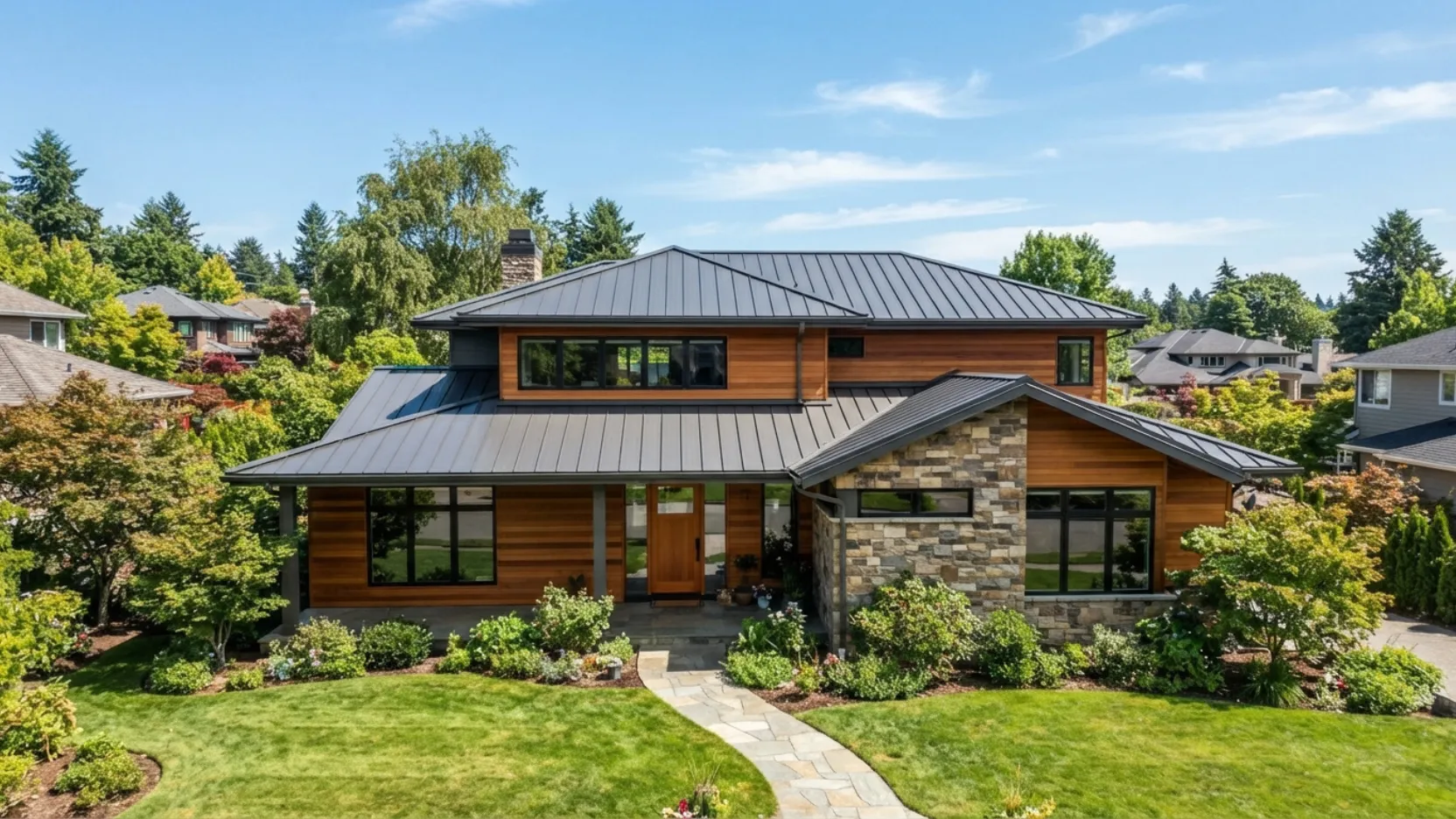
Metal roofing has become the fastest-growing roofing choice in Texas. This guide breaks down exactly why from lifespan and energy savings to storm performance and resale value so San Antonio homeowners can make an informed decision.
Metal roofing has been the fastest-growing residential roofing category in the United States for several years running, and in San Antonio that trend is especially visible. Drive through any neighborhood in Bexar County and you will see standing seam panels and corrugated metal replacing worn-out asphalt shingles on homes of every size and style. The reasons go well beyond aesthetics.
Homeowners are switching to metal because the math makes sense for the Texas climate. San Antonio gets extreme summer heat, periodic hailstorms, and high winds. Asphalt shingles deteriorate faster here than in cooler parts of the country. Metal roofing systems are specifically built to handle conditions that shorten the life of other roofing materials. When you factor in lifespan, energy performance, storm resistance, and resale value together, the picture becomes clear.
Metal roofing is not just a premium material it is a different category of product with a different lifespan, performance profile, and cost structure than traditional asphalt shingles. A homeowner who plans to stay in their home for more than 15 years, or who wants to maximize resale value, is making a financially sound decision when they choose metal. The higher upfront cost is the only honest objection, and it disappears quickly when you calculate what you will spend replacing asphalt shingles two or three times over the same period.
Lifespan
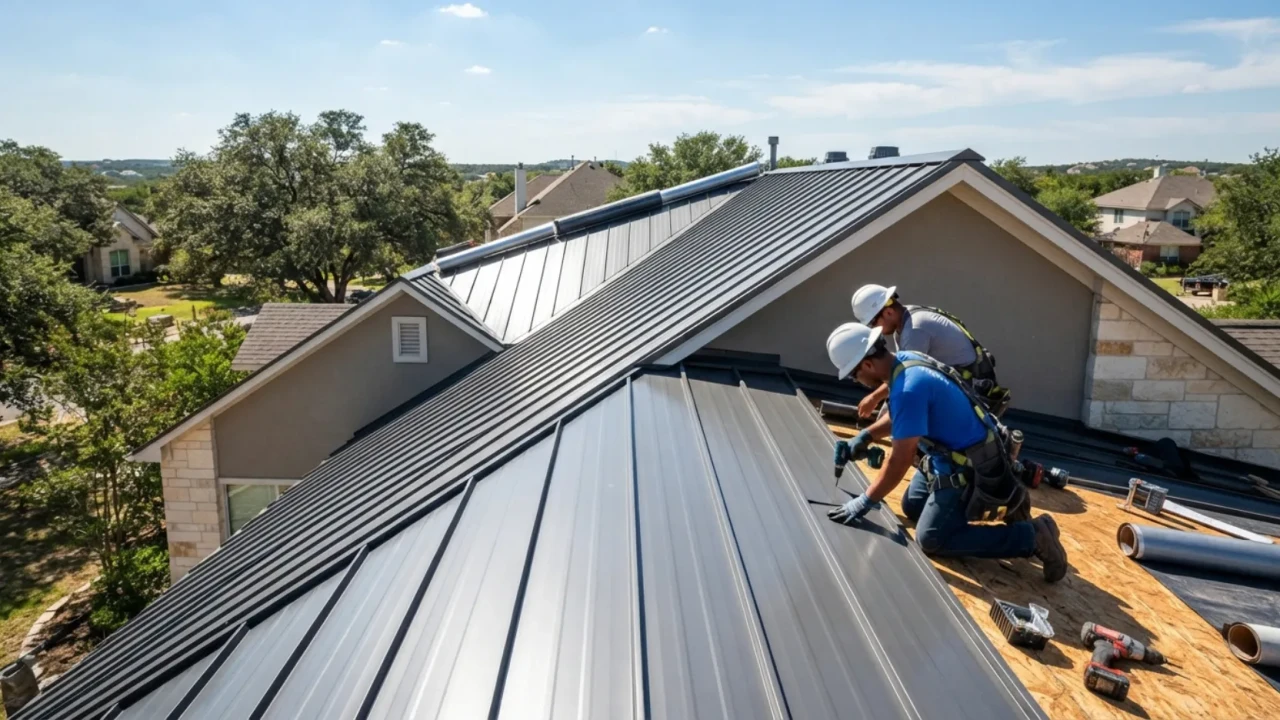
The single biggest advantage of metal roofing is how long it lasts. A standard three-tab asphalt shingle roof in San Antonio will typically need replacement in 15 to 20 years. The combination of intense UV exposure, summer temperatures that push a dark roof surface past 180 degrees Fahrenheit, and the thermal cycling between summer heat and winter cold accelerates shingle degradation compared to cooler climates. Metal does not degrade the same way.
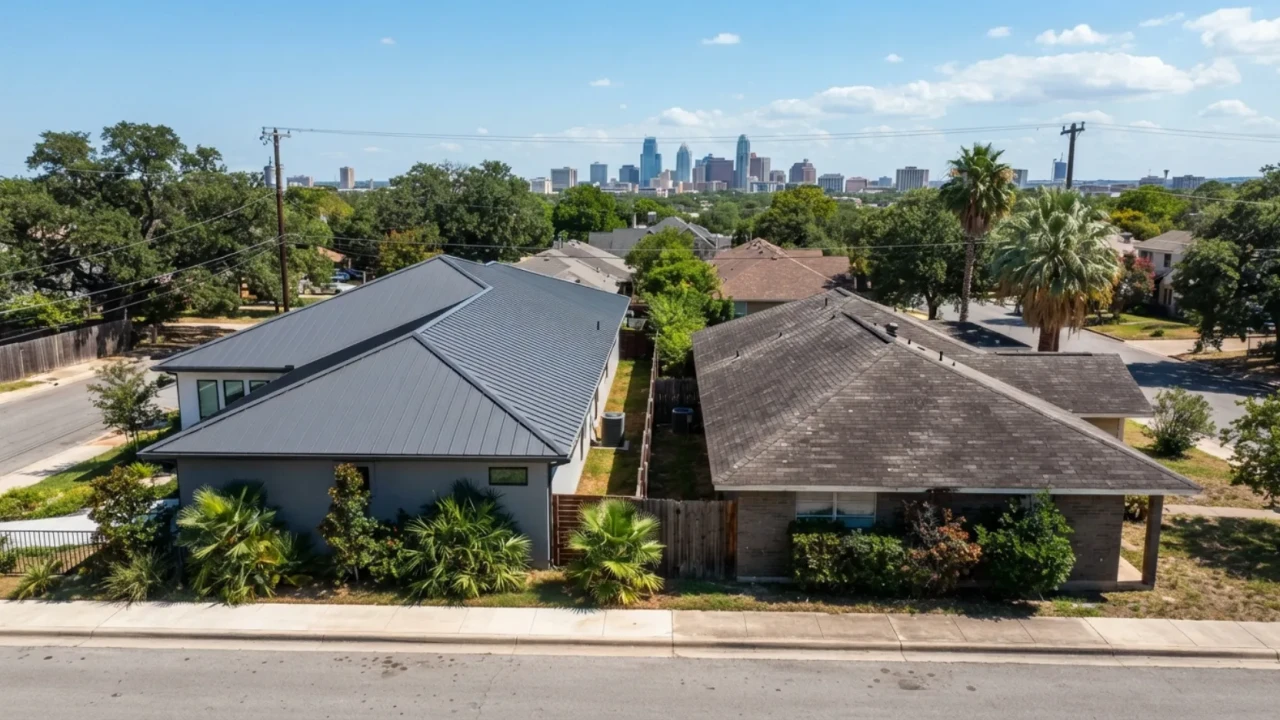
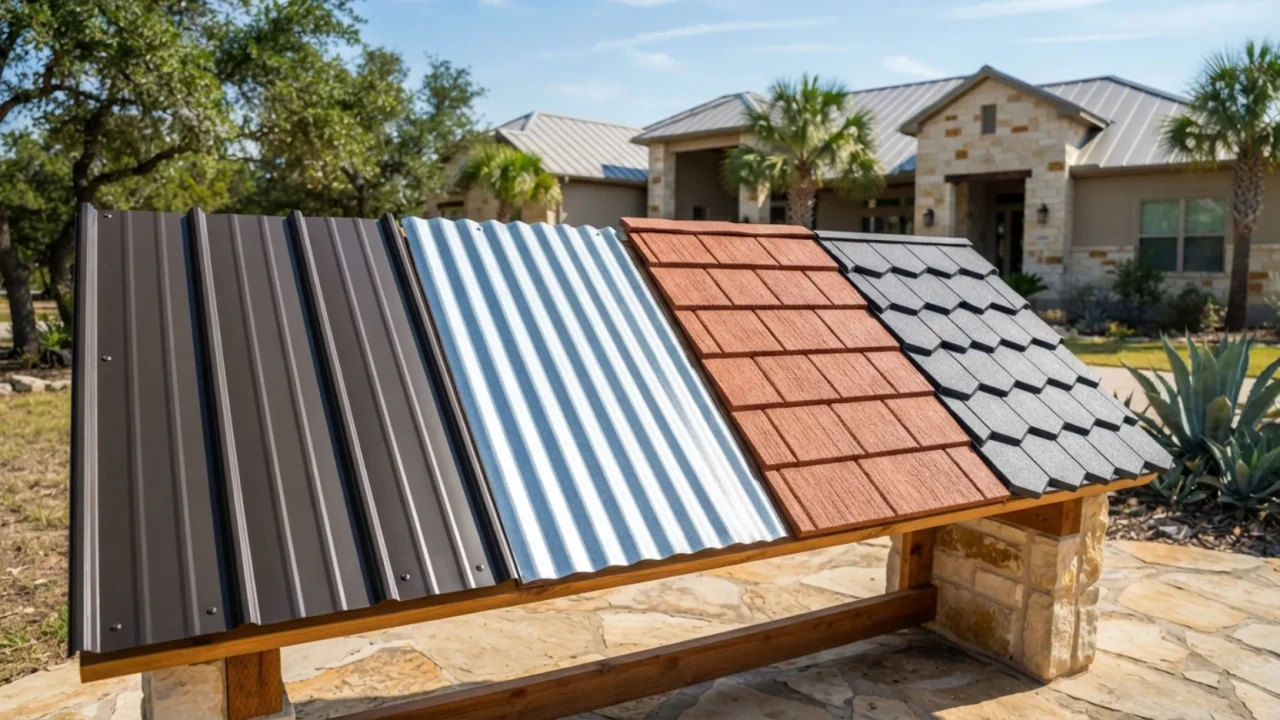
Steel and aluminum panels: Galvalume-coated steel is the most common metal roofing material for San Antonio residential roofs. It resists corrosion, reflects heat, and holds its dimensional stability across extreme temperature swings. Properly installed Galvalume standing seam roofs routinely reach 50 or more years with basic maintenance.
Stone-coated steel: This product combines a steel base with a stone granule finish bonded by acrylic resin. It offers the appearance of traditional roofing with the structural performance of metal. Lifespan ranges from 30 to 50 years in the Texas climate depending on coating quality and maintenance history.
- Galvalume or high-quality paint coating selected for UV exposure resistance in the Texas climate
- Panel gauge appropriate for the application: 26-gauge for residential, 24-gauge for high-wind or commercial exposure
- Concealed fastener systems (standing seam) reduce weathering points and extend service life
- Roof properly ventilated to prevent heat buildup at the deck level, which can stress panel coatings
- Maintenance schedule includes fastener and sealant inspection every three to five years
Energy Savings
San Antonio averages more than 220 sunny days per year. Summer temperatures regularly exceed 100 degrees Fahrenheit, and air conditioning costs represent a substantial portion of household energy spending from May through September. The roof is the largest surface on most homes and one of the biggest contributors to heat gain. Metal roofing systems address this differently and more effectively than asphalt shingles.
A dark asphalt shingle roof in San Antonio can reach surface temperatures of 170 to 190 degrees Fahrenheit on a hot summer afternoon. That heat radiates through the decking into the attic space, raising attic temperatures and forcing air conditioning systems to work harder. Metal roofing with reflective coatings keeps surface temperatures 50 to 70 degrees cooler than dark shingles under the same conditions.
When selecting a metal roof color for energy performance in San Antonio, lighter is better but not by as much as you might think. The real advantage of quality metal roofing is not just the initial reflectivity; it is the emissivity. Metal releases heat rapidly once the sun goes down, unlike asphalt shingles that hold heat into the evening hours. A medium-gray metal roof with a high-emissivity coating often outperforms a white asphalt roof on total daily energy performance. Ask your San Antonio roofing contractor for the SRI (Solar Reflectance Index) rating of the specific product you are considering.
- Product carries an ENERGY STAR certification or meets Cool Roof Rating Council standards
- Solar Reflectance Index (SRI) rating provided by the manufacturer for your selected color
- Batten or counter-batten installation system specified to create air gap below panels
- Attic ventilation assessed and upgraded if needed a reflective roof works best with adequate airflow
- Tax credit eligibility confirmed before installation with a copy of the manufacturer’s certification
Storm Resistance
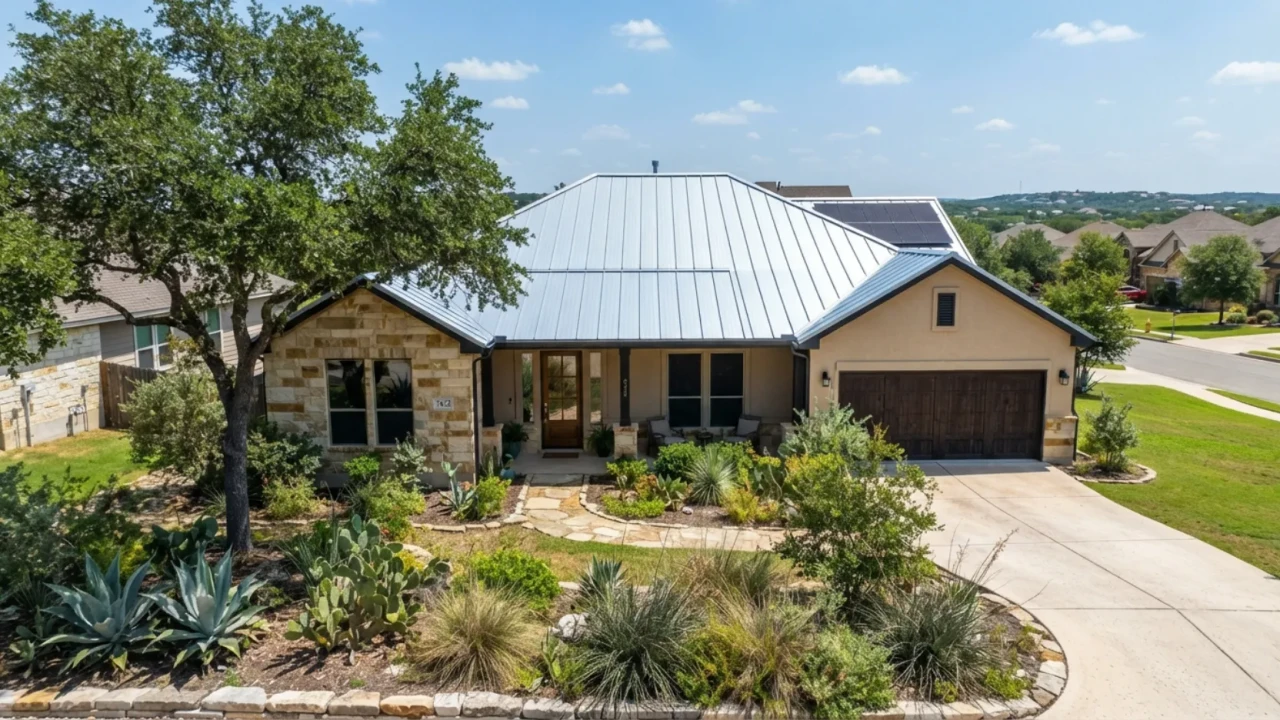
San Antonio sits in one of the most active hail corridors in the country. Large hail events, high-wind storms, and the occasional severe thunderstorm are a normal part of life in Bexar County. Asphalt shingles are rated for wind and impact, but they reach the end of their protective ability much sooner than metal under repeated storm exposure. A Class 3 or Class 4 impact-resistant metal panel will survive hail events that crack and dislodge shingles entirely.
Wind is the other major factor. Standard three-tab asphalt shingles are typically rated for winds of 60 to 70 mph. Architectural shingles push that to 90 to 110 mph with proper installation. Standing seam metal roofing systems are engineered for wind speeds of 120 to 140 mph well above the worst storms San Antonio typically sees because the concealed clip attachment system distributes wind load across the entire panel rather than concentrating it at individual fastener points.
- Panel product carries a Class 4 UL 2218 impact resistance rating for hail coverage
- Wind rating of 130 mph or higher specified for standing seam installation
- Insurance agent contacted to confirm premium discount for Class 4 impact-resistant roofing
- Concealed fastener (standing seam) system used where maximum wind resistance is needed
- Flashing details at all penetrations and edges engineered to resist wind-driven rain
Resale Value
Homeowners who plan to sell within 10 to 15 years sometimes hesitate on metal roofing because of the upfront cost. That hesitation is understandable, but it overlooks how significantly a metal roof affects buyer perception and home pricing. Real estate professionals consistently report that a newer metal roof is one of the most compelling features a seller can offer in the Texas market, where buyers are acutely aware of what a roof replacement costs and how soon an aging asphalt shingle roof will need attention.
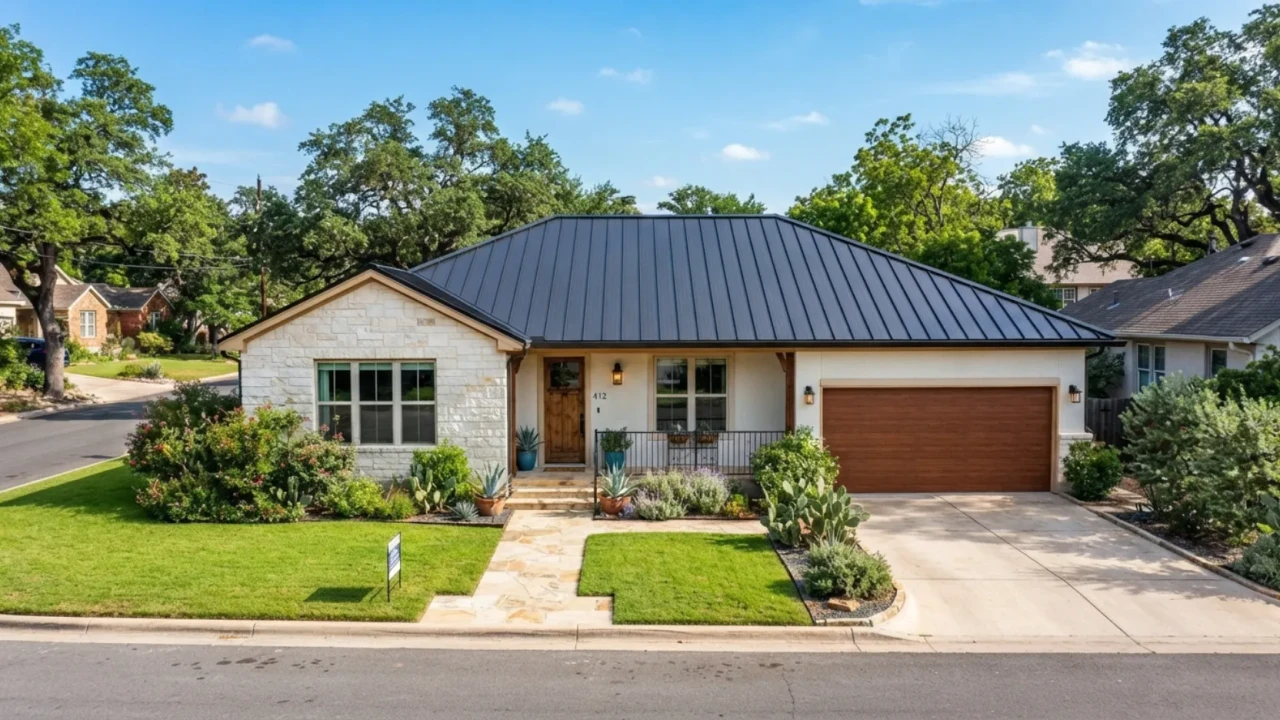
Buyer psychology: A buyer looking at two similar homes priced the same one with a 12-year-old asphalt shingle roof and one with a 5-year-old metal roof knows that the first home will likely need a $10,000 to $18,000 roof replacement within a few years. That knowledge directly affects their offer price. The metal roof home is effectively priced lower in real cost to the buyer, which gives it a measurable competitive advantage.
Appraisal consideration: While appraisers use the cost approach conservatively, a metal roof in excellent condition with 30 or more years of remaining life is a documentable improvement that supports a higher appraised value compared to an aging shingle roof requiring near-term replacement.
- Installation records and warranty documentation kept on file to present to future buyers
- Product’s impact resistance rating (Class 4) documented a tangible insurance benefit buyers can carry forward
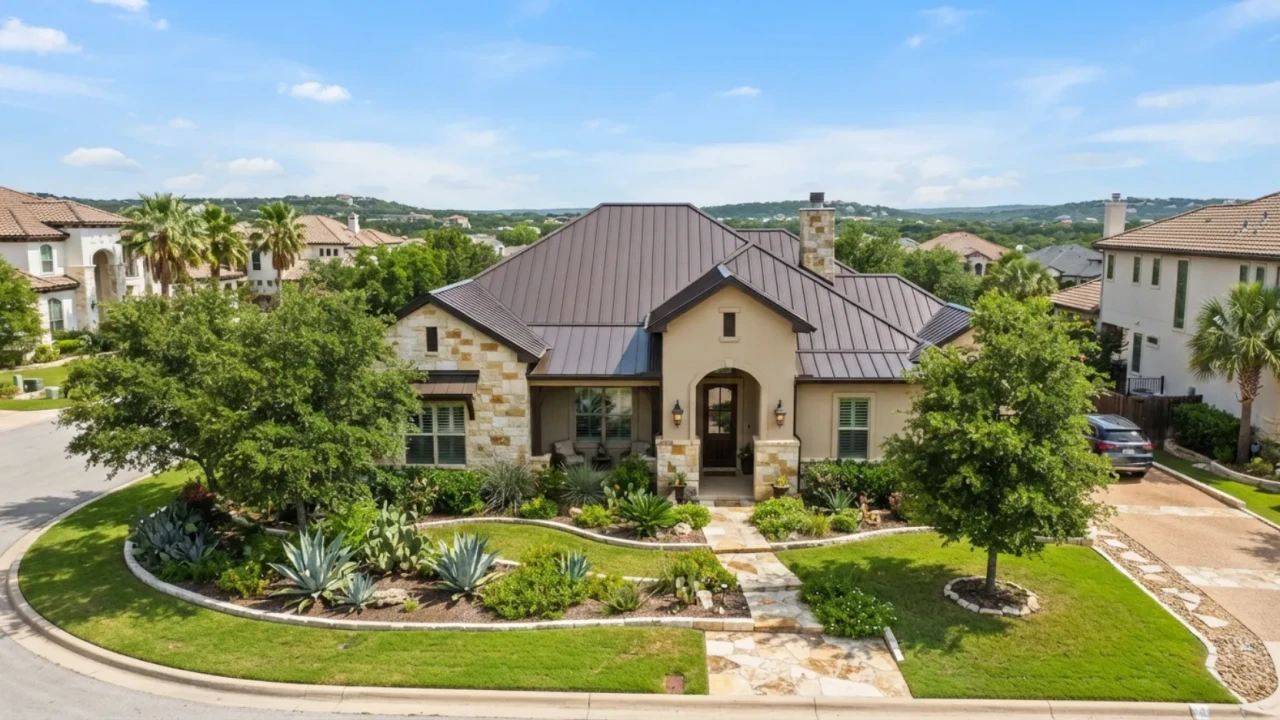
- Color and style selected to complement the home’s architecture and neighborhood aesthetic
- Maintenance history documented: inspection dates, any repairs made, sealant applications
- Manufacturer’s warranty transferability confirmed in writing most quality metal roofing warranties are transferable
Low Maintenance
Asphalt shingle roofs require ongoing attention: granule loss accelerates after year 10, wind damage to individual shingles needs prompt repair, moss and algae growth has to be treated before it causes deterioration, and the shingles themselves become increasingly brittle in Texas heat. Metal roofing does not share these vulnerabilities. Once properly installed, a metal roof needs only periodic inspections to check fasteners and sealant, plus gutter clearing to prevent debris accumulation at eave edges.
There is no granule loss, no brittleness from UV exposure, and no moss or algae problem with Galvalume or painted metal panels. The most common maintenance items on a screw-down metal panel roof over its lifespan are fastener inspections around years 10 and 20, and sealant renewal at penetrations and ridge caps roughly every 15 to 20 years. Standing seam systems with concealed clips require even less because there are no exposed fastener points to inspect at the panel field.
- Year 1 after installation: confirm all fasteners properly seated and sealant fully cured
- Every 3 to 5 years: visual inspection of fasteners, sealant at penetrations, and ridge cap condition
- After major hail events: professional inspection within 30 days to check for coating damage
- Annually: clear gutters and valleys of debris accumulation that holds moisture against panel edges
- Year 15 to 20: sealant renewal at all penetrations, ridge caps, and panel termination points
Fire Safety
Metal roofing carries a Class A fire resistance rating, which is the highest classification available under ASTM E108 testing standards. This matters in San Antonio and across central Texas as wildfire risk has increased in surrounding counties, and summer conditions dry grass, high temperatures, low humidity, and wind create the conditions that allow roof-to-roof fire spread in dense neighborhoods.
A Class A rated metal roof will not ignite from airborne embers, will not sustain surface burning, and will not contribute to the spread of fire from one structure to another. Standard asphalt shingles are typically rated Class A or Class B, but the organic mat under the granules is combustible and can contribute to fire spread once the surface granules are compromised. Metal is non-combustible throughout its entire structure.
- Metal roofing product carries a Class A UL fire resistance rating confirmed on the manufacturer’s data sheet
- Non-combustible throughout: metal does not add fuel to a fire the way wood or asphalt underlayments can
- Ember resistance: a metal roof will not ignite from airborne burning debris during a wildfire event
- Insurance carrier contacted to confirm Class A fire rating discount availability for your location
Sustainability
Approximately 11 million tons of asphalt shingles end up in landfills in the United States every year. Shingles are difficult to recycle because of their composite nature asphalt, fiberglass mat, and mineral granules bound together and most recycling programs accept them only in limited quantities. Metal roofing generates a fraction of this waste footprint over time, for two reasons: it lasts two to three times longer, and when a metal panel does reach the end of its useful life, it is 100 percent recyclable with established market demand.
Most steel and aluminum metal roofing products are manufactured with 25 to 95 percent recycled content, depending on the panel type and manufacturer. The production process for recycled metal uses significantly less energy than virgin material production. Over a 50-year ownership period, a metal roof produces far less total material waste than the two or three asphalt shingle replacements it displaces.
- Recycled content percentage documented by the manufacturer for the specific panel product
- ENERGY STAR certification confirms the product meets federal energy performance standards
- Cool Roof Rating Council (CRRC) listing provides independently tested solar reflectance and emissivity data
- End-of-life recyclability confirmed: steel and aluminum panels have established scrap market value
This comparison assumes a 2,000 square foot San Antonio home and reflects typical 2026 market conditions. Individual results vary based on home size, product selection, and energy usage patterns.
| Category | Metal roofing | Asphalt shingles | Advantage |
|---|---|---|---|
| Upfront installation cost | $12,000 to $25,000+ | $6,000 to $12,000 | Asphalt (short term) |
| Expected lifespan in SA | 40 to 70 years | 15 to 20 years | Metal |
| Replacements over 50 years | 0 to 1 | 2 to 3 | Metal |
| 50-year total cost estimate | $15,000 to $28,000 | $18,000 to $40,000+ | Metal |
| Annual energy savings | $200 to $500 | Baseline | Metal |
| Storm and hail resistance | Class 4 impact rating available | Class 3 maximum typical | Metal |
| Wind resistance | Up to 140 mph | Up to 110 mph | Metal |
| Fire rating | Class A standard | Class A or B | Metal |
| Insurance premium potential | Discounts up to 30% | Standard rate | Metal |
| Maintenance requirements | Minimal inspection every 3 to 5 years | Moderate annual inspection recommended | Metal |
- You plan to stay in the home for 15 or more years and want to eliminate future roof replacement costs
- Your current asphalt shingle roof is approaching or past 15 years old and will need replacement soon
- Your home is in an area of Bexar County that sees frequent hail or high-wind events
- High summer energy bills are a priority concern and you want to reduce air conditioning costs
- You are planning to sell and want to maximize resale value with a durable, low-maintenance upgrade
- Your insurance carrier offers a significant Class 4 impact-resistant roof discount
- Upfront budget is the primary constraint metal costs more initially, but the long-term math typically favors metal
- You plan to sell the home within five years recovery of the investment through resale is not guaranteed in all price ranges
- Your home has a very low pitch some metal panel profiles have minimum pitch requirements that limit options
- Neighborhood HOA has restrictions on roofing materials or colors verify before committing to a specific product
- What panel profile and gauge do you recommend for my specific roof pitch and exposure conditions?
- What is the manufacturer’s warranty on the panel finish, and is it transferable to a new owner?
- Does this product carry a Class 4 UL 2218 impact rating and an ENERGY STAR certification?
- What will the installation look like at the eaves, ridges, and around my roof penetrations?
- Do you carry at least $1 million in general liability insurance and workers compensation for your crew?
How much does metal roofing cost in San Antonio compared to asphalt shingles?
Is metal roofing loud during rain in San Antonio?
Does a metal roof attract lightning in San Antonio?
What type of metal roofing is best for San Antonio homes?
Can I install solar panels on a metal roof in San Antonio?
How do I find a reputable metal roofing contractor in San Antonio?
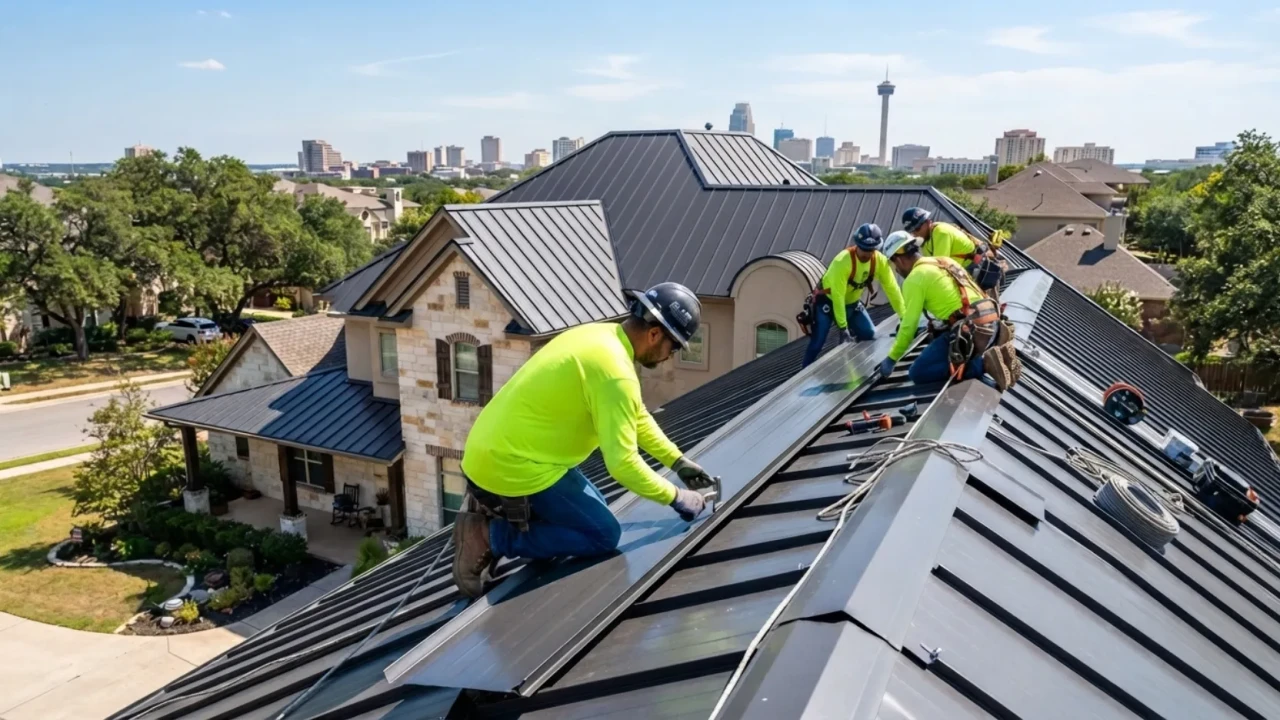
Ready to get a metal roofing estimate in San Antonio?
We will walk your roof, assess your current roofing condition, and give you a clear written quote for metal roofing installation at no cost. Licensed, insured, and local to Bexar County.
[/et_pb_code][/et_pb_column][/et_pb_row][/et_pb_section]