
[et_pb_section fb_built=”1″ admin_label=”section” _builder_version=”4.16″ global_colors_info=”{}”][et_pb_row admin_label=”row” _builder_version=”4.16″ background_size=”initial” background_position=”top_left” background_repeat=”repeat” global_colors_info=”{}”][et_pb_column type=”4_4″ _builder_version=”4.16″ custom_padding=”|||” global_colors_info=”{}” custom_padding__hover=”|||”][et_pb_code _builder_version=”4.27.7″ _module_preset=”default” hover_enabled=”0″ sticky_enabled=”0″]
Not all metal roofs are the same. Standing seam, exposed fastener panels, stone coated steel, and metal shingles each perform differently under San Antonio heat, hail, and wind. This guide breaks down every metal roofing type sold in San Antonio, what each one costs installed, and which option fits your home, your budget, and your neighborhood.
San Antonio homeowners researching metal roofing quickly discover it is not a single product. Standing seam, exposed fastener corrugated panels, stone coated steel, and metal shingles all fall under the metal roofing umbrella, and each one handles Texas heat, hail, and wind differently. The right choice depends on your budget, your neighborhood’s aesthetic rules, and how long you plan to stay in the home.
This guide walks through every metal roofing type sold and installed in San Antonio in 2026, what each one costs installed, and which type fits specific situations, from HOA controlled neighborhoods in Stone Oak to historic homes in Monte Vista and King William.
Homeowners who choose metal roofing based on price alone sometimes pay twice: once for the roof, and again a decade later when an exposed fastener system starts leaking at every screw. Homeowners who choose based on looks alone sometimes pay a premium for standing seam when a stone coated steel panel would have met an HOA’s shingle look requirement for thousands less. Start with your priority, whether it is budget, hail resistance, HOA approval, or long term value, and the right metal roofing type becomes clear.
Standing Seam
Standing seam panels run vertically up the roof and lock together at raised seams, with all fasteners hidden underneath the panel edge. Because no screw heads are exposed to the sun and rain, there is no failure point for water to work through over time. This is the single biggest reason standing seam roofs outlast every other metal roofing type in San Antonio.
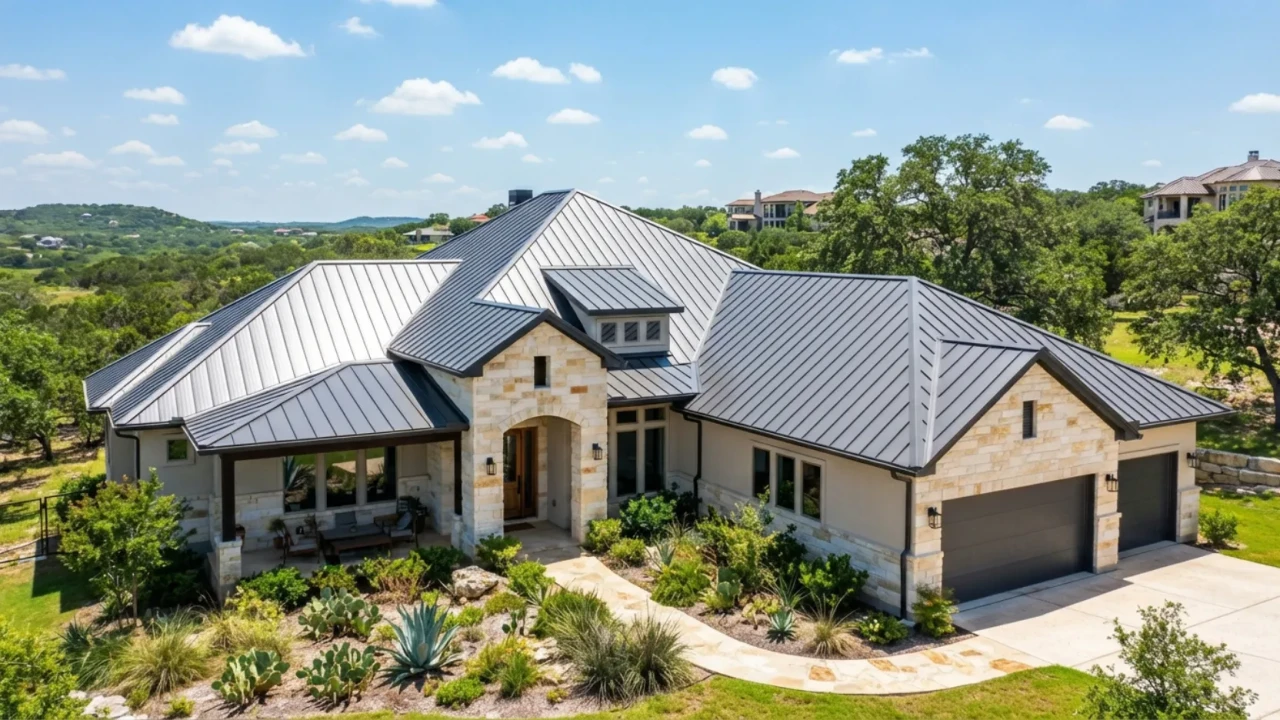
Snap-lock panels: Panels click together without special tools, which lowers labor cost. A solid choice for most residential standing seam projects in San Antonio.
Mechanically seamed panels: A roller tool crimps the seam closed on site for the tightest possible seal. Used on low slope roofs or homes in wind exposed areas where maximum seam strength matters.
- Panel gauge confirmed in writing: 24 gauge for full residential roofs, not a thinner substitute
- Seam type specified: snap-lock or mechanically seamed, matched to your roof slope
- Underlayment specified: a high temperature synthetic underlayment rated for San Antonio heat
- Clip spacing confirmed to manufacturer specification for local wind load requirements
- Warranty covers both the paint finish and the substrate, with terms clearly separated
- Installer has documented standing seam experience, not just exposed fastener panel work
Corrugated
Exposed fastener panels, often called R-panel, Ag-panel, or 5V-crimp depending on the profile, are screwed directly through the panel face into the roof deck or purlins. This is the fastest and least expensive metal roofing system to install, which is why it remains common on garages, workshops, ranch style homes, and outbuildings across the San Antonio area.
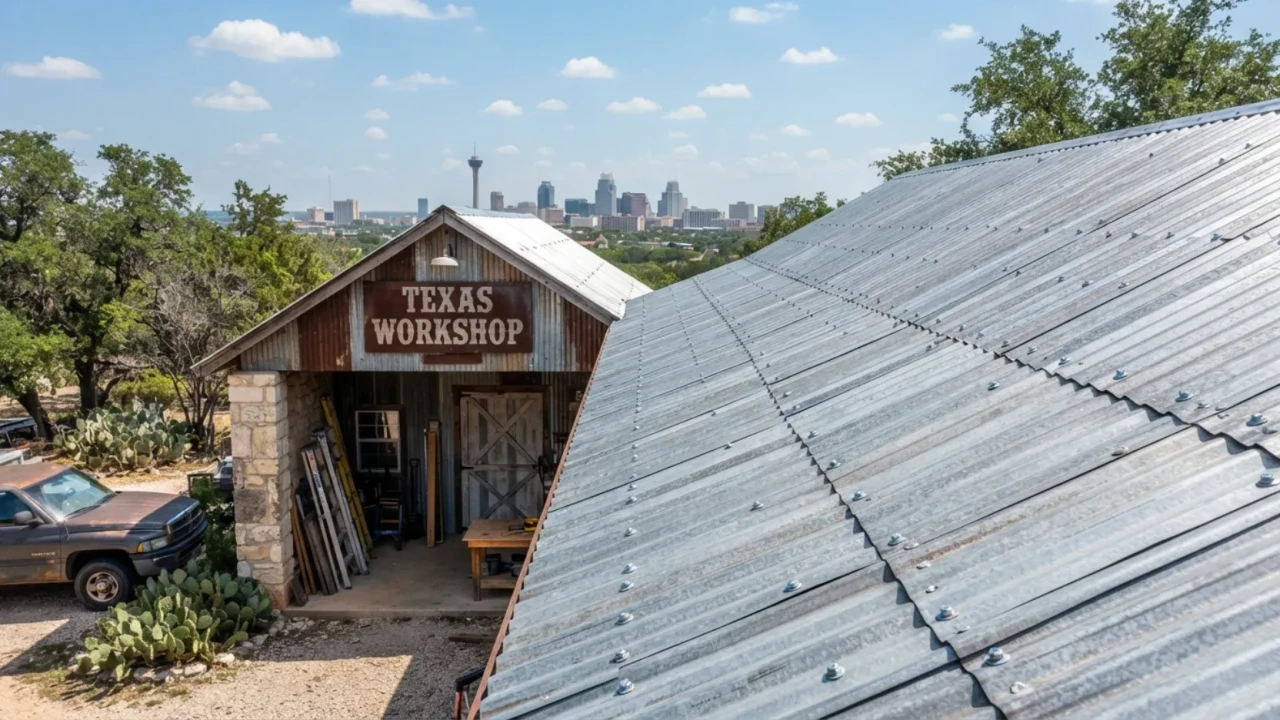
How it is fastened: Screws run through the raised rib or the flat pan of the panel, straight into the deck or purlins, with a rubber washer sealing each hole.
Budget for a fastener maintenance pass at the 10 to 15 year mark. The EPDM rubber washers under every exposed screw harden and crack under San Antonio’s UV exposure over time. Re-torquing and replacing worn fasteners on a regular schedule is inexpensive compared to the cost of chasing leaks after several screws fail at once, and it keeps this budget friendly system performing for its full expected lifespan.
- Panel profile confirmed to match your roof slope; low slope roofs need tighter panel overlap
- Fastener spacing meets manufacturer specification for San Antonio’s local wind zone
- Screw type is a gasketed metal roofing screw, not a generic construction screw
- Maintenance schedule discussed upfront: fastener inspection every 10 to 15 years
- Realistic expectations set that this system costs less but needs more upkeep than standing seam
Best for Hail
Stone coated steel panels are formed steel shingles or shakes coated in natural stone chips bonded with acrylic. From the ground, they read as a textured shingle or shake roof, which makes this the go-to option for San Antonio neighborhoods with HOA design guidelines that restrict the visible look of a metal roof, including many Stone Oak and North Side communities.
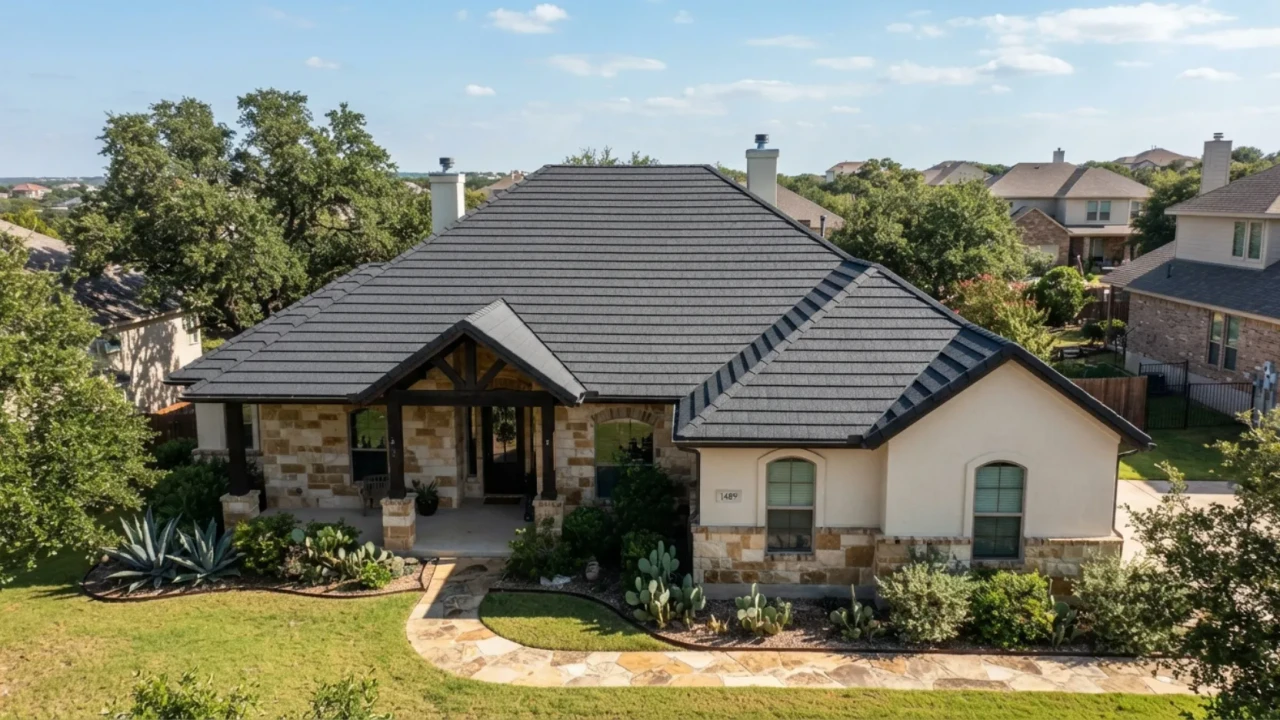
Impact resistance: Most stone coated steel products carry a UL 2218 Class 4 rating, the highest impact resistance classification available. Many Texas insurers offer a premium discount for a documented Class 4 roof.
Profile options: Shake, shingle, and tile profiles are all available in stone coated steel, so the aesthetic can match a wide range of San Antonio home styles.
- Class 4 impact rating confirmed on the specific product line being quoted, not the category generally
- HOA architectural review submitted and approved before ordering material, if applicable
- Profile and color sample viewed in person; stone coating color can read differently in full sun
- Insurance company contacted to confirm the available discount before finalizing the budget
- Underlayment and fastening system confirmed for San Antonio’s steep slope wind requirements
Metal Shingle
Metal shingles and tiles are individual interlocking panels, usually aluminum or steel, formed and finished to resemble slate, wood shake, or clay barrel tile. They give a San Antonio homeowner the traditional look a historic district architectural review board may require, without the structural load or ongoing maintenance of real slate or tile.
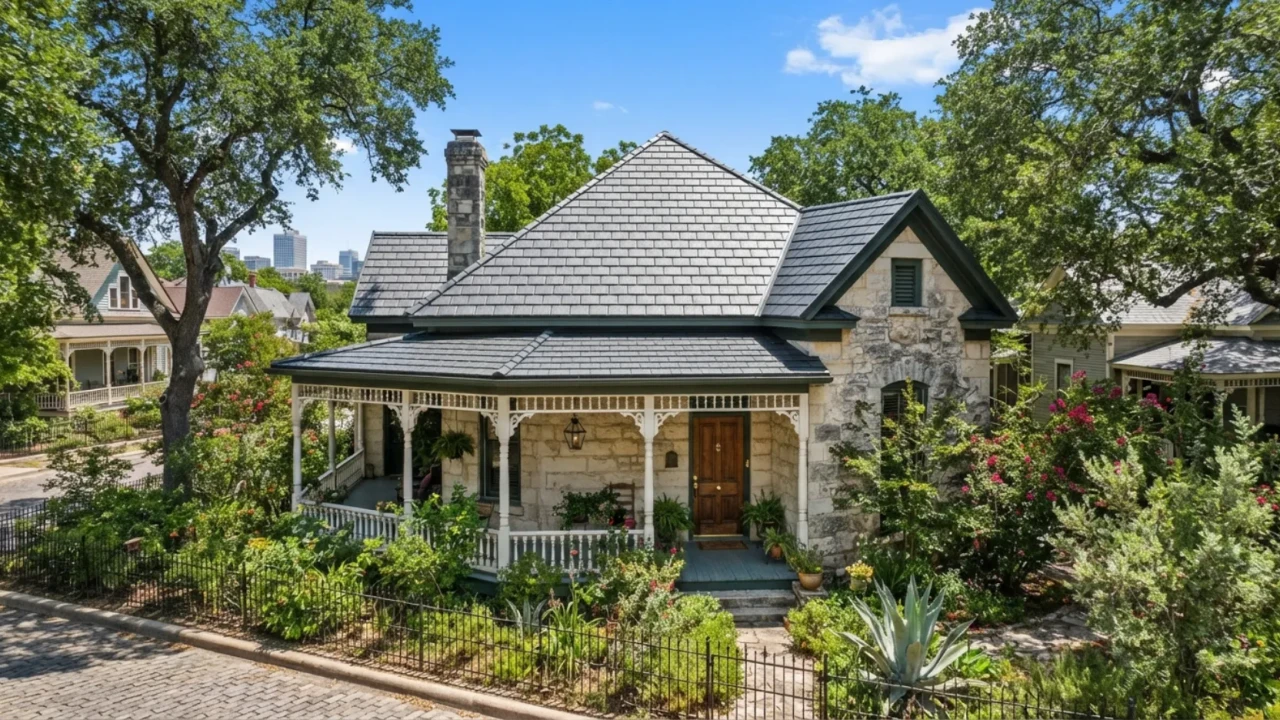
Slate and shake look: Individually stamped panels replicate the shadow lines and texture of real slate or wood shake without the weight or the maintenance.
- Historic district or architectural review approval confirmed before purchasing material, if applicable
- Roof structure evaluated to confirm it can carry the chosen product’s weight, even though it is lighter than real slate or tile
- Base metal selected based on your priority: steel for cost, aluminum for corrosion resistance
- Sample panel viewed on site under actual sunlight before committing to a finish color
Base Metal
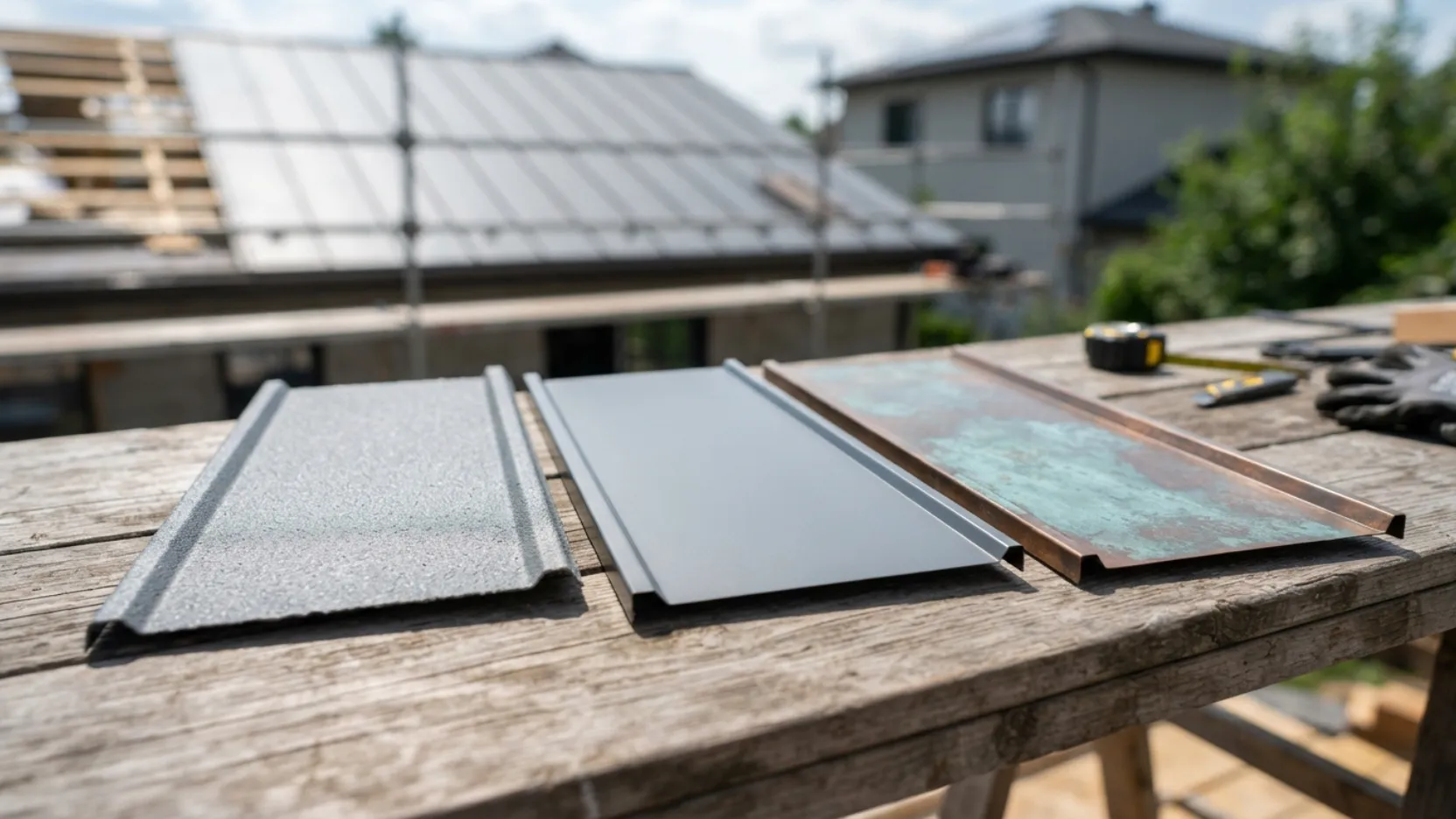
Every panel style covered above, standing seam, exposed fastener, stone coated, and metal shingle, can be manufactured from more than one base metal. The base metal you choose affects long term corrosion resistance, weight, hail performance, and cost more than most homeowners expect going in.
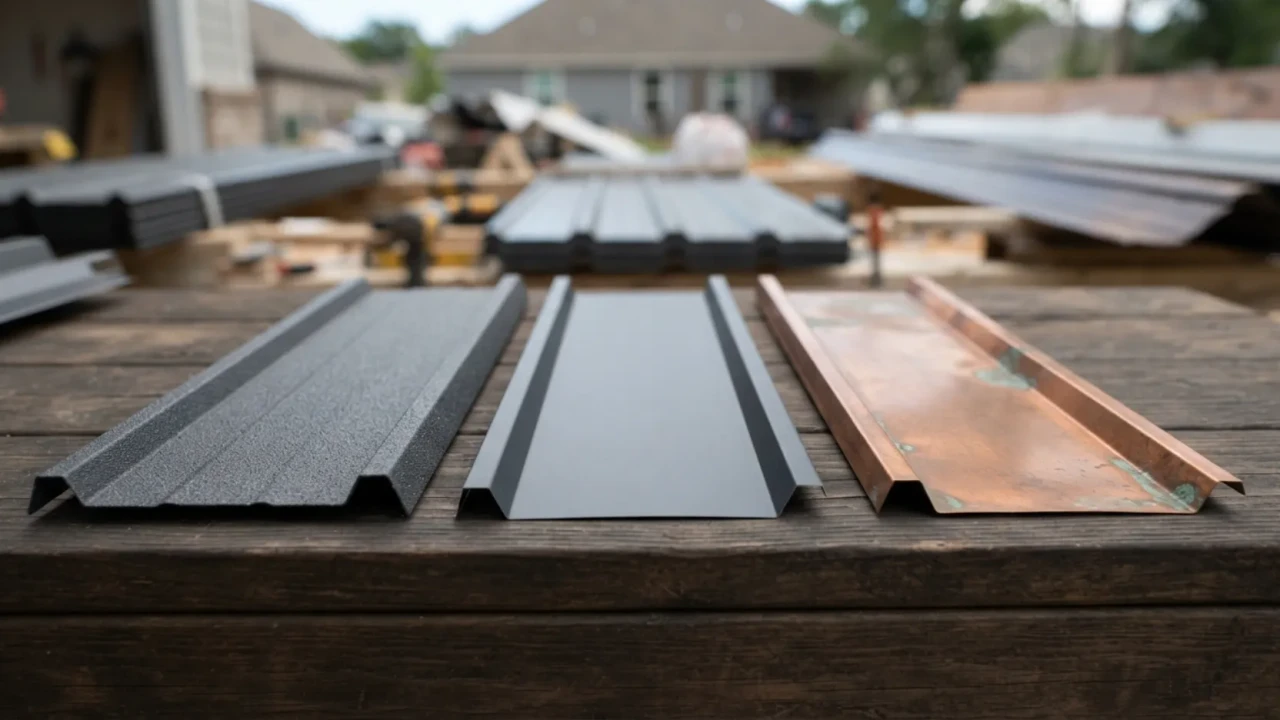
Galvalume steel: The most common metal roofing material in San Antonio. Steel coated in an aluminum-zinc alloy for corrosion resistance, then finished with a painted coating. Strong, magnetic, and the most cost effective option.
Aluminum: Never rusts, since it contains no iron. Lighter than steel and a strong choice for older homes with limited structural load capacity. It dents more easily than steel under large hail, which is worth weighing given San Antonio’s hail exposure.
Copper and zinc: Premium, long lasting materials that develop a natural patina over decades. Used most often on accent roofs, entryways, and dormers rather than full residential roofs due to cost.
- Coating type confirmed on steel products: Galvalume, galvanized, or a painted finish over one of the two
- Structural load capacity confirmed with an older home before specifying a heavier base metal
- Hail exposure weighed honestly against dent resistance when comparing steel to aluminum
- Paint finish warranty reviewed separately from the substrate warranty on any painted steel product
Every metal roofing type covered in this guide performs well when it is matched to the right situation. The table below maps common San Antonio homeowner priorities to the panel type that typically fits best.
| Your priority | Recommended type | Reasoning |
|---|---|---|
| Lowest upfront cost | Exposed fastener corrugated | The most affordable installed metal roofing option, best suited to outbuildings and budget conscious projects. |
| Maximum hail resistance | Stone coated steel or Class 4 standing seam | Both carry the highest available UL 2218 Class 4 impact rating, and often qualify for an insurance discount. |
| HOA requires a shingle look | Stone coated steel | Reads as a shingle or shake roof from the street while delivering full metal roofing durability. |
| Longest lifespan, lowest leak risk | Standing seam | Concealed fasteners remove the leading cause of metal roof leaks, giving standing seam the longest track record. |
| Historic district home | Metal shingles or tiles | Matches slate, wood shake, or tile profiles required by many San Antonio historic district review boards. |
| Older home, limited roof structure | Aluminum standing seam or metal shingle | Aluminum is lighter than steel and never rusts, reducing long term load and maintenance concerns. |
| Modern architectural look | Standing seam, steel or aluminum | Clean vertical lines and a sleek, uninterrupted panel surface fit contemporary San Antonio home designs. |
These price ranges reflect real San Antonio market rates in 2026 for fully installed metal roofing, including material and labor. Costs vary based on roof pitch, access difficulty, panel profile, and total roof area. Every estimate should be confirmed in writing before work begins.
| Roofing type | Installed cost per sqft | Typical lifespan | Best for |
|---|---|---|---|
| Exposed fastener corrugated (steel) | $5.50 to $8.50 | 25 to 40 years | Outbuildings, workshops, budget conscious projects |
| Stone coated steel | $9 to $13 | 40 to 60 years | HOA neighborhoods, hail prone areas |
| Standing seam steel | $9 to $14 | 40 to 70 years | Long term value, modern homes |
| Metal shingles or tiles (steel) | $10 to $14 | 40 to 60 years | Historic districts, architectural style |
| Standing seam aluminum | $11 to $16 | 50 to 70 years | Older homes, zero rust maintenance |
| Metal shingles or tiles (aluminum) | $13 to $18 | 50 to 70 years | Coastal or humid microclimates |
| Standing seam copper | $22 to $35 | 100 plus years | Accent roofs, entryways, premium projects |
- Priority ranked in order: budget, hail resistance, HOA approval, lifespan, or architectural style
- HOA guidelines or historic district rules reviewed for any restrictions on roofing appearance
- Roof structure assessed for load capacity if considering a heavier base metal or profile
- Insurance company contacted to ask about discounts for Class 4 impact rated roofing
- Home’s expected ownership timeline weighed against each type’s typical lifespan
- Panel gauge and base metal specified in writing, not just the general product category
- Underlayment type confirmed, ideally a high temperature synthetic rated for San Antonio heat
- Fastener type confirmed: concealed clip system or exposed gasketed screws, matched to the panel style
- At least two written quotes obtained for any full roof replacement over $8,000
- Warranty terms compared separately for paint finish, substrate, and workmanship
- Certificate of insurance received and verified, at least $1 million general liability coverage
- Manufacturer product line and color confirmed in writing, with a physical sample viewed on site
- Installation timeline and weather contingency plan discussed for San Antonio’s storm season
- Permit requirements confirmed with the City of San Antonio or applicable county authority
- Final walkthrough and sign-off terms agreed upon before any deposit is paid
What is the best type of metal roofing for San Antonio?
Is standing seam or exposed fastener corrugated metal roofing better?
Does metal roofing hold up to San Antonio hail?
How much does metal roofing cost per square foot in San Antonio?
Can I get a homeowners insurance discount for metal roofing in San Antonio?
Will my HOA allow a metal roof in San Antonio?
Not sure which metal roofing type is right for your San Antonio home?
Tell us about your home, your neighborhood, and your budget. We will walk your roof, explain which metal roofing type fits your situation, and give you a written estimate at no cost.
[/et_pb_code][/et_pb_column][/et_pb_row][/et_pb_section]