
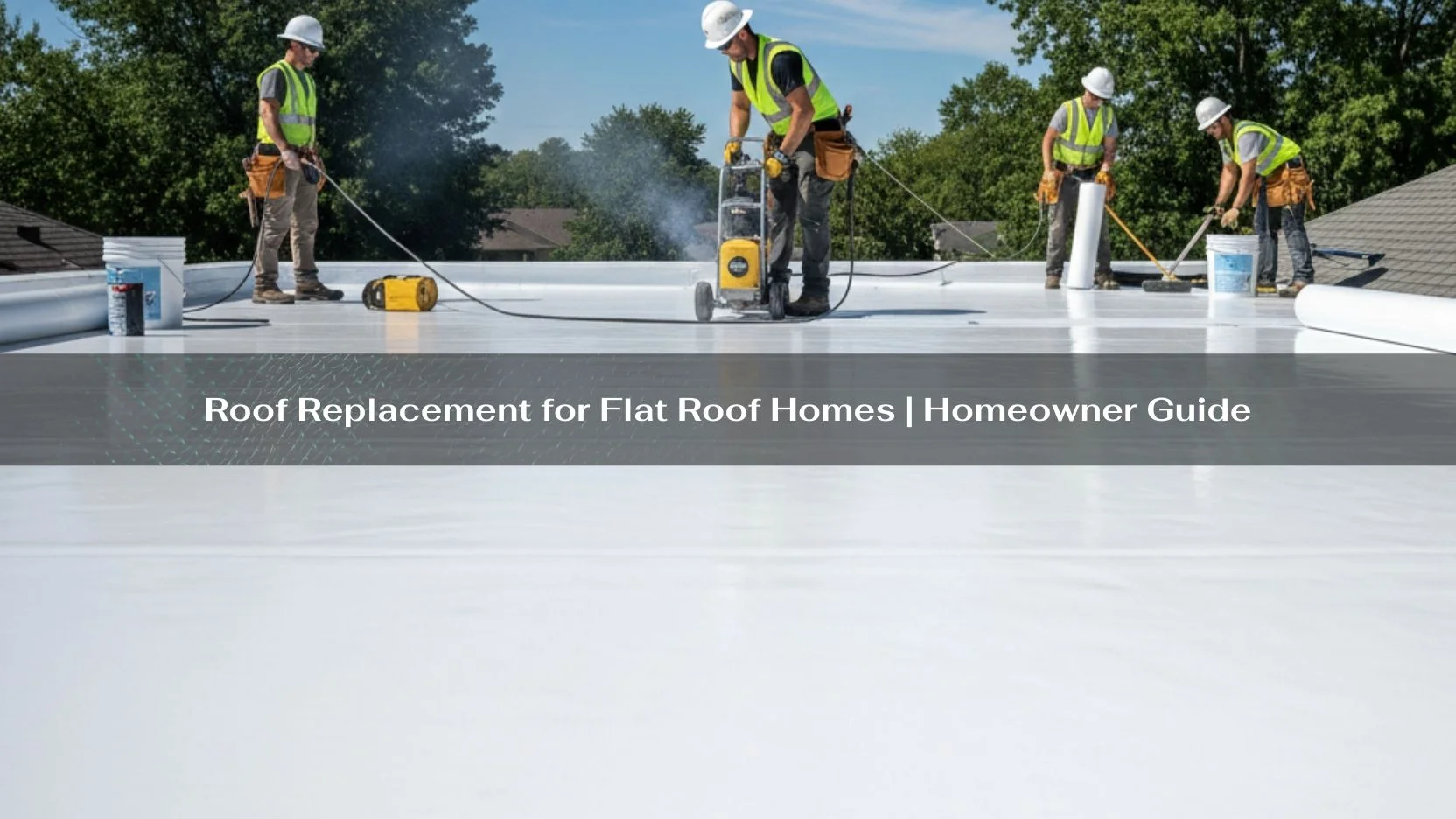
Flat roofs are common in many homes and commercial buildings. While they look sleek, they can develop leaks, water pooling, or material damage over time. That’s why homeowners often ask: How do I replace a flat roof the right way?
One homeowner said, “After the last heavy rain, I noticed water pooling. I realized my flat roof needed serious attention.” This guide will explain the challenges, materials, and steps to successfully replace a flat roof.
Challenges of Flat Roof Homes
Flat roofs come with unique challenges. Unlike sloped roofs, water doesn’t drain as quickly, increasing the risk of leaks. Proper membrane installation and insulation are essential to prevent damage.
A roofing contractor shared, “Flat roofs need careful planning. Even a small slope miscalculation can cause pooling and shorten the roof’s life.” For a technical overview, see Wikipedia flat roof.
Common Materials for Flat Roof Replacement
Several materials are commonly used:
- TPO (Thermoplastic Polyolefin): Durable and reflective, helps with energy savings.
- EPDM (Ethylene Propylene Diene Monomer): Flexible rubber material, resistant to UV and weather.
- PVC (Polyvinyl Chloride): Strong and waterproof, good for commercial applications.
- Modified Bitumen: Asphalt-based membrane, often with granules for added protection.
Each material has pros and cons. For example, EPDM is cost-effective but may need extra care at seams. More details are in the HomeAdvisor flat roof replacement guide.
How to Plan a Flat Roof Replacement
Start by assessing your roof’s condition. Check for leaks, ponding, or damaged areas. Next, choose a suitable material that fits your climate, budget, and building codes. Finally, set a realistic budget and timeline.
A homeowner on Angi flat roof replacement guide said, “We measured everything carefully and consulted our contractor. Picking TPO gave us durability without overspending.”
Professional vs DIY Replacement
Some minor repairs or small flat roofs may be suitable for experienced DIYers. However, most full replacements require professional installation to ensure proper slope, sealing, and warranty protection.
A contractor on Quora flat roof replacement questions noted, “DIY is risky for full replacements. Professional installers prevent leaks, protect your home, and provide a warranty.”
Maintenance Tips After Replacement
After installing a new flat roof, regular inspections are key. Remove debris, check for ponding, and address minor issues promptly. Routine maintenance can significantly extend your roof’s lifespan.
Homeowners on Reddit flat roof repair discussions shared, “We schedule inspections twice a year. Catching small issues early has saved us thousands.”
Conclusion
Replacing a flat roof requires understanding its challenges, choosing the right material, and planning installation carefully. Professional help is often the safest choice, and proper maintenance ensures your investment lasts for years. By following these steps, homeowners can enjoy a durable, leak-free flat roof.