
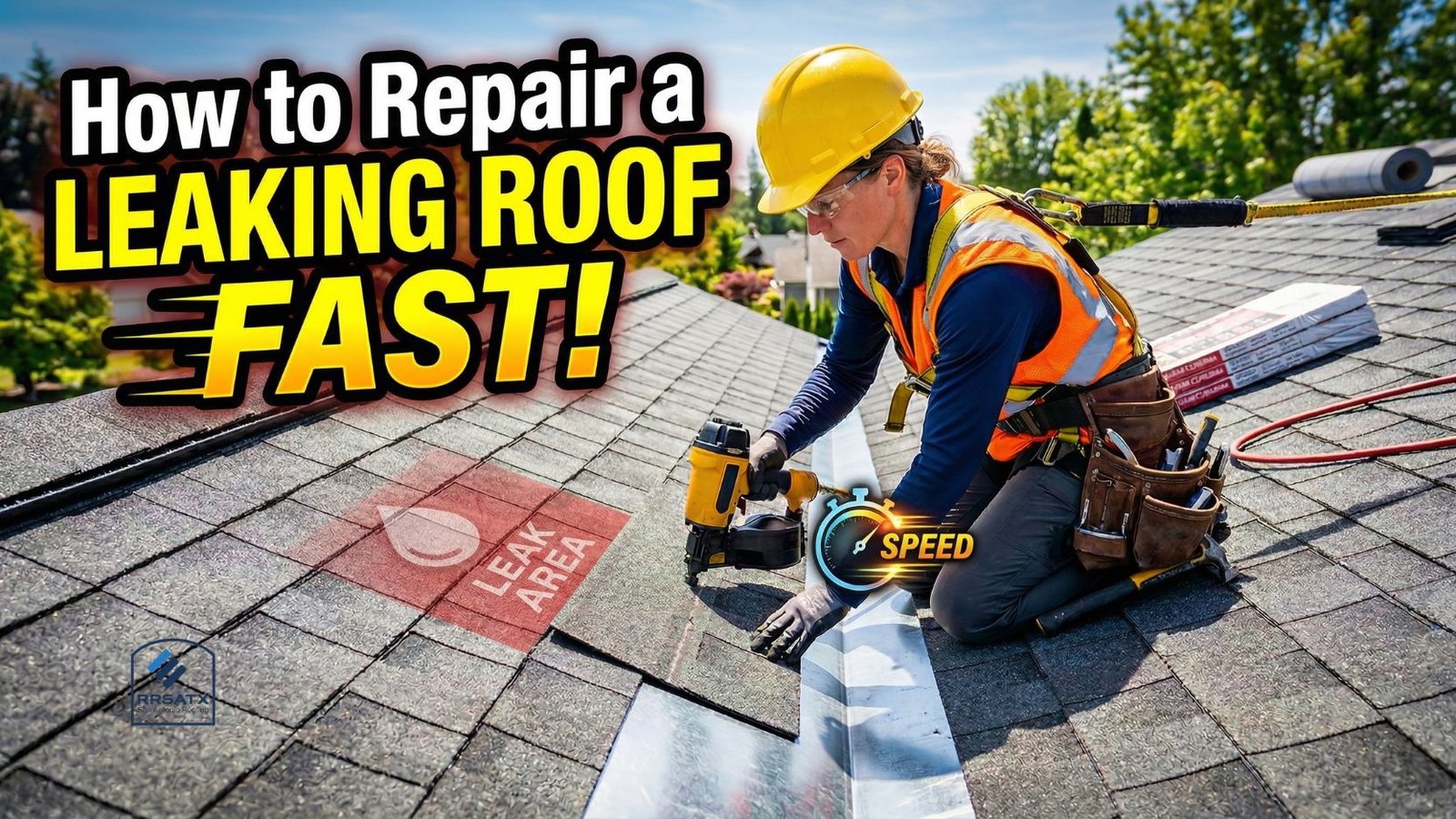
If your roof is leaking, the fastest safe response is to contain the water inside, protect the damaged area with a tarp if accessible, and schedule a professional roof inspection and repair as soon as possible. In San Antonio, roof leaks can spread quickly after hail, wind, and heavy rain, especially on older roofs or around flashing, vents, and low-slope sections.
At RRSATX: San Antonio Roofing Company, roof leak problems in South Texas often involve storm damage, failed flashing, missing shingles, clogged drainage, or worn roofing materials. Fast action matters because a small leak can lead to insulation damage, mold growth, stained ceilings, and wood rot if it is ignored.
What Should You Do First When Your Roof Starts Leaking?
The first step is to limit interior water damage and keep people safe. You do not need to know the exact source before taking basic protective steps.
Start here:
- Move furniture, electronics, and valuables away from the leak
- Place buckets or containers under dripping water
- Use towels or plastic sheeting to protect flooring
- Relieve ceiling bulges carefully if water is trapped
- Turn off power if water is near lights or outlets
Key takeaway: Your first goal is not a full repair. It is stopping further damage until the roof can be fixed correctly.
Can You Repair A Leaking Roof Fast Without Climbing On It?
Yes, in many cases you can take fast temporary steps without getting on the roof. This is the safest option for most homeowners, especially during bad weather or after a storm.
What you can do from inside or from the ground:
- Document the leak with photos
- Check the attic for wet insulation or visible entry points
- Look for missing shingles from the ground
- Call for emergency roof tarping if rain is ongoing
What you should avoid:
- Walking on a wet roof
- Climbing during wind or lightning
- Using heavy sealants as a blind fix from inside
A temporary response may reduce damage, but it will not replace a proper roof leak repair.
What Causes A Roof Leak In The First Place?
Most roof leaks come from failed roof components, storm damage, or age-related wear. The leak may show up in one room, but the actual entry point can be several feet away.
Common causes of roof leaks in San Antonio include:
- Missing or damaged shingles
- Cracked or lifted flashing
- Hail damage
- Wind-driven rain under exposed roofing materials
- Clogged gutters or poor drainage
- Failed seals around chimneys, skylights, or vents
- Ponding water on flat roofs
- Aging roofing systems near the end of service life
For commercial buildings, leaks often start at seams, penetrations, drains, or membrane edges.
What Is The Fastest Temporary Fix For A Leaking Roof?
The fastest temporary fix is usually covering the damaged exterior area with a tarp and securing the affected interior space. This helps reduce water intrusion until permanent repairs can be made.
Temporary Roof Leak Fixes And What They Do
| Temporary Fix | Best Use | Limitation |
| Bucket under leak | Active drip inside | Does not stop source |
| Plastic sheeting | Protects furniture and floors | Interior only |
| Tarp over damaged area | Storm or shingle damage | Temporary only |
| Attic moisture control | Reduces spread of damage | Does not fix roof |
| Emergency service call | Fast professional response | Repair timing depends on weather |
Key takeaway: A tarp is a short-term barrier, not a true roof repair.
How Do Professionals Repair A Leaking Roof Fast?
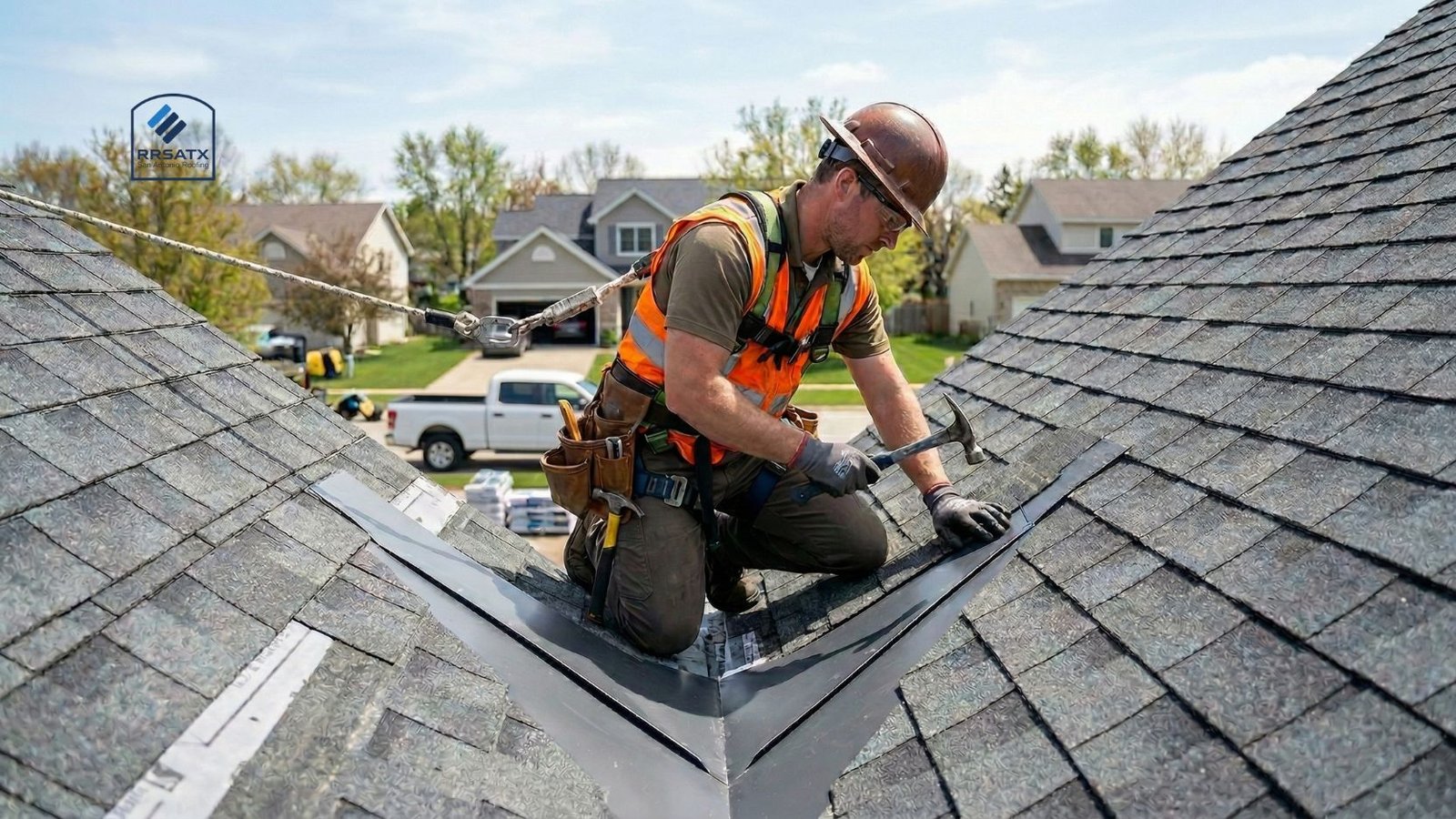
A professional roof repair starts with finding the true source of the leak, not just sealing the visible drip area. Fast and effective repair depends on the roof type, the weather, and the extent of damage.
A roofing contractor may:
- Replace missing or broken shingles
- Repair or replace flashing
- Seal exposed penetrations
- Remove and replace wet roofing materials
- Fix storm-damaged roof decking
- Repair membrane seams on flat roofs
- Improve drainage around problem areas
For older roofs with repeated leaks, a contractor may recommend replacement if patching would only provide short-term relief.
Is A Roof Leak An Emergency?
Yes, a roof leak is an emergency when water is entering the building, electrical systems are at risk, or storm damage has opened the roof system. Even if the leak seems small, hidden moisture can spread fast.
A leak needs urgent attention if:
- Water is dripping through the ceiling
- Ceiling drywall is sagging
- The leak is near wiring or fixtures
- Rain is still entering during a storm
- Multiple areas are affected
- The building has a flat roof with ponding water
For commercial buildings, quick action also helps reduce disruption to tenants, inventory, and operations.
How Can You Tell If A Leak Needs Repair Or Full Roof Replacement?
A roof leak needs repair if the damage is isolated and the rest of the roof is still in serviceable condition. Replacement is more likely if the roof is old, has widespread damage, or has a long history of patchwork.
Repair VS. Replacement
| Situation | Likely Best Option |
| One small flashing failure | Repair |
| Limited shingle blow-off | Repair |
| Repeated leaks in several areas | Replacement may be better |
| Roof is 15–20+ years old with wear | Inspection needed for replacement planning |
| Heavy hail damage across large sections | Replacement may be more cost-effective |
A professional inspection gives the clearest answer, especially for insurance claim situations or property sales.
How Can You Prevent Another Roof Leak After The Repair?
The best way to prevent future leaks is to fix the root cause and inspect the roof regularly, especially after storms. Quick patching without follow-up often leads to repeat problems.
Smart prevention steps include:
- Schedule annual roof inspections
- Check the roof after hail or wind events
- Keep gutters and drains clear
- Watch for ceiling stains and attic moisture
- Repair damaged flashing early
- Monitor aging roofs more often
In San Antonio, weather exposure makes regular inspection especially important for older homes and commercial properties.
FAQs
Can I Fix A Roof Leak Myself With Caulk?
You can use caulk as a very temporary measure in a small, visible area, but it usually does not solve the full problem. Most leaks involve underlying damage, flashing failure, or worn materials.
How Long Can I Wait To Repair A Leaking Roof?
You should repair a leaking roof as soon as possible. Even one day of ongoing water entry can damage insulation, drywall, framing, and interior finishes.
Does Homeowners Insurance Cover Roof Leak Repair?
It depends on the cause. Storm damage is often covered, while wear and tear usually is not. Documentation and a prompt inspection help support a claim.