
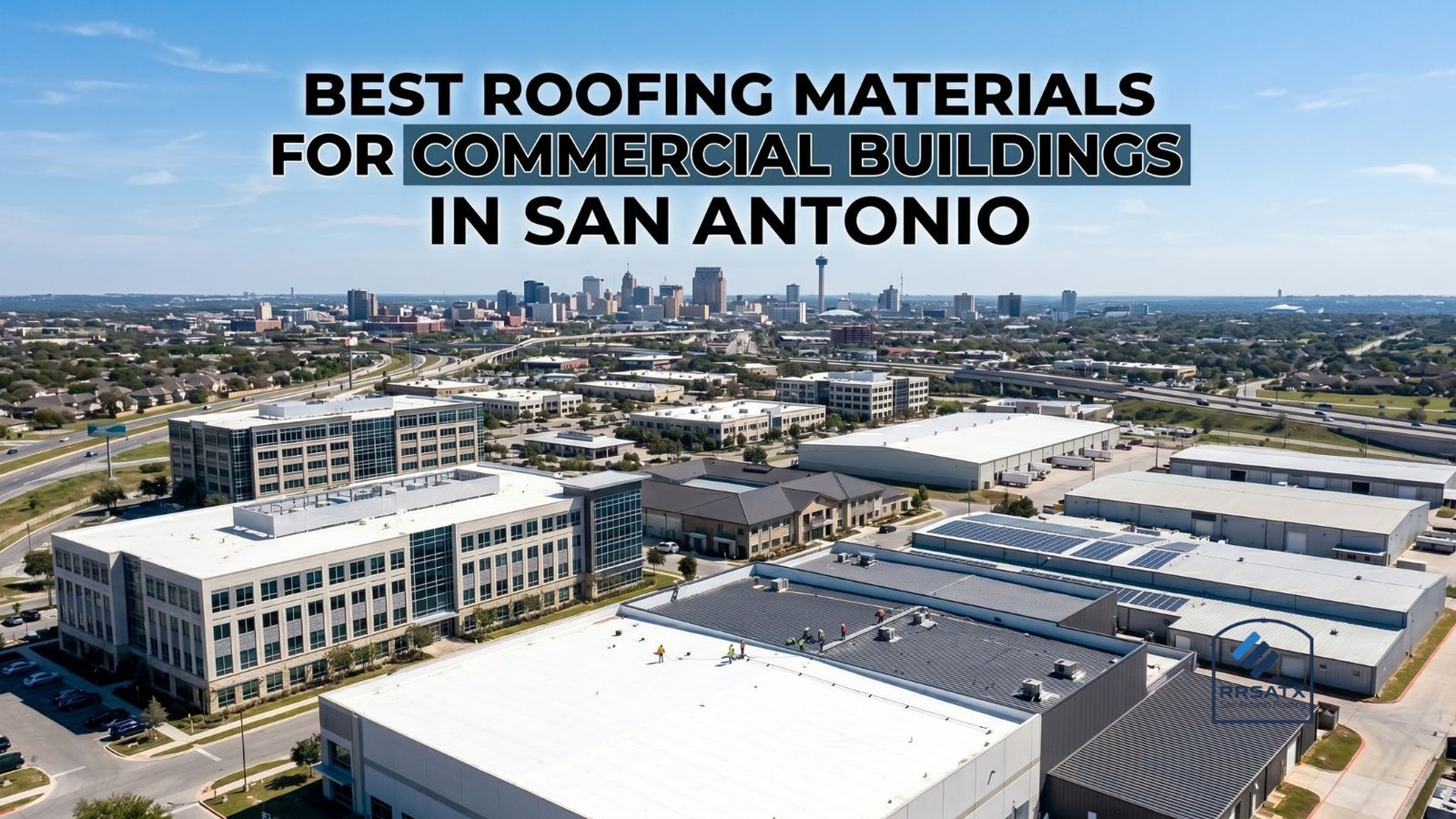
Roofing guide · San Antonio, Texas
What Are the Best Roofing Materials for Commercial Buildings?
The right commercial roof depends on the building, its slope, and its use. Here are the main options.
The short answer
Common commercial roofing materials are single-ply membranes (TPO, PVC, EPDM), modified bitumen, built-up roofing, metal, and roof coatings over sound existing roofs. In San Antonio’s heat, reflectivity matters: the U.S. EPA says a cool roof absorbs and transfers less heat, and cool products exist for low-slope roofs. [1] Metal is durable and low maintenance and can last 50 years or more, according to the U.S. Department of Energy’s Building America Solution Center. [2]
What are the main options?
An overview.
| Material | Notes |
|---|---|
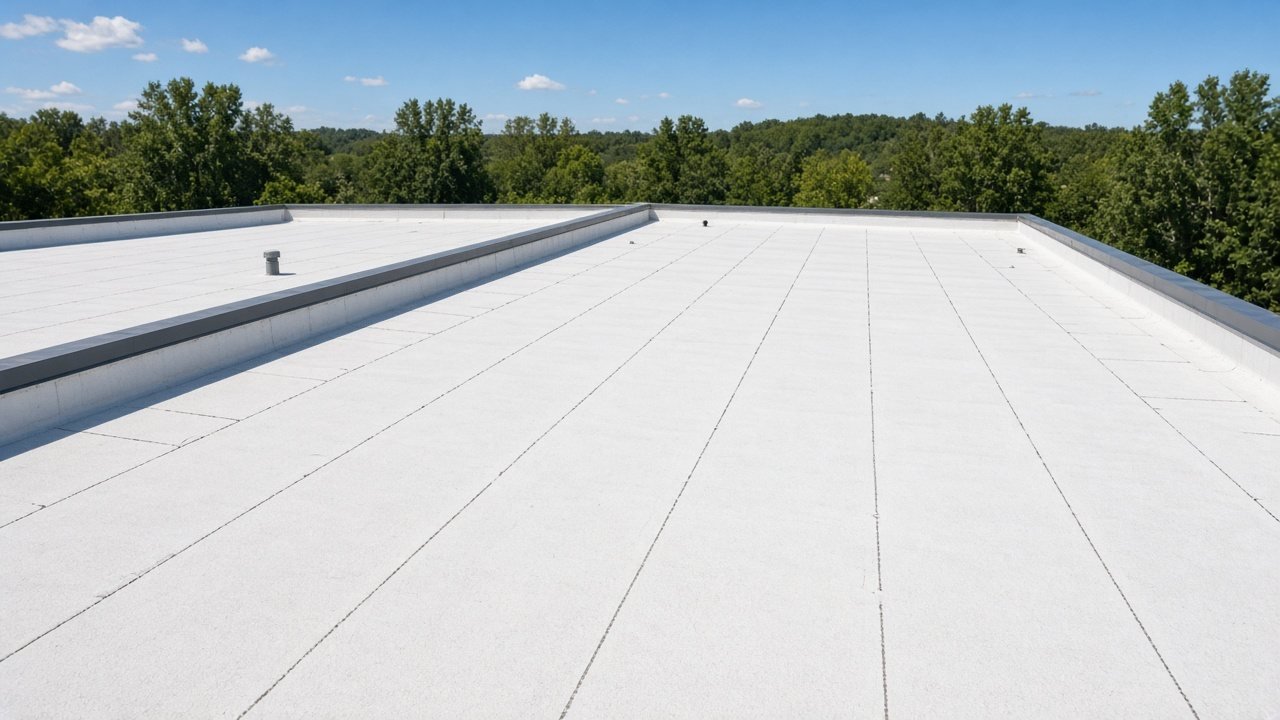
| TPO | Single-ply, usually white and reflective [1] |
| PVC | Single-ply with welded seams |
| EPDM | Rubber membrane, often black |
| Modified bitumen | Layered asphalt-based sheets |
| Metal | Durable, can last 50+ years [2] |
| Coatings | Applied over a sound roof; can add reflectance [1] |
| Green roofs | Vegetation layer; needs structural review [3] |
How do you choose?
Match the material to the building.
- Slope: low-slope roofs need membranes or low-slope metal.
- Heat: reflective surfaces reduce heat gain. [1]
- Foot traffic: rooftop equipment means more service visits.
- Fire rating: metal is generally fire-resistant. [2] [4]
- Hail: heavier-gauge metal resists hail better. [2]
See TPO vs metal and coatings.
How does maintenance differ?
All need inspections.
Every system benefits from inspections at least twice a year and after severe weather. [5] Low-slope cool roofs may need cleaning to keep their reflectance. [1]
What RRSATX recommends
Ask for the manufacturer’s maintenance requirements in writing. Warranties often depend on them.
Next steps: what you can do, and what needs a pro
Choose for slope, heat, and use.
You can safely:
- Know your roof slope.
- List rooftop equipment.
- Ask about cool options.
- Compare bids.
Leave to a roofer: commercial roof installation and replacement. RRSATX offers a free roof inspection with a photo report and a written estimate.
Local roofing service
About Affordable Roofing Contractors San Antonio
Affordable Roofing Contractors San Antonio, also known as RRSATX, is a father-and-son roofing business owned by Ted. Ted has 40 years of hands-on roofing experience. The company carries $2 million in liability insurance coverage. It offers free roof inspections and leak inspections, with no fee and no obligation, provides a photo report after the inspection, and gives a free written estimate before any work starts. If storm damage is involved, RRSATX can help as your roofer, not your adjuster: it can document damage and prepare an estimate, but it cannot act as a public insurance adjuster or negotiate a claim for you. [6] RRSATX provides a written workmanship warranty; this guide does not state its terms.
- Phone
- (713) 504-2341
- sales@affordableroofingcontractorssanantonio.com
- Address
- 4324 Monterey St, San Antonio, TX 78237
- Contact
- Request a free roof inspection
Commercial roofing materials: questions answered
Is TPO good for San Antonio?
White TPO is reflective, which helps in heat. [1]
Does metal work on commercial roofs?
Yes, on suitable slopes; it’s durable. [2]
Is a green roof possible?
With structural review. [3]
Do cool roofs help in winter?
EPA says the winter penalty is typically offset by summer savings. [1]
Request a free roof inspection
Call or use the contact form. You get a photo report and a written estimate before any work starts.