

[et_pb_section fb_built=”1″ admin_label=”section” _builder_version=”4.16″ global_colors_info=”{}”][et_pb_row admin_label=”row” _builder_version=”4.16″ background_size=”initial” background_position=”top_left” background_repeat=”repeat” global_colors_info=”{}”][et_pb_column type=”4_4″ _builder_version=”4.16″ custom_padding=”|||” global_colors_info=”{}” custom_padding__hover=”|||”][et_pb_code _builder_version=”4.27.6″ _module_preset=”default” hover_enabled=”0″ sticky_enabled=”0″]
Labor is the line item most San Antonio homeowners underestimate when budgeting for a metal roof. This guide breaks down exactly what drives labor costs, what a fair rate looks like in the San Antonio market in 2026, and how to make sure you are paying for skill rather than speed.
When a San Antonio homeowner gets a metal roofing estimate, the materials line item is the one that gets the most attention. The labor line is often accepted without question. That is a mistake. Labor on a metal roofing project is not a fixed number. It moves based on the type of metal panel you choose, the pitch and complexity of your roof, whether a tear-off is included, and the experience level of the crew doing the work.
Getting the labor cost right matters because it affects two things: your total budget and the quality of the finished roof. A crew that bids labor 30 percent below market rate is cutting time somewhere, and on a metal roof, rushed installation creates leaks, failed fasteners, and voided manufacturer warranties. This guide covers what labor costs in San Antonio in 2026, what drives those numbers up or down, and what questions to ask before you sign anything.
Metal roofing is an installation-sensitive product. Unlike asphalt shingles where a less experienced crew can still produce a functional result, metal panels have no margin for error on fastener placement, panel alignment, flashing integration, or thermal expansion allowances. A standing seam roof installed by an undertrained crew can fail at the seams within five years. A corrugated panel roof with over-driven screws will be leaking within ten. The labor cost you pay at installation determines whether that roof performs for 50 years or costs you in repairs every few years. In San Antonio, experienced metal roofing labor is priced at a premium for good reason.
Panel Type
Not all metal roofing is the same, and the panel type you choose has the largest single impact on your labor cost. Standing seam panels require specialized seaming equipment, precise layout work, and a crew trained specifically on that system. Exposed-fastener corrugated panels are faster to install and carry a lower labor rate, but demand careful attention to fastener torque and placement to avoid the most common failure modes. Stone-coated steel panels install more like a layered shingle product and fall between the two in labor complexity and time on the roof.
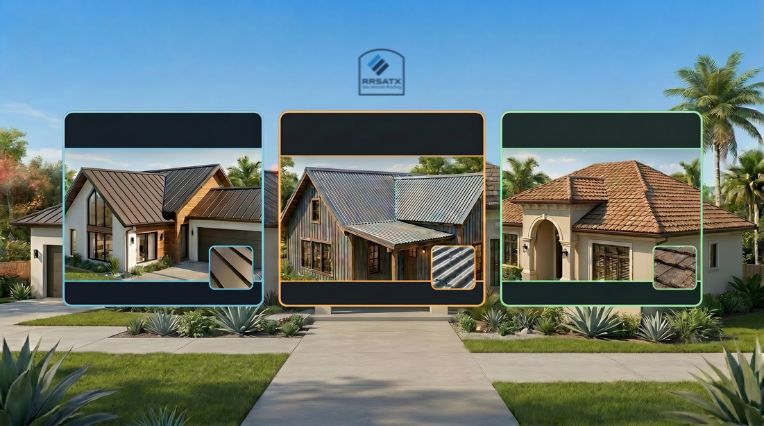
Standing seam: The most labor-intensive metal roofing system. Panels interlock at concealed clips and are mechanically seamed using a powered seaming tool. Crews must be trained on the specific manufacturer’s system. Mistakes in layout or seaming are not correctable after the fact. Labor runs $5 to $10 per square foot in San Antonio, higher than any other metal profile.
Corrugated and exposed-fastener panels: Faster to lay out and install, but proper fastener technique is critical. Each exposed screw is a potential leak point. Labor runs $3 to $6 per square foot. The lower rate reflects faster installation speed, not lower skill requirements.
Stone-coated steel: Installed in an overlapping pattern with concealed fasteners and interlocking edges. More pieces per square than flat panel systems, which adds installation time. Labor runs $4 to $7 per square foot.
- Contractor confirms crew is trained on the specific panel system being installed, not metal roofing generally
- Standing seam quote includes the cost of the powered seaming tool operation, not just hand labor
- Labor rate is quoted per square foot or per roofing square (100 sq ft) in writing, not as a single blended total
- Stone-coated steel quote accounts for the higher piece count per square compared to flat panel systems
- Manufacturer certification or training documentation requested for the crew lead on standing seam jobs
Pitch and Complexity
Roof pitch is measured as the number of inches of vertical rise per 12 inches of horizontal run. A 4:12 pitch is walkable and considered standard. A 7:12 pitch requires roof jacks and additional safety setup. A 10:12 or steeper pitch slows installation significantly and requires a crew experienced in working steep slopes. In San Antonio, most residential roofs fall in the 4:12 to 8:12 range, but steeper pitches are common in older neighborhoods and on certain architectural styles.
Beyond pitch, roof complexity adds labor time. Every hip requires cutting and fitting metal panels to a diagonal. Every valley needs custom flashing fabricated and integrated into the panel run. Each dormer, chimney, skylight, or vent pipe adds a flashing detail that has to be done correctly or it will leak. A simple gable roof with two slopes and no penetrations is the fastest, least expensive metal roof to install. A hip roof with multiple dormers, chimneys, and HVAC penetrations on a 9:12 pitch is a completely different job from a labor standpoint.
Ask every contractor to break out pitch premium and complexity charges as separate line items on the estimate. A quote that bundles everything into a single labor total makes it impossible to compare bids accurately. If Contractor A charges $4 per square foot with no stated pitch premium and Contractor B charges $5 per square foot with pitch premium already included for your 8:12 roof, Contractor B may actually be the lower bid once you add back Contractor A’s unstated pitch charge. Line-item transparency is the only way to make an apples-to-apples comparison.
- Pitch of each roof slope measured and documented on the estimate
- Pitch premium stated as a specific dollar amount or percentage, not absorbed into a blended rate
- All penetrations counted and listed: chimneys, vents, skylights, HVAC curbs, satellite mounts
- Each flashing detail priced individually so you can see what complexity is costing you
- Staging and safety equipment requirements identified for steep-pitch slopes
- Valley and hip cut labor included in the quote, not treated as a line item surprise after the fact
Prep Labor
The labor to install the metal panels is only part of the total labor picture on a replacement project. Before the first panel goes on the roof, someone has to remove the existing material, haul it away, inspect the decking, replace any damaged or rotted sheathing, and install the underlayment. Each of those steps costs labor time, and not all contractors include them in the base installation rate.
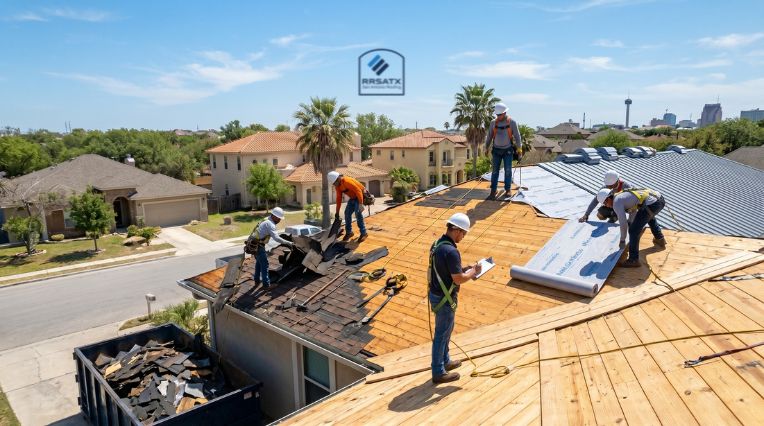
Tear-off labor: Removing asphalt shingles runs $1 to $2 per square foot in San Antonio. A second layer of shingles that requires a double tear-off adds to that cost. Metal over metal tear-off is more time-intensive and typically runs $1.50 to $3 per square foot depending on the panel profile being removed.
Decking inspection and replacement: After tear-off, the crew inspects the plywood or OSB sheathing for soft spots, rot, and delamination. Replacing a standard 4×8 sheet of half-inch decking runs $80 to $150 per sheet installed, including the material. Decking replacement is priced per sheet and billed after the tear-off reveals the actual condition of the substrate.
Underlayment installation: Metal roofing requires an appropriate underlayment, typically a self-adhering modified bitumen or a heavy synthetic felt. The labor to install underlayment runs $0.50 to $1 per square foot and is sometimes included in the panel installation quote, sometimes priced separately. Confirm which applies to your estimate.
- Tear-off labor quoted separately from panel installation labor, with a per-square-foot rate
- Number of existing layers confirmed before quote is finalized, not estimated
- Disposal and haul-away included in the tear-off rate, not billed as a separate add-on
- Decking replacement priced per sheet, not included as a flat estimate that may undercount actual damage
- Underlayment type specified and labor for installation either included in the panel rate or listed separately
- Drip edge and starter strip installation labor accounted for in the estimate
Crew Quality
There is a meaningful difference between a roofing crew that has installed metal panels and a crew that specializes in metal roofing. Most roofing companies in San Antonio will take a metal roofing job. Far fewer have the specific training, equipment, and installation volume to do standing seam or specialty metal panel work at the level that protects the manufacturer warranty and produces a roof that lasts its rated lifespan.
Many metal roofing manufacturers, including DECRA, Metal Sales, and McElroy Metal, offer contractor certification programs. A certified installer has completed training on that manufacturer’s specific products, installation methods, and quality standards. More importantly, some manufacturers require installation by a certified contractor as a condition of the enhanced warranty. If a general roofing contractor installs a panel system that requires certified installation and the roof fails, the manufacturer may deny the warranty claim on the grounds that the installation did not meet certification requirements.
When a contractor quotes you a labor rate significantly below competing bids, ask two questions before accepting it as a deal. First: is the crew that will actually be on your roof employed by this company, or will the job be subcontracted? Subcontracting is common and not automatically a problem, but you have a right to know who will be on your roof and whether that crew is certified on the system being installed. Second: does the labor rate include the full scope of work, or does it assume ideal conditions that are unlikely to hold once the job starts? Low labor bids that do not account for pitch premium, complexity, or prep work often look very different by the time the final invoice arrives.
- Contractor confirms whether the installing crew is employed directly or subcontracted
- Manufacturer certification documentation requested for the specific panel system being installed
- Warranty terms reviewed to confirm whether certified installation is required for the enhanced warranty
- References requested from at least two completed metal roof installations of the same panel type
- Contractor carries the correct seaming equipment for the specific standing seam profile if applicable
- Crew lead experience level confirmed: years in metal roofing specifically, not roofing generally
Total Cost
Pulling together the per-square-foot labor rates, pitch factors, and prep costs gives a clearer picture of what labor actually totals on a real San Antonio metal roofing project. The figures below assume a standard pitch (4:12 to 6:12), single-layer tear-off included, underlayment included, and no unusual complexity. They represent labor only, not materials or overhead and profit markup.
| Home size (sq ft) | Corrugated / exposed-fastener labor | Stone-coated steel labor | Standing seam labor |
|---|---|---|---|
| 1,000 sq ft roof area | $3,500 to $7,000 | $5,000 to $9,000 | $6,500 to $11,000 |
| 1,500 sq ft roof area | $5,000 to $10,000 | $7,500 to $12,500 | $9,000 to $16,000 |
| 2,000 sq ft roof area | $6,500 to $13,000 | $9,500 to $16,000 | $12,000 to $21,000 |
| 2,500 sq ft roof area | $8,000 to $16,000 | $12,000 to $20,000 | $15,000 to $26,000 |
| 3,000 sq ft roof area | $9,500 to $19,000 | $14,000 to $24,000 | $18,000 to $31,000 |
These ranges are wide by design. The low end reflects a straightforward gable roof on a walkable pitch with a crew working at full efficiency. The high end reflects the same square footage on a roof with a steeper pitch, multiple penetrations, and a specialist crew running certified installation. Your actual labor quote will land somewhere in the range based on the factors covered in sections 01 through 04 above.
- Labor line item represents a credible percentage of the total bid (35 to 45 percent is a normal range)
- Roof area measured by the contractor and confirmed in square feet on the written estimate
- Waste factor accounted for: metal roofing typically requires 10 to 15 percent overage for cuts and trim
- All labor components listed: tear-off, underlayment, panel installation, flashing, ridge and trim
- Payment schedule reviewed: a legitimate contractor does not require full payment upfront before work begins
- Lien waiver requested upon project completion to confirm all subcontractors and suppliers have been paid
Use this table as a starting point when reviewing contractor quotes. Every project is different, but these ranges reflect current San Antonio market conditions. Any quote that deviates significantly from these figures in either direction deserves a direct conversation with the contractor about what is included and why.
| Labor component | Typical rate (San Antonio 2026) | Notes |
|---|---|---|
| Corrugated / exposed-fastener panel installation | $3 to $6 per sq ft | Assumes standard pitch, simple roof geometry |
| Stone-coated steel panel installation | $4 to $7 per sq ft | Higher piece count per square adds installation time |
| Standing seam panel installation | $5 to $10 per sq ft | Requires certified crew and powered seaming equipment |
| Single-layer shingle tear-off | $1 to $2 per sq ft | Includes haul-away and disposal |
| Double-layer shingle tear-off | $1.75 to $3.50 per sq ft | Increased debris volume and time |
| Underlayment installation | $0.50 to $1 per sq ft | Sometimes bundled into panel labor rate |
| Decking replacement | $80 to $150 per sheet installed | Priced per sheet after tear-off reveals actual damage |
| Pitch premium (7:12 to 9:12) | 15 to 25% above base rate | Applied to the panel installation rate |
| Pitch premium (10:12 and steeper) | 30 to 50% above base rate | Specialized rigging required |
| Penetration flashing (per detail) | $150 to $400 each | Chimneys, skylights, vents, HVAC curbs |
- Labor is broken out from materials as a separate line item on the written estimate
- Panel installation rate is stated per square foot or per roofing square, not blended into a project total
- Tear-off, underlayment, and decking are each listed with their own rates
- Pitch premium and complexity charges are identified, not buried in the base rate
- At least two other written quotes obtained for the same scope of work
- Contractor confirms whether the installing crew is a direct employee or a subcontractor
- Crew certification status on the specific panel system verified in writing
- References from comparable completed metal roofing jobs requested and followed up on
- Contractor carries workers’ compensation insurance covering the actual crew on site
- Seaming equipment confirmed as appropriate for the specific standing seam profile, if applicable
- Payment schedule reviewed: no more than 10 to 30 percent upfront on a well-capitalized contractor
- Written contract specifies the complete scope of labor, not just the materials list
- Workmanship warranty period confirmed: two years is a minimum, five is a reasonable expectation
- Manufacturer warranty terms reviewed to confirm certified installation requirement, if any
- Lien waiver provision included or requested for projects over $10,000
How much does labor cost for metal roofing in San Antonio?
Is metal roofing labor more expensive than shingle labor?
Can I install a metal roof myself to save on labor costs?
Why do metal roofing labor quotes vary so much between contractors in San Antonio?
Does roof pitch significantly affect the labor cost of a metal roof?
How long does it take to install a metal roof, and does that affect the labor cost?
Get a free metal roofing labor quote in San Antonio
Tell us about your home, your roof, and which panel system you are considering. We will give you a clear, itemized written estimate with labor and materials broken out separately, at no cost to you.
[/et_pb_code][/et_pb_column][/et_pb_row][/et_pb_section]